Stereotypes in the Service Industry

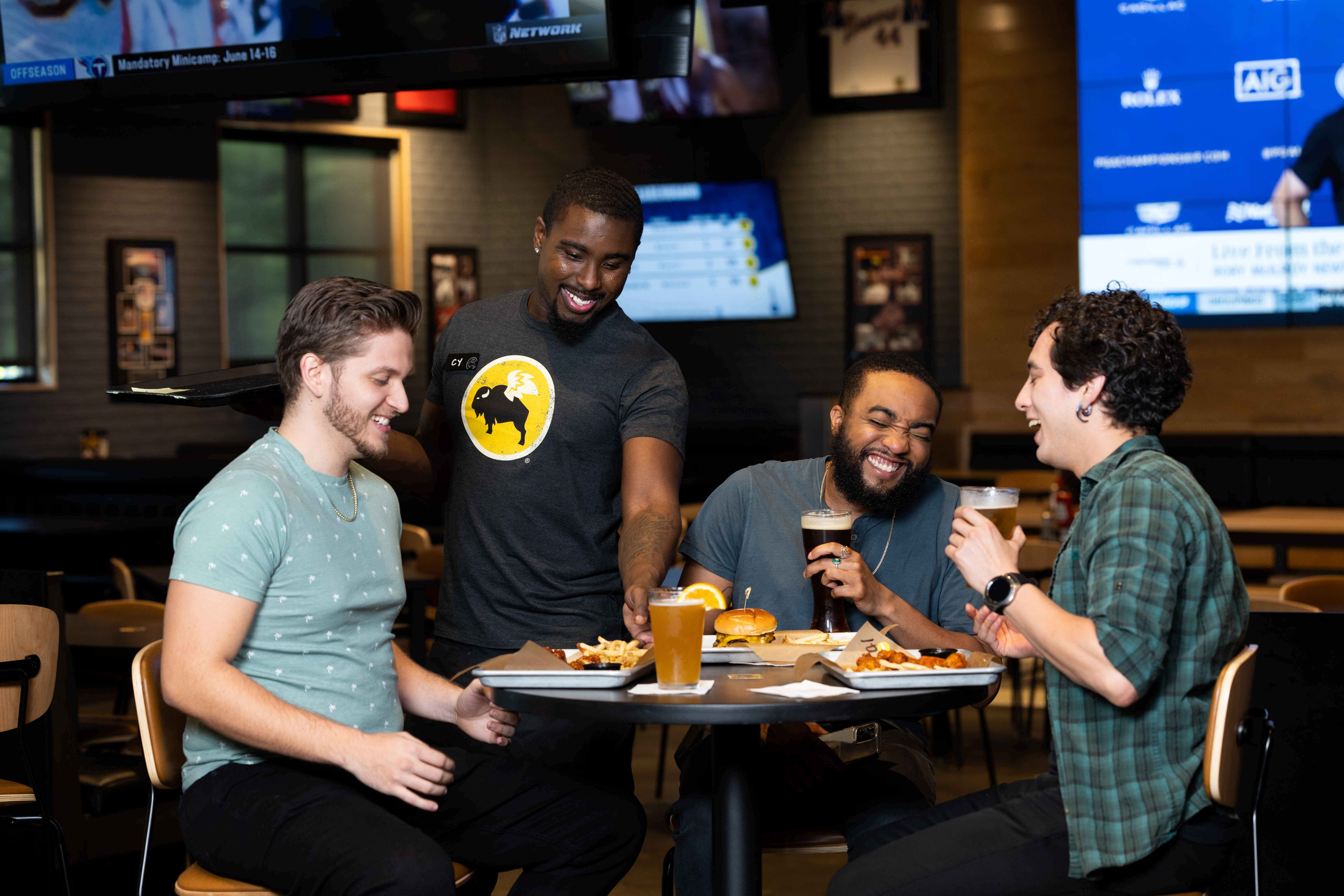
In the past three years, I’ve worked at two different jobs that have an aspect of food service. I’ve never personally been a server (aside from the two tables I served one day when we were short staffed at Buffalo Wild Wings) but being a server means relying on your customers’ generosity to pay your bills. From what I’ve seen, this leads servers to make many, many, MANY assumptions about their customers from the time they walk up to the host stand to when they walk out of the door. 

The main factors that come into play when determining if a party will be a “good” (high-tipping, low-maintenance) table or a “bad” (low-tipping, high-maintenance) table are age and race. The age thing is simple. Young people, like teenagers, don’t tip or will barely tip. Older people are more likely to tip because they are accustomed to that social norm and have the money from their grown up jobs to do so. This makes sense to me and I don’t think it’s the most harmful of stereotypes to assume. The racial stereotypes are a lot more complex and 100% more harmful. 

These stereotypes, in my experience, include (but are definitely not limited to) a White family will tip well, Black people will not and will ask a lot of their server, large groups of Hispanic will likely order a lot of beers and tip highly as a result, South Asians (often grouped together and labeled “Indians”) will ,without a doubt, not tip a cent, while East Asians don’t have much a reputation for being a good or bad in regards to tipping. Within the last month or so, I’ve heard some of my coworkers talk about how happy they are that it’s “snowing” (aka most of the customers at the moment are white) and when I was at Buffalo Wild Wings I remember an instance when one of coworkers paid another one of my coworkers to take a group of Indian people who came in pretty close to closing (the one who served them ended up getting a handsome tip). 

All of these experiences have reminded me of Chimamanda Ngozi Adichie’s ‘The danger of a single story’ speech. These stereotypes and assumptions are all based on a couple interactions and ultimately lead paying customers to be given shitty service regardless of how they plan on tipping. If, perhaps, my past and present coworkers were more open to seeing people (in both groups and individually) for what they actually are, they would earn the big tip they are so eager for. I understand that it’s difficult to serve a table that runs you all over the place just to not really get paid for any of it (most servers get paid around $3 an hour and almost entirely get paid with their tips if you aren’t aware), but viewing entire groups of people and perpetuating single stories doesn’t not help literally anyone. 
“I finna be in the pit”

I had an experience recently that I really wanted to write about for this post so forgive me if my connections to the readings are a bit of a reach. On November 1st, I took my girlfriend, Madison, to see Sabrina Carpenter at Madison Square Garden for her birthday and while it was like the best night ever, I noticed a lot about how the people around us were using their bodies.

In Roxanne Gay’s ‘My body is a cage of my own making’ she writes, “I am, perhaps, self-obsessed beyond measure. No matter where I am, I wonder about where I stand and how I look…I am the fattest person. This is a constant refrain and I cannot escape it.” When we were assigned to read this for class, I definitely related to constantly being aware of how your body moves and what it looks like and in Madison Square Garden, a place that holds thousands of people, I was feeling it a little extra heavy. I know realistically that I was not the biggest person in that audience, but as I was standing there, it felt like everyone around me was aware of how much space I was taking up. This was not made better by the fact that I was holding a tote bag carrying the merch we purchased on my shoulder.

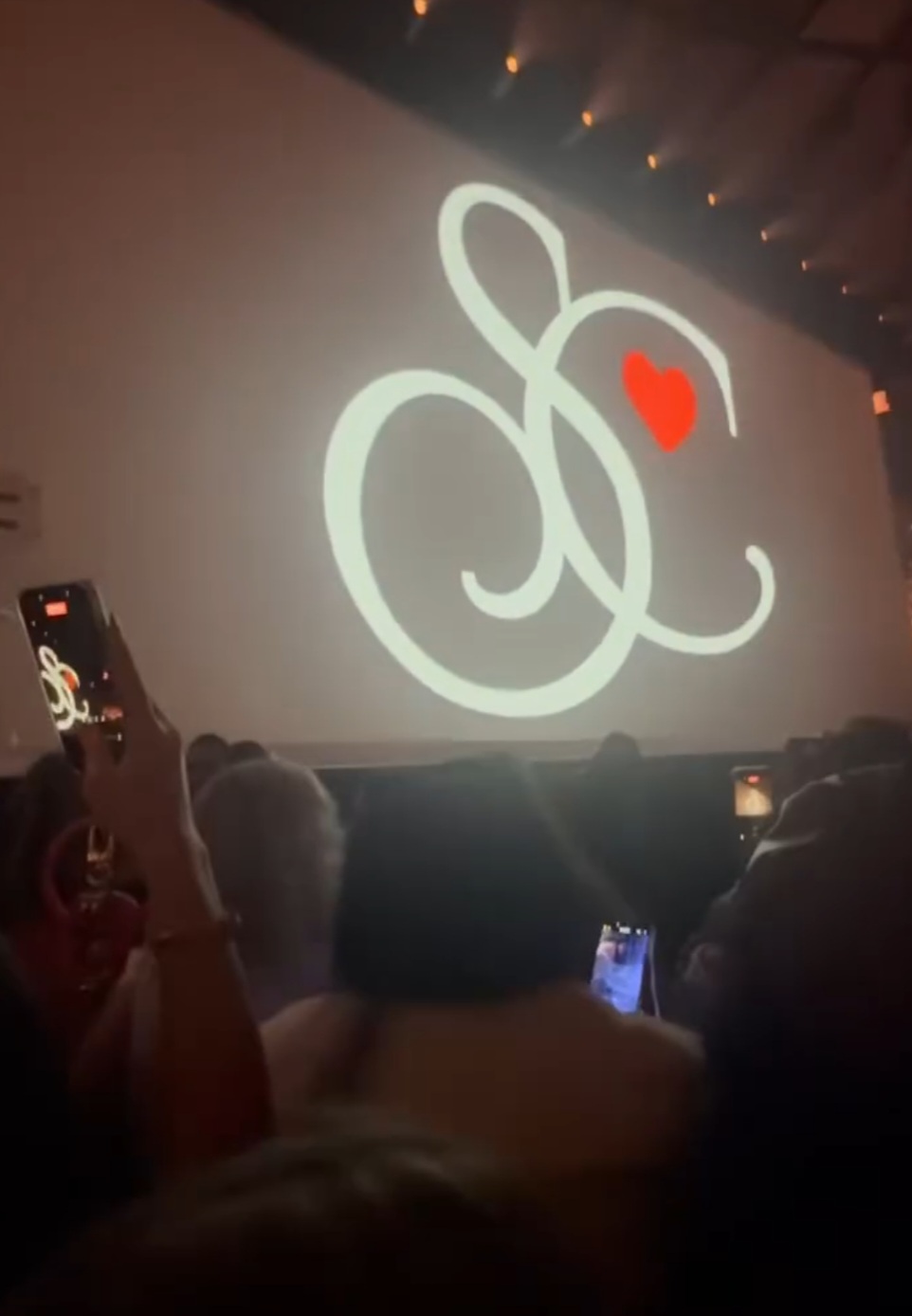
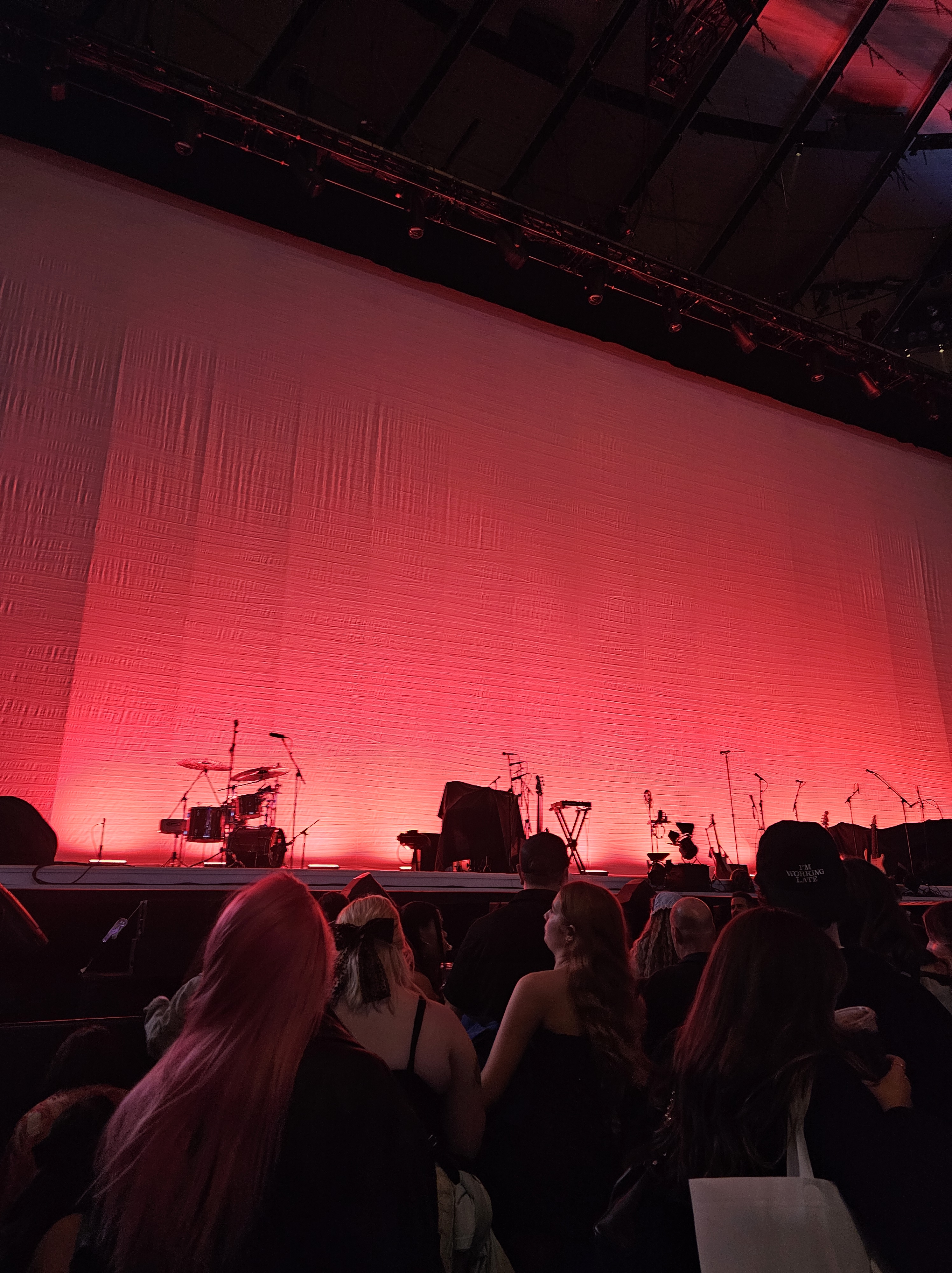
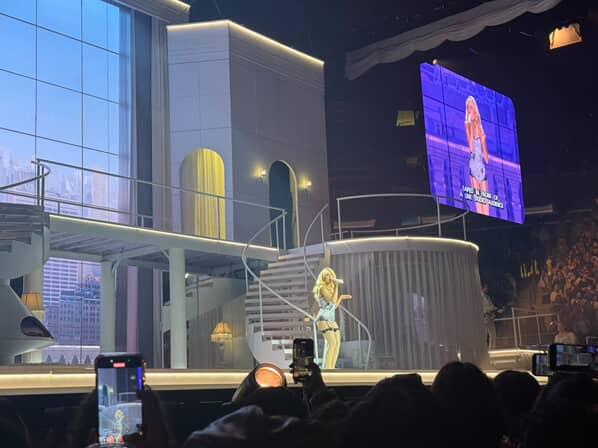
Everything seemed pretty much fine when the opening performers were on stage. My girlfriend and I had our space and were enjoying the show. Then, however, Olivia Dean exits the stage and a large ‘SC’ appears on the big screen on the stage. Sabrina Carpenter is about to come out and people are ecstatic. All of a sudden, everyone around us (for context, we were in the pit) is pushing and shoving their ways past us to get closer to the stage, seemingly not realizing that there is not enough space for the matter of their body to take up. It’s a little difficult to tell, but the pictures below show where we were while the openers were performing vs when Sabrina came out.

Now, I don’t think all of these people are just selfish scum of the earth. I understand that they were excited to see this person that they idolize so much. As I was standing there, still waiting for the main event to start, I began to think about how people desire physical proximity to the people they admire. For me, just seeing her up there on the stage was enough to conceptualize that she is a real person. I am left with the question of what is it about celebrity that makes one so desirable to simply being close to? Why did all of these 14-year-old girls feel so called to force themselves in front of Madison and I and why did they feel that they had a more of a right to be close to her than us?

Our view before the show started.
Our view after Sabrina came out.

“I Knew”

“I remember wearing my mom’s high heels
And these pink work-out sweatpants
Yeah, I was a little kid
Who didn’t know to hide it
I remember hatin’ all my clothes
And seeing pretty girls with pretty clothes
And I was envious
How can I be one of those?”

These are some of my favorite lyrics from the song IDK If I’m a Boy by Blue Foster. You can pretty much gather what the song is about from the title. In this section of the song, Foster basically bullet points a series of experiences they had as a child that express interest in feminine practices/rituals/aesthetics. I was listening to this song on my drive to work the other day and when I heard these lyrics it got me thinking about how we’ve talked a little about signs from your childhood acting as evidence towards your queer/trans status later in life. 

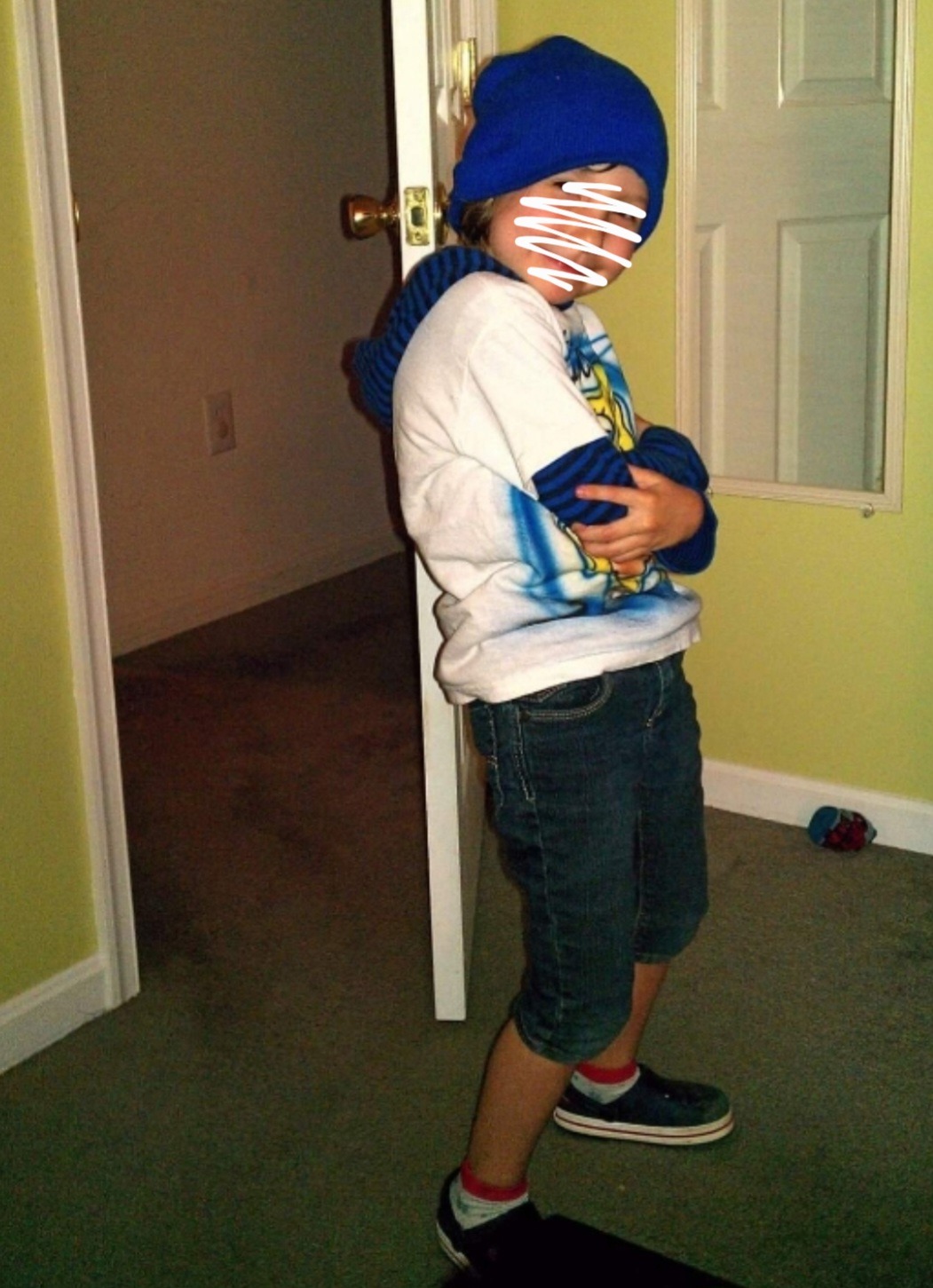
This photo, I think, perfectly encapsulates me as a child (circa 2011). While I don’t have any stories as good as Dr. Kate’s typing class love story, I do think I have some memories that could serve as these so-called pieces of evidence. For one, outfits like the one I’m wearing in that photo were the thing I felt most comfortable in (you may be able to see my big smile through the scratch out lines). I hated anything with ruffled sleeves, I would’ve rather died than let you put my hair in a ponytail, and don’t even get me started on skirts/dresses. When I got old enough to recognize the difference between the “boys” section and the “girls” section of clothing stores, I would say no to everything in the pink, frilly area until my mom was forced to take me over the cool, blue area. It was around the same time that I began to notice how pretty I thought my female classmates were and how uninteresting my male classmates were.

I read Deconstructing Myself (chapter 2) from Nonbinary: Memoirs of Gender and Identity and in it the author, Levi, discusses their journey from identifying as a straight cisgender woman to a lesbian cisgender woman to a “neither heterosexual nor homosexual” genderqueer individual. Levi shared some of their own evidence from their early life. This included wanting to play shirtless outside and pee standing up as a child, as well as wanting to talk about girls, fix cars, and wear a tux to prom as a teenager.

When I started writing this blog post (approximately thirty minutes ago), I planned on ending it with the question of why do people view behaviors they exhibited as children as evidence for their identity when they get older. While I’m sure there’s a lot more that could go into it, I’m starting to think it’s silly for me to ask that question. I have the answer (at least I have my answer). There is some murky water, but I think all-in-all we know who we are and there is no better time to understand who you are than when you are ignorant to all the factors that will one day influence your expression of identity. Like the song says, when you’re too young to understand what your desires may entail for your identity, you don’t know that you are supposed to hide it from the world around you. 

Behind The Screen

So earlier I was trying to do this assignment and I was critiquing it constantly and trying to make it sound more deep and professional than necessary so I’m starting over with a new approach. Dr. Kate said that it should be in “our own voice” so I’m going to write in a sort of free-write style. That being said, bear with me. 

My idea for the blog comes from the very first reading we were assigned this semester. When I was reading it for the first time, some of it was confusing me quite a bit but there was one particular section that was pretty straight forward to me. Within the first couple of pages, the authors talk about bodies in relation to cyberculture. They particularly mention how, in the 21st century, we are able to have an extension of our bodies in the form of televideo calls and/or avatars. In other words, the body is not just the physical being. 

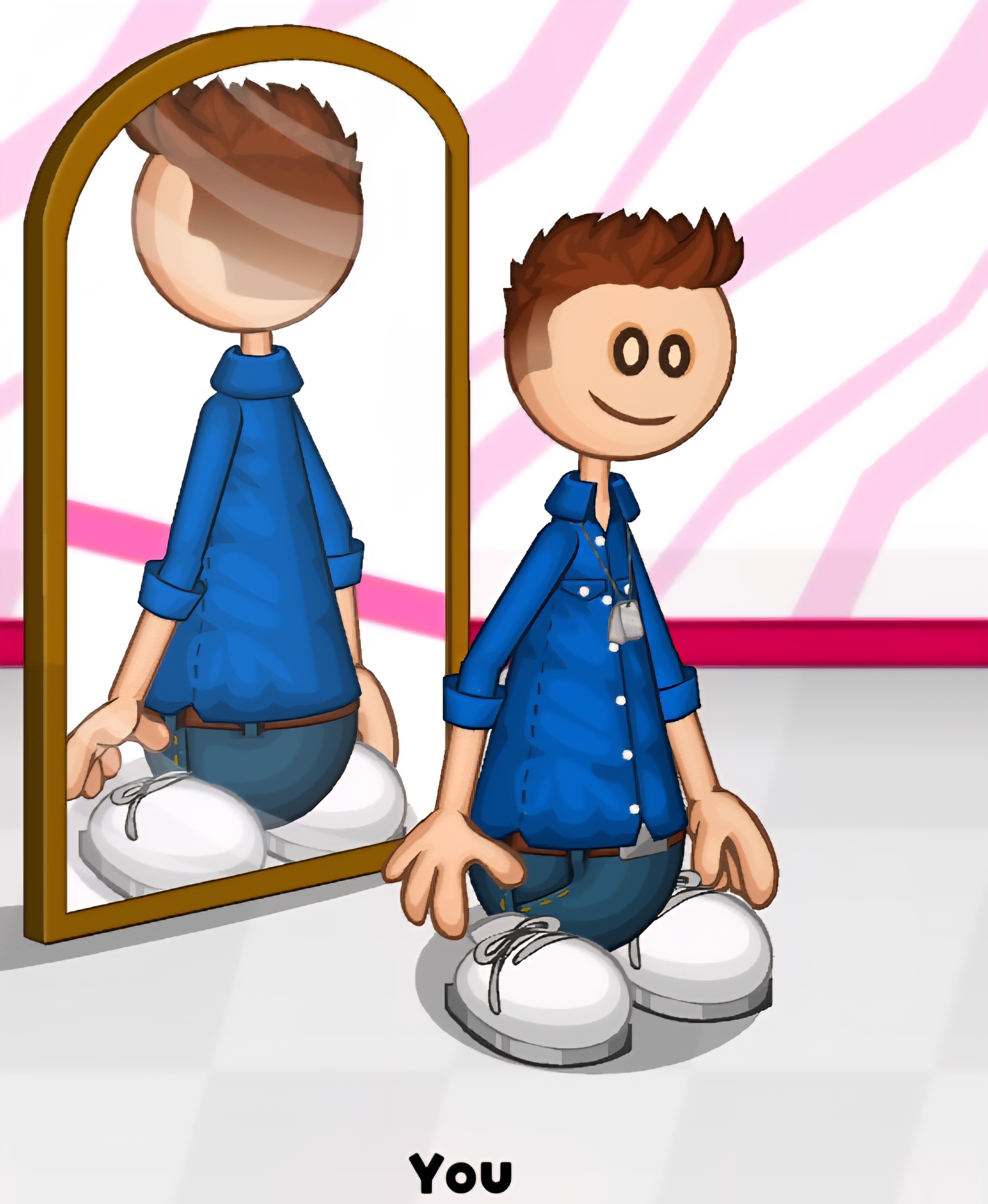
This got me thinking about my own experience with video game avatars. Since I was a child, I would always, without a doubt, choose to play as the male character and not the female character (even though I was AFAB). Like whether it was Mario Kart or Papa’s Hotdogeria, my character had to have the ♂️ selected. Even when I would play board games like Clue with my family, I would always choose Prince Azure over Lady Lavendar. I remember feeling some level of guilt for picking to play as these characters as I started to approach middle school age, but I literally could not force myself to pick the others.

Screenshot of my current Papa's Hotdogeria avatar
Screenshot of My Current Papa’s Hotdogeria That Doesn’t Totally Look Like Me (Best $1.99 I Ever Spent BTW)

Not to get too vulnerable or personal or anything but I’m going through a bit of a gender journey at the moment and this has actually been something I’ve been reflecting on for the past couple of months. My desire to “be” the boy characters in these games, I’m starting to believe, was likely a projection of what I wanted for myself in real life. This didn’t exactly feel like something I could be capable of when I was 8 so I was confined to doing it from behind a controller or keyboard. However, I think I was actually lucky to be able to somewhat experience worldly interactions (even computer-generated ones) from the perspective of the body I mentally felt comfortable in even though it didn’t match my physical body. 

Some people get tattoos and piercings to feel more appropriate within themselves. I, and many others, chose to take it a different route (not that I haven’t also partaken in the former). By accepting virtual avatars as an extension of myself, I allow myself to learn about my own identity and perform it (think “doing gender” in my case”). I think we are all lucky to be able to have this type of outlet for exploration and expression and we shouldn’t take it for granted. I hope we can find even more ways in the future for people to safely/freely form their identities in terms of embodiment.