
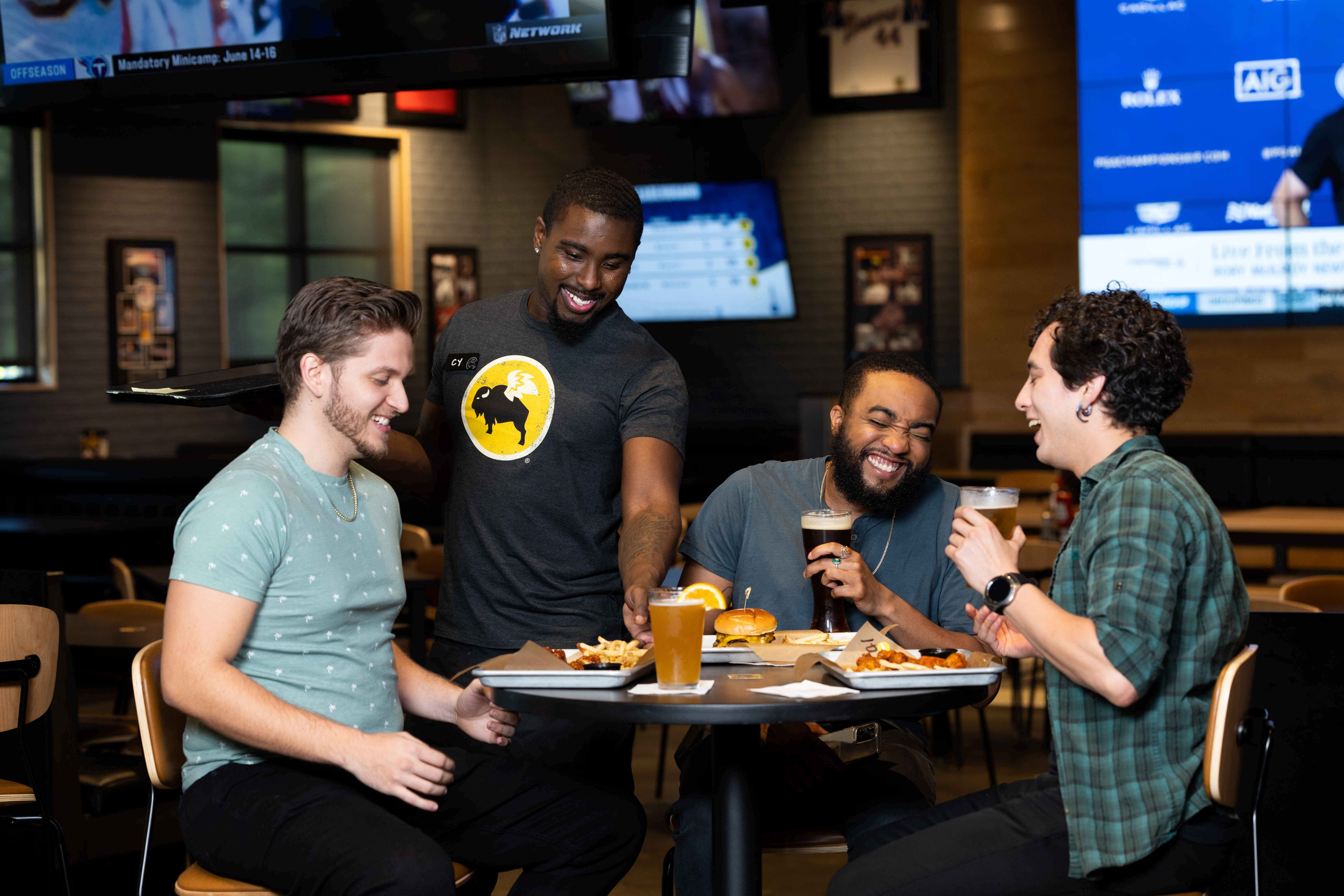
In the past three years, I’ve worked at two different jobs that have an aspect of food service. I’ve never personally been a server (aside from the two tables I served one day when we were short staffed at Buffalo Wild Wings) but being a server means relying on your customers’ generosity to pay your bills. From what I’ve seen, this leads servers to make many, many, MANY assumptions about their customers from the time they walk up to the host stand to when they walk out of the door.
The main factors that come into play when determining if a party will be a “good” (high-tipping, low-maintenance) table or a “bad” (low-tipping, high-maintenance) table are age and race. The age thing is simple. Young people, like teenagers, don’t tip or will barely tip. Older people are more likely to tip because they are accustomed to that social norm and have the money from their grown up jobs to do so. This makes sense to me and I don’t think it’s the most harmful of stereotypes to assume. The racial stereotypes are a lot more complex and 100% more harmful.
These stereotypes, in my experience, include (but are definitely not limited to) a White family will tip well, Black people will not and will ask a lot of their server, large groups of Hispanic will likely order a lot of beers and tip highly as a result, South Asians (often grouped together and labeled “Indians”) will ,without a doubt, not tip a cent, while East Asians don’t have much a reputation for being a good or bad in regards to tipping. Within the last month or so, I’ve heard some of my coworkers talk about how happy they are that it’s “snowing” (aka most of the customers at the moment are white) and when I was at Buffalo Wild Wings I remember an instance when one of coworkers paid another one of my coworkers to take a group of Indian people who came in pretty close to closing (the one who served them ended up getting a handsome tip).
All of these experiences have reminded me of Chimamanda Ngozi Adichie’s ‘The danger of a single story’ speech. These stereotypes and assumptions are all based on a couple interactions and ultimately lead paying customers to be given shitty service regardless of how they plan on tipping. If, perhaps, my past and present coworkers were more open to seeing people (in both groups and individually) for what they actually are, they would earn the big tip they are so eager for. I understand that it’s difficult to serve a table that runs you all over the place just to not really get paid for any of it (most servers get paid around $3 an hour and almost entirely get paid with their tips if you aren’t aware), but viewing entire groups of people and perpetuating single stories doesn’t not help literally anyone.


This blog post truly read my mind as someone who has been a server for almost two years. Everything you said was very accurate. I think a lot of people in the service industry suffer from their own confirmation bias. They think a table won’t tip, so they don’t treat them with the best service, and in turn, their tables don’t tip to reflect it. There are also other factors involved too. When I tell people I make around $3 as a server, they’re extremely surprised which could be another reason why many don’t tip because they just don’t know. Additionally, a lot of people are from cultures where tipping isn’t socially acceptable or a concept.
I believe that confirmation bias and stereotyping is such a huge issue! We get fed so much racial stereotyping through out social media feeds and normalize racial jokes in our society that it can start affecting our subconsciousness and the way we perceive others.
Yeah, I’ve heard many similar things from friends that are servers. Also wondering if you’ve seen the TikToks where Servers break down typical orders at their resturaunt by race?
It really is unfortunate how easy it is for a joke to reinforce such harmful stereotypes that degrade someone, their income, and their respect for service workers based on their race. If anything, when something is worded in a playful manner rather than a straightforward hateful comment, it can be even more damaging as people are less likely to see it for what it actually is and the stigma will be shared among larger groups.