Being Girly Against the Grain

In the early years of Facebook, 2009 or so, my mom came across a long post that was being shared around by some people who were friends of her friends. The post was essentially an essay about why parents should never let their daughters play princess, because it would teach them to fall into traditional gender roles, think they need a man to save them, and to only value frivolous things like dresses and parties. My mom, having a 5 year old daughter (me) who loved all things princesses, was annoyed by this post and commented on it in disagreement. Her comment was immediately pounced on by a dozen people calling my mom a terrible person for letting me play pretend with princesses, saying that she is part of the problem and upholding the patriarchy, among other things. To these people on Facebook in 2009, allowing little girls to engage in stereotypically feminine behavior was a bad thing.

This is the kind of messaging I would receive for my entire childhood: being interested in “girly” things was bad and being interested in more stereotypically masculine things was better. I know a lot of AFAB people had the opposite experience and were forced into standards of femininity that they didn’t connect with, but that wasn’t my personal experience. I have always been a “girly-girl,” preferring purples and pinks, loving dresses and skirts, and being obsessed with princesses and fairies. From a young age this had made me the odd one out, but by the time I was 9 all the other girls in my class had fully moved away from ballet and Rainbow Magic books in exchange for soccer and Warrior Cats.

In no way am I saying it is bad for girls to like stereotypically masculine things, quite the opposite actually. Everyone should be allowed to enjoy what they want regardless of gender identity. But I do think that the pushback against femininity that I faced was in part an overreaction to previous waves of feminism. I think that in an effort to establish that girls were just as capable of being interested in and doing stereotypically masculine things as boys, it came back around to implying that stereotypically girly things were somehow lesser. I’m still very girly. I still love Disney princesses and Barbie, and I couldn’t care less about sports or superheroes. That’s just who I am. 

In the past year or so I have been so excited to see things primarily targeted towards women breach the mainstream through things like The Barbie Movie, Beyonce’s Renaissance Tour, and Taylor Swift’s Eras Tour, and so happy to see other people embrace feminine fashions in public through Cottagecore and Princesscore aesthetics. It makes me feel like maybe society is starting to value femininity as equal to masculinity and androgyny.

No, I Am Not Autistic

“Are you autistic?” A peer asked me recently with a genuine look on their face. They quickly added that they were on the autism spectrum, and were just trying to see if we shared that in common. I shook my head and politely said “No, I am not autistic specifically, but I have other neurodivergences.”

I’ve probably had this conversation, if in different words, over a hundred different times. I know I share a lot of traits and experiences with people on the spectrum, and a lot of people in my life from family, friends, and acquaintances, to near strangers, have seen that and mentioned it to me. I know that I do not always pass as neurotypical, and that is bound to raise questions and assumptions. I don’t mind explaining myself, I am used to it.

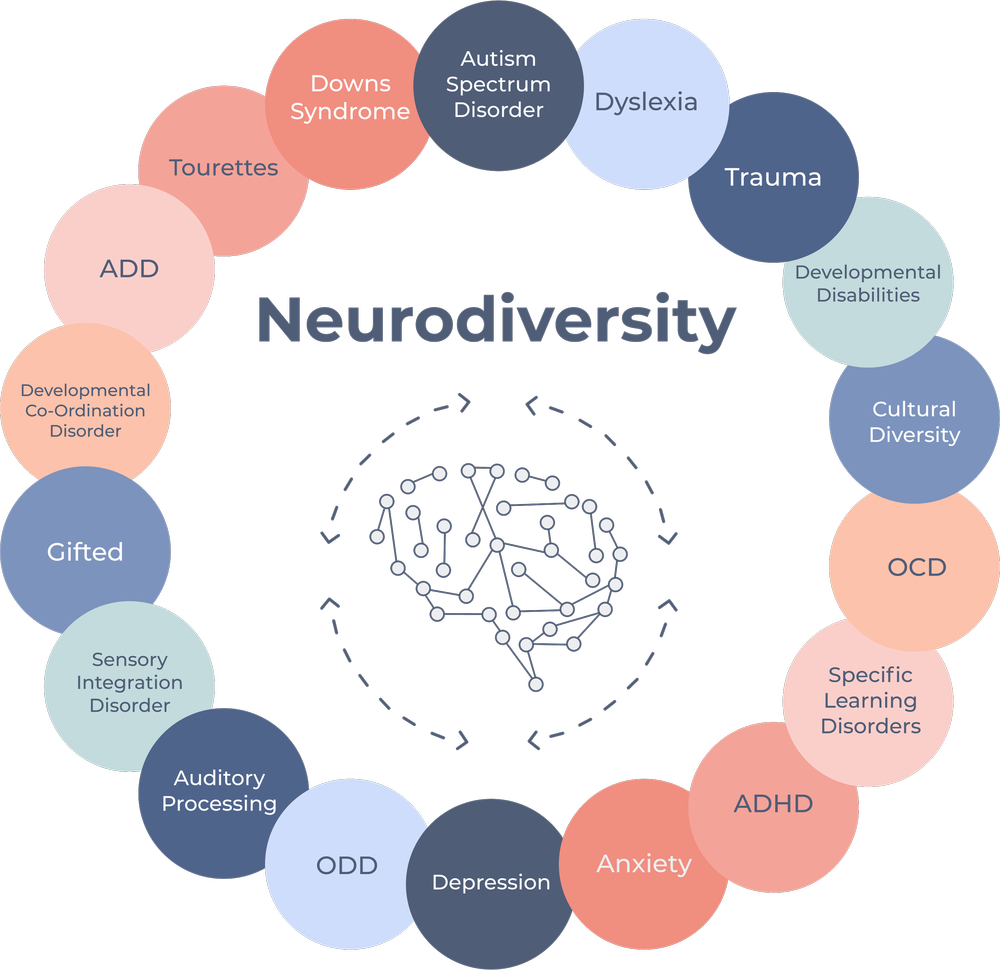
A lot of people seem to think that ‘neurodivergent’ just means autistic, and that’s not true. Neurodivergency encompasses all kinds of neurological differences (see graphic below for examples), a lot of which happen to have overlapping traits. For example, sensory issues, stimming, hyperfixations, lack of social awareness, and meltdowns are all traits associated with autism that all also occur in other neurodivergences. I have been tested for autism on three separate occasions in my life, and despite having all of the aforementioned traits I have always been told that my autistic traits are better described by other neurodivergences.

Like I said, I don’t mind people assuming or asking if I am autistic. What I do find annoying is when I explain that I am not autistic and I am not believed. People who barely know me have listened to me explain the previous paragraph and responded with things like “it’s ok to self diagnosis as autistic though, you don’t need a diagnosis” and a recent example “Oh, don’t worry I know lots of people who have only realized they are autistic once they get to college.” I know people mean well when they say things like that, but it just feels like I am being contradicted about my own identity, or that the people telling me those things think they somehow know my experiences better than me and my psychologists.

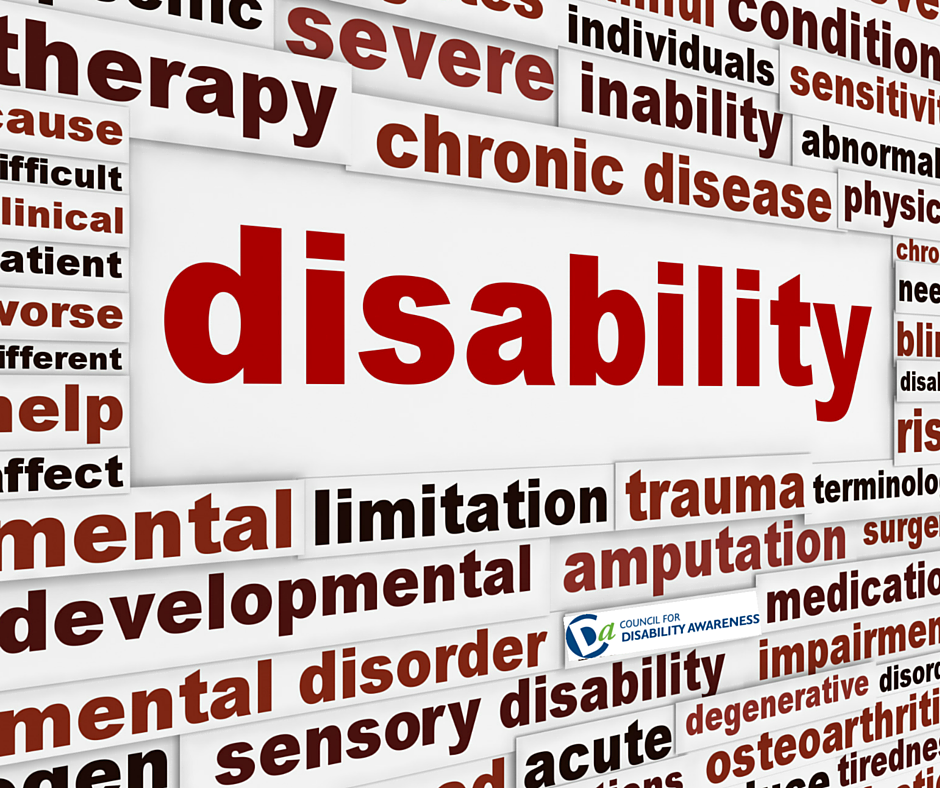
What Does It Mean To Be Disabled?

What makes something a disability? Can mental illness be a disability? If your disability is being treated, and doesn’t currently disable you, are you still disabled? Are you still disabled even when your disability goes from being primarily visible, to primarily invisible? If you were in Special Education as a kid, but have made Dean’s List the last 3 semesters, are you still able to call yourself disabled? Do you say you are disabled? Do you say you were disabled? Do you count your issues as a disability at all? Is that undermining the plights of actually disabled people? 

Last year I was in a math class, and two girls sitting next to me got to talking about the fact they were both people who grew up disabled with chronic illness conditions. I couldn’t help but overhear them, and as they talked I realized I related to everything they said. From not being believed by doctors, to getting denied accommodations in school, to missing out on formative experiences due to disability and trying treatment after treatment with little to no results. But as much as I wanted to join in and say “me too” I couldn’t. I didn’t know how they would respond. 

As someone with severe anxiety and panic attacks, I’ve always felt like I straddle the line between mental illness and disability. People don’t like to consider mental illness a disability. Even in writing this anonymously, part of me is scared that I will get criticized for calling it that at all. I feel this need to go out of my way to justify that my experiences were bad enough to get the label of disability, to put my heart and trauma out on the table so that no one thinks I am trying to claim a label that doesn’t apply to me. But that’s exactly the problem.

I don’t want to have to explain the fact that I was a completely non-functional child, a total mess. It’s no one’s business that I had daily severe panic attacks that would last for hours, complete with kicking, screaming, and endless sobbing. It isn’t fun to recount the fact that multiple therapists told my parents that my issues were too severe for them to treat. I don’t want to have to explain the years I spent in Special Education classes in order to participate in a conversation about disability.

I am not the gatekeeper of disability. I don’t know what counts and what doesn’t. But in my opinion, while not all mental illnesses are disabling, some of them are, and I see no reason for that to be any less valid than any other kind of disability. Maybe there is no one firm guide to disability, maybe it’s more fluid and complicated than that binary allows.

I am medicated for mental illness (and that’s OK)

My entire life I have been hearing a narrative that antidepressants, (a category of drug that includes things like SSRIs, SNRIs, TCAs and MAOIs,) are intrinsically bad or indicate some kind of personal failure. People have used different arguments, saying that antidepressants never work or that they work too well and cause people to become emotionless robots. I’ve heard people imply that it’s insulting to even suggest medication as a treatment for mental health issues. Personally I disagree with these assertions and I would argue that the bad rap mental health medications get is born out of bad personal experiences, ableism and misunderstandings of how psychiatric medications are prescribed. (I am going to mostly talk about antidepressants here because that’s what I have the most experience with and knowledge of, but similar principles apply to other categories of medication as well)

I started taking antidepressants over a decade ago, as a treatment for a laundry list of mental illnesses and neurodivergences that started presenting from the time I could speak. I would have severe panic attacks and meltdowns on a daily basis, each lasting for hours at a time, complete with kicking, screaming, and endless sobbing. Eventually after several failed attempts at holistic treatments I was prescribed Citaloptam, an SSRI (a type of antidepressant), to help me manage my emotions and prevent panic attacks, as well as benzodiazepines to take as needed when my panic attacks became out of control. Prescription medication was not the first choice treatment from my doctors or parents, no one wanted to have to give a 9 year old benzos, but it was necessary in order to keep me safe, stable, and calm when I would otherwise be a non-functional mess. I would go on to try a dozen different meds before the age of 15 before settling on the cocktail of drugs that I’ve been taking for the last 5 years or so, which is a combination of an SSRI, an NDRI, and a medication classified as an antipsychotic that is also used to treat anxiety and depression. 

Of course, meds alone don’t cure mental illness, that’s not how that works. Therapy, in the forms of group therapies, DBT, CBT, and individual talk therapy have all been parts of my treatment regimen over the years, and they have helped me immensely. Gaining accommodations, correct diagnoses, and removal from environments that exacerbated my mental health issues were also important steps in my journey. But the antidepressants and other meds I took were instrumental because they lowered my baseline level of distress and made me capable of participating in my treatments and helped me be able to access the resources at my disposal. I cannot stress enough how much antidepressants have improved my quality of life.

But that’s just my story, and my experiences are not universal. Not everyone needs meds, and meds don’t work for everyone, especially on the first try. If your mental health issues are mild, not severely impacting your day to day functionality, and not causing you significant distress, psychiatric medication may not be right for you. In that case maybe talk or behavioral therapies would be better suited for you. Even if medication is right for you, it’s quite possible or even likely that the first one or two or three that you try won’t be effective. (Often psychiatrists will cycle patients through several different SSRIs, despite the fact that they don’t work for everyone, before trying other forms of psychiatric medication. This is because SSRIs have been found to be the safest and least addictive type, as well as having the least significant side effects compared to the other types of antidepressants. The fact SSRIs have the fewest adverse effects make it an appealing first choice for doctors, but I digress.) Psychiatric medications are unfortunately not an exact science with a one size fits all solution.

But that doesn’t mean that antidepressants don’t work for anyone, in fact, for some people like me they are as necessary as any medication for any other kind of chronic condition. When people imply that the suggestion of antidepressants is bad, or that antidepressants never work and aren’t worth trying, it reinforces the stigma around them and mental illness in general. I fear that this narrative could prevent people from seeking professional mental health treatment, or cause people who are already on medication to feel bad about it, to hide that fact or stop taking their meds altogether. Taking psychiatric medications is not ‘taking the easy way out’ or a sign that someone hasn’t tried hard enough to treat their issues on their own, it’s a morally neutral act. Thank you for coming to my TED talk.