Do These Pants Make My Ass Look Bisexual?

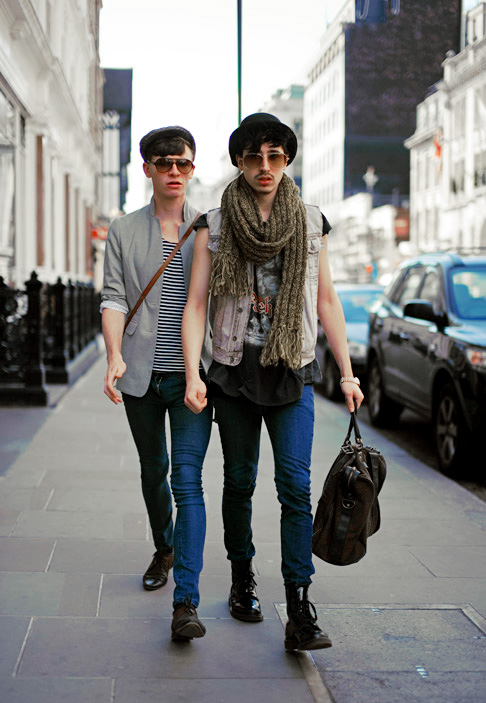
Why does what I’m wearing define my sexual orientation? I’m a 22-year old female, and I often change the way I dress, even on a day-to-day basis. I may feel like wearing a tight skirt, heels, make-up, and jewelry and shaving my legs on Monday. On Tuesday I might wear sweatpants and a T-shirt and throw my hair in a messy bun, and on Wednesday I may wear a baggy pair of guy’s jeans with paint stains on them, a tank top, and skater shoes but do my hair in a cute way. I enjoy dressing in any way that makes me feel comfortable, and I usually do.
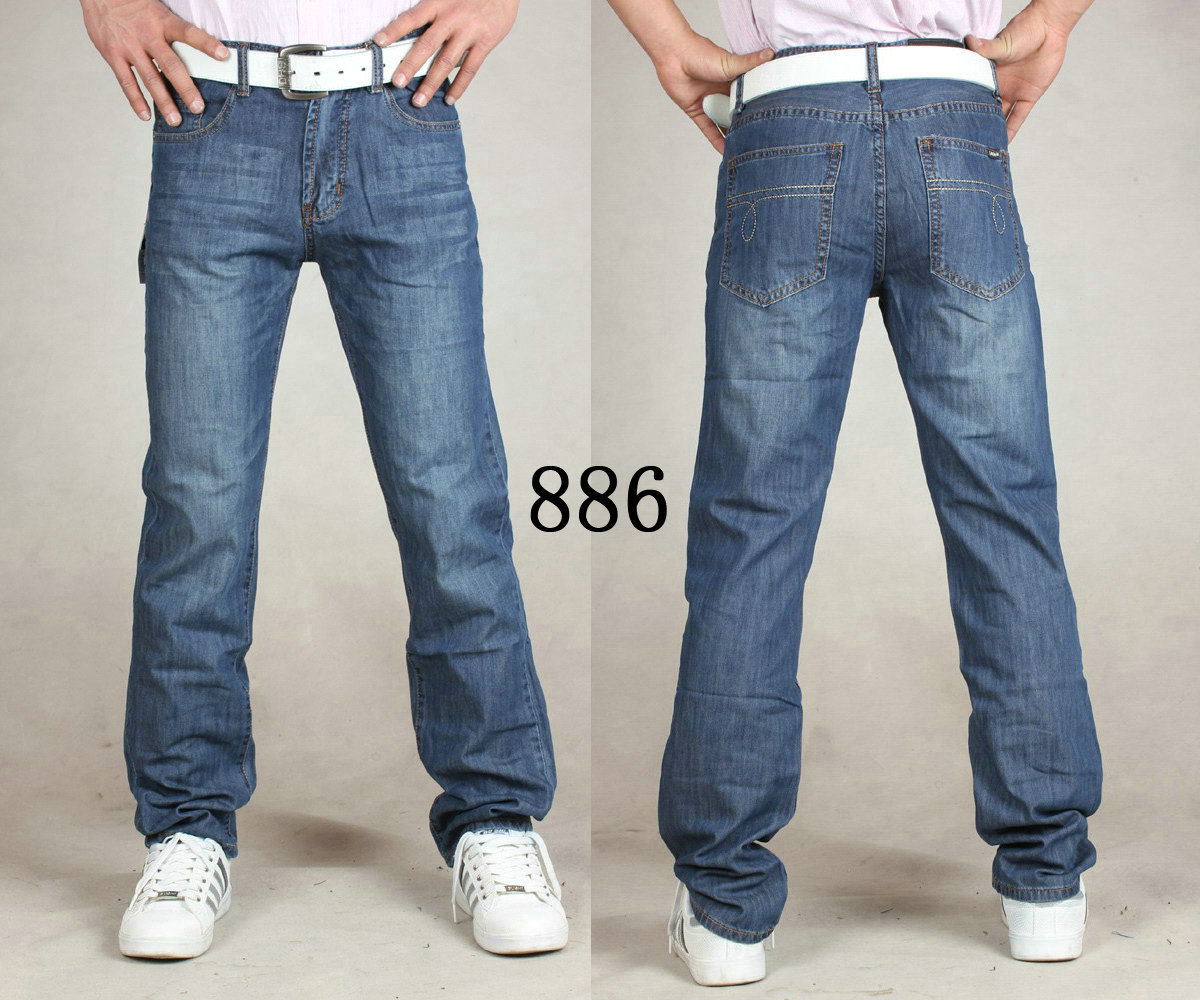
But recently, I got a girlfriend, and even though I dress the same way I’ve always dressed, with my same unique style I’ve always had, I’ve heard some interesting comments, even from people that I know care about me and aren’t trying to be offensive. But if I’m dressed up (and meet society’s beauty standards) I’ll hear people say things like “Are you really a lesbian?” or “I don’t understand how you’re gay” and when I dress down, or “more like a guy” I hear “You’re such a lesbian.”

And I’m not even a lesbian! I’m bisexual!
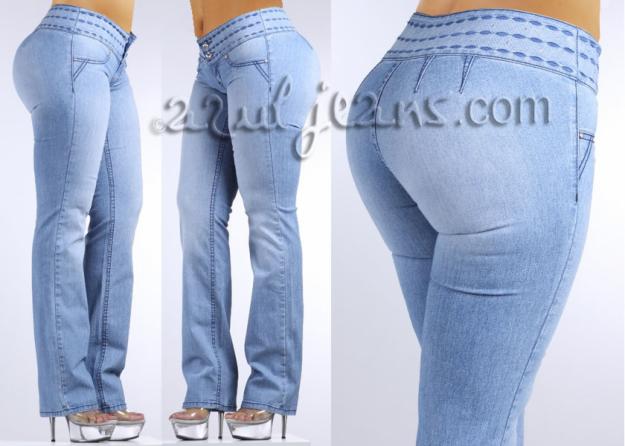
I feel as though society often judges people as being gay or straight based on what they’re wearing. A recent conversation with my (straight, male) roommates went like this:

Roommate 1: “What are you wearing?”
Me: “Jeans.”
Roommate 2: “She has a girlfriend, she can wear what she wants.”
Roommate 1: “She’s only half-gay.”
Me: “What does that have to do with it?”
Roommate 1: “Well sometimes you dress like the straight half.”
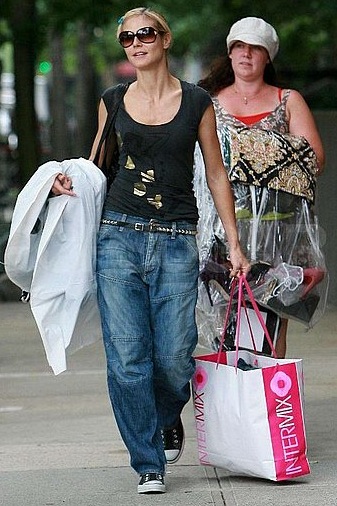
First off, I consider myself a hundred percent gay and a hundred percent straight, and I hate it when people call me “half gay.” It’s not like I find women attractive half the time; I find attractive PEOPLE attractive ALL the time. Second, how come I can only wear “whatever I want” because I have a girlfriend? It’s not like my girlfriend dresses me. Could I wear girls’ jeans if I was a lesbian? Could I wear guys’ jeans if I was straight? Why are my roommates only saying things now? Don’t the same rules apply now as when I was single? Or am I “more gay” when I have a girlfriend?

It’s also weird to me that clothes can make you look gay (“He’s totally gay, look at his pants.”  “I can’t tell if he’s gay or if he just dresses really well…”  “She looks like a dyke in those pants.”) or even make you look straight (“Can you believe he’s gay? He dresses so straight!”) but I have never heard of clothes making you look bisexual. If bisexuality, homosexuality, and heterosexuality are all valid sexual orientations, why don’t our clothes make us look bisexual? Where can I buy pants that make me look like I date boys and girls?
The Micropenis

I know that as a class we are a pretty open group of people, but because this is a public blog (and because I am unsure how people will feel about me posting pictures) I am going to refrain from doing so for this particular post, however, if you are interested in finding pictures they are very easy to come across online. I will also warn you that the sites I have posted do contain graphic pictures, so don’t visit them if you don’t want to see the pictures.

Interestingly enough, I stumbled upon this topic after our class discussion of a utopian society in which all babies were born with the possibility of all inheriting any genetic traits from the entire population. A conflict arose when two groups of people argued whether or not they should “exclude the negative traits” without ever specifying what those negative traits are or might be. Well, I figure this is easily something that could be seen as a “negative trait”- the microphallus or micropenis.

According to http://www.micropenis.biz/p/micropenis-information.html  and Wikipedia, a micropenis can be defined as “an erect penis that is 2.5 standard deviations less than the average human penis size”. However, the two sites differ on what the average erect human penis size is. The first site defines a micropenis as being 9 centimeters or 3.5 inches or less, while the second site defines it as 7 centimeters or 2.5 inches or less. According to the websites, 0.5-0.6% of the male population has this condition. But does having a condition mean that you suffer from it?

It is possible. Even the author of micropenis.biz says that he “suffers” from the condition. Some people think they no longer suffer if the condition goes away with some form of treatment.

In the 1960s and 70s sex reassignment surgery was recommended for the micropenis condition, and if the parents consented, the testes would be removed, an artificial vagina would be constructed, and the boy would be raised as a girl. Even at our very own Johns Hopkins Hospital they performed 12 of these surgeries. However, these surgeries were based on three assumptions that are now in question:

  1. gender identity and sex differences were solely a matter of social learning rather than biology.
  2. a male with a penis too small to put into a vagina could not find a satisfactory social and sexual place in society.
  3. a functionally acceptable vagina could be constructed surgically

Because intersex individuals and some of these patients believe that children’s sex organs, sexual identity, and gender identity shouldn’t be decided for them, or regretted the surgeries that have been performed on them, many of these surgeries have stopped and parents are waiting until their children are old enough to make the decisions for themselves.

Get Naked to Fight Negative Body Image!

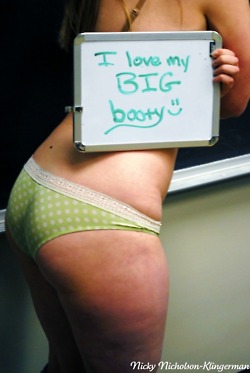
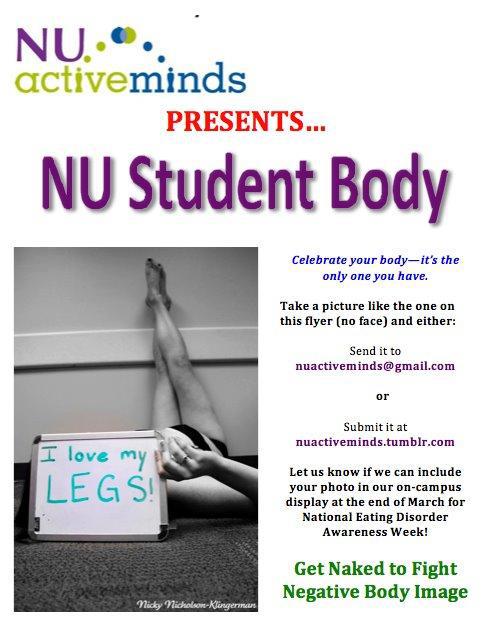
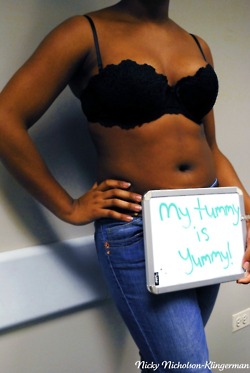
My sister, Lisa, goes to Northwestern University and put the poster to the right on her facebook page. I glanced at it, and immediately loved the idea. A student organization “Active Minds” is asking average students at the University to submit pictures of themselves with their clothing off (without showing anything inappropriate) and without showing their faces to put a cute slogan on a whiteboard or paper and say something positive about that part of their body. I asked her if there were more pictures like the one in this poster. She said yes, go HERE. So I did.

The pictures on this blog are the ones I found on that website. I loved the clever ways people wrote about their bodies and that everyone seems comfortable in their own skin. In a way, it reminds me of the POST SECRET website where people anonymously send in secrets about themselves they’ve never told anyone, and they are viewable publicly on the internet. But unlike PostSecret, this community is just college kids and they’re saying that instead of giving in to the public perception of how bodies “should” be, this is simply the way they are and they’re proud of that and they’re willing to put it in a public place.

I can’t wait to see the kinds of pictures people post, and am also curious to see if anyone will send in a picture of a scar they’re proud of, or if people will send in pictures of their tattoos or piercings like what we’ve discussed in class. I am going to continue to follow this project even after I post this blog and I encourage you to do the same.

The goal of this project by Northwestern University’s “Active Minds” is that they will have lots of pictures of average people who like their bodies the way they are and they will be displayed at the university for National Eating Disorder Awareness Week at the end of March. I couldn’t be happier with this idea.

As a child, I was a ballet dancer, and I was severely underweight. But I thought I looked great because the standard in that environment was, and is, that you are not supposed to have excessive body weight, even in areas like your hips and breasts where you should be gaining weight at puberty. I was exposed to eating disorders at a very young age and know several people who have suffered and nearly died from them.I really like the idea that they’re promoting eating disorder awareness and simultaneously promoting a positive body image. In fact, I like the idea so much I want to start something like this at UMBC. So my question is, if I did, would you join me, and do you think other people would join in?

Dove Real Women Beauty Commercial

Someone sent me this video on an interesting transformation between the way someone really looks and how they turn a “regular person” into a model. It shows a woman sitting in a chair and you see her go from an average person to them doing her hair and make-up, and finally taking a picture, photoshopping it, and putting it on a billboard. These are the images that we show to our society, yet nobody sees a problem with it.

Have no fear though, Dove is out to set the record straight. They want you to know that Dove is there for you, for real women! They want you to trust them to show real images of real women and make you feel better about yourself. No matter what the media shows, Dove is there for you and they believe in the beauty of every woman.

One thing that’s interesting to me though is that it’s a Dove commercial about promoting real women and real beauty, yet when you watch their other commercials, their models are thin and beautiful and promote the stereotypes of beauty that our society has put before us. I have an issue with the company pretending that they care about “real people” and “real beauty” when the way they act defies that. This makes me think that Dove is simply using a tactic to try and prove a point, or to get people who don’t like commercials or the media to start turning to them for an “unbiased” or “unconventional” model of what beauty is.

I think they are playing our society and using unconventional forms of beauty to attract new customers and promote their products. Now, instead of using conventional beauty to attract women by saying “if you use our products you will be this beautiful,” they are using the scheme “if you’re a real woman, you’re beautiful the way you are, and we support women being beautiful just like you, so knowing that we support REAL BEAUTY, you should buy and use our products.”

I think this is a real problem that needs to be addressed by society, but I don’t think doing it to promote your product is a fair way of doing that. Our concept of beauty clearly needs to change, but this is not the way to do it. Someone with nothing to gain has to put out a video or a commercial like this.