
the story on my skin

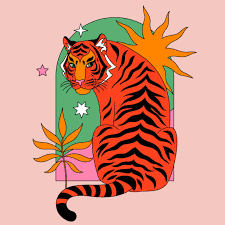
my first tattoo was a tiger. trigger warning: self-harm, SA
placed on my hip,
sized just a bit
too small for anyone else to see
unless they were seeing all of me anyway.

i got him because they symbolize
fearlessness.
and i hoped his courage would come to me
from seeing his bold inked form every day,
reminding me of my power.
(it works some days)

my second one was a rose.
they stand for love,
for my heart truly grows
when i think of the adolescent girl
who used to take a blade and hold
the tip to her own flesh to show
the world the hole inside her soul
consuming her wide, consuming her whole.
(but people just think it’s pretty; i don’t tell them i put the rose over my healed scars to remind me to never forget to love myself again)
tattoo number three came suddenly to me
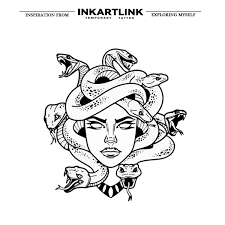
when i heard medusa’s story (a rendition).
the snakes were not to punish her more,
but guard her from more pain and gore.
they helped her spin an evil lore
where twisted forms and forked tongues
turned man and monster into stones
that served as everlasting tombs.
(when i heard this version of her story i cried and cried. she is not bitter and broken, she is bold even when she was burned.)
my lotus.
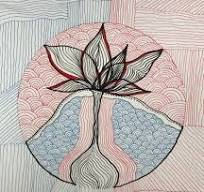
there is a tale of this flower
growing from muck,
through strife and strain
yet never staying stuck;
yearning to feel the warmth of day.
the lotus grows through greatest pain,
through scum and water in hopes to attain
a safe space to bloom and lay
its petals, arrayed in the dawning sun.
(if you’re here today, i’m proud of you. i hope you’ve found your safe space to bloom. don’t ever give up; don’t let the pain in this world make you forget there’s things worth living for. you are worth living for.)
It’s not me, it’s you

Growing up, I was a reading kid. The stories told in the books I read would captivate me, bringing me into a fantasy of a world that felt magical to experience. Then, with a snap of the teacher’s fingers, my beautiful bubble in dreamland went *pop*. Another lecture, another complaint to my parents about how I didn’t pay attention in class; all I did was read. I did try to focus, I really did. But it was so boring. I kept reading; my books kept getting taken away, but I would bring more.

School was weird for me. College is, too. I’m smart, but sitting in a classroom just listening to someone talk at me for ages is one of the most agitating experiences to sit through. I engage with new information by asking questions- sometimes in the first week of a new semester, I will raise my hand in a new class to ask a question, and in turn recieve a curt, impatient answer from a professer who prefers to be the sole talker and I, the passive listener. And I can’t do that. So I check out. Going to class becomes something I dread, it becomes a painful moment in my day that takes so much energy out of me to not fidget, not move, and just sit still and listen.

I was in special ed in high school. I had one class period every day where I was with other kids who needed a break from the intense informational overload that we experienced constantly. In other classes, though, the non-special ed teachers would treat me with irritation or disdain for dawdling or getting up and pacing (in the back, not distracting others) while listening to them teach. I had an accomodation to be able to leave class 3 minutes early to avoid crowded hallways, and I got yelled at by teachers regularly in front of the entire classroom because they kept “forgetting”.

I identify as neurodivergent, but I don’t ruminate on all the different ways that the education system and the workplace have behavioral norms and expectations that don’t align with the way that I naturally show up. I would crumble. I do crumble. I experience burnout constantly from the fact that many of my responsiblilites that I need to show up for are not structured to accomodate my needs or my best interest. The reading “The normalisation agenda and the psycho-emotional disablement of autistic people” aligns with the social model of disability, though I like this article more because the social model still largely unacknowledges mental disability. I resonate with the biggest point made in the article- It isn’t someone’s inability to fit into society that makes them feel psychologically harmed, it is society’s inability to accomodate their needs as someone who naturally diverges from the norm.

Your Disability Is In Your Head

Trigger warnings: mental illness, SA

My disability, as I’ve been told by my parents during some of the hardest years of my life, is all in my head. The accumulated and compounded effects of strife in my life that eventually developed into a deep, dark depression- it’s not physically tangible, so how could it have been real?

I have a unique relationship with my disability. The one that I grapple with the most is one that is acquired, not inherited or born into. I have post-traumatic stress disorder, and I am not a war veteran. I am a sexual assault survivor. My disability was acquired through experiencing trauma and then experiencing the more deeply horrific experience of utter social isolation, lack of support, and lack of real mental health resources for someone of my age, specific trauma, and cultural background. I was diagnosed when I was 13, before I realized I have ADHD, depression, and GAD. Most of those are co-morbid.

My relationship with my disability was very much through the lens of the medical model- something is wrong with me, it is my problem to fix, and in the mean time, *some* institutions and people may be willing to accomodate my different needs despite the burden that it is (that I am), but ultimately the onus of responsibility for my disability, for my neurodivergence and its physiological consequences, is on me.

I realized much more recently that this may not be true. This semester, it was reiterated to me in the form of Tom Shakespeare’s reading about the social model of disability. // In our view, it is society which disables […] impaired people. Disability is something imposed on top of our impairments,
by the way we are unnecessarily isolated and excluded from full participation in society. (p. 215)//

I don’t agree with every aspect of this reading, such as how mental disabilities are not acknowledged by the founders/ creaters of the social model. But I do resonate with this new way of thinking- that the structures we live within are not inclusive to all people that live within them. This leads some people to struggle much more than others to get through their days.

I only started truly believing recently that I deserve the accomodations I have. Not because I didn’t believe that I was disabled, but because I saw them as a privilege. But I see it differently now. Not everyone has to deal with what I deal with every day. That doesn’t make them better than me or more normal than me, but it means that their phenomenological experience of this world is not the same. Nobody gets to tell me that my disability isn’t valid when they have never walked in my shoes. Nobody gets to tell me to suck it up and find a way to make it through when I see how so many people are able to do with ease, the things that I struggle and toil to do.

Also, yes, my disability is all in my head, in a literal sense. But that doesn’t mean it’s not real.

They Suffocate You Out of Love

I began to grow breasts at age 10. Ever since the peripherals of puberty were on my horizon, my body (and my body is me) was not treated the same. I hardly recall a time that (how did Young put it?) my motility was not governed by the social laws of femininity. Laws, not constructs; it took me 15 years to begin to grasp the echoes of possibility that the rules I lived by were not fundamental, that I was not born into a natural hierarchy where my sex, my race, my disability, and my sexuality governed my worth and my right to take up space. I am re-learning a concept I was socialized away from as a young child- that I get to take up space, because I exist. Feminine motility // the movement of a feminine being born into a female body. Ever since my body hinted at a slender waist, since my breasts came into existence, the world I have lived in has not been the same. Unlike some female philosophers, I blame this not on the experience of womanhood itself, but on the experience of my womanhood which is experienced by others through their truths, their beliefs, their internal “laws”- which is in return projected onto me.

When I was 11, I wanted to swim with the other kids in the pool. They were kicking in the water, laughing, splashing, shrieking in delight. I wanted to join them. Most of the girls had not yet grown breasts, most possessed the lanky build that children often do. I stepped to jump in, still clad in a shirt; I’d forgotten my swimsuit at home. But I heard the mothers of the other girls talking about me. “Oh, is she going to swim in a white shirt? That’s kind of inappropriate, people will see her chest! She’s so irresponsible. Her shirt will cling to her [chest] and the men will see!”
I heard my own mother agree with them that I should stay out of the water, that it was the proper thing to do. They didn’t know I could hear them, they were going to wait and watch to see if I had enough “self-awareness” (shame about inhabiting a curvaceous body) to stay out of the pool. And I did, after hearing those words; my heart was a paper with “self-love” written on it that was crumpled and brought to a flame; a dark cloud called shame took over.