
pussy (n.) 1. Nice name for a cat

  1. Slang for women’s genitals
  2. Cowardly

Credit to Urban Dictionary for the lovely definitions.

Being born with a body that possesses a vagina has always been…well, there isn’t one word I’d use to describe it. It can be joyful at times, and a burden the next. It can hold me back from feeling immense happiness, and it can also make me feel on top of the world. I never thought I’d have complicated feelings about my vagina, but now as someone who is taking testosterone and seeing the effects it has on this important body part of mine: I can’t help but feel constantly conflicted. Don’t get me wrong, I am in no way saying I want phalloplasty. I, frankly, would prefer if no surgery had to happen within/outside/around my vagina. But I still can’t help but feel this weight of it pulling me back from fully being myself, and fully feeling happy.

Read more: pussy (n.) 1. Nice name for a cat

And why is that? I mean, the short answer is dysphoria. But OK, try a different path: even if I was cisgender, would I still feel conflicted in having a vagina? Could I join the cisgender women in arms and discuss how owning a vagina makes me the most badass, powerful woman on Earth? I mean, maybe. The reclamation of the vagina as an empowering symbol has its appeal to me currently: I’m a man with a vagina, suck on that Republicans! But still, that concept of my genitalia never meeting the “norm” for a cisgender man will always feel as though it’s holding me back. And yes, I know, the “norms” were created by folks who wanted a mass genocide of the Black, Brown, queer, disabled, and all things deemed “other” – so knowing this, why do I still feel the need to appease this massive dictator of a concept?

One answer could be: it’s just easier to submit to society. Another could be that I’m just starting to unlearn these things as the “norm”, so falling into “old habits of thinking” is prone to happen. And, perhaps, the third answer is just that it is also the “norm” for transgender men to feel dysphoria surrounding their genitals, to feel as though they are “lesser”. And maybe that’s the norm that I find myself stuck in: I have to be depressed about my vagina, because I’m trans and society says I have to feel sad about being trans. By actively going against this, and creating joy out of the otherwise dysphoric – it begins to open up a world of new possibilities. The thing that once felt as though it was holding me back, now holds significant power – just as it does for others.
Interview with Someone on the Spectrum

“Buck”, 25, is an able-bodied white transgender man (he/they pronouns).

Read more: Interview with Someone on the Spectrum

Q: When did you first suspect you were on the autism spectrum? How did that feel?

Buck: That’s a two fold question. I didn’t have the thought until the last few years that I could be autistic, but I have always known I was weird/different growing up. I knew I was different in elementary school, but I never had a word to explain it until now. But having since found the word to explain why I’m different, it was nice. It explained a lot, but it was also difficult because all of the autistic people I knew growing up were on the high support level, and I didn’t have an image of what I was “supposed to be” as an autistic person.

Q: Would you say your experience is universal, or widely relatable within the autistic community?

Buck: It’s not universal, but probably individual traits or experiences are relatable. It’s a blanket statement that life events and experiences are not always comparable, since my life experiences have shaped how my autism presents – which is entirely different for any autistic person.

Q: What were things you recognized as autistic traits that you did in childhood, and now looking back you’re like “ooohhhh, okay, yeah, that makes sense”?

Buck: I was always the “stick to the rules” kid growing up. I thrived on routines, and was the “narc line leader” in school. There’s one experience where my daycare teachers told us to “grab a buddy” when going out to recess – and when we all went outside, no one continued to stick with their buddy. This stressed me out so much that I ran to the teacher and said, “No one is with their buddy! Do you want me to pair them back up?” to which the teachers went “…no, it’s okay.” When I got older, I then had a decade-long Harry Potter “obsession” (looking back, it definitely was a special interest) – I would discuss intricate plot points to family members who did not care, and had to have every book and read them all (even if it meant buying them on vacation).

Q: What is your favorite stimming activity? Can you describe it to me?

Buck: Oh, I dunno. I’ve learned to mask all of my stims growing up, and I feel like I present stimming in a different way than others. My favorite would have to be scream-singing along to a song in the car, it’s a whole body sensory experience for me.

Q: Do you feel the world disables you as a person on the spectrum? Do you think the world disables other people on the spectrum?

Buck: Like, yes, but I struggle with the word “disables”. I personally have other characteristics that put me at a privileged place to where people will overlook my autism and instead describe me as “eccentric, easily excitable”, etc. Because I am male passing and white, that makes it easier to overlook. I think the world definitely disables autistic people, especially those with higher needs of support. There’s a spectrum, just like autism, where the world has effected people with autism based on their other identities, how they grew up, etc. It’s all intersectional.

Q: What is your point of view on identity-first language? How would you prefer to identify?

Buck: I prefer identity-first language (ie. autistic person), because I can also view it within the context of being transgender. It’s weird to me to be called a “person of transgender experience”, right? It feels like people are trying to separate the identity from the person, but these identities are important to me. You can’t separate being transgender and being autistic from me. But I know that is my personal opinion and feeling, and if others disagree – that’s fine. But for me, personally, it’s identity-first.

Q: What is one thing you wish was less stigmatized about the autistic community, or neurodivergent community?

Buck: Understanding neurodiversity in general. That people think in different ways. Not that there needs to be any accommodations to these different ways of thinking (because I wouldn’t know what that looks like), but just the idea that the way information is presented in a “normal” way doesn’t mean it’s the “right” way of presenting this information. Just the acknowledgement in schools/workplaces that there’s thinking in different types of ways across the board.

Q: Is there anything else you’d like to say or want people to know about you?

Buck: Nope! Thank you.

Dispair / *Despair

I have many impairments. I need glasses. I need tasks repeated, written down in planners, reminded of multiple times throughout the day, written in front of me, with a harsh deadline in order to get done. I even had braces, and should be using my long-lost retainer inside a hot-pink case to keep that “aesthetic impairment” in check (sorry to my future dentist). But I don’t think I would have ever considered myself disabled until now that I’m facing mobility issues.

Read more: Dispair / *Despair

To be frank: I still don’t consider myself disabled. I just think the possibility is higher now. I’m older (not too old), and have had incredible stressors placed on my body (an example being COVID in May, as well as the mental stressor of work and a deteriorating friendship) – it’s natural for things to start “falling apart” or “not working as well as they used to”. 

But buddy, if you have these impairments – surely you’ve been disabled this entire time! Like, sure, I guess. Except for the fact that my visual and cognitive impairments are the “more manageable” impairments that I face. I have glasses, although I need to go in to update my prescription every few years. I have ADHD, although I need to constantly ensure I can get access to adderall without jumping through ten thousand hoops – not to mention admitting my amphetamine results on drug tests are because of medication, something I am always embarrassed of (another conversation for another day). Mobility impairments aren’t in the same ballpark solely because the “solutions” are less accessible. 

In order to check that my ankles are chronically messed up, I have to have routine conversations with my doctor. This means testing out theories of new/different shoes, stretches, exercise plans, and pain medications. Some of which could help, but only for a few periods of time. Others can have no impact whatsoever, or even make my pain worse. Once these are all ruled out, then comes the tests. X-rays. Blood tests. Gait checks. Then the waiting. Then the results. Then the realization, whether good or bad – that I need help. Then the vulnerable accommodations. Begging to be taken seriously, if I was even given the advantage of being taken seriously from the get-go, which not everyone is privileged to. I’m fortunate enough to be working somewhere where the walk from my car and the building isn’t too harsh, but from Parking Lot 29/Walker Apartments (wherever there’s a free commuter spot) to Engineering is absolutely unbearable. So the disability pass – if I even qualify for one – would only be for school, which already feels like a debate that’s waiting to happen: are you really disabled? 

That’s when I circle the drain. Is it easier to just accept yourself as impaired, but not disabled? But then, how do you gain accomodations for such impairments? Do you just stick it out, saying it’s not worth it and continue suffering in silence?

Why has society ruined the idea of being disabled?

Honey-coated Flytrap

Honey-coated Flytrap

It’s fortunately very easy to tie our class discussions into real life/other classes I’m taking, has anyone else felt that way? One thing that struck gold with me in relation to our topic of bodies is the fact that women’s bodies within society throughout generations within a religious light have always been thought of as something that is a sin/sinful and that utilizing that body will result in horrible events for mankind. 

Read more: Honey-coated Flytrap

We’re taught through the Greeks that Pandora opened a box after the wise Zeus, her creator, tells her not to, unleashing the “bad” into the world. But the thing we later realize is that Pandora was never given a physical box you and I think of – no, this box (or pithos) was what most cisgender women have: a uterus. She opened her uterus (had sex), and brought forth the worst imaginable things onto mankind. Does that sound familiar? Like in a specific garden, I don’t know, in Eden?

The thing is, women are always taught to “keep their legs closed”, to “take up less space” – things that make them smaller, make their bodies smaller, until they’re practically nonexistent. And for what? So that men can pass down a story through generations about a sexually active woman who “ruined it” for the rest of humanity? If a woman is going to be known as a horrid being, shameful and sinful, should she not be at least allowed to have a little fun and take up as much space as she desires? As if, for example, women have desires outside of doing whatever men tell them to do? Are women allowed to have desires, to be tempted by fruit, or are their bodies too small to house such things that they must turn to other things to fulfill those desires, and then be banned from society? 

It’s a slippery slope from being a sinner or a saint – in Christianity, Mary is given sainthood by the miraculous conception of Jesus, but why is she exempt? Does a woman have to give birth to a miracle to be considered holy? Are their bodies not enough without holding the body of the next god? Who deems the gods from the men? If men decide, why are they demonizing themselves?

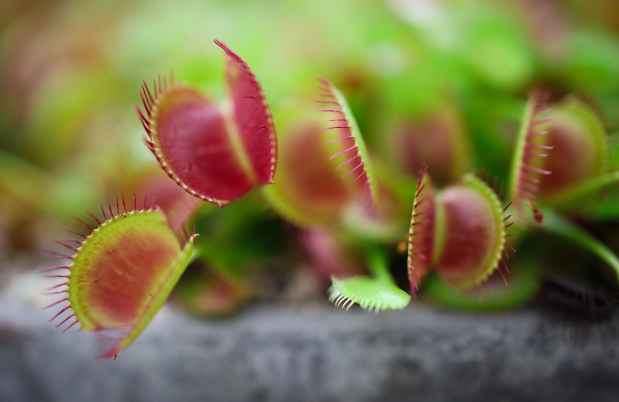
Are their bodies not enough for you, while simultaneously being too much that you need to restrict them from all their desires? Being a woman and being a man is similar to being a fly in a Venus flytrap – everything seems sweet until the jaws close down and your temptation is the death of you. You’re then just food for the plant.