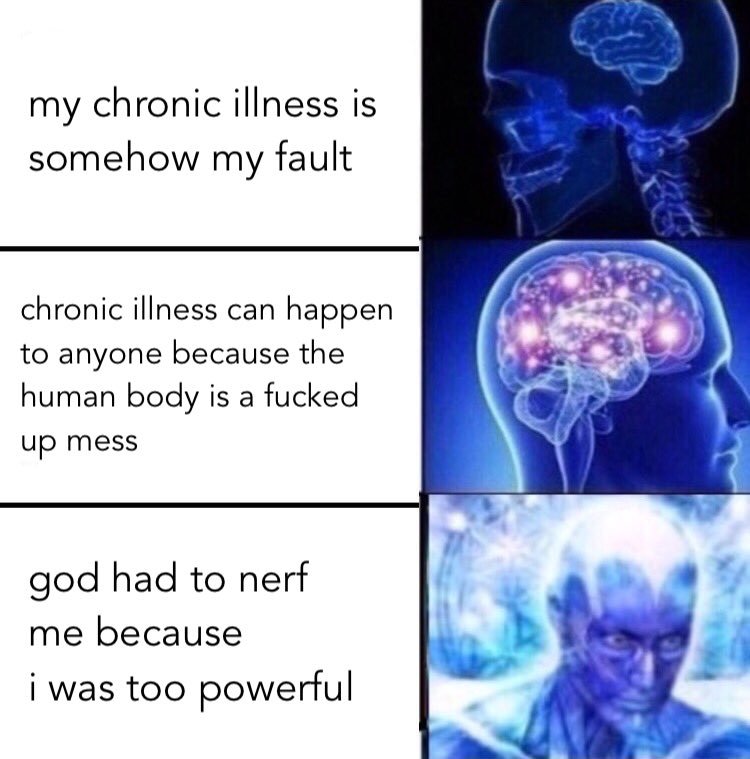
Being chronically ill has to be the funniest thing in my life. When I started a job last year, I was given a magnetic nametag to fasten to my shirt. I did it without noticing the warning on the back not to put it near pacemakers—a warning I assume the higher-ups had never considered either, because what kind of able-bodied young person has a pacemaker? An hour or so into the presentation, a muffled beeping fills the room. No one recognizes it, so we move on. And a few minutes later, beeping again. It’s coming from near me. Is it in my jacket? No, it’s literally in my body, because I put a very strong magnet right on top of my implanted defibrillator.
When I spent my first two years at University of Maryland, eastern shore, that was the first time where I saw black people of a different socioeconomic status to myself. I was born poor, from a dysfunctional family and somehow I am surrounded by people who had it better than me. It is an interesting take because we often talk about black people as a monolith, but that is further than the case. Blacks can be as racist as non blacks, and whites can be as poor as non whites. The discussion that we had in class considering this interested me because I am still trying to find myself. I am doing great things, I am even the first in my family to have a job with a major corporation in my 20s, but I see these people who are the same color as me, achieving even more. Then I realize that they could be wealthier than my family and or their family is functional. I end this with saying that wealth has no race however there are strong correlations with being a certain race and your wealth.
In class when we were talking about Phenomenology I truly, from the bottom of my heart, had no idea what was going on. I understood it to an extent or I believed I did but as we continued to speak it became more and more confusing. As we continued and related phenomonlogy to racial identity I felt like it clicked. As we talked about the question when someone asks “Where are you really from” it resonated with me. As a Black Biracial person, in my own experience, I usually deal with the questions of “What are you.” This categorizing is uncomfortable first of by how it is said. Saying “What are you” to me feels like I’m not a person but instead something that needs to be put to name. My body feels anxious becoming alert and tense. I start to notice my voice, the way my body moves, and how I look. Is this convincing enough? How do I look? Do I have to answer this question?
After that big question the next ineviable one is. “So…who is it? Which parent?” Ah, this question. The question that is suppousibly proving if I am this race or that race enough. These types of reactions have been less overtime as I learned about my cultures and became rooted in my identity to not let others put labels on me or control how I feel about myself but every now and then this phenomena of feelings rush in and make my body feel hyper aware and thoughts running faster than my feelings can make sense of how my body feels.
Phenomenology is the meaning in the experience that we are having in our bodies. How our bodies store this kind of feeling in the moment during and after it has happened. Knowing this, the body is truly a temple that can hold a lot more than we let on. These moments for me are examples of the body phenomenology when others ask what I am thinking it makes them feel comfortable knowing where to place me. Questions like these should be mindfully asked or respectfully given. Through out his career we will travel to introduce him to others
They’re always with me. When I laugh, when I cry, when I scream. To Everyone, it’s less that they are my friend who accompanies me and more that they are me. It feels like we’re twins who get mistaken for each other even though we’re not even identical; we’re fraternal. And Everyone is upset with me when they feel like I’m not treating my body like I should. Because she’s a girl’s body. And a girl’s body should not be as hairy as I keep my body. A girl’s body should not move as sporadically and recklessly as I move my body. A girl’s body should not wear the clothes and sport the haircuts that I have my body wear and sport. And yet, my body is still too much of a girl’s body to be anything else. A girl’s body is not my body but somehow a girl’s body is all my body could ever be. It doesn’t make sense.
It took a long time for it to sink in that Everyone thought I was being a bad friend to my body. I was being a bad friend by letting my body eat whatever they wanted, by letting their hair grow the way they wanted, by letting them move in the way that they wanted.
I’m not a bad friend. I take care of them, in the best way that I know how, in ways that nobody else knows how to. Even if my body was exactly like how Everyone wanted them to be, they would still never be happy with me or my body. Because no matter what, Everyone is only ever going to stare through my clothes and ogle our shape, categorize the color of our skin and decide who we are, pity the scarf on our head, and then pity us. Everyone is not going to care about anything that cannot be stripped off us with their eyes and placed into a box.
That’s why I stay good friends with my body. To keep us standing and happy.
I grew up here and have never lived anywhere else. The house I was born and raised in is about ten minutes from UMBC. Catonsville’s reputation precedes it–telling others from the county where I’m from, Catonsville conjures the immediate image of overwhelming whiteness. I remember as a kid spending the longest time being unaware of whiteness, of my own existence and participation in it, because it was almost all I saw. To me, at an age where my brain had not developed enough to conceptualize a world beyond the five-mile radius within which my home, school, and all of my friends lived, this was the world.
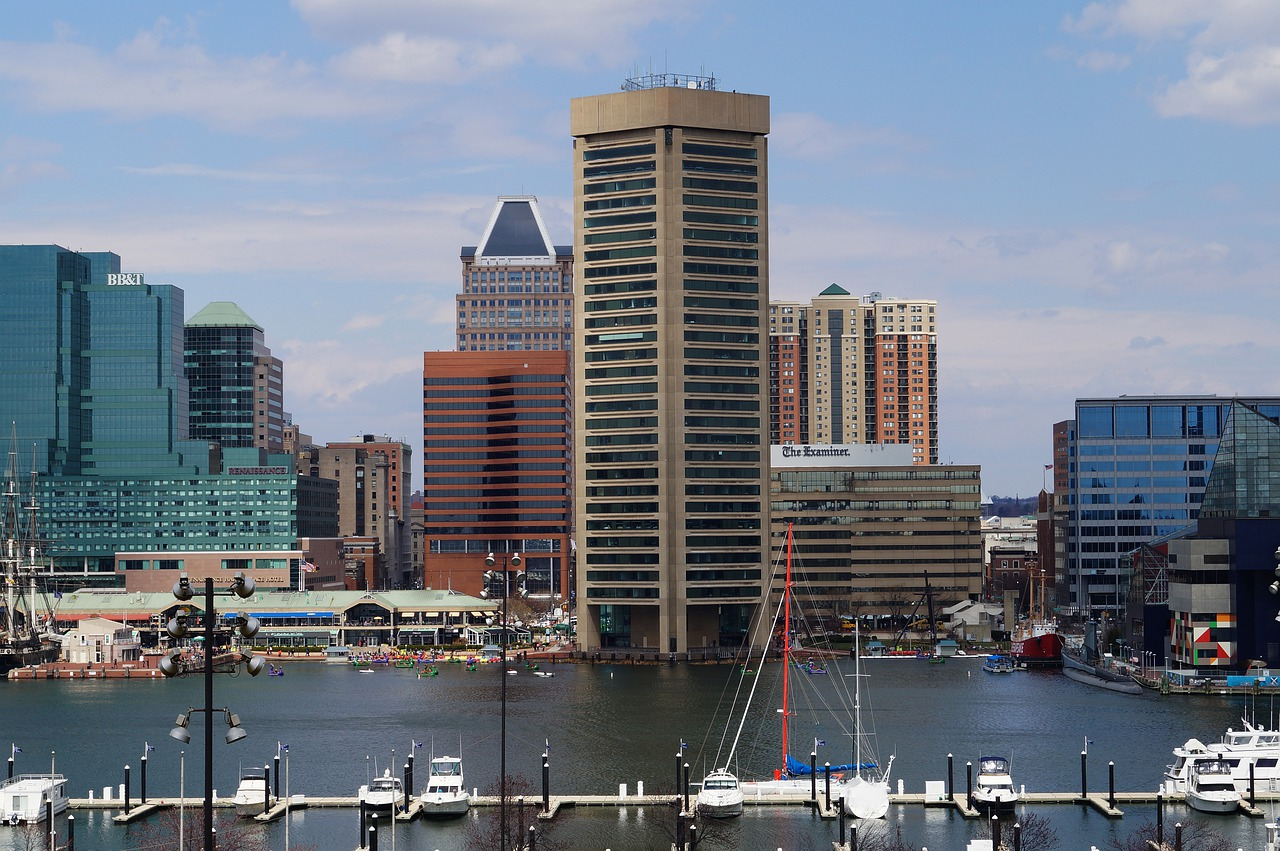
Baltimore itself is incredibly segregated. This is no secret. The county, too, is sprawling and deeply varied in its socioeconomic contents to an extent I did not realize was exceptional until I understood that most counties elsewhere differ from it in this respect. Telling someone you’re from Catonsville means something significantly different than, say, Dundalk, Pikesville, Owings Mills, and on and on. My elementary school–reported to be 68% white–is only about 5 miles from my best friend’s elementary school in Windsor Mill, an area with a high Desi (members of the South Asian diaspora) population and he tells me he went to school where almost all the kids were Desi like him. He and I didn’t know each other as children, and despite living so close to one another, there was almost no way we could have met.
With regards to racial phenomenology and race as a result of perception and a visible phenomenon, Linda Alcoff says that “A reduction of racism will affect perception itself, as well as comportment, body-image, and so on. Toward this, our first task, it seems to me, is to make visible the practices of visibility itself, to outline the background from which our knowledge of others and of ourselves appears. in relief.” I can’t help but wonder what would have happened if the plan to better integrate schools in the Catonsville area, an effort that was dually also meant to solve overcrowding, had been actually put into effect; would the realm of the visible impact the children from the school I grew up in (and the ones around it) in such a way where they would not grow up to become their parents, vehemently protesting the proposal to try and fix our problem with modern-day segregation? To be a child is to only know what you can see. The phenomenology of children is predicated on what is visually and socially available to them in the most basic sense, and they are still in many ways attached to their mothers; their first-person experience of the world is a world that has been carefully (or carelessly) curated by their parents. Making the practices of visibility appear visible means lifting whiteness out of its “default” positionality; for kids, everything they see appears intentional and salient, representative of the world at large. Failing to account for this and making invisible the experience of racial embodiment, my town is overrun with ghosts, with specters of possibility. Something could have been done. Something has not been done.
My mother, to me, is a hard-working woman. Growing up, she took on very difficult tasks that forced her to grow up too fast for her body to handle. When she was back home, she took care of her family, too big to fit in one house. Hours on end making food, cleaning the house, and later on working in a dangerous factory. Those beliefs passed down from hundreds of generations, of what womanhood is was brought with her to the United States and placed upon her children.
Nowadays, it hard to find someone do not at least one internet account. There are variety sites from education to entertainment and the first step is open new account aka the profile. The most active sites are to social media like instagram, facebook, and twitter where it is promising for connecting people, showing personal thoughts and expressing oneself. On social network sites, I think the profile pictures would be critical because it is a first thing I want to show and let people to find and to see. I find interesting that the profiles picture have more meaning about the one’s account than it just a photo for profile.
When I was most actively on facebook, I found it hard to choose a picture for my profile. I wondered a photo of myself is good enough to attract others or I should go with a picture of my interesting games and animes. There were always something that I want to share in order to let people know about me through my profile picture. At the same time, I liked to see other’s profile pictures that I might find interesting and wanted to add /follow. Especially, there were beautiful and sexy girls’ profiles that I want to connect when I was single.
Searching through thousand and thousand of people’s profile pictures, I think there are two kind of people. First, people are confident about themselves that maybe are their faces, their bodies, their styles and their talents, therefore, they want people acknowledge it. Most of them get a lot of invites and follows. Second, people are not confident and they will have a profile picture about something they may interesting at that time like their pets, their hobbies. They hope they may find some connections with people are the same interests but sadly there are few.
In general, it is just my thoughts about the profile pictures. However, what do you want to express through your profile? How do you think about other’s profile pictures?
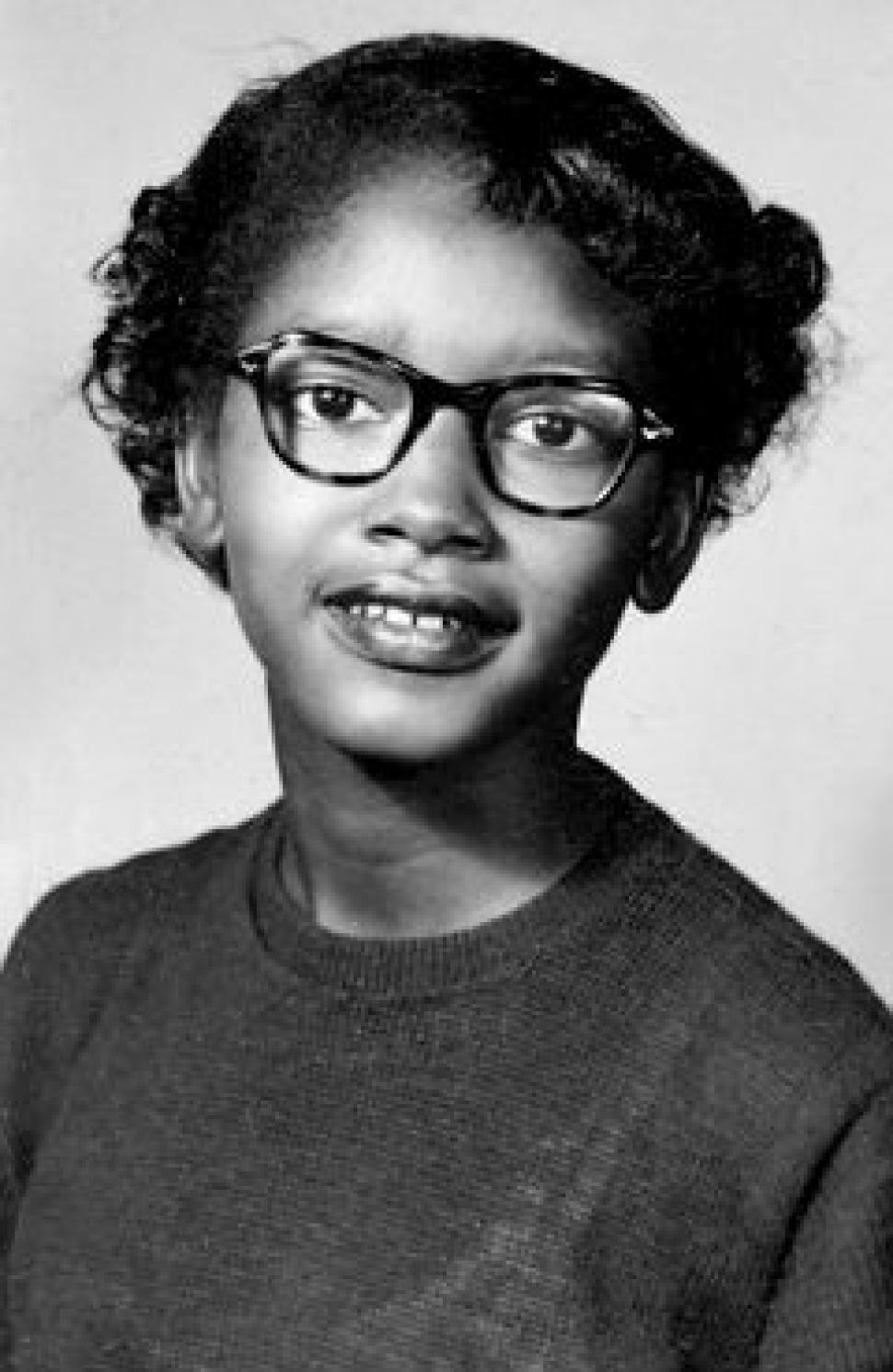
Women have gained a lot of mobility in reference to the spaces we are now ‘allowed’ to enter. Does it mean we are welcomed with open arms to enter these spaces? No, but hey it’s in our rights and is now seen with more normalcy then it was dating back to the 1950’s where mobility was nothing but the house, store, and possibly the bank. Looking back more closely into the 1950’s it represents the birth of the American Dream where women’s imagination came to die. Suburnian life came into full swing with white picket fences, one working father, at least 2 children, and a housekeeper, I mean wife, was all one lifestyle. The American Dream is called that for a reason, because at the end of the day it is unattainable and very few are able to reach the common understanding of what the Dream is. The outsiders are always looking into something that seems so close and is plastered everywhere as a goal and something to be achieved when in actuality it is to keep the working class working. Karl Marx speaks on this and views people as extremely creative but we throw ourselves into a hole of neverending labor. He states, “Humanity creates itself as the product of its own labor, ultimately objectifying itself through the work it performs.” Marx believes with the rise of capitalism that all we are is machines with no other purpose in life. I believe Marx is close to understanding what keeps workers working but misses the mark in terms of why people continue to work. For most there is no choice but to continue down the same deadpan path as certain groups receive less opportunities to advance in society than others. This can be as a person of color, a member of the LGBTQ+ community, or as a woman. Going back to women, taking up space as a woman was an unheard of term and women were quite literally told to take up as little space as possible and be seen not heard. For black women, it was not to exist at all and not be seen nor heard. Women like Claudette Colvin, who refused to move to the back of the bus before Rosa Parks did or Serena Williams who was talked about in the excerpt from Citizen as someone who would take up space in a predominately white sport helped pave the way for women’s mobility. Taking up space should be the goal to normalize women being able to do anything they want in any space they want. Women are more than capable of it and I know it will continue as women cautiously step into uncharted territory of being free to be anything or do anything they desire.
I want to be like others and do “normal” things like exercise or stay up all night with my friends but I can’t because if I do, I’ll spend the next 1-2 days in pain. Ever since I was about 4 years old, I have had awful, excruciating migraines, which had landed me into the hospital on multiple occasions. My body will suffer if I try to be like a “normal college kid.”
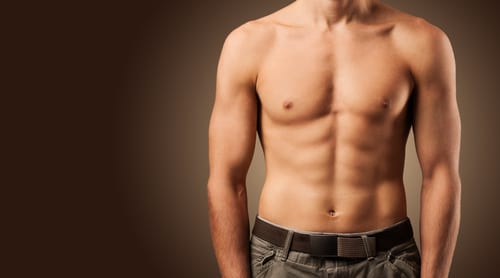
Everyone’s body is different. We could be short and skinny, short and fat, tall and skinny, or even tall and fat. I consider myself short and skinny. I have been going to the gym recently to improve my body so I can be in good shape and to also improve my health. I always get called skinny because I was not eating and underweight, but no matter how much I ate, my weight never increased. I guess you could say my stomach is a black hole. You could be born with good genes or bad genes where you could have a fast metabolism and eat more again, or end up with a slow metabolism where you are still full after a few hours and not be able to eat.
My eating habits have been bad, so I took it upon myself to try and eat more protein in order to bulk and be able to physically improve my body. I took a shortcut and started to use protein powder to get my daily protein in. So far I have been to the gym since march 2022 and my body has been getting more lean which has improved my weight along with the amount of exercise I am doing. I did not start to go to the gym due to body shame, but rather to improve myself and become a better man. It was interesting to see this quote in the article of “Made by the Work”, by Ed Slavishak when he said, “From long-haul truckers with chronic back pain and hemorrhoids to data-entry clerks with carpal tunnel syndrome, laboring bodies experience ailments and annoyances that are often hidden because they are experienced in isolation” (148). People may not realize that physical labor can either improve your body or damage it. I have seen people body shame because of how they looked such as a man having a curled body which made them look like a “troll”, but in reality, they had back problems due to work. Next time you see someone that has a “lesser” body than you, stop and think before you say something as they know what you do not.



 Unruly Bodies