Asians don’t get B’s

Overhead portrait of international students waiting for test in college. group of university mates sitting on the floor with books and laptops, doing homework.

Image by lookstudio on Freepik

“All Asians are smart.”

“All Asians get straight A’s”

I have heard these stereotypes all my life. My experience with education has not been the best. I disregarded my happiness and well-being for my education and this is the phenomenon of being a first-generation student.

I am the youngest of four in a first-generation Vietnamese household. My parents immigrated to America, with limited education and no knowledge of the English language. Despite that, they were able to escape from an environment of poverty and social immobility, in hopes of giving our family opportunities they never had. Because of their hardships, my parents placed a big emphasis on my siblings and I to only focus on our education. 

With the significance of education prominent in my household, I feared my parents’ disappointment if I failed to meet their expectations. To gain familial approval, I worked myself to tears. I did not have much of a social life, I rarely took sick days, and straight A’s were expected, not suggested. As a result of the immense pressure, I developed depression, anxiety, and panic attacks at the age of five. I developed insomnia because I worried about my future and if I was doing well enough to gain my parents’ satisfaction. I was destroying my health and I didn’t care because I wanted approval from my parents. It was only when my parents bragged about my grades to their friends that I got the recognition I desperately desired.

In an Asian household, mental illness is seen as a weakness. I was told I was crazy and stupid because of my struggles with my mental health. I felt myself go mad because I stopped caring for myself. Therefore, I concealed my “weakness”, to avoid judgment and shame from others. 

The stress and anxiety prevented my pursuit of happiness but drove me to work harder to achieve my goals. There’s at least a silver lining. So here is the ending of my story, I still struggle with my mental health but I learned that my happiness should come first even if I’m risking disappointing the people I love. I still do my best in school, but I know my limits now. I made myself proud. I have already made it this far, so who’s going to tell me I’m not good enough?

Grades do not define you, nor does the expectations of your culture. You are your experiences and what you learn from them. It’s a struggle being a first-generation student, but if you’re making yourself proud, then who cares about what anyone else thinks? Now that I’m older, I understand immigrant parents aren’t trying to break you down, they’re encouraging you to do your best in the only way that they know how because they weren’t raised to deal with emotions. It may not be the right way, but it’s a cultural thing.

Moral of the story: Do what makes you proud of yourself and never ruin yourself for anyone’s expectations.

Pink instagram post template, motivational quote for influencer vector

Image by rawpixel.com on Freepik

Kick Like a Girl

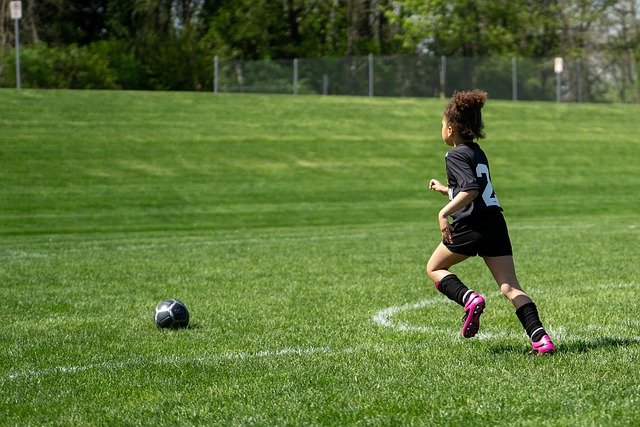
I have been playing soccer recreationally and in teams/clubs for the past 9 years of my life. And so, for the past 9 years of my life, I have been hearing comments like “Oh you play soccer? That’s so cute!” or “You play varsity soccer?” as if it’s the most unbelievable thing in the world or I play because its “cute”. So, you can imagine that seeing that we had to read an article called “Throwing like a Girl” by Iris Marion Young for class was entirely too triggering. I have heard the exact statement “kick like a girl” by all the little boys I used to be in a club with and even well into my teen years. I would go home crying in my room, thinking I wasn’t good enough and that I would never be as good as the boys on my team.

Continue reading

Struggles with my own phenomena

Phenomenology & Trauma 

When it comes to literature that isn’t required for school, then best believe I will finish a good book in a day. Except for one book. “The Body Keeps Score” by Bessel van der Kolk. A book I picked up in hopes of understanding the root and healing process of trauma without realizing how triggering and difficult it actually is to read. One of my coping mechanisms (which by the way I do not recommend) is to bury memories and store them in a place that I don’t ever want to revisit. Realistically speaking you cannot erase experiences. Experiences no matter how small or how big the impact will always stick with you. 

When we first approached the topic of phenomenology my brain immediately went to how I am struggling to read this book. I am struggling with my own journey of phenomenology. Identifying an experience is one thing, but having to dive into its structure or the meaning within that experience is a whole other level. 

For the sake of this blog I’ll dive into a pretty recent experience of what I would describe as phenomenology. Whenever I am walking and someone is coming towards me in the exact opposite direction more than likely if they are a white man they will not move out the way. Two things usually happen; I move out of the way or we bump into each other. Even after bumping into each other I often will not hear the words “sorry” or “excuse me”. This experience has been happening for years. Recently I have explored the structure surrounding this experience and how it shapes my actions. In the moment of this experience I become tense, uncomfortable, and start overthinking. Very similar to the way my body automatically reacts to walking into not so diverse environments. It feels threatened and unsafe. Before diving into the layers that surround this “phenomena” of coming close to a white man on the street, I would just lightheartedly say, “some people are just rude”. When in fact it has shaped my subconscious reaction in experiences to follow. 

Now that was a very real example. But also not something with that big of a magnitude in my life that I would feel the need to bring up in therapy or would associate to the trauma recalled when reading, “The Body Keeps Score”. Take that example as an outline of what happens when I turn the pages of the book and begin to revisit past traumas and realize the layers of complexity behind them. Oftentimes overcome with heavy emotion and dark moments of enlightenment I shut the book and put away my memories. One day I will do better with studying my own phenomenology. 

A Couple Words Shift Your View

What two animals can you see in the picture above? I will leave the question and answer for later. 

Who has never been impressed by a magic trick? Well both of these two questions have something in common and the special aspect is Phenomenology, a really weird word that if you have never heard of it might not understand anything of what I would express later but might have a first impression of phenomena and would be correct. In fact, Phenomenology is the study of everything surrounding phenomena at the eyes of the person involved like the person’s memories, feelings and body reactions, according to the situation. 

I gave two questions before going into depth with the main topic and these provide the examples to understand the topic of phenomenology. Starting with the magic trick, the magician before doing the trick talks or makes different movements to catch your attention and place it into these different actions so, you will not caption the disappearance of a plastic ball from his fist. It doesn’t really require the same preparation of a magician to exercise phenomenology, I can do it too! Let me show you! Looking back at the picture at the beginning of the text, mentioning earth, mammal or pet you should see a rabbit, but if I were to talk about the ocean, beach or river, you might look back at the image and see a seagull or duck. As easy as that, the idea of a single thing or object shifts by the conversation or thoughts going on at the moment.


“i don’t see color”

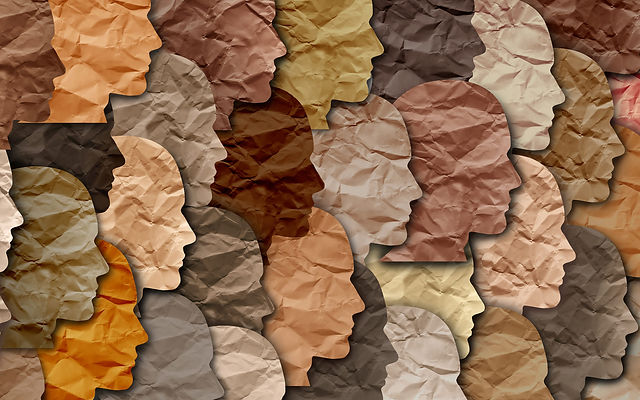
this is a typical response to racism, made with good intentions and in good faith. even in alcoff’s “Towards a Phenomenology of Racial Embodiment”, it is highlighted that the liberalism concepts of universalism purport that differentiating between race through color impedes equality, essentially saying that acknowledging color is unseemly. despite that good, this statement can be seen as ignoring the privileges certain people have over others and can invalidate the struggles some experience because of race. i’ve found myself trying to explain this to people in the past, and it is (not surprisingly) very difficult. when having discussions about race with someone who is not the same race as you, the conversation can become very defensive, very quickly. as a black person, i try to have these open discussions with friends and peers so we can all learn from each other. for some reason though, i never feel like i get much out of the conversation. since we aren’t used to having these tricky conversations, they continuously feel like uphill battles. talking about race with other black people is different, and easier: because our experience with race is similar.

it is extremely important in this day and age to educate ourselves on the experiences of everyone. but it just can’t be denied that it is typically easier, and maybe more comfortable, to surround yourself with people who have similar experiences to you. there is a lesser chance of a cultural barrier, and it can be easier to form connections because of this. at my high school during a school-wide assembly, my principal said that while he walked through the cafeteria, he noticed that most tables were primarily filled with people of the same race. he was perfectly correct: whether it happened intentionally or unintentionally the people of my school typically were friends with others that looked like them. originally when he stated this i thought “what’s the problem with that?” and in my opinion its not a problem: it makes sense that we as humans choose to be around people like us. but we can’t truly learn about the experiences of others if we don’t allow ourselves to.

the main reason why the “i don’t see color” saying confuses me is because i see color. a lot. i notice it in every new environment i’m in, especially in the workplace or at school. as a black person in the STEM field, it is very obvious to me when i am sometimes the only black person in the room. or as a black person working in an IT department, it is very apparent to me that i am one of the only persons of color in the office. or even just moving about my daily life, acknowledging the fact that because i am black, i will be perceived in certain stereotypical ways in public. my main point is, that having the privilege to “not see color” means you are desensitized to the experiences that people of color experience every day. we all, as humans, need to develop a better understanding of our shared and individual experiences. we also need to learn empathy for each other, and compassion. there is still a very long way to go for racial equality, but acknowledging one another, and our color, is the first step.

Continue reading

Aren’t Gender Neutral Clothes… Just Clothes?

The dreaded boys section and girls section. The first thing you see when you walk into a store that sells clothes is that divide between blue and pink.

On one side is camouflage, trucks, dinosaurs, superheroes, and dark colors. The other is glitter, bows, cute animals, hearts, flowers, and bright colors. I didn’t specify which one was boys and which was girls but I didn’t have to, did I? Why has society spent so much time telling us these are the only two styles that exist, and they exist only for one of two genders?

My first experience shopping in the mens section was in middle school. I started with graphic t-shirts because I liked the fit better (women’s shirts: why do you insist on being so tight around the armpits?). I felt more comfortable with the looser fit. I then experimented with other types of shirts (I’ll be honest, it was flannels) and jeans. Mens jeans just have so much pocket space. Come on, women need pockets too. Where else would we keep our rocks? Experimenting with clothing came with questioning my gender. Suddenly I was stuffing my hair into my beanie to see what I would look like.

I can’t remember how, but I grew out of that and started shopping in the womens section again. Whether that came with the embarrassment I felt while wearing mens jeans around girls wearing skinny jeans and skirts, or just a change in my personal style, I couldn’t tell you.

That doesn’t really matter because I’m back in the mens section. And what I’ve noticed while exploring my nonbinary identity is that there are now more shops that sell gender neutral or unisex clothing. But what does that mean? Scrolling through different websites, it usually just means mens clothing that they also show female models in. Dark colors, boxy fit, usually street wear. I know there are websites and shops out there that actually sell good gender neutral clothing, so just pretend I’m not talking about them. Right now I’m talking about stores like PacSun. Most of what is in their gender neutral collection might as well be in the mens section. It’s almost like they think gender neutral means traditionally masculine. Why are designers so afraid of putting traditionally feminine clothes on male presenting people?

Music: My Best Friend. You Know Me, You Understand, and I Love You.

I started writing this when I was elevated and even though it may sound exaggerated and heavily personified, I know that I was writing what I truly feel. This is how music is present in my life.

Music allows me to stand up to, address, and understand my emotions. Without you I wouldn’t know who I am. I am a person whose emotions feel complicated and out of the ordinary. My feelings make themselves more important than anything. Without you I would be dead. I would have nothing to comfort me besides the rain. Some of my friends do too, but the rain and you are not human and the closest thing to my inner peace. I’m alive because of you and I owe you my talent, truth, and full self. You have given me the greatest feeling I will ever feel. Nostalgia and therapy. You give me the greatest feeling and remind me every time I play you. You are the only thing that truly understands me because with you I am able to be my authentic self. You allow me to feel everything under the sky, and question. You are the only good feeling that multiplies in so many different ways that only deepens my feeling and understanding. I love you. You are my heart and passion. The people that I share you with are special. The people that I share myself with through you are special. The person that I will truly be with in the most loving and honest way will have you to thank for my heart. I may not even understand the magnitude of this and what it really means but I will try my best to give you my all and give you truly me. I deserve that because I owe myself love that is true. You understand me in a different language that I don’t even speak. I don’t understand. You are the only one that I feel comfortable with giving my complete self too. Not that I am afraid someone will but you wouldn’t betray me. You give my security. You give my thoughts and emotions shelter, food, and water. There’s more that I can say, but for now, Thank you. I look forward spending the rest of our lives together.