

Just like pretty much any other person in our era, I love watching TV shows and typically choose one to fixate on for a few months. At the moment, I’m watching Desperate Housewives and a particular scene in the show gathered my attention. The young daughter of one of the main ‘housewives’ is sitting in at an interview for the private school her parents are hoping she’ll attend. At the end of the interview, the principal says something along the lines of: “She’s in. We could use someone of Mexican heritage to fulfill our diversity quota anyway.” to which she responds “I’m Mexican??”
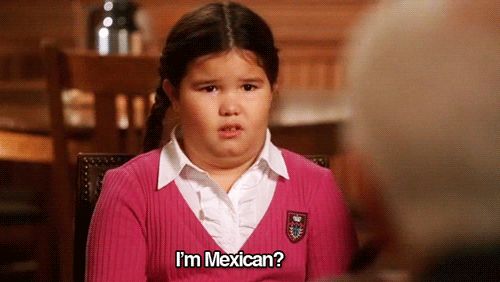
(the clip if u want more context! – https://www.youtube.com/watch?v=5_BhradG7ME)
And I’ll be honest, it is a pretty funny one-liner and it got a chuckle out of me. However, when reading Nonbinary: Memoirs of Gender and Identity, specifically chapter eight, titled “The Token Act” I couldn’t help but draw similarities between this scene and the author’s experience being Asian American as well as nonbinary and kind of being tasked with the role of representing her entire background and minority.
The author of this specific chapter, Sand C. Chang states “My identity is conveniently used as a symbol, especially for employers and organizations that want to show how welcoming they are of DIVERSITY! I hate the word “diversity,” almost if not more than I hate the word “multicultural.”” The author goes on to make an excellent point about how the job of being the token in a certain environment makes you vulnerable to being the representative of an entire group of individuals who are different from you. I truly loved this chapter because it put something I didn’t even know I was feeling into the perfect words, with a shared amount of anger and frustration.
Drawing connection to both this particular show and chapter, it made me wonder why being a minority deems you immediately entitled to a second job in which you’re required to represent the vast majority of the people who just happen to be of the same background as you. Whatever category you’re placed in, there are numerous subcategories of whom you’re completely unfamiliar with. For example, if you identify with being black, there’s numerous black people whom you cannot speak on the behalf of. Say for instance, you’re fully African American. How accurately would you be able to speak on the experience and lifestyle of Afro-Latinos? West Africans? East Africans? Black and White bi-racial African Americans? The same goes for all varying sorts of people. It just doesn’t make sense.