a token for a token

a token for a token

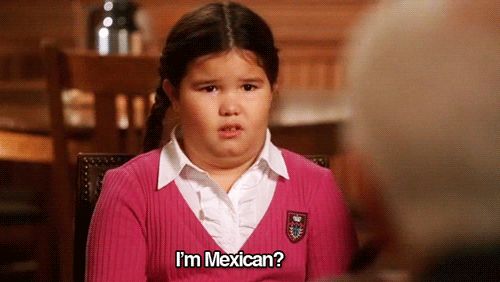
(the clip if u want more context! – https://www.youtube.com/watch?v=5_BhradG7ME)

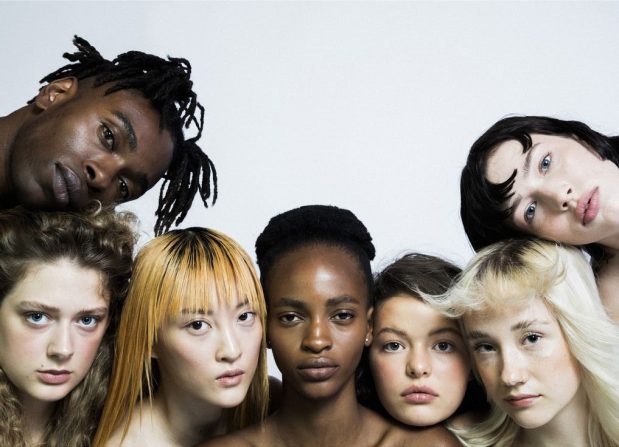
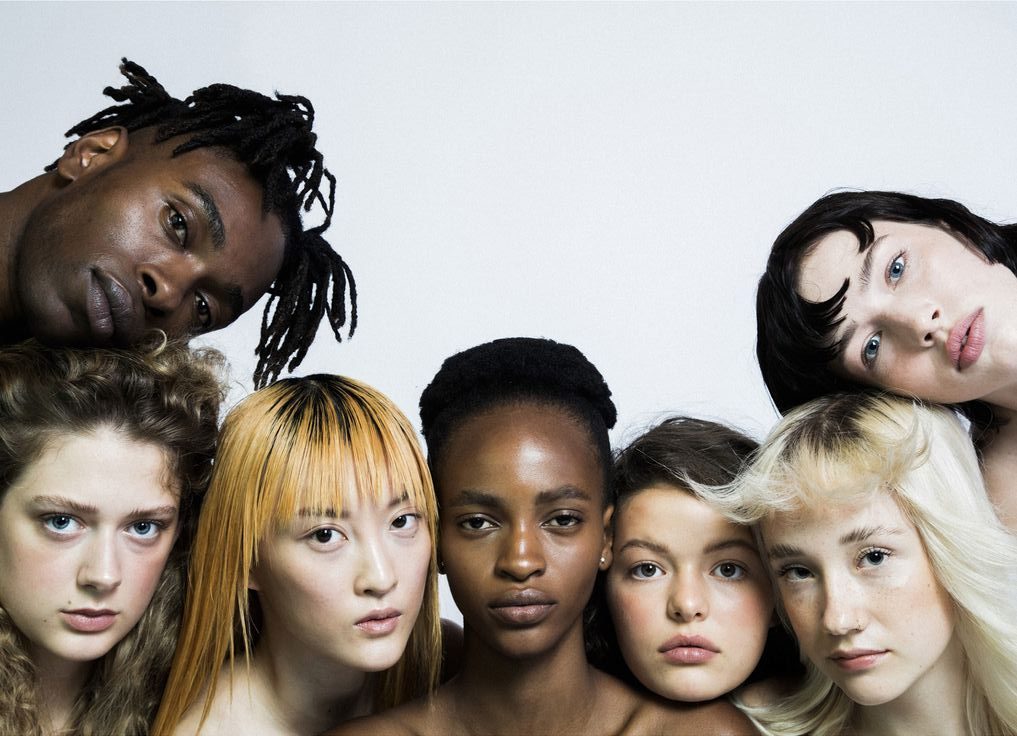
And I’ll be honest, it is a pretty funny one-liner and it got a chuckle out of me. However, when reading Nonbinary: Memoirs of Gender and Identity, specifically chapter eight, titled “The Token Act” I couldn’t help but draw similarities between this scene and the author’s experience being Asian American as well as nonbinary and kind of being tasked with the role of representing her entire background and minority. 

The author of this specific chapter, Sand C. Chang states “My identity is conveniently used as a symbol, especially for employers and organizations that want to show how welcoming they are of DIVERSITY! I hate the word “diversity,” almost if not more than I hate the word “multicultural.”” The author goes on to make an excellent point about how the job of being the token in a certain environment makes you vulnerable to being the representative of an entire group of individuals who are different from you. I truly loved this chapter because it put something I didn’t even know I was feeling into the perfect words, with a shared amount of anger and frustration. 

Drawing connection to both this particular show and chapter, it made me wonder why being a minority deems you immediately entitled to a second job in which you’re required to represent the vast majority of the people who just happen to be of the same background as you. Whatever category you’re placed in, there are numerous subcategories of whom you’re completely unfamiliar with. For example, if you identify with being black, there’s numerous black people whom you cannot speak on the behalf of. Say for instance,  you’re fully African American. How accurately would you be able to speak on the experience and lifestyle of Afro-Latinos? West Africans? East Africans? Black and White bi-racial African Americans? The same goes for all varying sorts of people. It just doesn’t make sense. 
I am my own label

I am me. I own no label but my name. for a major portion of my life, I identified as a lesbian; it was a truth to me, made a fact to anyone who asked. while it was something I obviously resided with, my friends at the time made it out to be my whole personality; not a day went by without being reminded of my orientation by my friends, it was all I was. what made matters worse is that I was hyper femme too. pink was in every outfit, even my all black outfit was paired with a pink sparkly belt, so to the world I was seen as the typical heterosexual ditsy pink girl. my friends constantly probed me to change, I couldn’t be a lesbian and dress the way I did; I needed to constantly be wearing markers. I was a label, only one label, nothing more. it didn’t matter that I loved drag, wrestling, building, coding, and makeup; none of my interests, which made up who I was, actually mattered to them. I was the butt of every gay joke and the first person looked at when the topic came about. As time persisted, I came to explore that women were not the only people I felt a gravitation towards, I confided in my friends about it, and the first thing they said was “Well, what are you then?”. It was like I was letting them down. within that moment, I felt something shift within me. I no longer wish to be a label, just a label. I like who I like, and that is a part of me, just a part. I know now that that friend group was not the best for me, and I do not blame them for their actions, as during this time, chronic online-ness became a pressing issue. they learned to gatekeep the community because the people they adored online were also gatekeeping, but I lost interest in being let in; I just wanted to be myself with no bounds. with this being said, I am still a very active participant in queer rallies and events. I strive to make sure that everyone I meet has a safe space within myself. not a day goes by where I’m not reminding people they are allowed to be who they are, open and free without constraints on being “enough” (whatever enough may be). No one will be made to feel the way I felt within those years, as if who I was was not enough to be let in. I now have a much better support group in friends, and I am forever grateful for them. They allow and help me explore who I am as a person, and remind me that I am complex and composed of a remarkable number of elements. in all, I am more than what anyone will ever make of me. I am queer; it’s just another part of me.

Why Do I Feel Like Nothing When Everyone Else Feels Like Something?

Have you ever scrolled online and see people confidently declaring their gender and sexuality like they’ve had it figured out since birth? “I’m nonbinary.” “I’m a lesbian.” “I’m pan.” Meanwhile, I’m sitting here wondering, why do I feel like nothing? This question has been bouncing around my head for a while now. But after reading Nonbinary: Memoirs of Gender and Identity, specifically Christopher Soto’s “What Growing Up Punk Taught Me About Being Gender Nonconforming” and Aubri Drake’s “Clothes make the Gender/Queer,” made me realize that maybe this feeling of nothingness isn’t emptiness, but simply uncertainty in a world that demands certainty from everyone.

Soto writes, “I tell my friend who still presents outside the binary that I want to be alive. I want to live. And so this is my gender: a desire to live.” That line hit me like a ton of bricks. For me, identifying as a woman has always been about survival. It’s safer, easier, less questioned. I don’t have to explain myself or fear someone reacting violently because I don’t fit their idea of what a woman “should” be. Soto ties their fear to capitalism and violence because the way safety, livelihood, and even love feel like privileges granted to those who conform. Sometimes I wonder if I’d feel freer to explore my gender if the world wasn’t punishing those who step outside the binary.

Growing up, everyone labeled me a “lesbian” before I could even figure it out on my own. I was the tomboy wearing my dad’s clothes, obsessed with comic books instead of makeup. My mom used to tell me to “act like a lady,” for simply sitting in my own home with my legs open. Then puberty hit, and suddenly I had curves I didn’t ask for. Aubri Drake’s words that “clothes started clinging to my body in all the wrong places… they stopped being a form of expression and instead became material to hide in”described exactly how I felt. I started hiding under oversized clothes because my body no longer felt like mine, but a spectacle for others. 

For years, I bounced between labels from bi, lesbian, pan,  and now to queer. Each one feeling right for a second and wrong the next. I even dated men exclusively at one point just to prove something, though my attraction to women has always been stronger. Every time I picked a label, I felt like a fraud and that everyone knew I was out of place. 

When it comes to gender, being called “masculine” or “feminine” makes me physically recoil. I don’t feel like either. I identify as a woman because it’s practical since it’s what fits easiest in the world’s boxes, but that’s never been the only reason. I’ve briefly thought about identifying as nonbinary, but fear always stops me: fear of losing cis privilege, fear of not being taken seriously, fear of violence. Like Soto, I get what it means to feel “illegitimate” just for wanting to live safely.

That’s why the label queer has been a relief. It’s flexible. It’s fluid. It lets me breathe. I don’t have to get a headache by searching for answers I don’t have yet. My gender and sexuality are personal, evolving, and maybe a little messy, but at the end of the day, that’s ok. 

A few months ago, before reading these essays, I went down a rabbit hole on Reddit trying to understand why I felt “genderless.” I remember scrolling for hours through different threads from queer and neurodivergent people describing the same sense of in-betweenness I couldn’t name. One that stood out to me was called “Does anybody else feel genuinely genderless?” on r/NonBinary, more specifically this one quote:

“When I lean more towards masc or femme with my presentation that’s all I feel it is — a presentation. Or really what it actually is is society interpreting my presentation as gendered. Ultimately it’s still just me. I don’t feel more feminine when I wear skirts — but it’s perceived that way.”

When I lean more towards masc or femme with my presentation that’s all I feel it is — a presentation. Or really what it actually is is society interpreting my presentation as gendered. Ultimately it’s still just me. I don’t feel more feminine when I wear skirts — but it’s perceived that way.”

That line felt like someone cracked my brain open and wrote down my thoughts. It echoed everything Soto and Drake described; that gender can feel more like a performance that others interpret than a truth you embody. Re-reading that thread and other ones I mindlessly scrolled actually helped me realize I wasn’t broken for feeling detached from gender. I was just tired of performing one.

I still feel like “nothing,” but I don’t see that as a bad thing anymore. That nothingness feels like freedom; free to move, question, and change without being boxed in. Reading these essays made me realize I’m not alone in that uncertainty. There’s comfort in knowing gender and sexuality don’t have to be solved; they can just evolve. Maybe “nothing” is true freedom. Maybe my gender isn’t nothing — maybe it’s just mine.

I Hate my Body Because I am Asian.

The only thing I remember that I wanted to be growing up, was to be white.

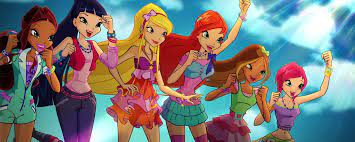
When we pretended to be our favorite characters, for some reason, I always wanted to choose the white girl with blue eyes in whatever girl group, even if there was an Asian passing girl in the group. I especially remember wanting to be Cloe from Bratz instead of Jade or Bloom from Winx Club instead of Musa. For two Halloweens straight, I was proudly Hannah Montana in my cheap blonde wig. I just wanted to be the extraordinary pretty blonde, fair girl. But I was a Filipino with dark brown hair and eyes and tan skin, born and raised here in America. 

Pictured is the infamous girl group the Winx Club. The fairies in order pictured together are Aisha, Musa, Stella, Bloom, Flora, and Tecna.
Winx Club characters together: Aisha, Musa, Stella, Bloom, Flora, and Tecna
Continue reading

What’s in a Name?

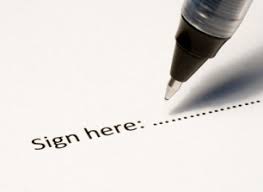
Image description: A white sheet of paper with the words "Sign here" followed by a dotted line. A tip of a pen hovers over the line.

Names, everyone has one (or several), and a name is used in everyday occurrences. You see your friend walking down the hall, you excitedly yell their name and embarrass or startle them, you see your pet eating something they shouldn’t, you shout their name and chase after them, you get the idea. A lot of people never really think much about their name, it’s their name, their parents gave it to them, case closed, but the issue of names comes up when one’s gender identity is brought to the forefront of their thoughts. As I try to untangle my own understanding of my gender identity, my name becomes an issue.

Continue reading