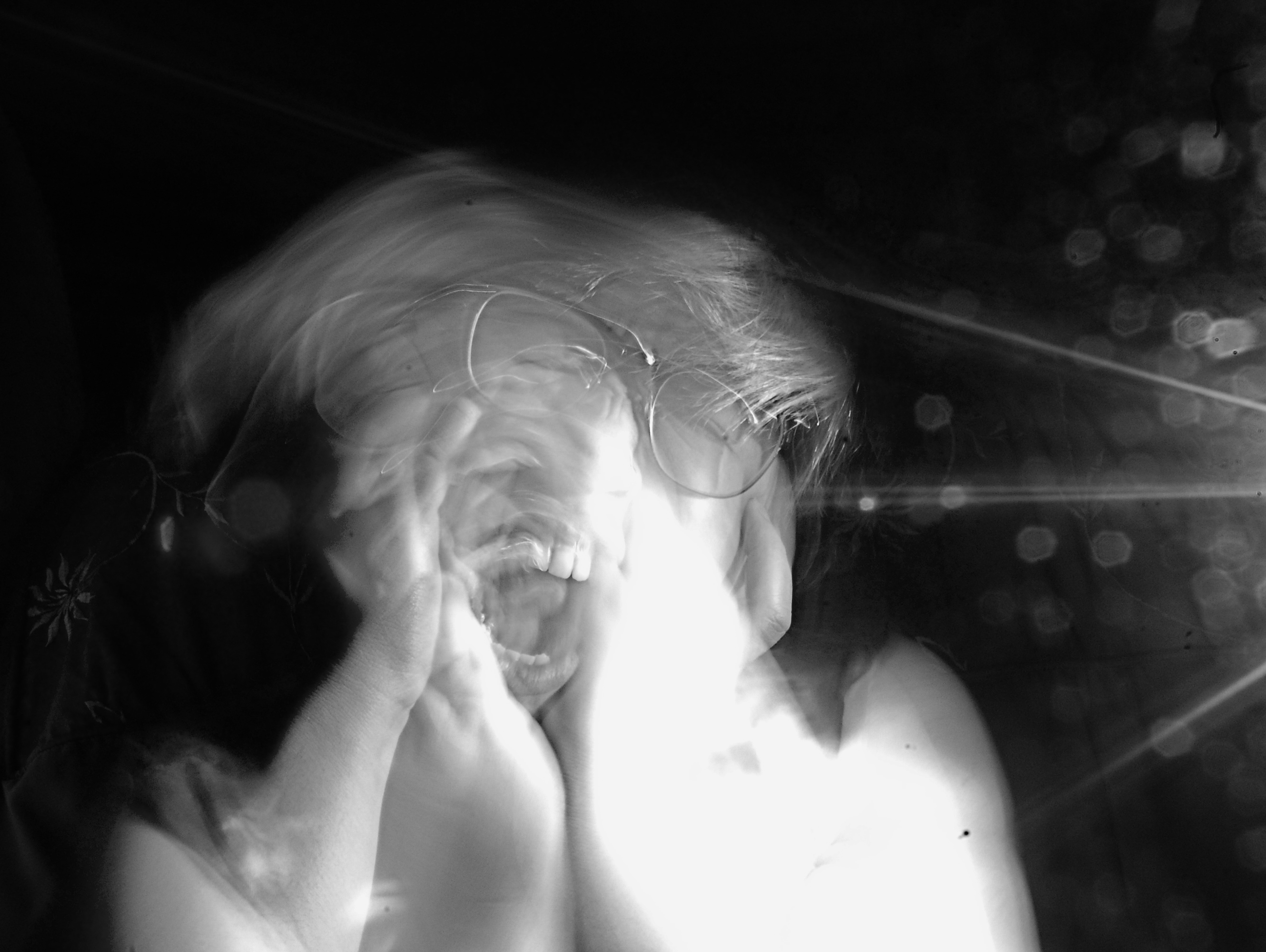
My friend and I had been talking about assault. I was talking about how if anybody ever approached me violently, I would use my entire body against them. I would kick them in whatever sensitive areas I could perceive, rake my nails into their skin, and use my teeth like a sabertooth tiger gripping the haunch of a primordial deer. I would make them regret ever thinking I was somebody weak. I would make them regret ever thinking I wasn’t prepared. I was excited for that aggression. That excuse for the energy I can exert, the dominance I can show, the unbridled aggression that can finally be released. And that concerns me. Why do I want to rip off some poor fucker’s ear? Sure, if they assaulted me, a defensive maneuver or two is probably warranted, but why would I want them to bleed. Why am I so excited by this visceral urge? Why is my being able to service my aggression so enthralling? That’s what I really want to talk about. The embodiment of aggression.
embodiment
Mirror, Mirror
Mirror, mirror on the wall,
who is the fairest one of all?
Is it the one over there, that skinny girl
or the one with the curves who should give the title a whirl?
Does it go to those wearing the latest brands
or those from the thrift store stands?
People who embrace their “natural beauty”
or those who wear make up as if its their destined duty?
Those dressed nice and straight laced
or those who take trends and happily deface.
…
Snow White you say?
Are you sure your opinion does not sway?
What makes her so special?
Her beauty is not so pure!
She sleeps with 12 men
and never goes outdoors…
(If you argue, take a look
at her skin which is as white as paper in a book)
No. I should not be crude.
My self worth is not based on how she is viewed.
Insulting her does not make me happy
it just makes me seem crabby.
No amount of name-calling will that change
I can only assess the problem in front of me, this issue I estrange
How dare you say I am not beautiful, not the fairest?!
You have no proof on that, I do suggest.
More than that, I know you’re wrong,
In my mind and heart your words do not belong.
I am beautiful, I do declare.
Your opinion, forever more, I do forswear.
Fursuiting: Creating Your Own Body

photo by kium on deviantART
If you’ve been around the internet for any extended period of time, or even if you happened by the Baltimore Convention Center around Bronycon or Otakon, you probably have seen or heard of “furries.” Furries, by definition, are individuals who are interested in the idea of anthropomorphic animals. They may merely appreciate furry art, or may draw it themselves. Some have furry characters representing themselves or multiple facets of their personality as “fursonas.” Some individuals may even identify with the animals portrayed or with animals in general more than they identify with being human. Individuals anywhere on this scale may create or commission costumes called “fursuits,” which vary in style, materials, and design.
What I find so interesting about the concept of fursonas and accompanying fursuits is the idea that it is possible, within this community and perhaps outside of it, to create an entirely new, self-constructed, and even non-human body to represent the individual as seen by the rest of the world.
Embodiment, Women and Drugs
An acquaintance of mine recently made a pretty generalizing statement that sparked some dissonance in me. My friend and I were chatting about a celebrity entering another stint in rehab and he said to me, “Drugs really kill a woman’s face. Us men are lucky.” As I ingested some chunks of this comment, a river of thoughts came crashing in.
Body learning: anxiety edition
In my notes from one of the first days of class, I have written, “embodiment -> we know because of our body; ways of knowing that exceed rationality.” This simple concept – that our bodies are sources of knowledge – is something I’d never consciously thought about, but as this idea about embodied knowledge started to sink in, I realized that my head has been learning a lot from my body recently.
—–
I started the week with particularly active butterflies in my stomach, for no particular reason. I assumed that they would ebb and flow as usual. But they didn’t; they stayed.
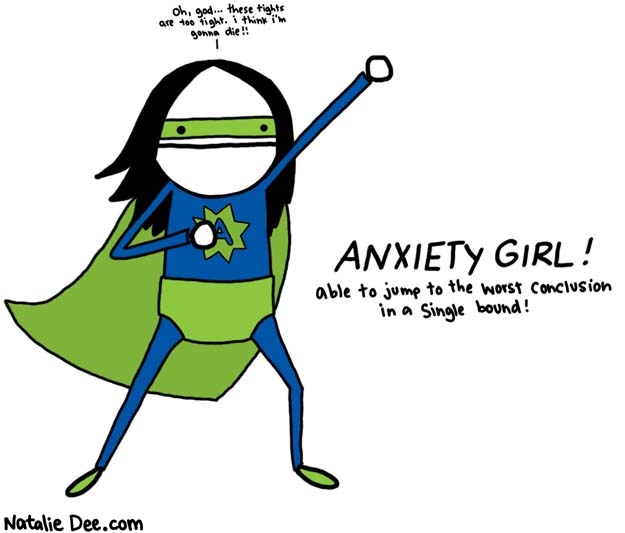
The next couple of days, my body started experiencing anxiety in different ways. My heart would race. I wasn’t digesting my food. I would shake a bit. I cried more than usual. I always felt on edge, like I was just about to have a panic attack but without the relief that can come after one. Continue reading
Adding a little sparkle to your genitalia
What would you like to accessorize today? Your ears? Your neck? Your wrist?
Perhaps your genitalia?
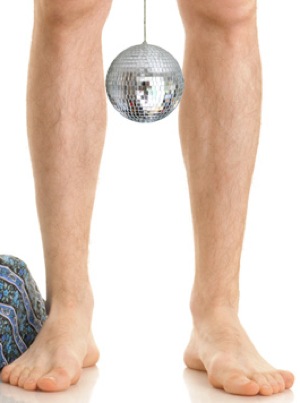
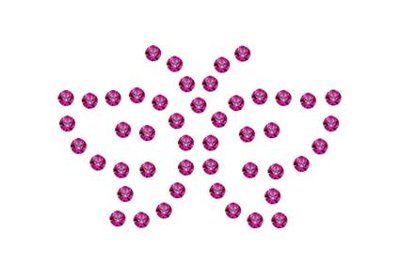
With vajazzling, which is the practice of placing glitter and jewels to the bikini area, and pejazzling, which involves Swarovski crystals being used upon the male genital area, you can now do so.
I recall my initial reactions to the aforementioned practices. I viewed them simply as odd methods of embodiment to engage in, without giving much thought into what they may mean in terms of body-related societal expectations.
While analyzing vajazzling and pejazzling, I wondered about whether or not there could possibly be a link between them and an increasing openness towards body parts that have been considered too taboo to even discuss at times. After all, the method of adding glitter, jewels, and crystals – products that shine, that are meant to be worn in order to increase visibility of oneself – draw attention to the places they are being applied upon. Therefore, it appears as though the phenomenons involve an attempt to incite viewer interest in the genitalia. By doing so, the practices seem to remove the earlier restrictive societal expectations placed upon genitalia (in terms of the encouragement of a lack of thinking about them, discussing them, making them more “apparent”, etc.), and replace them with a more unbarred mindset.
However, could vajazzling and pejazzling signal another form of thinking (that may be seen as not so transformative in nature)? Perhaps, they point to beauty standards that are shifting to encompass more body parts (i.e. not just the face) and that delineate that one must consistently change parts of themselves to appear better. In this case, those who engage in the practices could be adhering to a societal ideal that entails they should change their genitalia, or, at least, make it be more visually appealing.
One article states, “following on from the almost cult-level success of the ‘vajazzle’ comes its evil twin brother, the ‘pejazzle'”, delineating that not everyone is all too happy about these forms of embodiment. This may mean that society is still remaining closed-minded about genitalia, that it has not gained much ground in fostering a “need for change” mindset towards the parts, or maybe neither. What do you think?

The Embodiment of Death
The chapter for next week about the embodiment of death – in terms of finding ground between the ‘body’ and the ‘self’ – resonated with me for various reasons. One of the biggest things I noticed was the unwillingness to deny that a person’s identity has left the body after death, which is a theme that has become prominent in various science fiction stories. Iconic characters such as the vampire or zombie relate the idea that after death we do not have to give up our bodies. Reanimated bodies, such as Frankenstein’s monster, also seem to feed into a belief that the remains of a body can be recycled to create new life (or something similar). Furthermore, the father in Pet Sematary who buried his dead son’s body within the grounds that were known to reanimate bodies did so to cling to the fact that his son would return once again after identity and body united.
These representations in literature and media walk a line between trying to beat death and keeping claim over your body, but ultimately there is something in the characters that lacks humanness. Vampires, zombies, Frankenstein’s monster, and the little dead boy from Pet Sematary all lost their identities after death and were changed completely. Something about the mysterious nature of death – one that we cannot completely have knowledge about, yet we all will experience – feeds into these representations of bodies that face the unknown. The characters definitely find an imbalance between the ‘self’ and ‘body’ being continuously connected, but for the most part these characters illuminate a world where bodies are meat and fodder. Identity may change after the cross between life and death, but the body will withstand composition (albeit disfigured and sutured, I suppose).