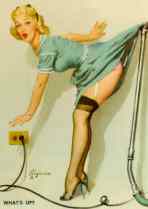
Between Sexes/ Between Species: The Politics of Isabella Rossellini’s “Green Porno” and “Seduce Me”

Debates over nature and sexuality have become, recently especially, a frequent affair in mainstream U.S. political discourse. U.S. presidential candidate Rick Santorum attracted a wave of controversy from the mainstream center left for his equation of homosexuality with bestiality, the subtext being of course that attraction to one’s own sex is inherently “against nature.” Reproduction-centered sexuality and heterosexual familial relations are, according to adherents of this position, the foundation of a functioning society. Contemporary queer theorists not only take issue with the assumption of a universal “natural” normative sexuality but critique the entire imperative of reproduction and future-oriented sexualities in favor of a politics of immediacy and contingency. Identities exist within a complex social network, and a variety of genders and sexualities emerge from that network. The critical response to people like Santorum rests on the reality of socialization, of complexity, of difference, multitude, and contingency, and diverges from the language of hegemony employed by Santorum to approach the debate from an entirely different epistemological framework.

Isabella Rossellini’s video series, both “Green Porno” and the similar “Seduce Me” cleverly re-opens this discourse, and reinscribes the question of nature in polemic opposition to its appropriation by crusaders for heteronormativity. The video depicts the head of Rossellini in the bodies of various animals, and explores (in a scientifically accurate manner) the ways in which their many bodies do sexuality, and the way the “nature” of a body changes the nature of sexuality. Normative conceptions of sex are, as Rossellini displays, impossible to impose outside of the limited reach of their own discourse and the limited bodily representations they encompass.

Rossellini’s fun, absurd, cleverly stylized and narrated series depicts a variety of modes of animal embodiment and sexuality. The female bedbug’s lack of genitalia, the self-cloning sexuality of the earthworm, parthenogenetic (virgin birthing) insects…Rossellini employs a perverse, ironic perspective, herself appearing as an absurd and disorienting hybrid of animal and narrator. Breaking down these normative relations, which are “by nature” hierarchical, Rossellini brings the viewer into a world of heterogeneity, absurdity, and bodily difference and multiplicity—the absurd world of nature in stark contrast to the hegemonic narratives of monoamorous, heterosexual embodiment parading as self-evident natural law.

The “Green Porno” and “Seduce Me” series can be found at http://www.sundancechannel.com/greenporno/
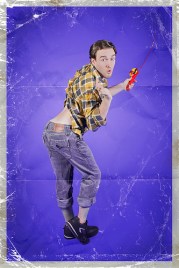
Pin-up boys?

A friend sent me this series of men photographed in traditional “pin-up” girl poses. They sure capture the pin-up girl vibe: Look at those arched backs, pursed lips, and inviting gazes!

Yet the difference is obvious: these “pin-up boys” wear jeans and camo and are depicted with traditionally masculine props such as dumbbells and a wrench. What do these recognizable poses on different bodies do for us viewers?

I love these pictures because they subvert the pin-up girl image. Seeing male bodies in pin-up poses takes apart what we’re used to seeing, and for me expose the silliness of pin-up girls while questioning their supposed sexiness. These guys do look silly! We’re used to seeing women with their backs arched and chests thrust out, even in the midst of their regular activities (like vacuuming, apparently). Seeing men in the sam poses while doing their regular activities (fishing? Skateboarding? Talk about the sexual division of labor!) exposes its artificiality; exposes the pin-up girl as the fantasy she is.

Do these men look sexy to you? I think they look funny, which reminds me that “sexy” means different things on different bodies. In U.S. culture, one kind of sexy = slender white women doing chores with their underwear exposed. Does it work in reverse? Do these men look sexy, or goofy and posed? 

The Embodiment of Death

The chapter for next week about the embodiment of death – in terms of finding ground between the ‘body’ and the ‘self’ – resonated with me for various reasons. One of the biggest things I noticed was the unwillingness to deny that a person’s identity has left the body after death, which is a theme that has become prominent in various science fiction stories. Iconic characters such as the vampire or zombie relate the idea that after death we do not have to give up our bodies. Reanimated bodies, such as Frankenstein’s monster, also seem to feed into a belief that the remains of a body can be recycled to create new life (or something similar). Furthermore, the father in Pet Sematary who buried his dead son’s body within the grounds that were known to reanimate bodies did so to cling to the fact that his son would return once again after identity and body united.

These representations in literature and media walk a line between trying to beat death and keeping claim over your body, but ultimately there is something in the characters that lacks humanness. Vampires, zombies, Frankenstein’s monster, and the little dead boy from Pet Sematary all lost their identities after death and were changed completely. Something about the mysterious nature of death – one that we cannot completely have knowledge about, yet we all will experience – feeds into these representations of bodies that face the unknown. The characters definitely find an imbalance between the ‘self’ and ‘body’ being continuously connected, but for the most part these characters illuminate a world where bodies are meat and fodder. Identity may change after the cross between life and death, but the body will withstand composition (albeit disfigured and sutured, I suppose).

Hollywood’s Thin, New Jennifer Hudson

After reading this article in Huffington Post and seeing many, many commercials with a svelte, toned Jennifer Hudson, I wondered how she managed to lose so much weight. Weight Watchers and exercise helped Hudson loose a huge eighty pounds in a healthy manner. The  formerly “larger than life” singer and actress is now a glowing size zero. Hollywood could not be happier.

Plus sized women in Hollywood are not easy to come by, especially when these women are black. Hollywood’s black female superstars are sexy like Halle Berry or extremely curvaceous like Beyonce. Where does a plus sized black woman like Jennifer Hudson fit in? Does out singing Beyonce in Dreamgirls mean nothing?

In my opinion, Jennifer Hudson had not been portrayed as other black women before she dropped eighty pounds. Yes, she was talented and award winning, but not beautiful. Her beauty has only come from her weight loss. Now, we can marvel over her thin waist and curvy hips along with her amazing singing voice.

But, which is better? Should a black female celebrity have to choose between being famous for her talent or her body? Of course, some celebrities like Beyonce have both covered while others like Nicki Minaj are lacking. What does this mean for little black girls? Can they feel comfortable in their bodies and accept not being beautiful but talented instead? Or do their bodies have to be the cause of their beauty? Should they  have to choose? I do not know the answers to these questions, although I have some ideas. The good news is that Jennifer Hudson’s voice is still big and beautiful!

Dove Real Women Beauty Commercial

Someone sent me this video on an interesting transformation between the way someone really looks and how they turn a “regular person” into a model. It shows a woman sitting in a chair and you see her go from an average person to them doing her hair and make-up, and finally taking a picture, photoshopping it, and putting it on a billboard. These are the images that we show to our society, yet nobody sees a problem with it.

Have no fear though, Dove is out to set the record straight. They want you to know that Dove is there for you, for real women! They want you to trust them to show real images of real women and make you feel better about yourself. No matter what the media shows, Dove is there for you and they believe in the beauty of every woman.

One thing that’s interesting to me though is that it’s a Dove commercial about promoting real women and real beauty, yet when you watch their other commercials, their models are thin and beautiful and promote the stereotypes of beauty that our society has put before us. I have an issue with the company pretending that they care about “real people” and “real beauty” when the way they act defies that. This makes me think that Dove is simply using a tactic to try and prove a point, or to get people who don’t like commercials or the media to start turning to them for an “unbiased” or “unconventional” model of what beauty is.

I think they are playing our society and using unconventional forms of beauty to attract new customers and promote their products. Now, instead of using conventional beauty to attract women by saying “if you use our products you will be this beautiful,” they are using the scheme “if you’re a real woman, you’re beautiful the way you are, and we support women being beautiful just like you, so knowing that we support REAL BEAUTY, you should buy and use our products.”

I think this is a real problem that needs to be addressed by society, but I don’t think doing it to promote your product is a fair way of doing that. Our concept of beauty clearly needs to change, but this is not the way to do it. Someone with nothing to gain has to put out a video or a commercial like this.