Tattoo

I honestly thought about getting a tattoo on my hand, because i think it looks cool and i always wanted to get one.But my boyfriend stopped me. He always think that if i get a tattoo, i would look totally a different person.Last week,I read this article about tattoos. It said, ” Tattoo placement can negatively impact a person’s life if ink location is not careful considered.”

Tattoos and Professional Disadvantages

And it listed the disadvantages of Tattoos:
“· Career Limitations
· Style of Clothing
· Relationship Conflicts
· Decrease in Community Involvement
· Negative Self-Esteem
· Compromise Health”

I think it is true that tattoo really can impact our life. After this article, i thought about if i really got a tattoo on my hand. i would have to worry about hiding it from my parent, or when i go to a job interview, how would people think about me when they see my tattoo, and so on.I also did some research about tattoo ink.Tattoo ink contains pigments. It is bad for body. It can cause infection, such as hepatitis and skin infections.Because of the tattooing equipment if they are not unsterile. Tattoo can results Granulomas.It is an allergic reaction from tattoo ink.The treatment for it requires medical attention for antibiotics. I am wondering, for those you that have tattoo, have you consider about skin problem or have an allergic reaction before you walk into the tattoo store?

Full Throttle Exercise: The Impossible Standard.

A few days ago class discussion touched on a topic that has always been sensitive to me: exercise.

Modern culture if full of ads and products for getting fit, working out, and losing excess weight, all which will lead to a better and more beautiful you. The more you work your body out, the better the results and the better life you will have, or so says all the diet and exercise literature that I have read.

But is this true?

Every magazine I pass in the grocery store offers at least one full spread of exercises that will transform your body for all to see while low-fat, fat-free and zero calorie food and drink are everywhere. In society’s drive to be “healthy” are we really just pushing ourselves beyond the scope of what we are actually supposed to look and feel like?

Throughout history women’s bodies have been viewed from a skewed lens; as chattel, as something that must be covered lest it seduce man, as dangerous, and now as something that must be shaped to fit a standard. That standard being a skinny, tall, large-breasted but without curves, form. The religion of Exercise has only given credence to this standard, with the abundance of gyms and fitness classes there is no reason not to have a “perfect” body, no reason not to count every calorie and run a mile for every slice of pizza eaten.
Are these expectations even possible to meet?

I recently saw an ad for a gym that read, “It’s not Fitness. It’s Life.” This ad made me angry, from a larger societal standpoint and as a woman I should not have to view exercise, or “fitness” as a lifestyle. Some days I may choose to take a walk, go to a yoga class or run and other days I may not do much at all in the realm of exercise. I’m not advocating for laziness or avoidance of physical activity, I believe an active lifestyle is healthy and beneficial in many ways, it’s the overabundance and extremes that are almost forced down our throats that frustrates me. You aren’t running every day? Le gasp. How about abs and shoulders, when will those become bikini body toned? Have some ‘extra’ poundage? There’s a pill/drink/diet/exercise for that.

Learning to love my body is hard being surrounded by the mantra of fitness=life, when for the majority of women fitness is really an impossible standard instead of just being a healthy BMI.

Fitness is not life; life is friends, family, beautiful days, meeting new people and moving because it makes your body feel good and not because you want to maintain an impossible and ridiculous standard.

Thoughts/Disagreements?

The Body in Poetry.


The video is Andrea Gibson preforming her poem, “I Sing the Body Electric, Especially When the Power’s Out”. I thought this was fantastic because it does self-consciously reflect the ways in which we take our bodies for granted until something is wrong. She points out that she wrote the poem when her body was hurting her – this is a reflexive way to recognize that the body exists. Her poem, however, extends pass that and praises the body as a machine in poetry. The imagery really counts towards her overall message. Body parts are representative of their function and ultimately, their worth.

The body does so much, but we also picture the internal features as something much more pristine. The use of heart beats keeping rhythm, of the mouth as a fire escape, and the smoke in her lungs points to the ability of the internal body to ampify our natural processes. What resonated with me the most were the lines about her injuring her body and the doctor assuming it was for attention. I feel like that’s one of the ground rules we’re expected to take about the body: we’re blessed to have it and should appreciate everything it does, so those who do modify the body are transcending the whole “body is a temple” concept

Who gets to talk about bodies?


(author’s note: I fully acknowledge the irony of writing this piece while being someone who identifies as male.)

Over the past two weeks, there have been two very different public showdowns over different parts of women’s bodies.  In the first, the Susan G. Komen Foundation found itself under fire for its decision to stop funding grants to Planned Parenthood because of a politically-motivated Congressional investigation into the federal funding the latter organization receives.  The second, more recent firestorm has arisen over a provision in the new federalhealth care regulations that would essentially require religious organizations that perform non-religious work to provide birth control coverage for their employees.

The real difference between these two events has been whose voices have been raised in anger, and who has garnered the media’s attention.  The Komen controversy began largely through social media channels, promulgated by well-known feminist activists as well as networks of those involved in the various breast cancer movements.  When the issue was brought to the attention of the mainstream media, the angry voices and stories of women both famous and not were splashed everywhere, supporting Planned Parenthood in a nearly unprecedented way.

Compare and contrast those scenes with what we have seen since the US Council of Catholic Bishops started to speak out against the administration’s birth control policy.  Not only have the public faces been overwhelmingly white and conservative, but they have also, almost universally, been men (with the exception of New Hampshire Senator Kelly Ayotte, best known for her previous encounter with Planned Parenthood). It doesn’t matter the network, you’re almost guaranteed that they have relied on a white conservative member of the clergy, politician, or talking head.  ThinkProgress tallied it up and published a report last week showing that over the course of three days, the cable networks relied on male voices more than two to one over women’s voices in the debate.

Given that the focus was on reproductive self-determination, shouldn’t the focus have been on the voices of women?  Surely, the Komen controversy showed us the value of women’s stories in understanding the impact of policy decisions?  The fundamental difference turns on the public role of men and male privilege in the areas of reproductive health versus their public roles relating to breast cancer.  When it comes to breast cancer, men and women have the shared goal of prevention.  For women, it is about the preservation of their health, while for men it is about the preservation of one of society’s most fetishized body parts.  Increasing access to breast cancer screening is thus a net win for both parties.

But birth control is a different story.  Men held an extreme advantage in sexual power relations prior to the mass marketing of hormonal birth control.  In a heterosexual relationship, it was only the male who was able to avoid the reproductive consequences of sex, by simply walking away.  But with the pill, women were suddenly able to control more accurately when, where, and with whom they would have a child.  Suddenly, there was a certain level of sexual equality.  The most misogynistic corners of our society, ably represented by the Catholic hierarchy and social conservative politicians, have yet to recover from this remarkable shift.  As a result, when the Obama administration presented them with this golden opportunity to limit access to birth control, they could not resist.  Throwing their privilege around, they were able to dominate media conversation, framing it as an issue of “religious liberty” instead of the attack on personal freedom it actually is.

Where the debate will end up has yet to be seen, but one can’t help but hope that women will actually be able to get a word in edgewise.

Everybody Say, “Baby Bump!!!”

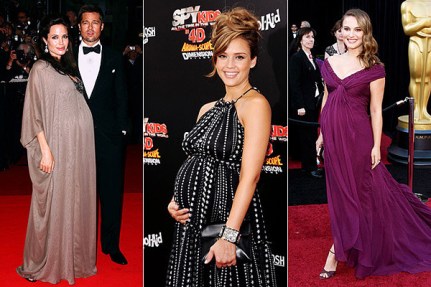
Baby, oh, baby, show us a woman who still thinks style has to suffer during pregnancy, and it’s a pretty safe bet that she hasn’t been keeping an eye on red carpet mamas.

Image

Best Dressed Baby Bumps

The quotation above was taken from this slideshow over at youbeauty.com. When I stumbled upon this slideshow, I was pretty shocked. Hollywood portrays its pregnant celebrities in interesting ways. Hollywood is constantly checking female celebrity’s bodies for “baby bumps” at the slightest appearance of a bulge. That one extra cupcake at a party or that extra french fry could potentially be a baby bump. After a celebrity has finally announced an official pregnancy, before or after they are actually ready to announce it, eyes are constantly on the tummy.

Of course, pregnant superstars cannot let their bodies or their fashion sense slide during pregnancy. Their body is still supposed to look like one of a superstar. The only piece of the body allowed to grow is the belly. The rest of the body is still as sexualized as it was before. Red carpet commentators drool over that motherly glow and growing tummy. Even with the growing bump, these women are supposed to dress to make the public comfortable, not themselves. Instead of maternity sweatpants, pregnant stars instead wear maternity gowns that accentuate the bump for all of the world to take part in her pregnancy.

Superstar bodies are constantly on display, even during pregnancy. Talk about the laboring body! I can only imagine how uncomfortable pregnancy is by itself. Adding on paparazzi cameras, heels, a drapey gown, and keeping a stellar body is way too much! Having a body that is constantly on public display, being praised and criticized, must be a big stress on famous women. What do you think?

Do you know what you put on your face?

When I was growing up my grandmother had a makeup collection that she let her grandkids use. I loved it, but my cousin was less enthusiastic. One day, when I tried to convince her to let me give her a makeover, she exclaimed, “No! Ew! Did you know that lipstick is made from bat poop?”

I didn’t know that and I didn’t believe her, and I have never found out for sure if her claim is true. And I don’t really want to know. I feel pretty certain that most mainstream lipsticks are NOT made from bat poop (seems logical, right? That’s what I tell myself). And I know that all-natural makeup products exist out there like Burts Bees products, which I assume are made of organic oat fibers, natural colors, and sunshine.

I don’t wear makeup often but I like to for some occasions. I enjoy emphasizing certain parts of my face, or adding color and sparkle for dressy outings. It’s fun to look a little different. I don’t know if as a working professional I might start wearing makeup regularly, but for now I’m content with my sporadic use. I don’t know what my makeup is made out of but I hope it’s fine and I try to make it look nice when I put it on my face.

Over the summer Jezebel posted this video of a year’s worth of make-up on a model’s face. It’s quite a different experience of makeup from what I’m used to – putting a little bit on some nights. Seeing a year’s worth of makeup applied at once changes my sense of the actual stuff that I am applying to my skin. But would a year’s worth of lotion look different? Or sunscreen?

According to the Jezebel post the “whole thing took nine hours, three lipsticks, seven bottles of foundation, and two bottles each of cream blush and eyeshadow to achieve. (That’s 228 mL, or 7.7 fl. oz. of face-spackle altogether.).”

What do you think? Does this change your perception of makeup? Do you think you’ll change how much makeup you wear after seeing this video? What about the money you spend on it?

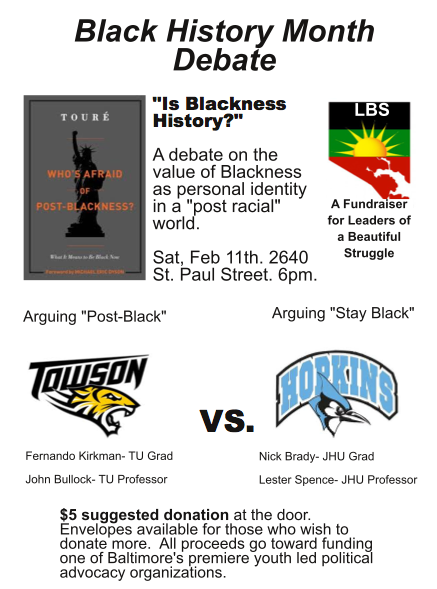
“Is Blackness History?”

Leaders of a Beautiful Struggle (LBS) presents a public debate on the meaning of Black history and Black identity in a “post-racial” moment.

Sat, February 11th, 2640 St. Paul street, 6 pm

The debate will pit teams of 1 professor and 1 student from two local universities against each other. Lester Spence, Professor of Political Science, and Nicholas Brady, a recent graduate, will represent Johns Hopkins University. John Bullock, Professor of Political Science, and Fernando Kirkland, a recent graduate, will represent Towson University.

There will also be a chance for the audience to ask questions and participate in the discussion.

$5 suggested donation at the door.

Envelopes available for those who wish to donate more.

All proceeds go toward funding one of Baltimore’s premiere youth led political advocacy organizations.

FREE ADMISSION
Light refreshments
Free street parking is available

Come out and participate in this timely and hotly contested topic.

This event is extremely last minute, so for those of you who are interested in the topic but cannot attend, what are your thoughts? What do you believe the meaning of Black History is? What role does gender play in Black history? What does it mean for Black identities to exist in a “post-racial” moment? Is this even possible?

Sculpture, Shoes, Height, Misogyny, and Damage

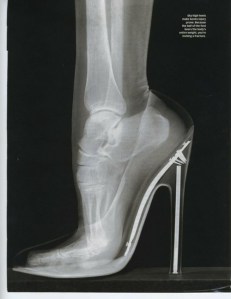
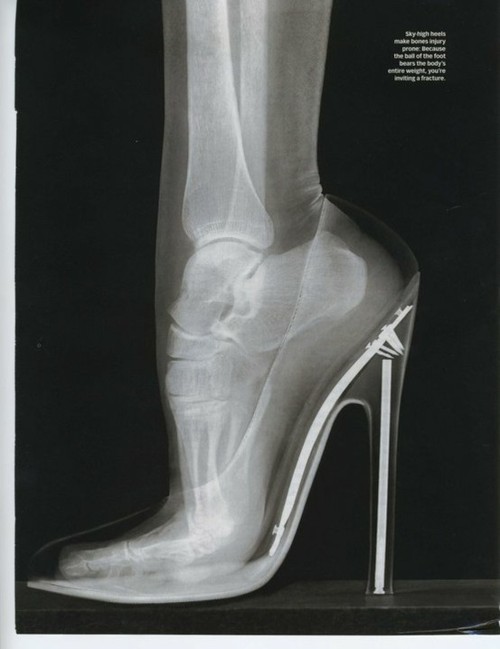
Are high heels hetting higher? What do super-heels do to the bodies that wear them? What does the design of super heels say about expectations of feminity, and what role does height play in those expectations?

I am 5’0″, or 5’1″, depending on the time of day. Sick of being teased for my height, I started wearing high heels at the age of 13, packing them in bookbags until my mother was out of sight.  The only time I felt comfortable not wearing heels as a teenager was when wearing soccer cleats, which did add an inch, but the soccer field was was of the only places where, as an offensive forward, my size allowed me to weave through and past other players, giving me an advantage. Seventeen years later, having spent my entire formative years running around in cleats and my entire twenties dancing in three inch heels until the wee hours, I have a pinched nerve between two metatarsals. The treatment involves cortisone shots followed by three days of limping. Not fun. This came as no surprise. I came to accept a life in flats, and that I would never “be taller when I grew up” by my late twenties. What has shocked me, in my relentless and foot-tiring search for comfortable shoes, is the marked increase in the height of high heels lately. While looking for sensible and “flattering” or “feminine” flats, all I have found is orthopaedic, hippie/nurse/grandma styles (yes this is honestly how  I see comfort shoes), babydollish flats seemingly designed for twelve year olds with no cushioning anywhere, and HIGH heels – heels frequently over four inches high.

If shoes meant for formal, fun, or even some proffesional occasions, mean adapting to styles usually directed at erotic dancers, what does this say about the sexualization of women’s bodies? Is the added height considered sexy? Or is it the discomfort and vulnerability? I certainly would not want to walk down ANY street alone in four  or five inch heels, or literally stumble out of bed the morning after wearing them. In my search for shoes, both in person and online, I have found some of the following styles:
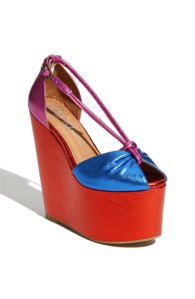
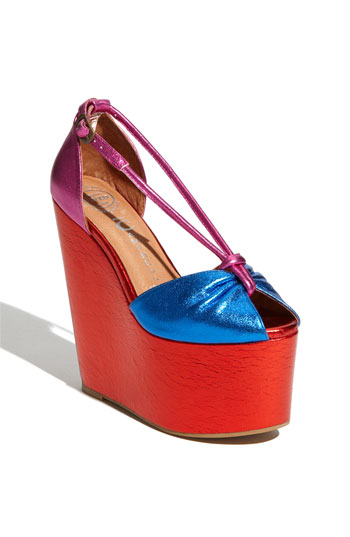
Jeffrey Campbell “Wedges”, for a mere $275 at Nordstrom. What a nice, colorful sculpture! I’m sure they’d be great for walking on cobblestones.
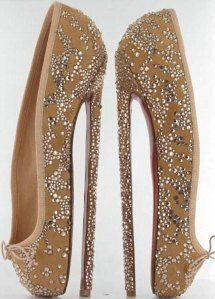
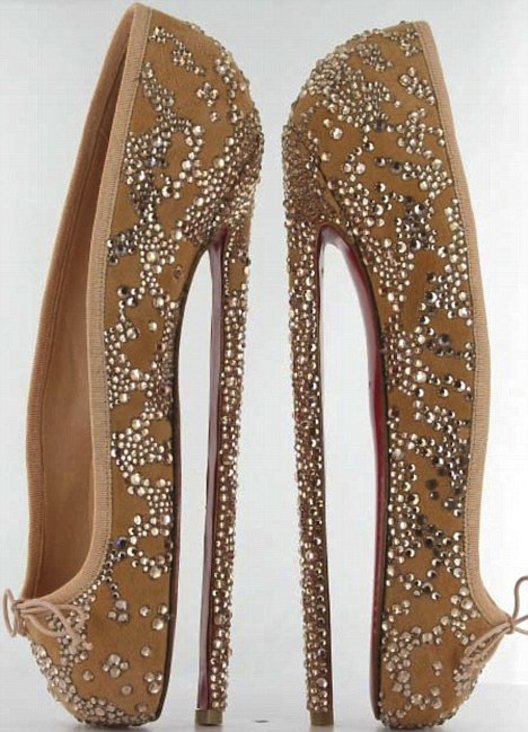
Christian Louboutin “Pointe” ballet stilettos, designed by a man, high fashion of course, but are they meant for a body?
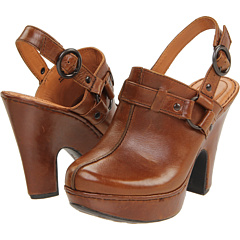
 Born “Comfort” wedges, $145 on zappos.com. These claim excellent arch support but still have an overall height of four inches.

So ,what, exactly is wrong with being short? Would strangers ask my height or tell me how tiny I am (like I have no idea) if I was 5’4″ and in considerable pain? Would men, as women have for centuries, submit to any accessory or piece of clothing that tortured them? Tortured them but let them be fashionable, stylish, and “with it”?

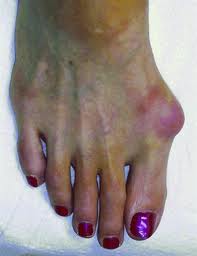
I frequently see girls on campus wearing stiletto heels, in the daytime, trucking around from class to class, and this is what I see: Morton’s Neuroma
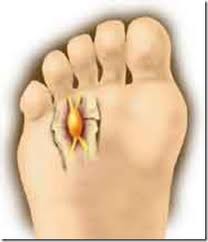
 The Classic Bunion

Sadly, in the year 2012, in the country where women supposedly have the most “freedom” in the world, some still choose a Foucauldian self-discipline (or torture) not far from that of Chinese footbinding. Heels are higher than they’ve ever been. I would love to know why.

Scalpels vs. Needles, and the Body as Art or a Canvas for Art

ImageWarning: this post does contain mention of self-injury.

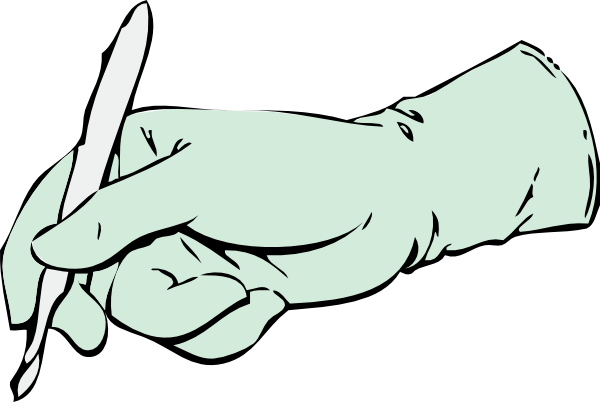
I recently came across this article on scarification. Scarification is a process that involves using a scalpel to carve patterns into flesh. This may seem gruesome to some, but some who are attracted to it are looking for a way to disguise old wounds. One person who had scarification had been a youth who had engaged in self-injury and said that scarification was a form of reclamation.

What is the purpose of disguising scars with more scars? The idea of putting more scars on top of preexisting scars being reclamation is baffling to me. I can’t help but think that scarification may make self-injury worse, or, at least, make people believe that placing scars on their body is a healthy coping mechanism.

What if someone got a tattoo to cover their scars, though?

ImageWhile scarification carries stigma, the cultural status of tattooing has evolved from an anti-social activity to a fashion statement. Tattooing involves placing needles into the body instead of scalpels. Since both processes involve piercing the body, one may wonder which one is worse – or if they are both processes that are equal in magnitude (i.e. in terms of harmlessness, morals, destructiveness of the body, etc.). To me, tattooing is better than scarification, as in my view, no matter the method, producing a scar as opposed to producing an image that does not resemble a scar (given that one is not attempting to tattoo what looks like a scar onto the body) encourages self-harm. However, I am aware that I can’t speak for everyone.

ImageOn a different note, while thinking about the process of scarification, I wondered about the body as a  work of art, or at least a canvas upon which practices such as scarification, which is done in the name of art may be carried out. Another practice is tattoo art, and one may be able to perceive plastic surgery as a procedure that makes the body a work of art or creates art upon it as it sculpts parts of the body. However, more subtle forms of art/processes that make the body art can be simply applying makeup or combing one’s hair. These processes, although they may be viewed as mundane parts of daily life, all involve “fixing” or “adjusting” the body to create a certain visual image for the viewer (whether that viewer may be oneself looking in the mirror or others). That, to me, is art.

I remain on the fence about scarification. However, I believe the practice can bring about some interesting discourse on what makes a body practice acceptable or not, and on the body as art/a canvas for art.

What determines the beauty of the African American Female

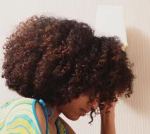
It is surprising to me that people believe that the beauty behind an African-American women is the straightness of their hair. not their beautiful complexion, the figure God gave to them or the way we carry ourselves but our hair. Black women today say the straighter the better, but why not the healthier  the hair better. African-Americans are putting many chemicals in their hair to straighten it so they can try to come close to the women of the opposite races or whites.
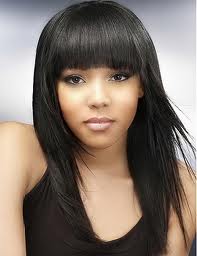
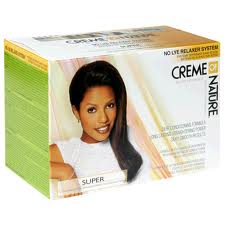
Actor Chris Rock featured a documentary called Good Hair to ask the African-American Population what they consider good hair. He interviewed many African-American female actors to give this definition on what they feel. Many of them responded “the straighter the better”. To them if it’s not straight then it is an embarrassment to them. when watching that movie all I could notice was that many of those women were not even wearing their own hair, many if not all were wearing weaves-an attachment pieces to the head that is sown in after real hair is hidden away in braids. How can these women know what African-American beauty is when they don’t show it.

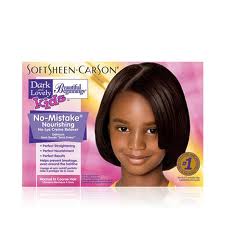
The term that many African-American use for their hair care products that would straighten their hair is called “Hair Crack” or relaxer the reason why this chemical is called Hair Crack is because once you use it once your natural beauty is gone and you must continue to use it to keep hair from being damaged. one thing that really disturbs me with the using of these chemicals is that children as young as six get these relaxers, destroying their hair because mothers think that their natural-born hair is not acceptable and ugly and will make their daughter’s beauty suffer. When watching Good Hair, Chris Rock talked to a little girl while getting her hair done and asked her why does she need a relaxer, she says that it makes her look pretty. What are we teaching our young daughter that without a relaxer our young female are ugly and are not as pretty as our white women and daughters and the only way to look like them, beautiful we must put chemicals in our hair to become them.

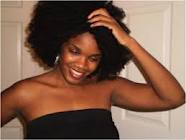
In conclusion black women should not be judged and classified as beautiful because of how straight their hair is but the inside. Yes, African-American women are known for their hair but the natural beauty of it, the way it grows, and the way women have used the natural beauty to pave the way for the daughter of African-American decent to look at themselves in the mirror and this of themselves as beautiful even though their hair isn’t straight or looks like the opposite race. just knowing that if a young black woman look in the mirror with their natural hair and say that they are beautiful and will not be tempted to change it because it doesn’t fit society and what they think is beautiful. Be confident in your natural beauty and one should let no one to tell you otherwise.