Bodies that speak

I’ll put my name in this post because it will make more sense.This is Renita.

So I was born in Cleverly, MD and I have lived in Maryland for 21 years I lived in Oklahoma for one year and I am 22 years old. However when I open my mouth and begin to speak something strange comes out – an accent. I have no idea why or how I sound the way I do. My mother who was born in Nigeria doesn’t have the accent and neither do my cousins who I spent a significant amount of with have one. So I have no idea where my voice comes from. Interestingly enough when in America and in other parts of the world (I have traveled a bunch) whenever I speak people accept that I am from Nigerian as opposed to when I say I am from America.

Usually the conversation goes something like this

“where are you from”

me – “Maryland”

“no I mean where are you really from”

me – “my family is from Nigeria”

“oh so where you born there”

me – “nope I was born here”

“oh so you lived there”

me – “nope I have lived here all my life

This conversation has happened many a time. It is very hard for me to explain to people that I am American and they never truly seem convinced. So more often then not I say I am Nigerian it is a lot easier then the long conversation. Or if I really want to make the person that I am talking to upset I say “I was born in America but I am from Nigeria”. My thing is that everyone has an accent to anyone else. There is no unified way that Americans talk. There are different southern accents, there are new England accents, new york accents so on and so forth. So why the obsession which trying to pin point where a ‘body’ is from based on how they sound. I mean if I wanted I could make my self sound American which probably means Caucasian (which by the way a lot of people that come from Nigeria and move here do). But sorry I am not going to make it easy. This is the way I speak.

Martha Nussbaum Contra Judith Butler: Feminism and disability through two critical lenses

Judith Butler stirred up a bit of debate earlier in the course, relating to readability, obscurantism, and other relevant concerns, but also served to supplement the beginning of the class’s ongoing discussion of disability. I found this essay recently by Martha Nussbaum, an important and frequently quoted political and legal feminist philosopher, raising some very interesting criticisms of Butler’s method and conclusions. This also reminded me that Nussbaum was included in the same documentary of which Butler’s walk with Sunaura Taylor was a part, the very thought-provoking and beautifully composed “Examined Life.” What struck me about this mutual discovery/rediscovery was how similar Nussbaum’s piece in “Examined Life” was to Butler’s, considering her polemic objection to Butler’s work in the essay.

The thrust of Butler’s discussion with Sunaura Taylor was that, rather than society being composed of self-sufficient individual agents working for their own benefit in a public sphere of socio-economic exchange, with marginal disruptive aberrations on that structure in the form of disabled subjects, we are all dependent, and we exist in a network of interdependence and contingency. This served as a critique of individualistic programs of thought that continually attempt to entrench normative prejudices relating to ability, sexuality, and embodiment into society. Nussbaum makes a very similar argument. “The theorists of the social contract…assumed that the parties to [the social contract] really are roughly equal in physical and mental power,” she argues, continuing to criticize this Enlightenment individualistic position by not only asserting that it leaves out consideration of unequal capacities, particularly people with disabilities, but that “it’s all of us– when we’re little children, and when we age.” The ubiquity of interdependence and the importance of inclusive social structures runs through both philosophers’ contributions to “Examined Life.”

I was wondering a couple things as potential points of discussion. 1.) Where do Butler and Nussbaum’s arguments about disability and society diverge in these videos, if at all? Is it purely a difference in scope or method, or is there a real difference in position? and 2.) What arguments of Nussbaum’s, in her critical article on Butler, can be vindicated, and what, if any, arguments in Butler show Nussbaum’s criticism to be incorrect or insufficient?

Stress Kills, or “I don’t have time for a body”

At some point this semester I began screaming at my boyfriend, “I don’t have time for a body!” I was having a pulsating migraine, my skin was breaking out, I had had no sex drive for weeks, and had an endocrinologist appointment and blood test the next morning prior to three classes that day. I was having an anxiety attack at 1a.m.

Everyone says college is stressful. I have found that no longer having the body of a twenty year old makes it exhausting. Running around a hilly campus, trying to get to class on time, parking about a mile from any buildings. All of this physical activity is also time consuming, adding stress to days packed with classes, work, homework, making dinner, buying cat food, paying bills, keeping in touch with friends and family, attempting to relax, and trying even harder to sleep. I often find my inner dialogue about stress going something like: “It’s because I’m a woman” or “It’s because I’m not upper middle class.” I have many found my stress triggers to generally be gender or class oriented.

I found the following documentary on stress very interesting. The director, John Heminway posits stress as not only as detrimental to mental health, but as someting that can kill the body over time  through exposure to dangerous levels of stress hormones. It also argues that stress levels are relational to class structure, with lower rung workers experiencing higher, and more deadly, levels of stress hormones. The documentary follows Stanford University Neurobiologist Robert Supalski in his studies of stress hormone levels of baboons in Kenya. He measured both adrenaline and glucocorticoids in these baboons and found differing levels according to the gender and social class of the baboons. The non-alpha males have higher stress hormones than the alpha males. When most of the alpha males died off due to tuberculosis infection, the stress levels of all the other baboons in the group went down. This documentary is very much worth watching, I believe all parts of it are on youtube and hope you can check it out.

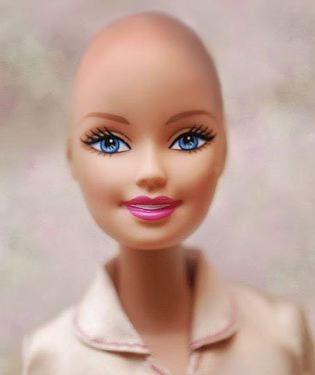
Bald Barbies

Disclaimer: While I have never experienced baldness personally, drawing from the literature on disability and class discussions I felt an affinity with the topic. If I indirectly offend anyone I offer an apology in advance.Image

Recently I’ve noticed a lot of rabble on facebook about a topic I never thought would pop up in my newsfeed: Bald Barbie.

There’s a facebook group dedicated to pressuring Mattel to create the Bald Barbie for children who suffer from hair loss due to cancer as well as Alopecia, and Trichotillomania. Mattel has finally released a statement saying they will create Bald Barbie but it, “will be a friend of Barbie, which will include wigs, hats, scarves and other fashion accessories to provide girls with a traditional fashion play experience.”

Hm. So, the new doll cannot be labeled a “Barbie” and she still has to have fashion accessories which, in my interpretation, (and perhaps this is my raging feminist coming out) means people who have hair loss still have to cover up their scalp since baldness cannot be accepted as normal.

Not only will Mattel’s new doll not be a “Barbie”, she will also only be distributed to children’s hospital for reasons of “directly reaching girls who are most affected by hair loss”. But what about the children who are not in hospitals who have experienced hair loss? And how does a hospital reinforcing to the children that they’re still beautiful actually combat the main message that Mattel sends out to the general public on a day-to-day basis, i.e. beauty has a certain standard, and if you don’t have the hair and body for it, you will never be beautiful.

Could placing the doll on the shelves of a toy store create too much of a sense of normalcy towards hair loss?

From the past course discussions on disability, and the invisibility and inaccessibility that many disabled people have expressed they have experienced; I don’t think that Bald Barbie does much to enhance the lives of children who have experienced baldness.

By only distributing these dolls to hospitals Mattel is stating that baldness is still a disability and is associated only with illness. Mattel could release Bald Barbie in mainstream stores and allow Bald Barbie to be viewed right next to a Barbie with hair but then what message would Mattel be sending to the children that experience baldness? Beauty standards can actually deviate from what Mattel portrays them to be?

If Bald Barbie were to be considered equal and sold in the mainstream market right next to a Barbie with hair I think children who experience hair loss could actually feel acceptance and beauty towards their baldness, especially when Barbie is such an icon for female children for femininity and glamour.

I think Mattel’s creation and distribution of Bald Barbie is just another way to emphasize disability rather than accept it.

Design improved by (dis)ability

So we’ve talked quite a bit about how architecture and spaces treat (dis)ability as an afterthought, defining a norm and making often weak attempts to accommodate those who do not fit inside the normative box.  But this doesn’t always have to be the case. There are some really smart designers who have flipped this script- collaborating with people of different abilities in order to come up with design that is beneficial to everyone.

Take for example the OXO Good Grips line of kitchen utensils. We’ve all seen them- peelers with really thick handles, unusually shaped can openers. Cool looking, but not the norm in utensil design.  It turns out, this entire line was designed in consultation with arthritis sufferers, in order to create kitchen tools that they could easily and comfortably use at a reasonable price.  Now, OXO Good Grips is one of the best selling brands of kitchen utensils around the world. A simple thought- making an easier to use potato peeler- leads to better design.

But what about architecture? How can it be impacted by collaboration across abilities? At DC’s Gallaudet University, which specializes in educating those with hearing impairments, new buildings are showing innovative design meant to help the deaf that could end up in your new office building or classroom.  Walking and talking is one of the cornerstone experiences of college life- but this becomes a bit trickier when you’re speaking a language that is visually based.  Buildings offer numerous obstacles to these conversations- narrow hallways, doors that have to be opened.  Gallaudet is creating buildings with wider hallways and wider sliding doors to better accommodate students’ social life.  Eye strain, again a common college problem exacerbated by needing to use your eyes to take in every second of classroom interaction, is dealt with by thinking of light sources and room color.  Each innovation is driven by thinking of (dis)ability first, and each one something that could be valuable to the world at large.

Is this a next stage in industrial design? Instead of trying to make a product comply to Americans with Disabilities Act standards, should we instead focus on making products more inclusive from the start? It’s a bit of a rhetorical question, sure, but the real question is, why aren’t more people thinking this way?

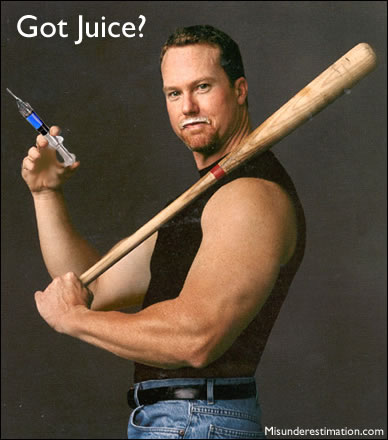
Should We Legalize Steroids in Baseball

Baseball is America’s pastime, but there is one problem, and that is the use of steroids. Steroids a synthetic hormone that promotes the retention of protein and the growth of tissue and the use can help and athlete build bigger muscles more faster. the problem i have with steroids is the unfairness that baseball gets by using steroids. To me i think it is a fake sports because now a days you don’t know who is using or now so you really don’t know who is naturally talented. I was reading the article and it discussed how if a player gets caught using steroids the first offense is treatment, which is basically a slap on the risk telling them not to do it again, and for five violations is a one year suspension. I do not think that it is fair, I think the rule should be first offense should be the one year suspension and the second offense should be getting kicked out of the league. The only reason i say this is because when they get older they are destroying their bodies for drugs, all they need to do is work on the talent that got them there, not put harsh chemicals in their body that can scar them for life.

These grown men should not be babied because they should know right from wrong and that steroids are bad, but they insist on using them. Should the League just legalize steroids so that way majority of the athletes don’t get in trouble and just call baseball America’s past time and just leave it in the past because baseball is not the same as it used to be, because I don’t think that this many people were using steroids back in the day. even though it is harming their bodies by making them infertile and gives you harmful psychological changes and even cancer, these athletes still use them just to get one up on their opponent.

Majority of the athletes playing baseball are on steroids, so we should just legalize it because even though they are getting caught they are not stopping. In order for the League to stop steroid use they would have to drug test the players everyday, but that is a waste of time and money because these men are grown they should know right from wrong. What should the commissioner do so the League can once again be America’s Pastime