
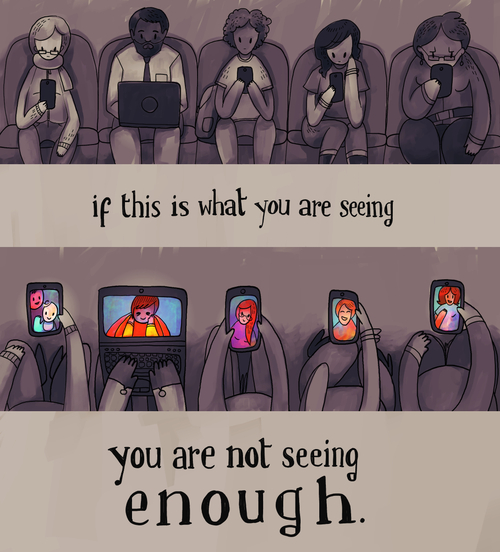
The internet allows for instant communication with people from all over the world. We can email, blog, instant message, “poke” on Facebook, Skype call — and, potentially, all without ever seeing the body behind the text or voice. The pessimist might assert that these communications are superficial, detached, and “not real”; we are ignoring “real” people in favor of glowing screens and lines of text.
Yet this point of view invalidates the incredible, long-lasting, very real relationships that people such as myself develop over the internet. There is the chance that we may never see in person, or even in photographs, the people we interact with this way. However, with things like Skype Video and Face Chat and “selfies,” it is easier than ever to match a face to the text. And anyway, even if I’m not talking with a person face to face, they are no less a person and our conversations are no less valid.
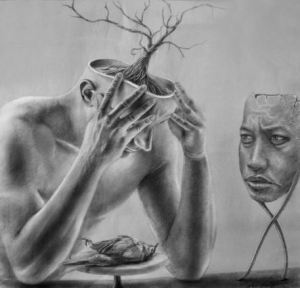
 Disability provokes a queer understanding of identity. Being queer in different environments–rural and urban–is like being a polar bear or a house cat, a bird or a lost lizard in a sewer. The criticism that Clare invokes when talking about these topics is also critical of race and ethnicity and of privilege and gender. Who was the first to claim land as an inexhaustible resource? Who dictates the gender and sexual norms? Who creates the urban space that perpetuates disability? Clare touches on all of these linked together identities and sites, and it feels so right. I learned so much from Clare’s writing, but I also picked up his sense of criticism; that calm, assertive, compassionate voice that questions why and kicks out with fervor. Clare’s criticism is beatifically formed and so god damn smart, but it’s not the only thing that keeps me in the book.
