The Emotional Dangers of Growing Up in a Predominately White School System

Colorism - NCCJ

I was born and raised in a small town in Harford County, MD. Where according to the most recent ACS, my town was 74.47% white and only 16.00% black or African American and is just a bridge crossing away from entering Cecil County, MD an area where confederate flags are ‘normal ‘and areas with relationships with the KKK. The only places I felt my blackness was embraced was within my home and my church which was a predominately black. The county school systems were predominately white as well as the general population.

From first to eighth grade, I was placed in a Catholic School. Go figure, I was the only person of color within that whole building. The thing is however, although I was not oblivious to the fact that physically, on the account of my skin color and hair texture I was different from my peers, I noticed my race was rarely a topic of discussion. I was never treated any differently from my friends and honestly did not think much of my differences.
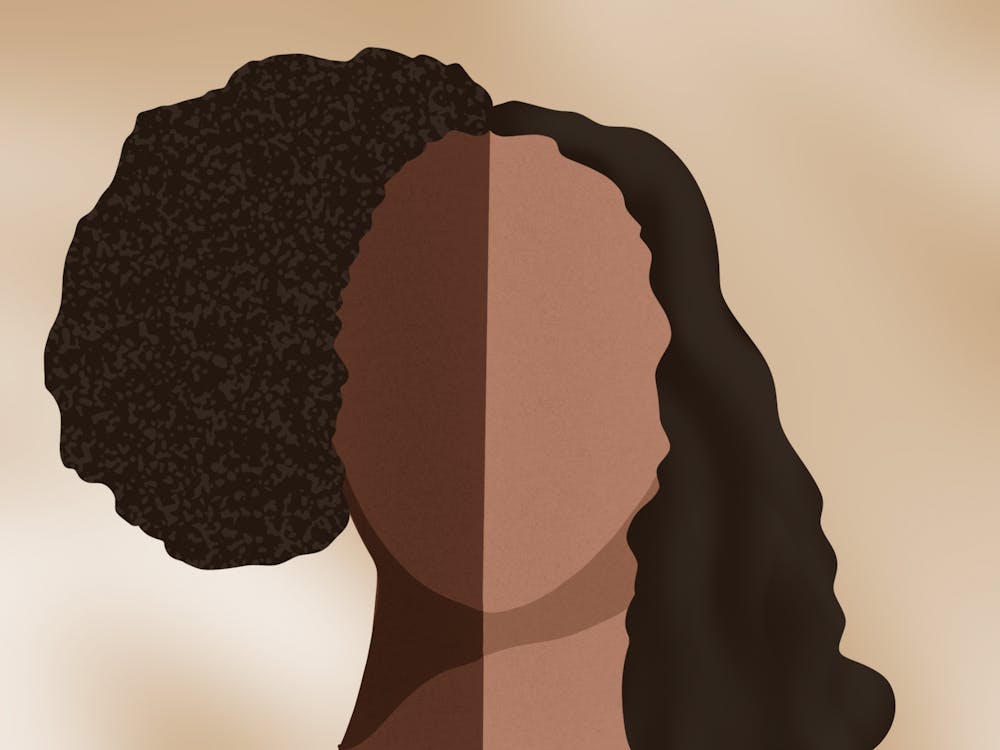
Black Vocies: Colorism is a plague in the Black community - Indiana Daily  Student

However, there would be circumstances in which my differences were evident when we would be talking about racism in history class and I would have to be warned ahead of time that the “N word” would be used and people looking at me during those class discussions. There was even one occasion where my class had a substitute teacher and she was trying to get my attention and instead of just asking another student “who is that?” she asked, “who’s the black girl?” I began to really pay attention to the elephant in the room now.

When high school rolled around, I was no longer at catholic and instead enrolled in our county’s technical high school. I was excited to finally be exposed to a diverse learning environment with more people that looked like me, but that excitement was quickly short lived.

What Is Colorism?

I was so used to just being “the black girl” in my previous school however, I was learning the variations in being black and dealing with constant questions of my “true identity.” I was now facing the sub categorization of being labeled “light skinned with curly hair” and dealt with the ignorance from those around me, the constant “really what are you?” “Are you sure you’re not mixed with…?” etc. I was constantly seen as biracial, Native American and even Hispanic, never “fully black” and it would get to the point where I would feel the need to show proof through pictures of my parents. Not only was my skin and hair the topic of discussion, but how I spoke and carried myself was also. I was frequently told “I speak so proper” and people would turn their heads if my opinions or interests didn’t match typical black stereotypes. This was damaging to my identity as these statements came from both my white and black peers and I would feel like I couldn’t relate to both and had to pick one or at times certain groups didn’t accept me for me. I believe it was during this time that without even realizing it I found myself struggling with this phenomenology of racial embodiment.
https://www.verywellmind.com/what-is-colorism-5077380

https://www.nccj.org/colorism-0

Swipe, Swipe, Block

I never was very self-conscious growing up, I knew I was chunky but really who wasn’t? I ate what I liked and didn’t think much about what people thought. Why would my waist size affect anything but the pants I buy? As time goes on you get taller, thin out a bit, but I always stayed a little hefty.
I went to a small, private, Christian school and as a gay teen, the dating options were little to none. I never had the chance to “court” or do all the normal high school things. I pretended to have crushes just to help the time pass, and keep people off my case. Once I graduated and turned 18, online dating was at its height, and I was an animal unleashed.
I started slow, with no profile pic or stats. When I got aquatinted with a guy, I’d send my picture and he would either call me “CUTE” or block me. These were men almost twice my age. I’d scroll through profiles, swiping through people in seconds. “Only fit” “No chubs” “fitforfit” were some common phrases I’d see. Everyone’s perfectly sculptured abs or tan dad bods would be on display, and for the first time, I didn’t like who I saw in the mirror. The field I was playing in was guys my age who looked like me or hot 42-year-olds who were either insane or married. But there was another field I yearned to be a part of. Muscular, proportionate, successful, super gays. Some whose bodies were their pride.
After I entered this online world, I looked in the mirror a different way. Every piece of food that was in my hand was calculated and no matter what It was, once digested, I was filled with regret. The freedom and opportunity I seemed for years, ruined the way I saw myself, and it’s a constant battle to love me, the way I am.

An Unhealthy Drive

This dreary September 23rd morning, my car windows fogged up, and I tried to get to Campus using the highways. It went as well as you expected. I was blind as a bat, and had to stop at the side of the road so I did not get into an accident or get myself killed. I e-mailed my professor that I could not make it to class this morning, and she said that was fine.

As I waited in my car, wiping away the fog from the windows, it got me thinking about why I was so determined to get to Campus. I, of course, wanted to pass my class, so I strive to attend every session as much as I can. But was one class worth risking my life for? Especially after learning that she recorded her lesson.

This got me thinking further about other people as well, people who would risk life or limb to ensure their daily lives could go as smoothly as possible. For example, essential workers, or workers who could not afford to stay at home and be unemployed. They risked infection upon themselves and others to ensure that they would survive. And I have to wonder if this kind of mindset is ingrained into our society and imprinted unto us. I mean, income or not, it is their life to consider. And excluding the whole pandemic debacle, this kind of behavior is none too recent. I’ve seen sick people go to work, and work themselves to the bone, because the alternative was being potentially let go by their superiors. And they cannot complain, because it’s futile.

It’s honestly a scary thought that we as a people don’t think too hard about this, where our lives weigh less than the products we can create, whether material items or work. I can only hope, I don’t end up like that.

Depressed Plant Mom

I spent almost every single day of the first six months of 2020 crying myself to sleep. At first I didn’t realize it, but I was dealing with the repercussions of traumatizing events. Before quarantine I thought I was just very very upset over a break up. And rather than sit and face my problems head on, I forced myself to be surrounded by people every second of the day. I also refused to let anyone know I needed help. I knew I needed it and I knew there was something wrong, but I struggled to reach out and tell someone. Instead I was spending every night crying myself to sleep, and then waking up the next morning with a forced smile on my face. I still remember one night after classes I began my walk up to my apartment on the hill next to walker garage, and out of nowhere I realized I had to go spend the next couple of hours by myself, alone, in my room. The realization was an obvious one but for some reason I did not process it until I was halfway to my apartment. Suddenly I couldn’t breathe, and I began to sob as I got to my apartment. I walked straight to my room and cried until I was numb and fell asleep. This was only a few days before campus shut down because of Covid-19. 

When the pandemic hit and I had to go back home, all of the things that I had been ignoring began to surface. I was back in the environment I had been wanting to avoid, and I was alone. Every night for the next few months was very similar to the one night I had walking up to my apartment on campus. There was so much more than just the pain from the break up that I had been simply refusing to accept. But this time I knew I could not let myself continue to hurt, as I did not have people to use as an excuse to ignore my problems. I began to notice how my emotional pain was beginning to affect myself physically. I was not eating all day and I was spending the entire day in my room by myself. I was losing weight, losing hair, and it felt like I was losing myself. 

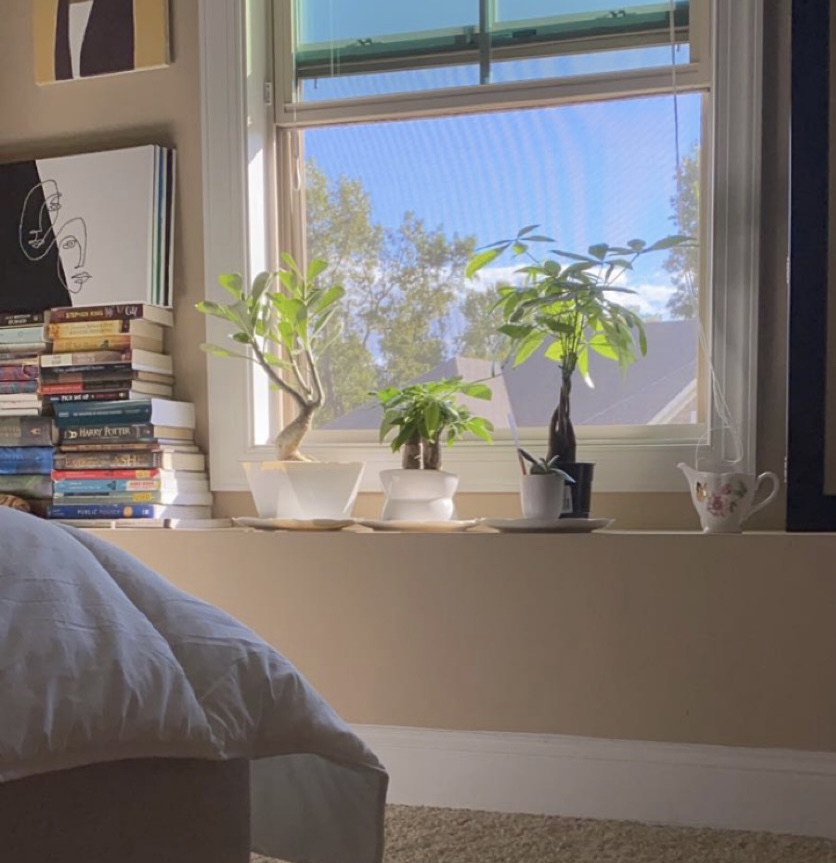
It was a very long and difficult process to finally get to a point where I felt okay. Weirdly enough one of the main things that helped in my healing process was buying my first plants. When I got my plants I quite literally went into plant mom mode. I found a few from Home Depot and they were all wilted with leaves falling off. Now I had something that I was forced to take care of. I’d wake up at 7 am everyday, open my blinds to make sure they had plenty of light, water them (when needed), repot them into new pots, and sometimes I would even just sit and talk to them. As I took care of my plants, I was also taking care of myself. I knew just like my plants, I also needed care too. I also need light, love, water, food, and just someone to sit and talk to. Some days are better than others, and I still struggle with my depression. But now when I look at my plants, which are all a beautiful shade of green, standing up straight, looking healthy, I know that I will be okay. 

Body dysmorphia as a female athlete

From the day you are born society is always going to be telling you what you should look like and how you should act. But in reality, it is really up to you how you want to want to look. Growing up as an athlete I had always noticed I had thighs that were a little bigger than all the other girls, and shoulders that were a little broader. When I was high school I never thought anything of it because I still looked like everyone else. With social media giving me all the information on how my body should look and I was still fitting into that category. Sure my body was a little more filled out but I still looked like most of the girls on the internet. Before I knew it, I was committed to play my sport at a division one level which had always been my goal as an athlete. Something you tend to forget when your a freshman in college is that you could be competing against girls who are now 4-5 years older than you, and have been working out that much more than you.

When I first came into college, I weighed roughly 135 pounds. I liked the way I looked. Slim in all the right places from what social media had me to believe. But I didn’t come to college to just look how I thought people wanted me to, I came to get an education and succeed as an athlete. Before I knew it, I was in the weight room 3 times a week lifting weights I didn’t know I could lift. By the end of my freshman year, I had gained so much muscle in every aspect of my body, I weighed 147 pounds.

All the sudden I don’t look like every model being posted on instagram. My thighs, arms, shoulders, everything on my body was different from everything social media was depicting us to be. You start to lose your mind a little bit when you look one way and begin to believe that society would no longer deem you as “attractive” or “normal”. With this leads to so many unhealthy aspects of life. When it would come to refueling my body, I would say “I’m not hungry” or lie about already eating just to save myself a few pounds that. I felt like I didn’t need. It becomes a constant battle with your mind everyday you step on the scale and feel like you weigh to much when in reality your body needs that to protect itself. As an athlete, your body needs hat extra bit of protein at a meal, and it needs that extra muscle on your bones to prevent injury in any way it can. It wasn’t until this year that it fully clicked in my mind how much my body needs this extra muscle to protect itself. Trying to put yourself into a mindset that is okay to not be as social media may tell you to and let your body be what is best for you. My body is at the strongest point it has ever been at because I allowed myself to just let go and do what is best for me. So many not only female athletes but all athletes struggle with this concept and I feel like it is not nearly talked about enough.

Use of Photoshop on Social Media

It is rare to see a picture on social media that is free of photoshop or Face Tune editing. Many people edit their face or body to fit within society’s beauty standards. I’m sure many of the people you follow on social media have at least one picture on their page that is Face Tuned or photoshopped. Today, the beauty standard is to have a small waist, yet be curvy everywhere else. This preferred body type, in my opinion, became popular due to celebrities and other figures in the media posting images that are unattainable.

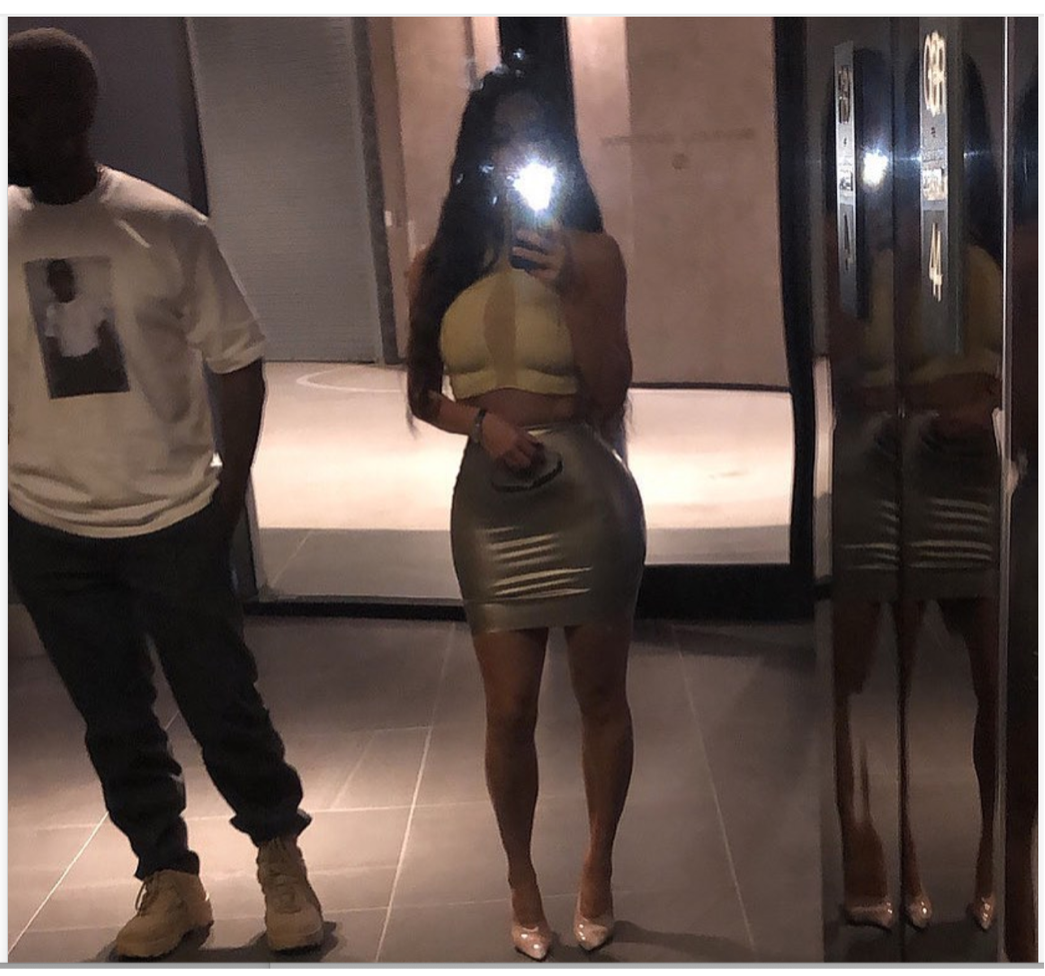
I think the most notable examples of photoshop can be found in the Kardashian family. On more than one occasion, the public has noticed photoshop fails seen within the Kardashian’s social media or ad campaigns. Here is just one example of Kim Kardashian failing to notice poor editing in a picture. You can see that the doorframe in Kim’s Instagram photo is clearly distorted, probably with the hope of making her figure appear curvier.

Kim Kardashian Instagram Post. Seventeen Magazine. https://www.seventeen.com/celebrity/a23458173/photoshop-fail-keeping-up-with-the-kardashians/.

I think that celebrities using photoshop to edit their bodies has a huge effect on body image in young adults. We as the public look up to these people because they are trendsetters. This is problematic because younger audiences believe these images are real and will likely feel a sense of dissatisfaction with their own bodies. Since so much time is spent on social media, many people are looking at images of unattainable bodies and wondering why they can’t look like these “perfect” celebrities. This leads to a variety of mental health struggles and an increase in body dysmorphia. It is extremely sad to see this, because all bodies are beautiful in their own unique way. To decrease the amount of body dysmorphia seen in young men and women, celebrities need to admit to photoshopping their photos, and/or post pictures of themselves with no editing to show the public what they really look like.

On the other hand, it can be argued that small edits to make an individual feel more confident online is not a horrible thing because nearly everybody does it. Celebrities are people too, all having insecurities like the rest of us. They should not be scrutinized by the public for everything they do, especially online. However, it is a problem when celebrities don’t admit to photoshop because this creates a negative online space, and it effects the body images of so many people.

Mutual Aid as a Practice in Love

Mutual Aid as a Practice in Love

I was recently asked why I got involved in mutual aid. My answers were the same as they have always been, it’s the end of the world and we need to take care of each other, it is a part of my politics, and a natural (human) response to crises. All of these things are very much true, and they all center me and my orientation in this moment of time. However, there is a piece of mutual aid that I’ve failed to name, but one that I feel deeply through the most sacred parts of my body.

Continue reading

Flunking Bio(logical sex)

The concept of “biological sex” is bullshit. When talking about trans people and the sex they were assigned at birth, the terms “biologically female” and “biologically male” are often thrown around without any critical interrogation into their meaning. They’re a fallback for a lot of people who are aware that saying “born female/male” is reductionist, but who haven’t yet done the work to find more accurate terminology. (The terminology I use and recommend is “assigned male/female at birth”). For a variety of reasons, “biological sex” is a faulty concept, rife with scientific inaccuracies, that subtly undermines and invalidates trans identity. Like a pointillist painting, the closer you examine the concept, the more you realize it’s just a cluster of meaningless points of observation, designed to trick you into seeing a complete picture that was never really there in the first place.

Continue reading