Unpreventable Weight Gain: When your body makes decisions for you

In November of last year, I acquired a new chronic illness: sinusitis, or inflammation of the sinuses. It’s surprising how your quality of life can plummet from a constant sinus infection. Sinus headaches, raw skin from blowing my nose every five minutes, loss of taste and smell for months, unable to do any physical activity because you can’t BREATHE; despite already dealing with chronic migraines and other health issues, I can easily say I was never as miserable as I have been dealing with sinusitis.

After trying a multitude of medications in the span of five months, the only one that eased my symptoms was steroids. Prior to this, whenever someone mentioned steroids, the first thing that came to my mind was Baywatch. However, the steroids I was taking were a bit different. They significantly brought down the inflammation, and after being on them for a few months, improved my life dramatically.

However, those same steroids that improved my life so much, also caused me to gain almost thirty pounds due to their affect on my metabolism. This summer, I had surgery to reduce my sinusitis, and while it hasn’t gone away entirely, it’s manageable without prescription medication. However, the illness has left a flood of body insecurity in its wake.
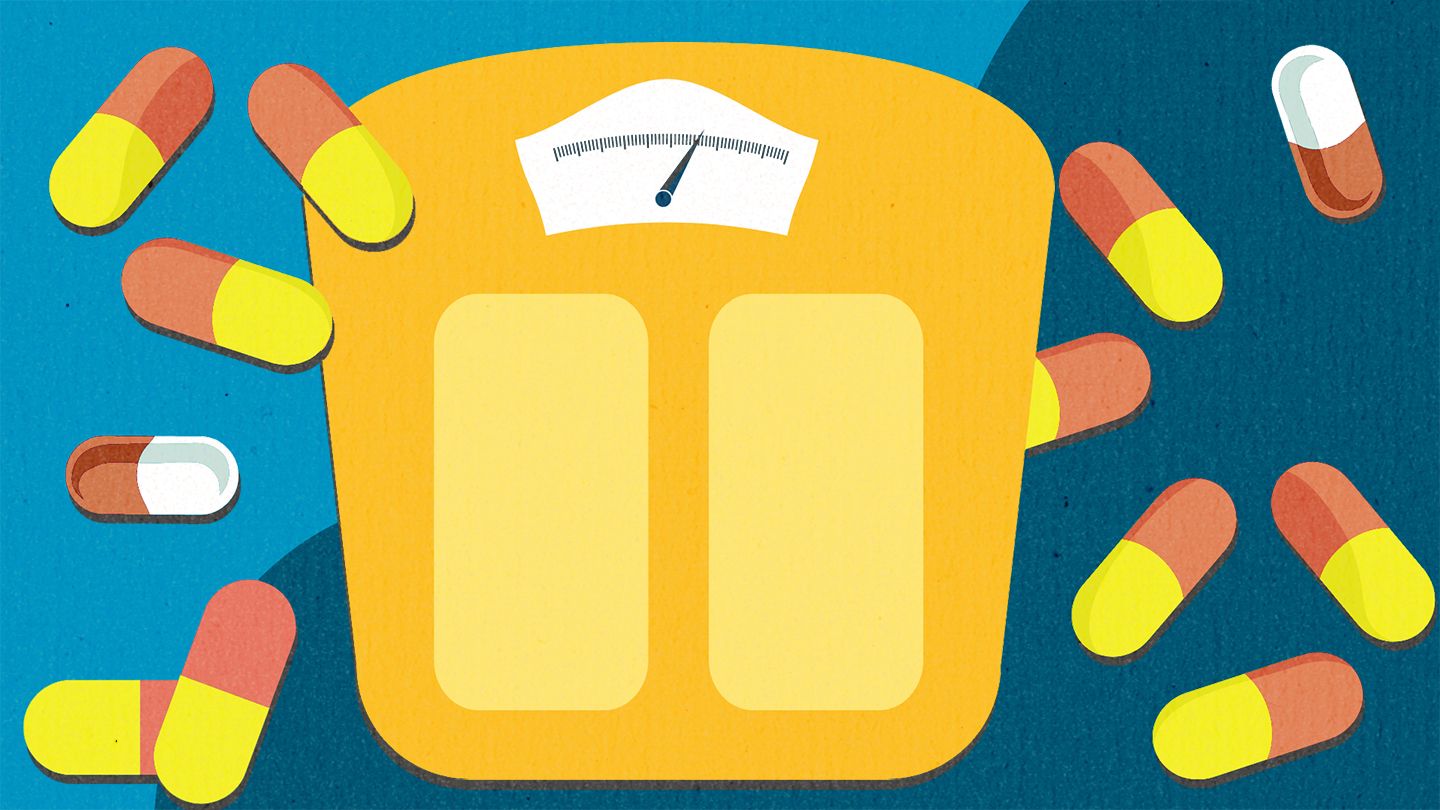
Image of an orange scale surrounded by yellow and orange pills against a dark blue background

American rhetoric regarding weight can be summed up quite easily: gaining weight is solely a result of your own decisions. If you’ve gained weight, you’re lazy, weak-willed, unreliable; the judgements go on. The messages are so powerful that even with knowing that line of thinking is wrong, even with knowing my weight gain has nothing to do with decisions I made, I felt and still feel shame for my weight gain. Before dealing with sinusitis I had been the same weight from the ages of 15 to 20. I felt comfortable in that body. And now, my body feels foreign to me. It’s crazy how quickly the way you talk to yourself can change. I’ve gone from general acceptance of my appearance to outright disdain practically overnight.

Being a teenager during the height of the body positivity movement had cemented in my brain that I should love myself, that I am beautiful regardless of the size of my body. But right now, loving my body feels like an unreachable goal. How can I love a body that is constantly putting me through the wringer? For now, the goal is indifference (which frankly, also seems like a tall order but at least more attainable). I want my body insecurities to take up less space in my mind; I want it so that when I get dressed in the morning I don’t choose my outfit based on whether or not my stomach is visible. It’s exhausting, and I’m tired of it. Although I didn’t have autonomy over the weight gain, I do have autonomy over what I do now. And Ive decided I’m going to work towards body neutrality. It will be a process, but so is everything else in life.


Housewife

“You’d make a great housewife”.

Those were the words that came out of my coworker’s mouth. For a second I stood there not knowing what to say, stunned into silence. After a few moments of silence, he goes “I’m just joking!” and I forced out a laugh to break the awkward tension between us. We were coworkers, friends in some sense, but not that close. To hear this come out of his mouth was a bit of a shock. To give some context to what I was doing, I worked in the home department of the store, and it was the end of the night. This means I was going up and down the aisles and cleaning them and when I got to the towel aisle, I began refolding them and it was in that moment that he felt the need to say that. So, was it my folding of towels that gave off the housewife vibe? How does folding towels, something that everyone knows how to do and should be doing, equate to being a housewife?

First off, this man obviously does not know his boundaries and is someone who grew up with a lot of privilege in his life. But that does not excuse him making that type of sexist joke. And why is being a housewife a joke? Some people cannot afford to go to work. Their only option is to stay at home and take care of the house and the children. And why do women have to feel ashamed if they WANTED to be a housewife? Why does it have to be something that is considered a lesser job and something that is not to be taken seriously? Just because there is not a monetary value to it, does not lessen the responsibility and the necessity of being a housewife.

Thinking back to this conversation makes me wonder, what was his goal of that comment? Was it to make me feel ashamed, was it some weird way to flirt with me, or did he try to compliment me by saying that? I literally do the same job as him, so what do I do that makes me a good housewife and him not? I hope that this man wakes up from whatever 1950’s daydream he is stuck in and comes into the 21st century.

Struggles of Being a Student Athlete

College is really hard. We obviously all know this. As a person who suffers from severe anxiety being a student athlete takes a huge toll on me. Everyday is the same thing over and over and it honestly drives you crazy. We practice for hours a day and still have class and homework. It is such a struggle to try to balance everything. I grew up as a straight A student and never got in trouble. My parents had huge expectations for me which was so hard to try to keep up in college. My grades dropped from all A’s to B and C’s. I started to struggle and sometimes still do a little bit. It is so hard to juggle everything in your life when you feel like you have no control. I do the same thing every single day and it makes me crazy. I feel like I have no control of my daily actions because I am tied down to a sport which I don’t even truly love anymore. My parents think quitting makes me a failure, but they don’t understand how mentally and physically exhausted I am. UMBC is a hard school already, but when you add in trying to play a D1 sport it makes it drastically harder. You become emotionally drained and mentally exhausted. My anxiety makes it so hard to do normal daily activities as well. My parents don’t understand mental health and the fact that you can struggle so hard with mental illness. They think I’m just being dramatic and lazy because all I want to do is go home and forget about sports and school. I crave having control in my life and have no idea how I can get it. I love my friends here and found great people to surround myself with, but It doesn’t feel like enough. I just want to be free and do what I want every day instead of constantly doing the same routine over and over. Student athletes deserve a break and coaches need to realize were human beings not objects. We deserve to have good mental health and take a step back when we need to.

Changing Bodies & Changing Times

Growing up I envied the teenagers who worked at Hollister, no it wasn’t because they had a job. It was their low-rise size zero jeans and skin-tight tops. I wasn’t like them; I had matured quicker than other girls. I would go home and Google if my body was normal. Then I came across a Yahoo answer that still sticks with me today. A person asked how to know if you are fat. And a stranger answered, “if your thighs go over the toilet seat when you sit down, you are fat”. As a pre-teen, I instantly looked down at my legs, spilling over the side of the narrow chair I sat on and convinced myself I was fat.

Times are always changing, and with that, the ideal body image is constantly being changed. With something that is always evolving, is it even ideal? One moment it’s a trend to be lean and the next it’s to be thick. We’re constantly fed by social media of how our bodies should or should not look like. Social media has the ability to glamorize everything, whether it’s drinking apple cider vinegar for a slim waist or vitamins to give you a bigger behind. We grow up with unrealistic expectations of how a body should look instead of learning to love our own. According to the National Association of Anorexia Nervosa and Associated Disorders, 95% of people with eating disorders are from the ages 12 to 25. This is the crucial age that involves so much change in our lives. While navigating through early adulthood, many are still plagued with the anxiety of how their bodies look. Loving our bodies is easier said than done, but wouldn’t it be helpful if the photoshopping wasn’t so common? 

While there’s more representation of all different body types today, there can still be so much more work to be done in allowing young people to easily fall in love with their bodies. I hope that there will come a day when we don’t compare our bodies to unrealistic expectations. 

I can gladly say, that at twenty-one years old, I have grown to love my body for how it is. I don’t compare myself with others, as hard as that can get with social media nowadays. While there are days where I feel down, your body deserves to be loved. While you evolve and change, your body is doing the same. Shouldn’t we be more loving towards it?

Sources:

National Association of Anorexia Nervosa and Associated Disorders. “Eating Disorders Statistics.” ANAD. Accessed February 24, 2014, http://www.anad.org/get-information/about-eating-disorders/eating-disorders-statistics/.

“I’m okay”, “I’m tired”, “No worries!” and other lies I tell: An ode to my failing mental health

Image description: A vast, open ocean with mild waves, it's night and the sky is full of clouds, partially obscuring the full moon. (end ID).

2020 was a train wreck, a dumpster fire, the roller coaster we weren’t allowed to get off, and it doesn’t take much looking to realize everyone is fed up and burnout from the pandemic, over a year of condensed trauma (whether you or someone you knew got sick or not), incompetent people in power, social justice at the forefront of everywhere, up rooted and cancelled life plans, the world is a dart board with every inch covered in things that will decimate your ability to keep going. But 2021 seems to show that 2020 was just a prelude to what our everyday life will be like from here on out.

Content warning!! Candid mental health talk, sucide and suicidal ideation, and open talk about trauma responses (NO details will be given about the traumatic events).

Continue reading

Anxiety: 19 years later… I begin to understand what it is.

Experts Explain 5 Signs Someone Has A Hidden Anxiety Disorder

My whole entire life, the word “anxiety” has been thrown around and used in so many different contexts that I was never really sure of it’s actual meaning. 19 years later I begin to understand that the thing is that not everyone is the same when it comes to anxiousness and how it affects you. Everyone has their own story to tell.

My biggest problem with coping with my own anxiety I have recently discovered is that I always tell myself, “Someone has it worse”. And I’ve come to realize that what a lot of other people like to say when it became obvious I was struggling. After opening up to people about what I was going through, I began to realize that just because my problems may be less severe than others, they are still important. It was then that I was able to help myself get out of the downward spiraling hole I was entering.

So a little backstory for you guys. I am a sophomore here at UMBC. I am also a student-athlete. Growing up, I lived in a house with my huge family. Even if I wanted to be alone, which wasn’t like me, it was rare I got the chance. I then adapted to having all my family around so much that it was weird to even go away for a weekend with my boyfriend. Because of how close I was with my family, it made the transition to college so much harder. I had a very hard time my freshmen year balancing sports and softball while also struggling with a new routine and being away from all the people I loved. I began to have bad days worse than good and realized I wanted nothing more to be home with my family. It didn’t help that because of the pandemic, I wasn’t advised to see anyone outside of my team. My days consisted of going to online class, practice, and then to sleep. College is obviously a time in your life where independence comes into play, but I had to learn how to be on my own without an option. I couldn’t see my family and friends and it SUCKED. The school aspect transition was just as hard. I saw all my teachers on a screen and had no type of face-to-face interaction with them to try and make a relationship with them.

Skipping forward a month, I was able to learn how to help myself get out of the little fog I had hit. I started facetiming my family more often. I built a relationship with a teammate who is now one of my best friends. And I started doing things to keep me out of a continuous routine of being sad. I began to be more optimistic towards my situation but also taught myself that sometimes you go through rough patches and you’re allowed to struggle but never give up, because I promise you it will get better!

The moral of this story was not to ask for pity for myself or make anyone feel bad for what I was struggling with. The point was to emphasis that no matter how little or big you may think your problems are, they still exist and it’s important that you acknowledge them. It is okay to struggle and it’s sure as hell okay to not be ashamed of what you’re going through.

Where the Sidewalk Ends

Euthyphro’s dilemma asks, “is it right because God wills it, or God wills it because it is right?” The first branch believes in an external locus of control, that success and failure result from factors beyond our control. The second branch believes that the self and its actions control the outcome of events in their life. If both statements are true, it becomes a vicious cycle where the snake is eating its own tail. A feedback loop based on inferiority.

Vector Ornamental Snake Ethnic Ouroboros Stock Illustration - Download  Image Now - iStock
Ouroboros eating its own tail in an infinity loop.
Continue reading

Speaking Up in the NFL

Having a meaningful, long-lasting conversation with my father has always been difficult for me. Sometimes he can drain all the energy from you with his pessimism. Despite this, there has always been one thing the two of us can talk about animatedly for hours: and that’s football. My dad started bringing me to Ravens games when I was a kid; these times together allowed us to not think about any of our issues. While I have always loved the game, it is hard to ignore the glaring toxic and racist masculinity that occurs in the league.

Last week, the head coach of the Las Vegas Raiders, Jon Gruden, had been found using various racist, homophobic, and misogynistic insults in emails from 2011-2018. As a result, Gruden resigned from his position. I 100% agree that Gruden should have been removed. What I question more is; what does it say about the corporate NFL environment that he felt comfortable to use such language for such a long time? And if he gets removed for this, what about the sexual harassment allegations against Washington’s Dan Snyder? Furthermore, what about the countless players that have had domestic violence charges?

In recent years, athletes who speak up about racial injustices have been told to “just stick to sports”. When you speak out, you get ostracized and invalidated. While there has been some notable progress like player campaigns for mental health awareness, Carl Nassib coming out as the first active gay player (and receiving a lot of support), and clubs explicitly supporting Black Lives Matter, there is still a very noticeable tension about standing up for equality. This dynamic around the NFL is one I can correlate to the relationship I have with my dad; we watch football and try to repress the other issues of our lives.

I believe that combining dangerous “locker room talk” attitudes with the toxic masculine tendency to repress allows the issues of the NFL to fester. They have removed several leaders for controversies like Gruden’s, yet the scandals still occur. To engage in true progress, the organization must have an open dialogue with the administrations, players and even fans about the very important issues these “scandals” are about. It is difficult to talk about the uncomfortable issues of life but it is vital if we are to expect substantial change.

My Fat Body

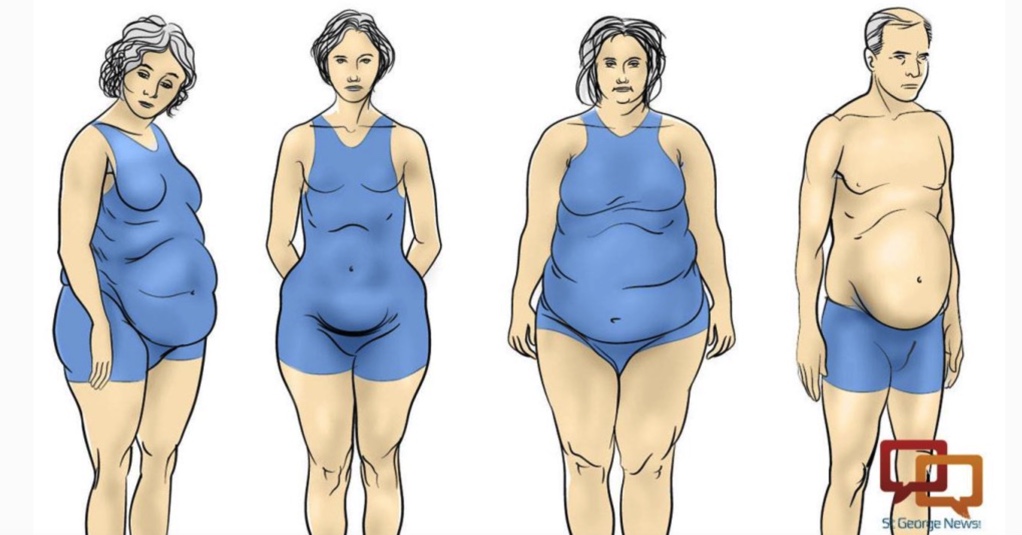
four figures shown exhibiting differing body types of fastness. Three women and one man. all wearing blue, all have fat rolls

The idea of being grounded and being you is something I’ve always found difficult to process, this being the split of mind and body in a sense. Growing up my body meant everything and nothing to me, I never liked it and I never noticed its existence aside from what it was able to do for me until people started to notice only that about me. In a world that values mind over body it’s hard to conceptualize that sometimes. It feels like the world only values your mind when your body is normal, the standard, or desirable, this in many ways translates to my experience of fatphobia.

Continue reading