
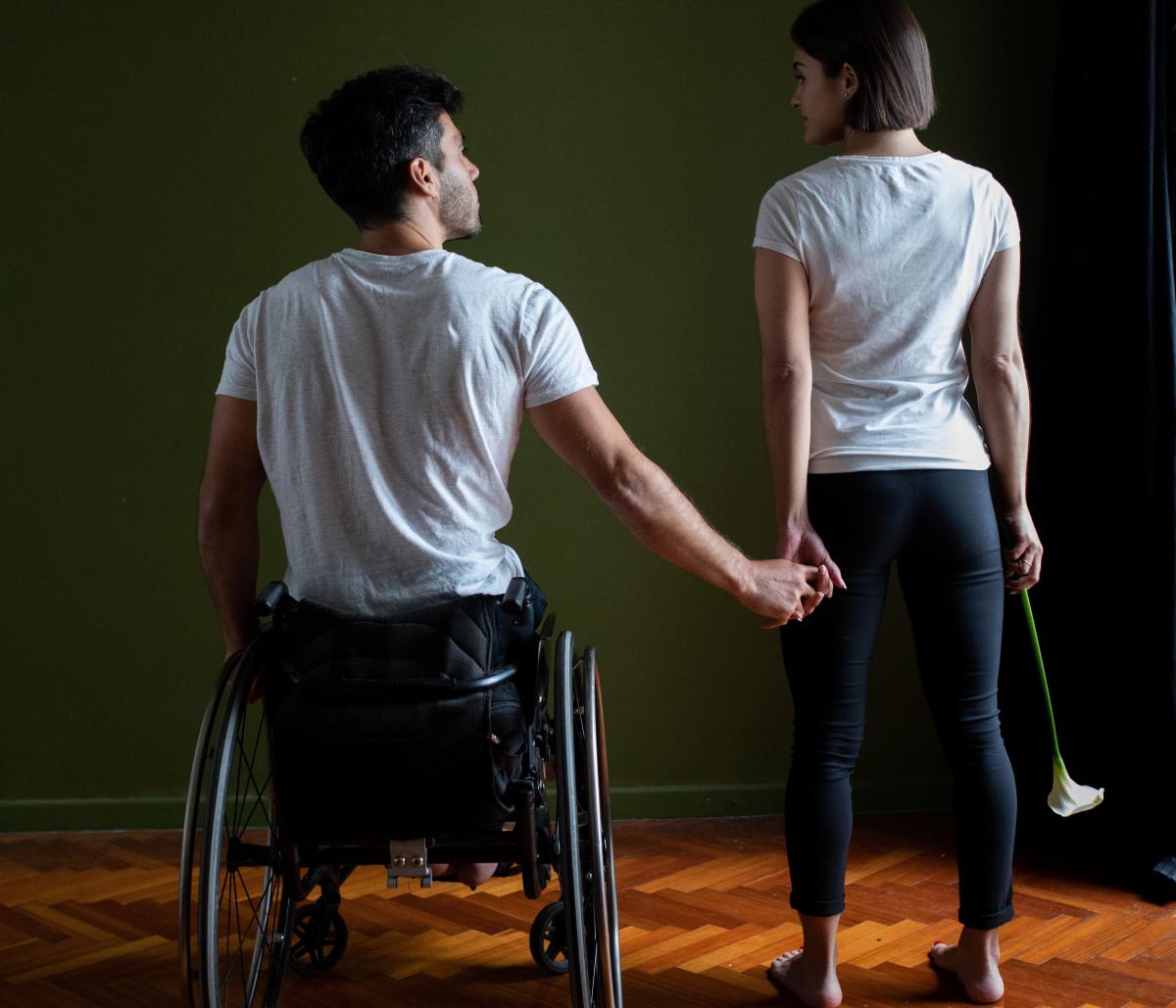
Growing up, we saw physically disabled people as the odd ones out. I could take responsibility for viewing disabled people that way, but that was how everybody around me viewed them. I had no chance of “knowing better,” at least in that environment and age. That was the case until I was introduced to this class and had a fair share of friends who were open-minded. These people changed my thinking in both positive and negative ways, but the point that they taught me that people are different; not everyone is going to look and act the same as everybody else, and that is okay. I know the previous statement can come out as a very “duhh” statement for most of yall; however, I didn’t use to think like that. It was more of “you are weird! something is wrong with you.” And of course, like most adolescents who are just discovering sex and how it works, I wondered what sex must have been like for people with spinal cord injuries and other disabilities like that. I asked myself, “Do they feel anything down there?” or questions like, “can women who are paralyzed from the waist down give birth?” Most of these questions came from mostly ignorance and a bit of curiosity.
Sexuality and Disability: The Missing Discourse of Pleasure by Mitchell Tepper opened my eyes to this issue regarding disabled people and sex. An article like Tepper’s is exactly what people like me missed back in junior high. From reading the article, I learned that sex is more than just borrowing some friction from a partner, and there are more ways to derive sexual pleasure that does not involve the privates. I found it heartbreaking that some disabled individuals give up on their sex lives because they believe that there is no point in trying, “nothing will be the same.” And that is when Mitchell Tepper steps-up and encourages people with SCI that their “sexuality is their responsibility.” These people learned more about the spinal cord-injured bodies and embraced their disability. Evidently, disabled people in wheelchairs tend to have a more difficult time finding a sexual partner than abled individuals; most of this is due to the stigma around disability and sex and partially due to self rejecting before they can even try. Self rejection is a problem that we need to tackle. We (teachers and professors) need to teach about pleasure and sexuality in order to shine a light on this topic of sex and disability and hopefully reduce the stigma and misinformation around disability and sex.


Yes, yes YES. I really like how you summed up the relationship between physical disabilities and sex and the stigma surrounding it. For me one of the first exposures to people with visible disabilities engaging in sex was “Me Before You”. While looking back, that’s not great representation of disability, it still did its job by making me think about it. People with disabilities are often written of as not sexual beings, but why does disability have to stop sex? We are all innately sexual beings and writing off older people and disabled people as not sexual is so problematic. We as a society need to stop stigma surrounding sex, including what it looks like and what kind of person can be sexual.
I remember that movie! I always wanted to know how people who actually have a physical disability thought about it. Because my young self loved it and was sobbing during the end.
Empowerment is such an important tool; for everyone. No one should feel like they have to give up on their sexuality. It’s also amazing that there are services such as sexual mobility aids and helpers that allow people to experience pleasure to the fullest. Sex shouldn’t just be seen as some taboo that is not talked about, but rather discussions surrounding sex need to be embraced and have a bigger part in our societal discussions. People with disabilities especially benefit from this clarity.
I think your insight about really coming to realize that people are different isn’t as “duh” a moment as you might think; most people, at some point or another, realize the full breadth of this statement and it often isn’t until you’re given direct examples and able to make connections between concepts and real life that this realization sinks in. I also really found the article on sexuality and disability really interesting, and it really does emphasize how little material on sex and disability there is in the mainstream. For many people in the class, the reading might have been the first discussion of it they were exposed to, and through no fault of their own. It really is so powerful to have conversations about these things because of the ability they have to open people’s minds.
I love this!!! Among many things that need to be added to the biology/sex education curriculum in school, this is definitely a big one I think. Especially revolving around the fact that being intimate and feeling good does not have to involve sex in the penetrative or genital touching sense. Emotional intimacy is so important and so many people would benefit from learning about it. There are even many adults who still don’t know the difference.