
First it has to be acknowledged that there is no one “look” and everyone perceives labels to mean different things. How one styles their clothing is going to reflect what they think looks good on them and expresses themselves accurately. Everyone has a unique perspective that has been shaped by their experiences. Just because I perceive these things as gender neutral does not mean everyone does and it should also not be assumed that wearing any style associated with gender neutral or gender non-conforming makes someone gender-non-conforming. To that end, wearing or dressing in a way that might convey a gender (such as wearing more masculine or feminine clothing) does not mean that someone identifies as how you are perceiving them. As tik toker kissmychaase put it “Even when I’m fem I’m still a them.” meaning even if this person dresses feminine they still go by they/them pronouns and that should be respected.
The clothes, shoes and accessories we put on our bodies says a lot about who we are and deeply influences how others interact with us. In “not just the reflexive reflex” by Mary Kosut and Lisa Jean Moore clothing and accessories are described as part of an identity-kit. When this identity-kit is stripped away it takes a chunk of someone’s individualism and uniqueness. Clothing is important, it allows self expression and can create comfort.
Fashion is outfits (clothing and accessories) and make up that project one’s belonging to a certain group. There are many types of Fashion. All of it is subjective and while some outfits are easier to deem as part of a subculture, others are harder to identify or explain. Some examples of fashion subcultures are Goth, Lolita, Hipster and so many more.
Gender neutral fashion is one of the most extensive groups of fashion. Mostly because it encapsulates so many other subcultures and can drastically change with each one. Each subculture, country and group of people are going to have another perception of gender and normal, and with that the idea of gender non-conforming changes.
America and many other parts of the world live in a gender binary, the perpetuation that there are only two genders male and female and someone is either part of one or the other. In Western society things like skirts, frills, lighter colors and dresses are considered feminine and associated with women. While simpler colors, pants, collared shirts, and suits are considered masculine and associated with men.
Gender neutral fashion usually aims to make it unclear what someone’s gender is, this can include techniques such as baggy or more rectangular clothes to hide body shapes, underwear like boxer briefs which can work for anyone, and culottes which can be described as pants that are flowy enough to also look like a skirt.
Here is an article with some brands and examples of gender neutral fashion :
and here is one of the pictures that stood out to me
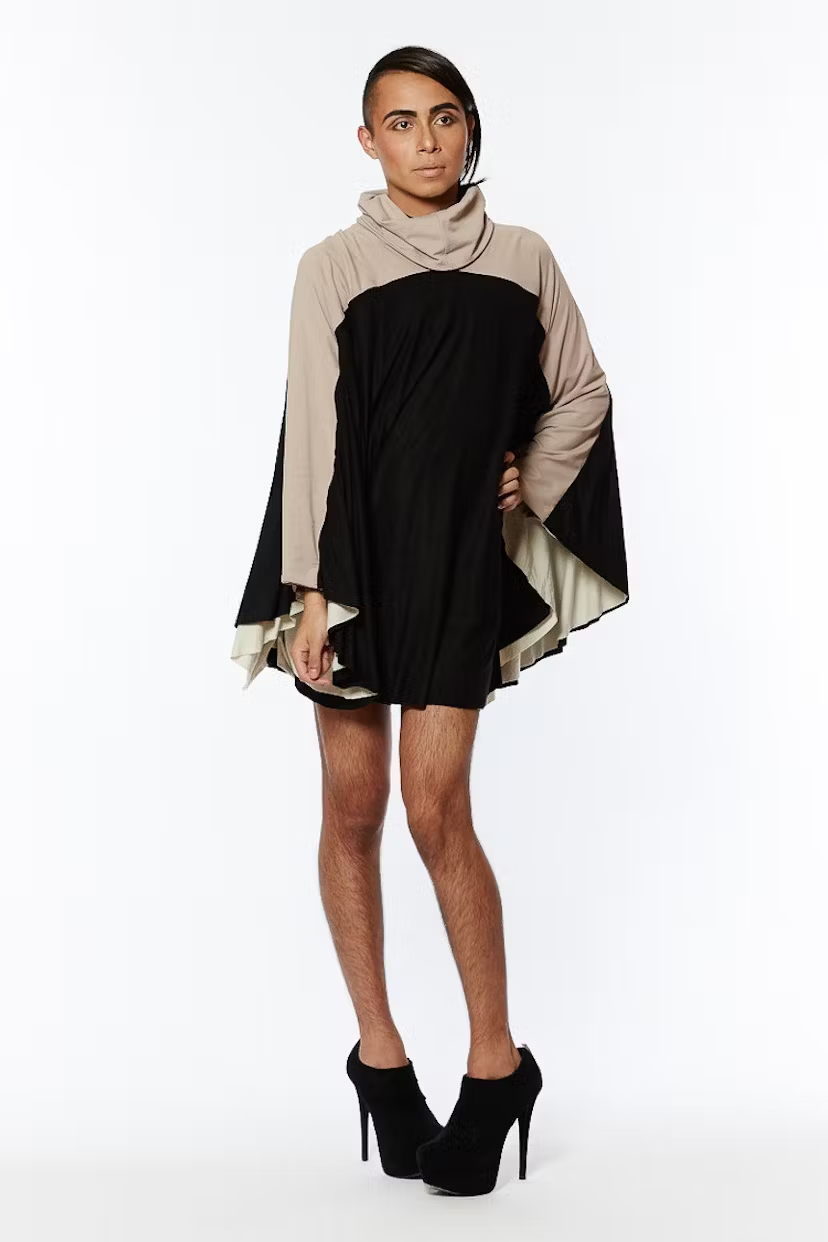
Also worth noting gender and pronouns are not the same thing, gender neutral, genderqueer, genderfluid are all labels and can only be applied if the individual chooses to apply them themselves. No one gets to say “oh you use [some set of pronouns] you must be [this gender]” and vice versa. No one has to have a label and you can also have multiple labels. They are just sets of words to help unify groups of people.
And make looking for clothes easier (mostly joking).


This piece was a very beautiful and detailed explanation on how diverse fashion is. What I love about fashion is how it is becoming something thats open to everyone of all types. Gender is something that use to rule fashion but I am glad that it’s restrictions on who can wear what are becoming obsolete. I love that you added a website that shows examples of non conforming clothing. It was very insightful and helped me to understand more ways that clothes can be styled fluidly.
I love this article because I have been talking about this with my family for MONTHS! There are so many barriers to gender-neutral clothes like money and culture. As a black trans-masc person it is so hard finding clothes that makes me feel comfortably while also paying homage to black-American culture. I mean of course I could mix and match clothes but there are few black-American gender neutral/inclusive brands that I often feel like I have to conform to the binary or have to forget my history. Also, it can be difficult to find gender-neutral clothes for curvy bodies. Living in anti-black and Eurocentric society clothes are rarely made for a body like mine that do not require me to dress baggy. It can be very discouraging and make it harder to find a safe space.
Gender neutral fashion is absolutely one of my favorite types of fashion, especially as a nonbinary person. Because most of my clothing is in a women’s size, I try to make myself seem more gender-neutral with boxier fits and pants worn around my hip line. Button-up shirts also make up a huge portion of my wardrobe, which helps in making my torso appear less shapely.
As someone who is deeply interested in fashion, I do agree that assumptions are all too easy when one dresses a certain way. At work and outside, I have been called “sir” several times, and it does dishearten me a bit to recognize that I am being labeled a certain way by means of my way of clothing and hairstyle. However, I would argue that some outfits, such as simple sweater and sweatpants or some arrangement of top and shorts, do not fall into any facet of the gender binary and are arbitrarily placed there through minor aspects such as the colors. Personally, I feel happier simply adorning such neutral outfits with other pieces that make me feel happy and comfortable, such as ankle boots with a high block heel. Gender neutral fashion, like all subjects of gender, is constructed from the social construct that categorizes many things into the binary. A sweater and sweatpants does not take too much effort, so it is considered “masculine”. So I ask, what is neutrality other than disregarding gender norms and simply adorning oneself in a way that works?
The clothes that we put on does determine who we are because it is a reflection of our own personal tastes and preferences that we then reflect towards society. I don’t personally partake in gender neutral fashion all that much but since i’m a photographer I see and shoot with people that do have those types of styles which makes for cool contrasts. I think its always good when one can express themselves through there clothing, whether it be gender neutral or other. Interesting perspectives though and very informative overall.
I agree with clothing being associated with gender. If I wear a dress I know I will probably be stereotyped as well as if I were to dress in mens gym shorts and a t shirt I would probably be looked at, because, society by just looking at me will judge me for looking like a girl but dressing like a boy. Some days I just wear baggy sweatpants because I do not want to dress feminine or masculine.
I resonate with so many of the points you’ve made in your article, especially the emphasis you placed on the ways different fashion subcultures interact with gender neutral expression. It’s quite interesting you bring up goth fashion because it has an extensive history of subverting the fashion expectations that are typically thought of in the context of the gender binary, like frills and ruffles! I think it’s so cool how many subcultures have been contributing to gender neutral fashion and its important to acknowledge the places / ideologies from which they draw their inspirations from. Gender neutral fashion has consistently been tied to more radical groups, especially amongst those who practice goth and punk culture and / or lived through their movements. Your post reminded me of a really cool video essay I found about this topic! https://youtu.be/P0lKhyIbCrI?feature=shared
Very interesting