When Will the Ouroboros Run Out of Body-Length to Eat?

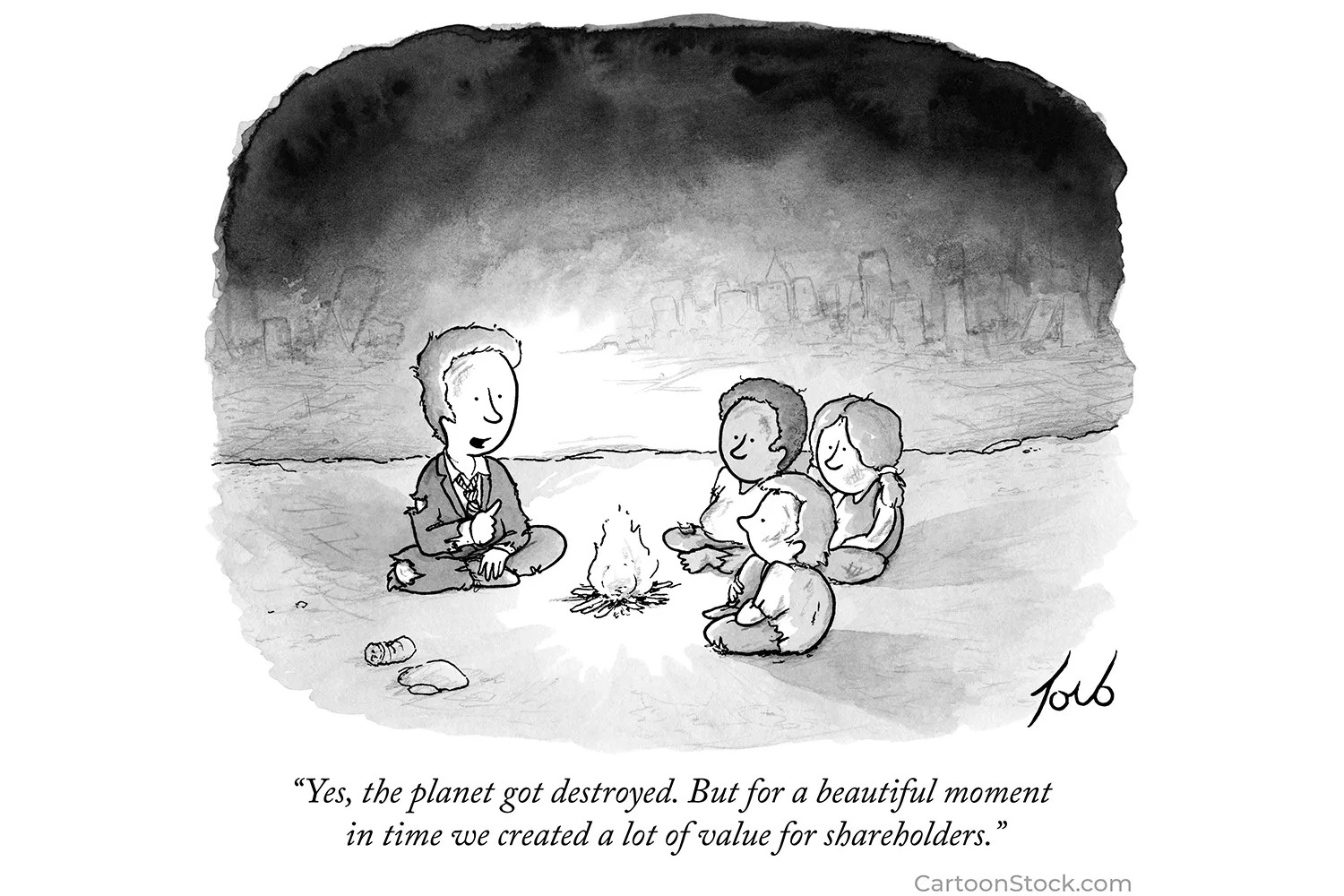
Our system postures itself as a beneficial ouroboros; one is led to believe in the presence of infinite resources fit for infinite consumption, yet one can look beyond this façade and see that individuals who rank power and profit above all else have been devouring those deemed unimportant or undesirable. Within the false notion of never-ending resources, one can see a paradox in which abundant resources suddenly become scarce when those outside of a particular group request them. It has been declared that our society cannot have free healthcare, clean air, timely cures for devastating conditions, affordable housing, public health measures, food for hungry children, or the absence of war because it is too expensive or difficult.

Beyond this excuse, one can see that the most likely reason for withholding and denying is that many of these protestors’ demands would not generate sufficient profit for the right companies, nor would the outcomes conform to the prejudiced worldview that has kept the systemic divide alive and well for centuries. As such, numerous causes do not receive attention until a problem becomes so impossible to ignore, so popular, that one may wring profit and control out of it. We produce reusable straws at the detriment of many disabled people, greenwash products made by grossly underpaid workers, and tout ‘personal carbon footprints’ in an unwalkable society, yet the majority of polluters are allowed to continue.

How loud must one be in order to be heard by those in a nearly soundproof box? How visible to be seen through the frosted glass wall that surrounds us? There is a highway barrier between the suffering and the indifferent, built by those who seek profit and power. Even in the places where this barrier crumbles, one is conditioned, either through excess exposure that rots one’s ability to fully see the magnitude of it all or dismissive falsities meant to cloud one’s perception, to see one’s suffering and look away. Those in the figuratively often-less-dangerous slow lane are told that those stuck in the fast lane are to blame for the highway, for its traffic and danger, forgetting that we are all trying to safely reach the same destination while those who built this system fly overhead.
In Defense Of Juliet

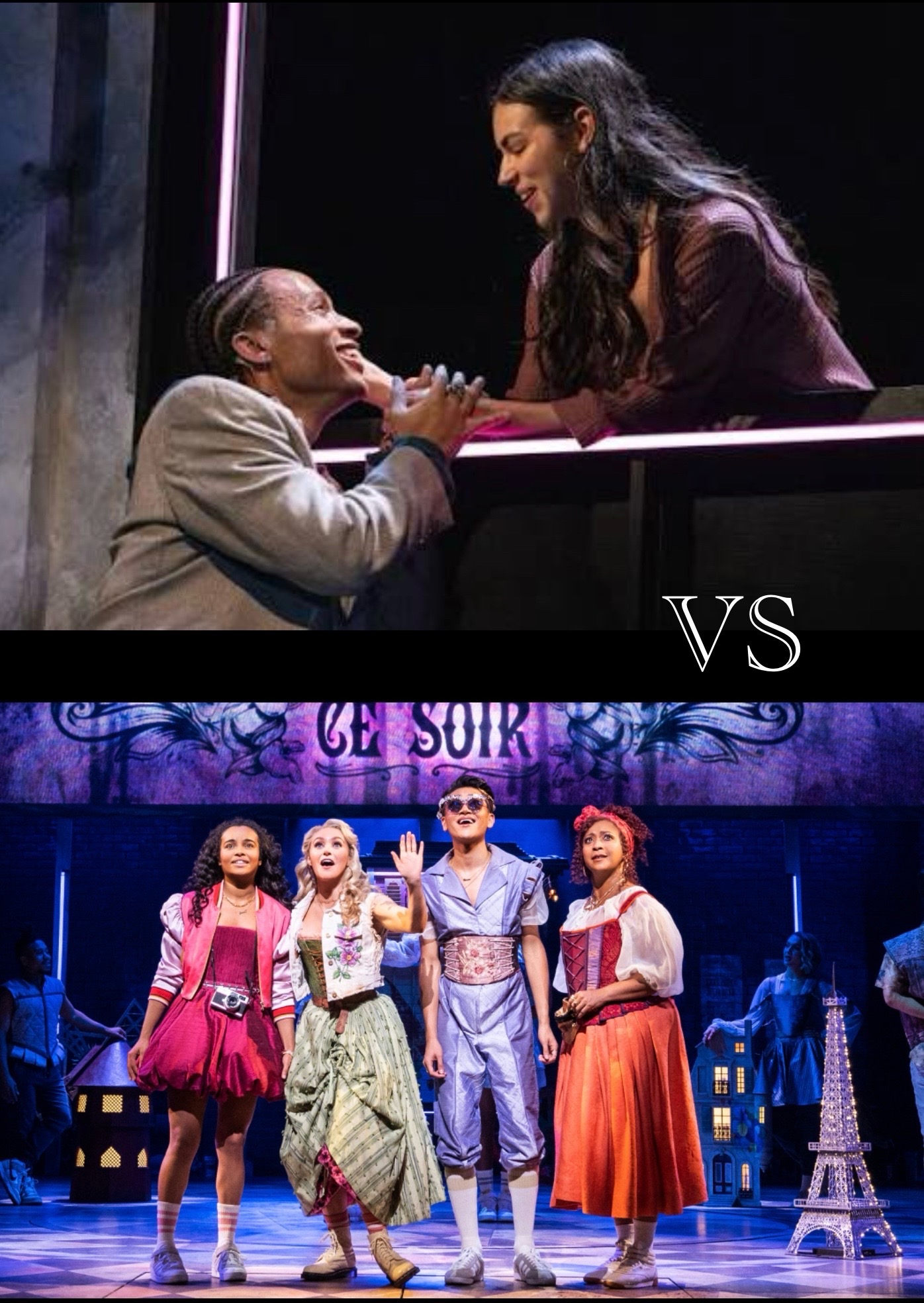
Juliet, from the titular play Romeo and Juliet, has long been seen as a woman stripped of agency. She is seen as a woman who couldn’t stand to live without her beloved Romeo, so she protested the only way she knew how and ended her own life. This is what the new broadway hit &Juliet says as the show follows Shakespeares wife, Anne Hathaway, as she rewrites her story, now starting with Romeo’s death.
For many reasons, I am not a fan of this musical’s take on Juliet’s life. For right now I will stick with this one point. Anne Hathaway ends up making every choice for Juliet. Anne takes Juliet away from her family and political ties and instead takes her on a girls’ trip to go clubbing around Verona. Without realizing it, by having Anne control every new aspect of Juliet’s life they have once again stripped her of her agency.

I do not believe Juliet is stripped of her agency in Shakespeare’s original piece. I actually believe she is the smartest character in the whole play.

Let’s get one thing straight, Juliet always wanted Romeo and her to be married. In fact this diva demanded that Romeo bend the knee when she said “If that they bent of love is honorable, thy purpose marriage” 2.2 150. She knew what she wanted and communicated it clearly to Romeo.


She also knew how fast things were moving, “It is too rash, too unadvised, too sudden” 2.2 125. She wasn’t dumb and in love, she knew that Romeo was moving quickly. The only reason she decided to speed everything up was that her marriage to Paris was to happen any day now.
And finally, with her monologue in act 3 scene 2, she describes how she is desperately awaiting for Romeo. She repeatedly says, “Come, night. Come, Romeo.” 3.2 17. Now, not to get too rounchy, but Juliet is not just waiting around to just sit in the presence of Romeo, she’s waiting to have sex with him once more.
In modern times, this seems more normal to us, but back in Shakespeare’s day, a high-class woman having sex with a man out of marriage was a big deal. So why do it? Because she knows that if she were to get pregnant with Romeo’s child, her parents would have no choice but to ensure Romeo and her got married.

Now let’s talk about the final scene. She wakes up from her sleep to find Romeo and Paris dead. At this point in history, Juliet would’ve had a hard time moving on now that she is a widow and the feud between the two families would’ve only gotten worse. If Juliet hadn’t used her body and life to protest in the face of both the Montagues and Capulets, how many others would’ve died? The feud would’ve continued and Juliet would’ve been outcast from her family. Yes, she missed Romeo, and yes, she partly took her life to be with him. But to say his love was the only reason is to discount all the other factors Juliet was also dealing with.

So no, &Juliet, Juliet isn’t just a love-sick girl who let a man take control over her life. But instead, a smart and witty girl who acted with wisdom.

Watching the Fire

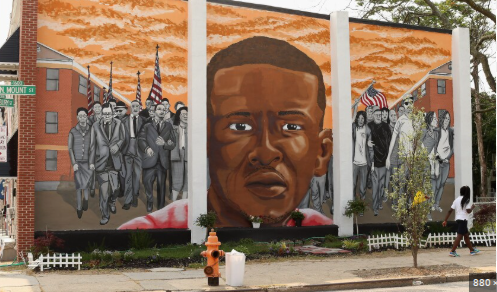
Mural of Freddie Gray in Baltimore

I was in the 4th grade when the death of Freddie Gray occurred on April 19, 2015. I didn’t know what was happening, I just wanted to be a kid. It didn’t hit me until I saw it.

When you type in Freddie Gray’s name, the first thing that shows at the top of the Google search engine is “Freddie Gray riots”, not protests, but riots. Interestingly enough, events that happened prior to the riots were peaceful protests in front of the Western District police station in Baltimore, Maryland. The people demanded that they know how Gray was in a coma after being arrested. After Freddie Gray’s death, the outcome of police brutality, the riots began.

Continue reading

Lavender Menace

Paper Promises

Many students in the education system today have a disability. This can range from having autism or being in a wheelchair. There are protections for children, but without proper enforcement, there is room for bullying or even hate to happen in an education system. We know children don’t know any better. We can give them a little room for forgiveness in some cases, but it is up to the adults in the children’s lives to teach them principles in a diverse environment. It’s usually easy for some to be respectful to others, but there are always those cases where we love to give a side eye to those who are awfully disrespectful, blatantly or passively.

We establish rules. It’s a policy. If you don’t follow this rule, we will penalize/punish you. But, we all know it is very easy to get away with things in a crowded environment like a public school (all schools are different, but I am speaking from my experience). How do we enforce rules when broken rules are missed? We don’t. We leave it up to those around them to have to courage to go and tell an adult. This can be difficult for some children, especially when there are so many factors that come into play. A child can know something is wrong, but feels socially unable to tell their teacher when they run the risk of getting shamed by their peers.

This happens out in the real world. “Snitches get stitches.” We’ve all heard this phrase. It’s used from the smallest things to elaborate criminal organizations. Sometimes we feel as if the negative consequences will always outweigh the positives when it comes to speaking up. We can see this when we second-guess asking for a re-mark on an exam to asking for help when we cannot make ends meet. In Crip Camp, they demanded that their rights actually be enforced. This shows the importance of actually saying something about what is wrong with the laws in place. Section 504 of the Rehabilitation Act is a federal law that prohibits discrimination, not a policy that we can miss with the consequence being well-being. The things that they protest for are rights that have been passed by legislation and signed by the executive. Although policy is still enforced by regulation, like consequences, a law is something that we should, by no means, have to be compliant with being ignored.

“Thank God We’re All Wearing Masks”: State Surveillance and Protests

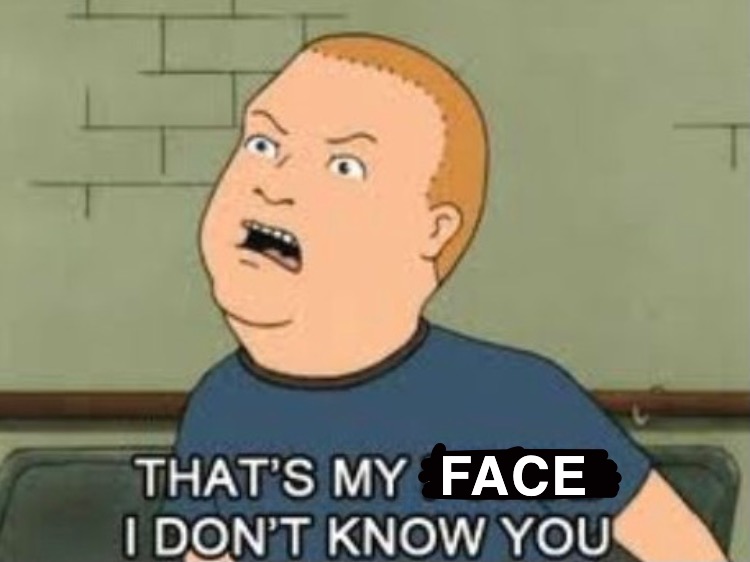
Meme I created to express how I feel when ANYONE takes my photo without me knowing. [it’s an image of Bobby Hill from King of the Hill saying “That’s my face, I don’t know you”]

We all sign privacy agreements. We all speed scroll through terms and conditions to download iOS 14. We all know the government stores our data, including our physical data. There are many examples of it, especially facial recognition. Recently, that government camera has been pointed at activists/activism, especially when it comes to protesting or “rioting” against police brutality. For example, during the recent Minneapolis protests against the murder of George Floyd, VICE reported that surveillance drones were flying over the city, collecting data to be used for “situational awareness”. There was a similar occurrences in Baltimore during the Freddie Gray protests. The government and its agents have made quick use of the physical data they gather, using everything from our location to our social media to now literal captures of our faces and bodies.

Continue reading