Mom Guilt

My husband and I have done so much work trying to destigmatize mental health needs with our kids. We are a blended family, and therefore the foundation of our marriage is unfortunately filled with trauma from previous relationships. We knew early on that our kids would require therapy of some kind to work through the pain and disappointment that often accompanies divorce. When our daughter (his youngest from his first marriage) began to exhibit behavior issues both at school and at home, we assumed that it was her way of processing how hard it was to go from one house to another. She thrives on routine, and spending one week with her biological mom and brother and then one week in our full house of seven was really hard for her. I mean let’s be honest – that would be hard on anyone, let alone a six year-old. After a year of trying all the tricks we knew, we sought out professional help. Shortly thereafter, she was diagnosed with ADHD and Oppositional Defiant Disorder. It wasn’t really a difficult diagnosis to swallow because she pretty much checked all the boxes of that disorder according to the Diagnostic and Statistical Manual of Mental Disorders (the holy grail of mental health professions). They sent us home with Adderall and told us to come back for monthly appointments to check in. The stimulant medication certainly helped with the hyperactivity and focus, but not for the “defiance” or weekly meltdowns she would have for (fill in the blank…..anything from itchy clothing to her milk not being cold enough could send her into a tailspin). We tried our best but after years of walking on eggshells, my husband and I were sometimes shells of our normal selves if she was having a bad week.

After our move from Louisiana, a state with little to no mental health care support beyond basic therapy, we sought out a new doctor to monitor her Adderall. It was this person who first threw out the word “autism”. While familiar with the typical signs of autism, for some reason I just couldn’t see it in my own child. I was not in denial, because I don’t view autism as a “bad thing”, but I guess when you’re just so close to the person, it’s hard to have an objective viewpoint. A nine hour comprehensive psychological evaluation confirmed that doctor’s suspicions. The diagnosis came as a relief to our daughter, because it simply confirmed that there was nothing wrong with her or innately bad about her behavior…she just processes sensory and information and experiences differently than we do. We would now have to relearn how to parent a neurodiverse child.

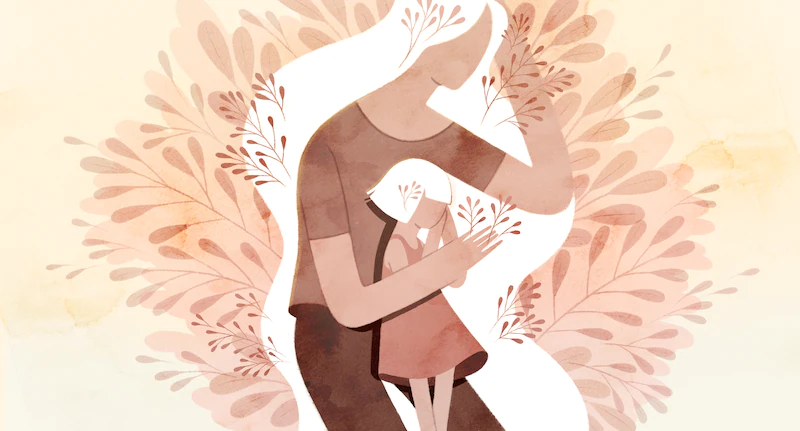
I got home from that appointment and broke down into a puddle of tear-soaked guilt. How could I have missed it? How could I have succumbed to so many moments of frustration when she couldn’t help it. There were so many times that I took her behavior personally and I allowed it to put a wall up between us as a way for me to protect my emotions. This may sound crazy but I have yet to find a human that can hurt my feelings as much as one of my kids can. Motherhood is sometimes a mindfuck in that way. I know that I need to let this go. I know we were doing the best we could with the very limited knowledge and resources that we had at the time. I want to blame the system, and I know I can and should. It’s very broken and there are so many kids and families suffering because of it.

But dammit….I wish I could turn the clock back and do so many things differently. Be better for her.
The Constant Pressures of Health Care

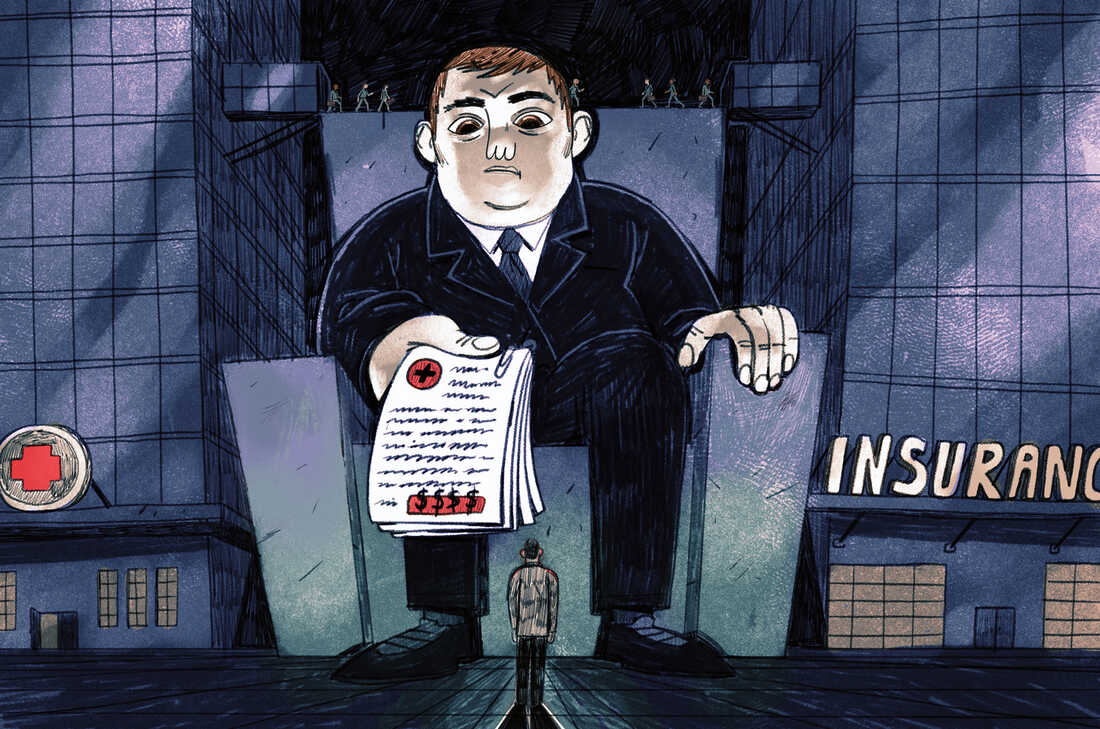
Being a student right now with so much to gain yet so much to sacrifice is very hard right now. Stress plays a big factor when trying to find the right lifestyle balance for me. As a grown adult I am a full-time student yet on the other hand am dependent upon myself to pay my tuitions off and other bills that I have to pay outside of school. Due to my tedious schedule, I only work a certain number of hours and believe I don’t get paid much for what these expenses account for. That stress comes to play when I have all these bills mounted up on me when I haven’t even gotten the chance at parenthood or life outside of academics. At the moment I have another new bill coming at me because now I have to pay for health insurance instead of being under my parents, and as you know now, everything is inflated and has been for a while. I shouldn’t have to be subjected to pay 250-350 dollars a month on my own for an insurance provider that I will only use probably once or maybe twice a year. To me that amount is ridiculous, and we still haven’t even talked about deductibles etc. When you look at other big countries, health care is usually free for everyone because it’s something that is a vital and essential part of your individual well-being, so I don’t get why those same rules can’t apply here. Now that I’m writing this, I’m left wondering how people with disabilities carry the burden of these medical expenses considering the fact that those bills are probably higher than what I even have right now. The best course of action that I can take right now when it comes to health insurance is capped off as well. When I mentioned capped off, I refer it towards my company health care plan, but even so requires a set number of hours that you have to complete in order to even be eligible to apply for such benefits, for which I don’t qualify for at the moment. Right now, I’m only left with private providers that charge me a boat load of money just to be considered at having a health plan, to just say I have a health plan. As it comes to looking towards the future, I’m going to have to ride out whatever plan I can get best for at least a year before I can come back and apply for my company benefits after graduation when I pick up more hours, God willing. With all of this going on, I’m not even a parent so I know the burden must feel even bigger as a parent when even more expenses come into play once other people are dependent upon you. To say the least, its nothing short of amazing how not just regular parents deal with expenses surrounding their children but parents who have to navigate these expenses and other factors of life when they may have children or other siblings with disabilities or abnormalities. As for me, I will keep my head up and see where this whole life thing takes me a year from now or whatever, but its certainly straining and stressful ill tell you that much.

When I say I can’t, I really mean I can’t

I went to a private Catholic school for many years and because of that, many  of the things I learnt there still stick with me today.  Let me tell you about my experience in a Catholic school as a student with a learning disability.  I should preface by saying that I didn’t get a math learning disability diagnosis until I was 20 but my parents and I always knew I couldn’t do math even when I tried my hardest.  I’m not going to name the school because it wasn’t all bad, just mostly.

I’ll never forget the teachers who made me feel stupid and less than.  There was a math and science teacher who was rather intimidating to begin with as she was notably strict with an ever present serious expression on her face.  Mrs. B, we will call her, cared about the students but patience wasn’t quite her forte.  She didn’t understand that I just didn’t understand and she would ask me, what don’t you understand and I would answer, I don’t know…I don’t even know what I don’t know.  What frustration.  One time, she sat next to me trying to explain some concept to me and she looked at me and asked, “Weren’t you taught this last year?”  I felt my face get red, “No?” I said in a small voice that made me sound like a mouse.  She got up and said she was going to ask my teacher from the previous year.  She left the classroom and to this day, I don’t know if she just stood outside of the classroom for ninety seconds or if she actually asked the teacher but she came back and sat beside me and told me my math teacher from the previous year said she did teach us said concept.  Did it really matter though?! I didn’t know how to go about this math problem so why couldn’t she just explain it to me again (not that I would have understood it had it been explained to me a hundred times)?

In the fifth grade, my math teacher, Mrs. L was more understanding and a bit more patient…with me anyway.  She even tutored me a few years after and I think she understood that I struggled with math but I don’t know if she knew the extent.  There was a day when we had a substitute teacher for her class and this lady was notorious for yelling and just being a miserable human.  We were doing long division and I couldn’t remember a step or I couldn’t part of it in my head, I don’t recall, but she just looked at me and said, “You don’t know how to divide, do you?” I didn’t know what to say.  I don’t know why but that memory has always stayed with me and it still stings a bit.  

These are two minute examples but the point I wish to convey is that this institution was not equipped to help students who could not grasp a concept the first or second time around.  I would always look around at my peers to see if they were as lost as I was and they all seemed to get it.  Uh-oh.  I can’t ask for clarification; I wouldn’t even know what to ask, it would be a waste of the teacher’s time, I’ll just quietly sit here.  

My teachers used to get so frustrated when I’d say “I can’t” and I said that all the time but I really meant it.  I didn’t know I had a math learning disability but I was certain there was something about my brain that prohibited me from comprehending it.  I tried telling people I wasn’t being dramatic, I wasn’t trying to get out of doing the work, and I wasn’t just being hard on myself.  I really, truly could not do it.  One time, on a math test, I was so frustrated with not knowing what the heck I was looking at or where to begin, I just wrote IDK for every answer.  The teacher of course made me retake the test and only then did someone start to take me seriously when I said it’s a bigger problem than they would like to believe.  

I am really lucky to have had my parents advocate for me when I was too embarrassed or scared to.  I had a math teacher in high school who recognized and accepted that I had a learning disability.  She would sometimes tell me when I got frustrated with myself, “You just suck at math but you’re so good at other areas like writing and Spanish.”  She was kind and patient with me.  It has taken a very long time for me to learn to advocate for myself and to speak up but I have started doing so very recently.  I still need to learn to be a little more forgiving towards myself.  

Brain dump

These last few weeks of topics have been incredibly hard-hitting, drudging up many of my own experiences and frustrations, as well as igniting my excitement to share what I do know or hear what others have learned. Neurodivergence, disability, chronic illness, depression, bodies and their accepted forms. It has been overwhelming at times.

I often find my brain caught in a loop trying to process the emotions of my own experiences, trying to process the experiences of others, trying to find an answer, a solution to this fucked up world. All I can come back to is There is no winning. It is a phrase that I first iterated as a teenager, and have never been able to let go of. At that time, it was in reference to toxic parental relationships (still is sometimes haha). But I have found it over and over again in so many different aspects of life. Medically, for me there is no winning. If I am right about what is going on with me, my body is broken, sick, abnormal. If I am wrong, it is all in my head and everyone was right, I am just anxious or need to eat better or need to just toughen up and push through and “learn discipline”. When it comes to the world and its flaws, there is no winning. I can’t fix the socializing factors that create the horror that is racism, misogyny, white supremacy, genocide, ableism. I can do my part to not contribute, I can do my best to combat the systems in place that create those, but there isn’t enough time in my life nor energy in me to truly fix it, change it permanently. It can’t be done in one lifetime. And it breaks my heart over and over again. We’ve discussed recently how even in a small scale, adjusting to accomodate and correct for one person or experience can have a negative impact on another. We can’t create a space where every individual person is able to be comfortable and free and happy at a basic level–depending only on physical and emotional needs, spaces with lighting levels and seating and maneuverable space and learning formats or communication formats suitable to every person, where stims of any kind are acceptable. The alternative is creating separate spaces for different needs and desires, but to me that borders on segregation and isolation once again. We move all the people who can’t function in the “common” way into a new space but isn’t that the same as just telling them not to come at all. And that is before thinking about the resources that would require, the infrastructure, the training, the social relearning and culture shift that would have to occur. And how do we globalize that? Is it even possible? There is no winning. We can’t force entire cultures and countries to alter their traditions and ways of life, and so many of those are firmly and strongly holding to the truth and righteousness of their beliefs and thus the wrongness of any others and how if it is wrong it cannot be tolerated.

I suppose that I would at least like to start. I want to create one place in this world where some semblance of balance and peace and compassion can exist, where the voices of the wronged are heard and reconciled, where people are respected without a question or hesitation. I want to live in a world, or at least a country, where the focus isn’t on how much we can squeeze from someone, how much we can get away with doing the bare minimum for those around us so as to avoid punishment and consequences, but rather focused on how we can serve and support the people around us. A communal world, not a individualistic world, where differences in mind body and soul are valued and honored and treated as opportunities to learn and grow rather than as challenges to overcome.

I am so sick of existential crises. I am so sick of being sick. I am so tired. I just want joy to thrive. There may be no winning, but it doesn’t mean I can’t keep fighting to create that world.

“Wish I’d known it was just our turn (we just got by)
Being blamed for a world we had no power in (but we tried)
You and I had nothing to show (we didn’t know)
But the best of the world in the palm of our hands (anything, darling)”
This line is one that plays over and over, capturing that feeling of helplessness but determination to make the best of it. Each turn around the sun gives us a chance to leave it a little better than we found it.

What Even Is Normal?

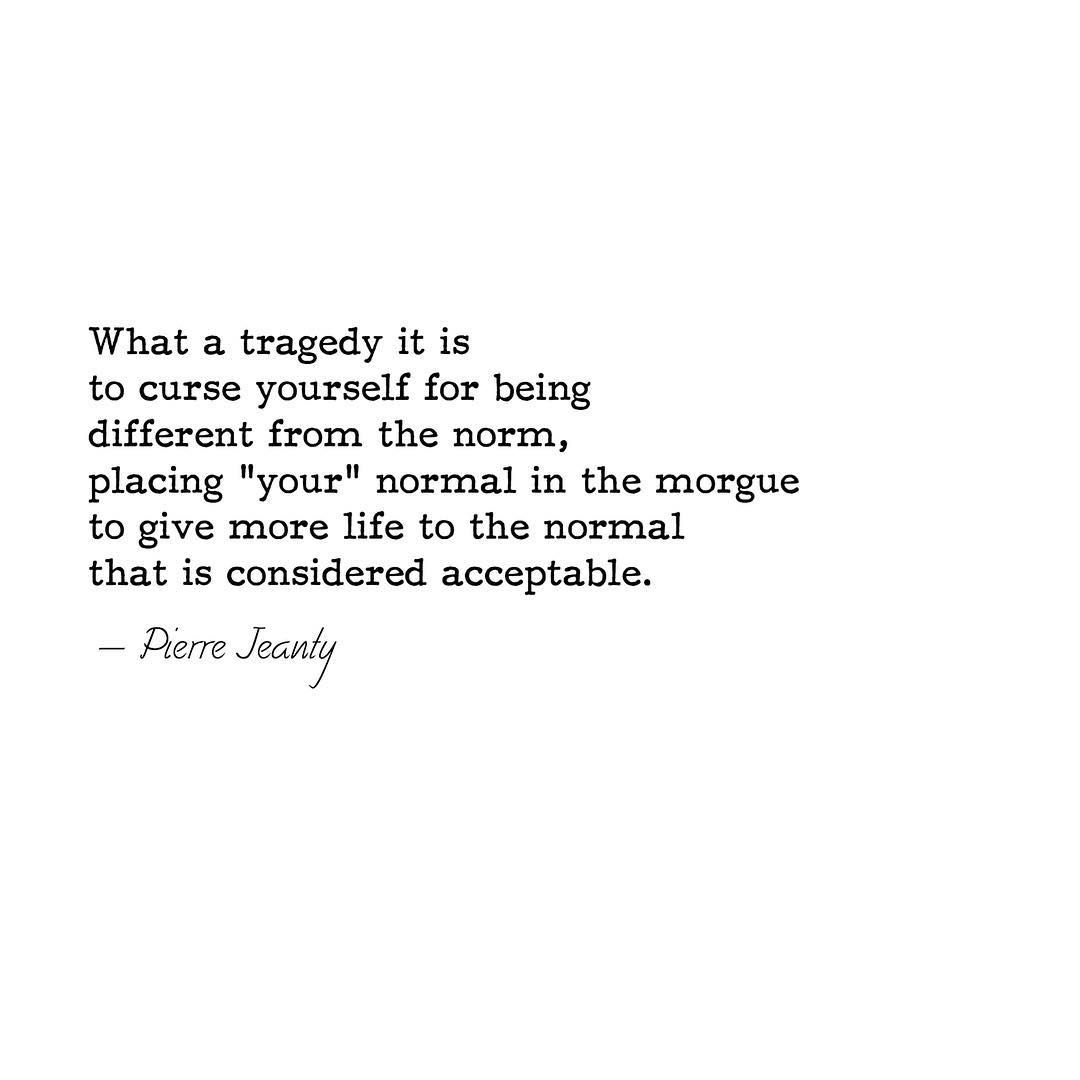
Why do we define such a thing as “normal” behavior? No one is normal, everyone is unique, everyone has their own strengths and weaknesses, quirks and faults, likes and dislikes, and so no one is really “normal”, everyone is “abnormal”. So why do we define some people as more abnormal than others? Where do we draw that line between what is the norm and not? What about this person has offended you so much that you need to stick a label on them and say they should act more normal?

I think it should be a goal of society to get to a point where we just are accepting of peoples individual needs without judgement and without setting certain people apart from others. For instance, I would not question someone wearing headphones on their way to class any more than I would someone who was stimming while on their way. Everyone has their own needs, no matter a diagnosis. If someone in our class needed the windows to be unshaded, or the noise level to be low, we would happily conform to allow that. However in some circumstances, such as a business setting or a less relaxed class, people may be less inclined to provide these accommodations.

This is not to say that I do not support the diagnosing of mental illness or neurodivergency, I am simply saying that we shouldn’t treat diagnosed people any differently than people without diagnosis. Everyone has needs and it is up to us whether we accommodate for those needs and to what degree. As a society we can decide to accommodate the best we can, and just as importantly we can not isolate people with greater needs than others and not oust them from society.

The Untold Story of Disability in Palestine

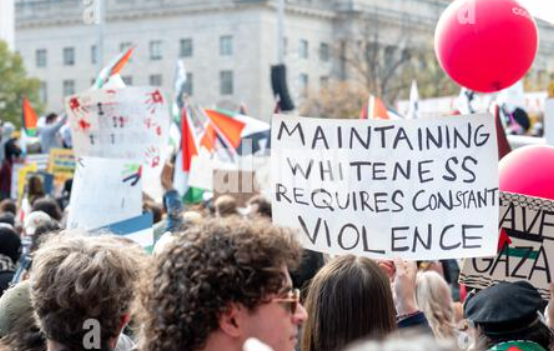
As we discuss the lived experiences of disabled people, it is so important we uncover the systemic methods of rendering them invisible to media and government focus. A facet of Israel’s occupation on Palestinian land that does not get nearly enough attention is how it has failed disabled people for years and has only been discussed by humanitarian aid organizations in the last 4 years. These acts of suppression and terror toward the community has only gotten worse from their already bleak reality with the ongoing siege and blockade on Gaza. When we campaign for the rights of disabled people across the world it is so important, now more than ever, to understand the intersectionality of marginalization inflicted by the oppressive systems in place to bar them from the kind of world we envision.

Israel’s unlawful closure of Gaza for 16 years has led to a general deflection of resources to support individuals with disabilities in day-to-day functions, including prohibitions on importing hearing aids and batteries, wheelchairs, functional prostheses, crutches, and more. People with visual, hearing, developmental, or intellectual disabilities are especially in danger from the indiscriminate attacks on Gaza because they may not hear, know about, understand, or be able to react to what is happening. If advance warnings are provided to civilians at all they come 3 to 5 minutes before they are in danger of having their location bombed. It gets even more difficult for individuals who require greater support from infrastructure crafted around their disabilities to evacuate.

” Zahra Al Madhoun, a 39-year-old woman with a physical disability, initially decided to stay behind when her family fled. “They didn’t give us a safe place to go to,” Al Madhoun said. However, she fled a few days later after she said she received a call from someone purporting to be Israeli intelligence warning her to go south. “My home was my safe place. I only left because of the call. I was afraid I would be the only one to stay behind.” Al Madhoun is currently living in a displaced persons’ camp in dire conditions and said she was considering returning home. ” (Human Rights Watch, November 1st 2023)

Moreover, disabled people experience high levels of psychological distress owing to the helplessness they feel about potentially having to evacuate areas that Israel may eventually target as they eradicate Palestinians from their own land.

” Samih Al Masri, a 50-year-old man who said he lost both legs in an Israeli drone strike in 2008, said he was sheltering at al-Quds hospital in Gaza City, but does not feel safe anywhere: “If they bomb the hospital, I will be dead. I know I cannot move. ” (Human Rights Watch, November 1st 2023)

It is essential that we continue campaigning for the rights of disabled people across the world as we revolt against the systems of oppression in place, especially in occupied areas, and put them in the spotlight of our discussions because their reality consistently goes underrepresented in conversations and calls to action across the board. The ceasefire we are demanding from Israel is to spare all of Palestine and its residents of the genocide and crime against humanity it is actively committing.

I urge you all to keep reading, keep advocating, keep crying, keep fighting, and keep putting pressure on our representatives and government to call for a ceasefire and free Palestine.

Article referenced: https://www.hrw.org/news/2023/11/01/gaza-israeli-attacks-blockade-devastating-people-disabilities

Bodily Insecurity as A Learned Thought Pattern

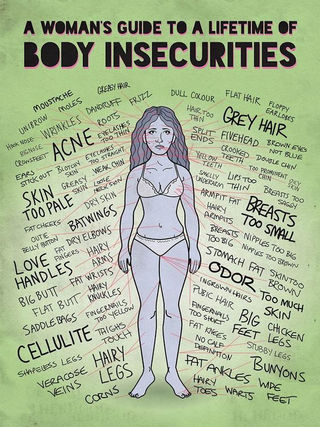
When is it that we, as beings, become aware of our physical forms? When does that awareness give way to insecurity and how is insecurity operationalized to control every aspect of our lives?  

A Woman's Guide to a Lifetime of Body Insecurities

It seems as though, for as long as I can remember, my apperance was a defining factor in my life. It was the way others perceived my health, activity levels, “laziness,” essentially attempting to paint a full picture of my life, often without knowing me at all. Eventually, it became the way I valued myself, always hoping and striving to look different, to weigh less.  

As a member of the South Asian diaspora, it is culturally common to be blunt about one’s appearance. To comment on one’s weight and features as a “sign of care” and “worry”. Meaning that comments about my body were constantly fed to me. I was told consistently in parties, gatherings, pujas1 how I should feel about it and what I needed to do to change it.  

Third grade was the first time I could recall feeling insecure about my body, a feeling that lasted well into my early college years, and even now hums faintly in the background crevices of my mind. It was at this age when unsolicited weight loss advice began. Despite understanding that I existed in a physical body, I was not truly aware of MY body until this point. It was others’ comments about my body, my weight, my skin that flipped this switch in my mind. It was in daily, never-ending comments from family members, members of the community, even strangers at my grandfather’s funeral that I learned my thoughts and my actions would always be secondary in value to my physical self, which they did not deem worthy.  

Weight and more specifically weight loss became a constant on mind. As I took my first breath each morning and as my eyes closed in the nights, it was my first and last thought. It became an obsession where my weight seemed to be the only thing holding me back from realizing my life’s full potential. I developed an unhealthy relationship with external validation which spilled over into the fundamentals of other aspects of my life, namely my academics. It was not until the period of Covid-19 isolation, that these thoughts slowed down. It was at this time that I no longer felt compelled to compare myself to others. I had learned to tune out the majority of comments from family as well, and I realized that there was and is much more to a life and to one’s value and worth as a person. Though, this will continue to be a struggle for me as I grow, I hope that my negative self-image will only further diminish with time. I strive to do better for future generations of my family and generally as a member of this vibrant and diverse world.  

“it gets better”

“It gets better” is a phrase I have heard alot recently and its starting to drive me crazy. Ive been through this part of depression before, I know it gets better, I am still fighting each and everyday to get out of bed and brush my teeth and try and be a functioning human. I don’t want to hear, “It gets better” I want to be told that its okay to lay in bed for a little and if all I did today was drink soup in my bed, then atleast I ate. It is that time of year when people start to feel down because of the weather, but for me, its that in combination of loads of unhealed trauma from my childhood coming to the surface.

Continue reading

My Head Hurts

Being knowledgeable or intersectional or just having empathy is so hard when we live in a world that is constantly trying to take away these things. Anti-intellectualism is on the rise, intersectionality is looked down on, and caring about people other than you is a bizarre concept. I am tired and sad and frankly pissed off.

WHY… why can’t society just grow up and change?! I am begging, millions of us are begging, screaming, pleading that the people who have the power to change society move an inch- I’d even be happy with a centimeter. My brothers and sisters are dying every day, we are fighting every day and it seems like it is for nothing but entertainment for those who do not have to worry. For those who live a life of privilege and comfort. Their entertainment is seeing little black boys and little brown girls cry tears of blood and grief for their families who are dead- rather I say killed because that’s what it was.

I cry for the unborn children who were killed because they would have been born with impairments, this is eugenics. I cry for the neurodivergent kid who is having a meltdown as we speak and is being called hardheaded or bad when all they need is quiet or a weighted blanket. I cry for the wheelchair user who lives in fear of an intruder or a fire because they know that they might be left behind. After all, that is what people are taught. I cry until my body is dehydrated and I pass out, hoping to wake up and see that it was all a bad dream.

When I was young I knew the world was not a perfect place but I could have never thought I’d live in a dystopia only Steven King could imagine. Wu-Tang Clan once said CREAM, cash ruins everything around me, this could not be clearer to me than it is today. Imperialism has its claws on the neck of the Middle East and Africa, people are not even seen as people they are bodies of exploitation. Being used up until they drop only to be replaced by literal children. Tupac said THUGLIFE, the hate u give little infants fucks everybody, racism, ableism, and sanism is being embedded into kids’ minds. They see their parents and role models being attacked and we expect that harshness and resistance to not be ingrained in their head?

If things keep going the way they’re going I don’t know how much I can take, my heart can’t take it anymore. And if I have to think about who to vote for I’m going to scream.

Burnt the Fuck Out

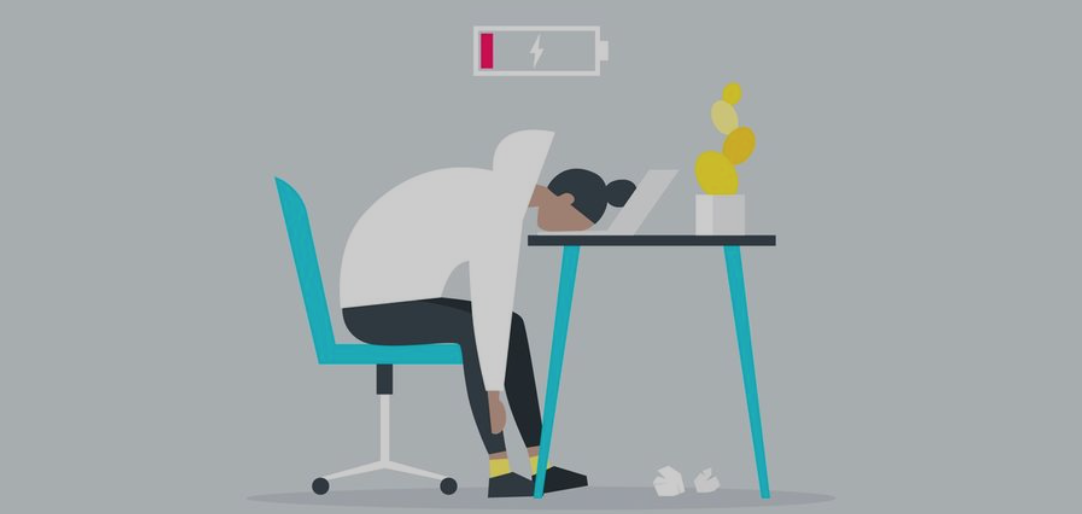
I am burnt the fuck out. My body is tired. My mind is tired. It is quite clearly being reflected in multiple facets of my life. I don’t even have the energy to speak to people much anymore. Classes where attendance is mandatory have not been seeing me. My grades were fine but now they’re dropping a bit and I just don’t know how to cope with this. This is reflected within my style as well. One of the biggest signs of burnout I have come to realize in myself is that my outfit is pretty simple, that’s not a regular thing for me.

I feel terrible. I look in the mirror and I can’t recognize myself. All I see is the numerous horrendous bags under my eyes. I’m trying. I really am trying not to let my exhaustion consume me and derail the academic success I’ve set myself up for but I’m having a hard time coping. This type of stress should not be the norm for college students. We aren’t even guaranteed a secure job at the end of this all so is it worth the mental strain? I question this everyday. All I do know is that I am burnt the fuck out and don’t know how to deal with it.