“Boobs Don’t Work That Way”…No really, they don’t!!!

Images such as these pervade comic book character art. Women are normally in sexy, revealing outfits; and, their bodies are often doing some pretty impossible things. A blog called Boobs Don’t Work That Way brings awareness to how ridiculously women are portrayed in comic books. The picture of Wonder Woman displayed here is not unique. Attempting to make her sexier, she is drawn into this impossible pose where her breasts and behind are shown at the same time. Also, her breasts are extremely large, and there is no way that her costume could logically support them. The commentary on the blog regarding this picture is as follows:

“It always freaks me out when boobs are drawn as almost a separate entity. This one looks like it’s about to pop off and and start a solo career.”

Other interesting points the blogger makes include the way fabric unrealistically stretches over breasts in some costumes, suctioning itself to each breast individually, the fact that nipples rarely have areolas in comics, and that breasts are not always perky and perfectly spherical.

I find it interesting that beauty for women in comic books is literally impossible for us as humans. The beauty standard is completely unrealistic. Do comic book artists feel that women will not be sexy without their impossible breasts? Or do they enjoy creating a fantasy woman? I’m not personally sure which reason correctly demonstrate how artists feel, or if there are other reasons. The blog is not being updated, but the pictures and commentary are excellent. Check it out!
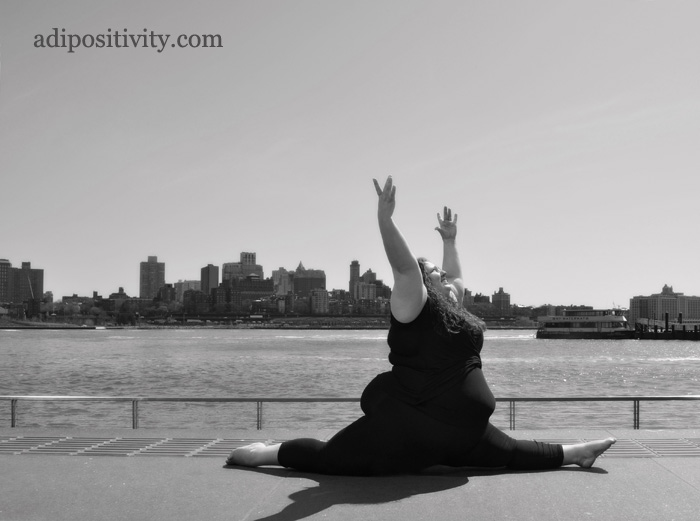
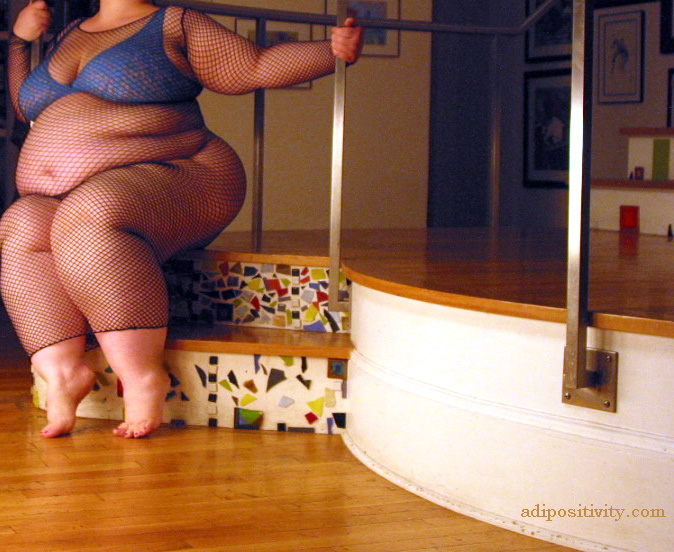
The Adipositivity Project

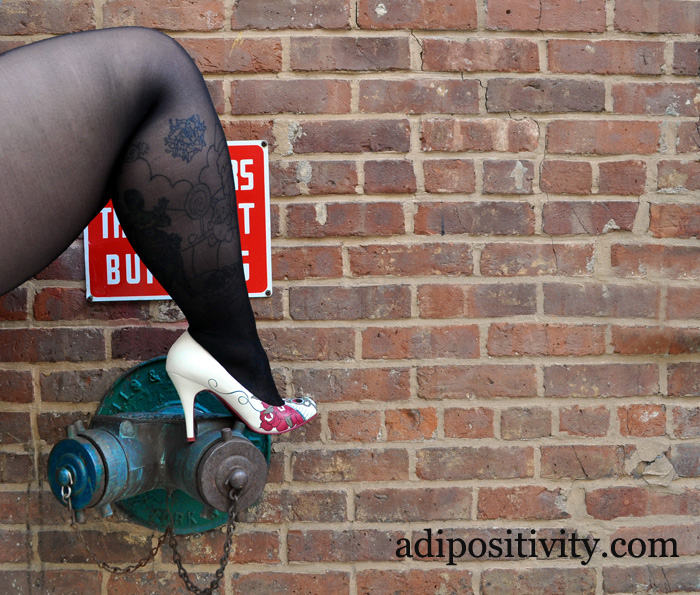
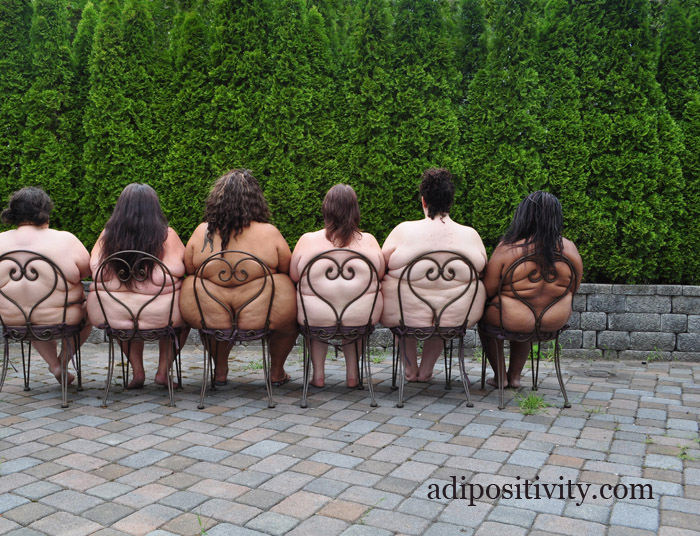
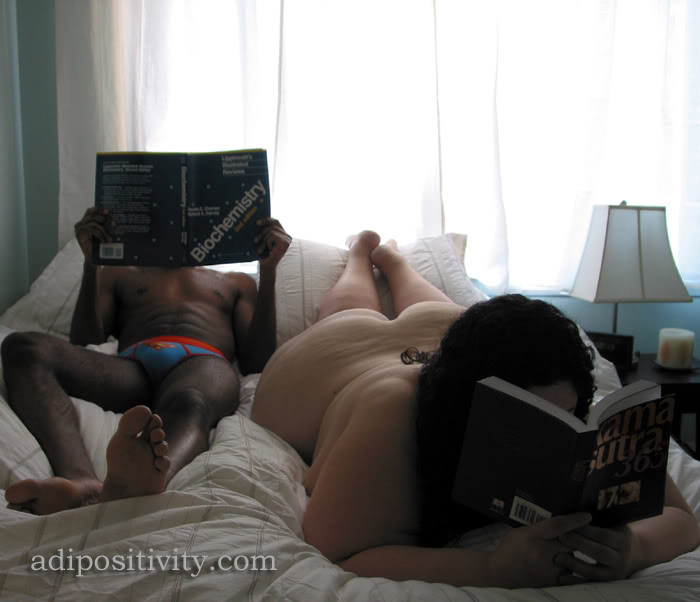
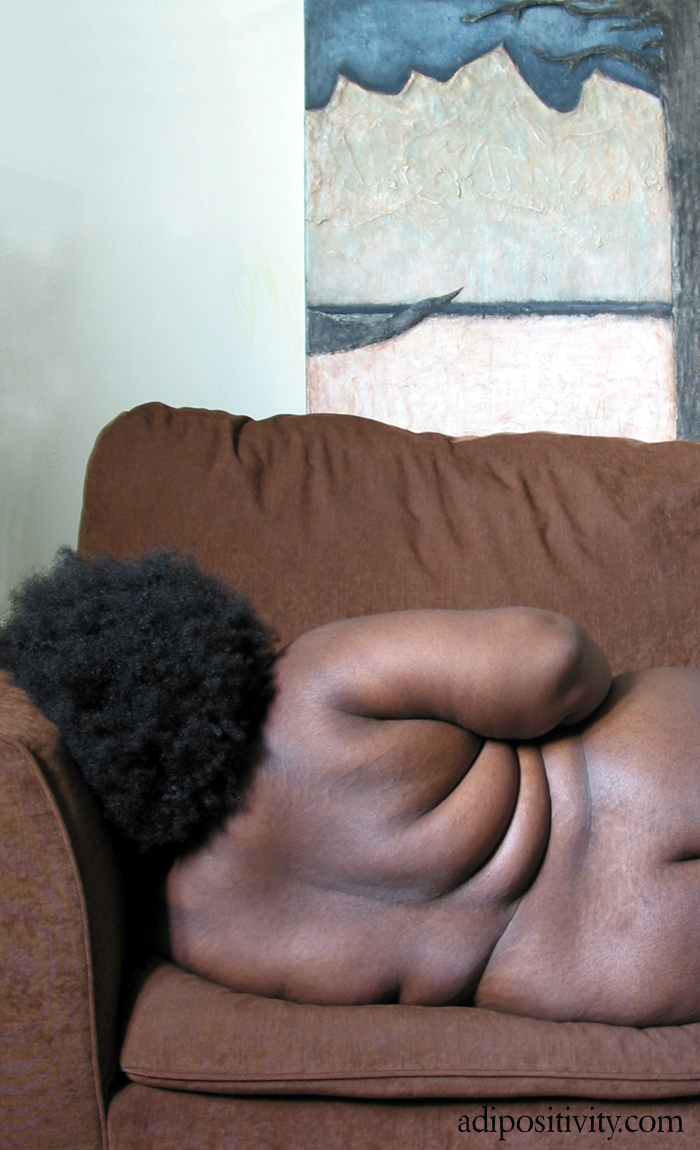
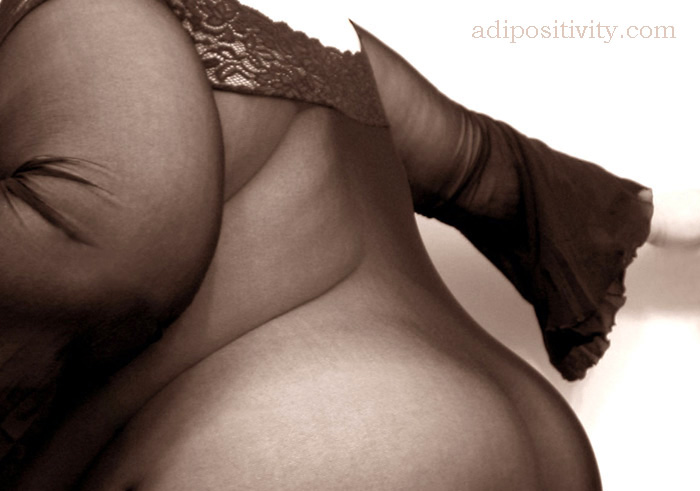
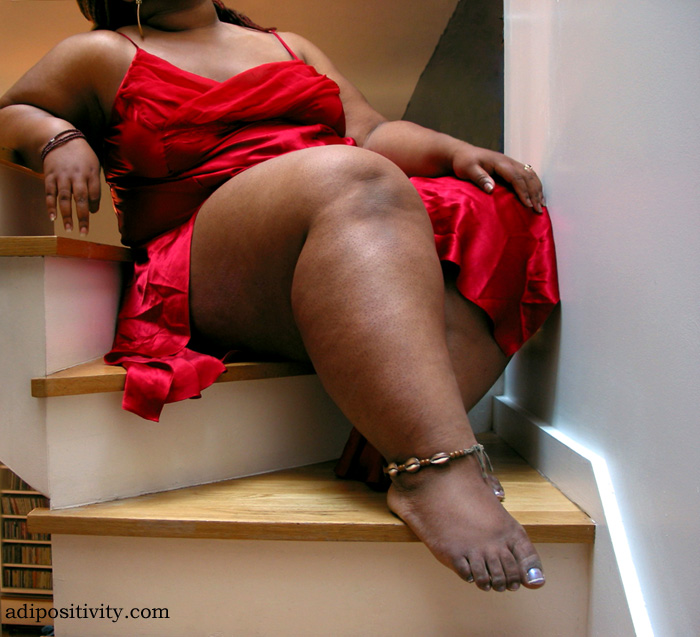
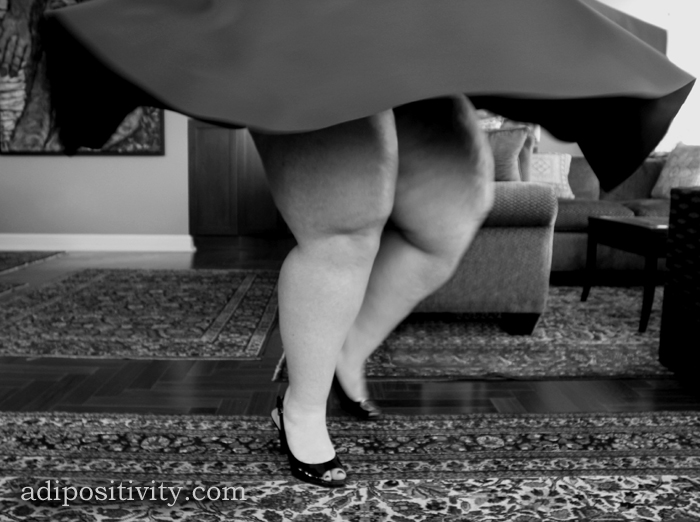
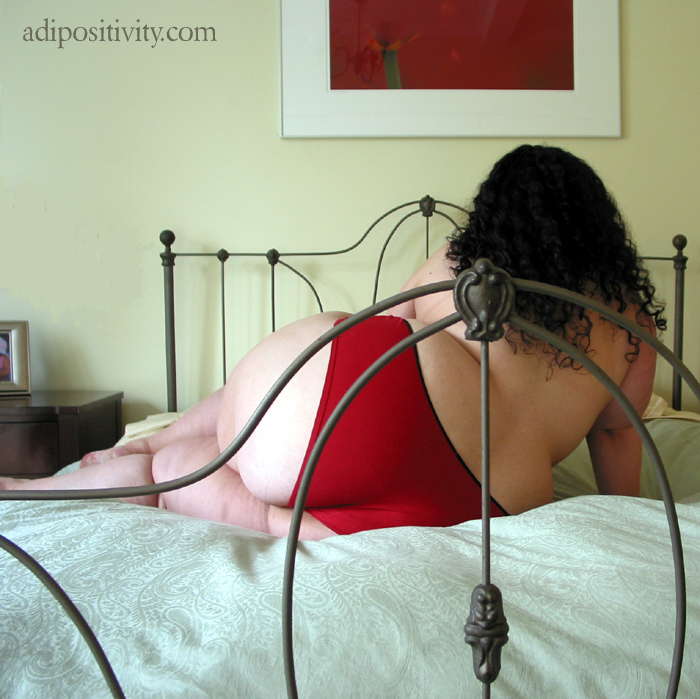
I’ve been aware of The Adipositivity Project for a number of years.  Most people who float around Fat Acceptance circles online are aware of it, but when I’ve shown it to friends who aren’t aware of FA, it’s always surprised them.  I thought, given the reading for our next class, this was at least visually on topic.  I’m also always a fan of activism through art and you can’t say Substantia Jones’ photographs aren’t beautiful or radical.   Many of the photographs are nudes, so beware if you decide to click through.  I’ve pulled some of the more modest ones to show the intent of the images.

Adipose: Of or relating to fat.

Positivity: Characterized by or displaying acceptance or affirmation.


MISSION:
 The Adipositivity Project aims to promote size acceptance, not by listing the merits of big people, or detailing examples of excellence (these things are easily seen all around us), but rather, through a visual display of fat physicality. The sort that’s normally unseen.

The hope is to widen definitions of physical beauty. Literally.

The photographs here are close details of the fat female form, without the inclusion of faces. One reason for this is to coax observers into imagining they’re looking at the fat women in their own lives, ideally then accepting them as having aesthetic appeal which, for better or worse, often translates into more complete forms of acceptance.

The women you see in these images are educators, executives, mothers, musicians, professionals, performers, artists, activists, clerks, and writers. They are perhaps even the women you’ve clucked at on the subway, rolled your eyes at in the market, or joked about with your friends.

This is what they look like with their clothes off.

Some are showing you their bodies proudly. Others timidly. And some quite reluctantly. But they all share a determination in altering commonly accepted notions of a narrow and specific beauty ideal.


I love this project, especially considering the attempts by the media to include “real” bodies through the use of marketing like the Dove Campaign for Real Beauty and “plus size” (really a size 6-12) models, and how different these fat people look from those culturally approved fat bodies.  These aren’t the media portrayed idea of what is “real” (and how problematic is that word in regards to any person?).  These (mostly) women, according to the BMI (another problematic method of judgment!), are obese, or more likely morbidly obese (sometimes called Death Fat in the FA community).  Most of them probably weigh somewhere in the neighborhood of 200 or 300 or even 400 pounds – yet I don’t think they look like the stereotypical bed-ridden mordibly obese person most non-fats think of when they hear those numbers. Or maybe they do look like those ZOMG FAT people to you.

However you see them, these people are fat, but they have accepted the bodies they have and are living their lives in them.

“Fotoshop by Adobé”, and some discourse on how the media excludes our bodies

I’m not sure how much anyone else has been exposed to people telling them to not trust media images in regards to visual accuracy in depicting bodies, but I have heard that quite often. Speeches on how images of bodies shown in the media have incorporated some form of falseness strike a chord with me, but they often seem to be lacking in one important department: a video representation of how much can be altered, in order to visually prove that manufacturing of a “fake”, so to speak, body in the media is possible with the assistance of technology.

I did not realize this until after I had watched “Fotoshop by Adobé”, a video directed by Jesse Rosten that does depict photoshop doctoring of bodies. This editing that is portrayed in the video raises quite a few important points to think about, most generally about the erasure of various bodily features/body types by the media.

Towards the beginning, the video shows a “before” portrait of a female with facial wrinkles (which I inferred to be a depiction of an elderly female), as well an “after” image of a female with no such wrinkles (which I thought was a portrayal of a young female). Clearly, any markings on the face, whether they be natural or not, are subject to censorship. Furthermore, elderly bodies appear to be denied a place in media.

Later, the video depicts a doctoring of a magazine cover that features a female with brown skin into someone with lighter skin. This raises awareness about the omission of bodies with skin tones that are not white/of a light shade from the media. Also, people of color’s bodies seem to be excluded.

Further along in the video, there is a portrayal of the reshaping of a female body from a curvy body shape to one that is less curvier, and once again, the delineation gives attention to the media expulsion of such body types.

It becomes clear, after watching the video, just what the media wants us to see in regards to bodies – and what the media is not showing us. The natural states of bodies continue to be reworked to fit a certain ideal: unmarred, young, light skinned, white, and skinny. In doing so, the “normal” becomes abnormal. The truth about what bodies really look like – that they come in a diverse variety – becomes replaced by a lie that only caters to a certain group.

As one article points out, “…Rosten skewers the breathless tone, too-perfect imagery and dense double-speak of beauty-oriented spots and magazine spreads.”

The Micropenis

I know that as a class we are a pretty open group of people, but because this is a public blog (and because I am unsure how people will feel about me posting pictures) I am going to refrain from doing so for this particular post, however, if you are interested in finding pictures they are very easy to come across online. I will also warn you that the sites I have posted do contain graphic pictures, so don’t visit them if you don’t want to see the pictures.

Interestingly enough, I stumbled upon this topic after our class discussion of a utopian society in which all babies were born with the possibility of all inheriting any genetic traits from the entire population. A conflict arose when two groups of people argued whether or not they should “exclude the negative traits” without ever specifying what those negative traits are or might be. Well, I figure this is easily something that could be seen as a “negative trait”- the microphallus or micropenis.

According to http://www.micropenis.biz/p/micropenis-information.html  and Wikipedia, a micropenis can be defined as “an erect penis that is 2.5 standard deviations less than the average human penis size”. However, the two sites differ on what the average erect human penis size is. The first site defines a micropenis as being 9 centimeters or 3.5 inches or less, while the second site defines it as 7 centimeters or 2.5 inches or less. According to the websites, 0.5-0.6% of the male population has this condition. But does having a condition mean that you suffer from it?

It is possible. Even the author of micropenis.biz says that he “suffers” from the condition. Some people think they no longer suffer if the condition goes away with some form of treatment.

In the 1960s and 70s sex reassignment surgery was recommended for the micropenis condition, and if the parents consented, the testes would be removed, an artificial vagina would be constructed, and the boy would be raised as a girl. Even at our very own Johns Hopkins Hospital they performed 12 of these surgeries. However, these surgeries were based on three assumptions that are now in question:

  1. gender identity and sex differences were solely a matter of social learning rather than biology.
  2. a male with a penis too small to put into a vagina could not find a satisfactory social and sexual place in society.
  3. a functionally acceptable vagina could be constructed surgically

Because intersex individuals and some of these patients believe that children’s sex organs, sexual identity, and gender identity shouldn’t be decided for them, or regretted the surgeries that have been performed on them, many of these surgeries have stopped and parents are waiting until their children are old enough to make the decisions for themselves.