
The Strike and the Silent Pressure on Men

The Strike and the Silent Pressure on Men

“The Strike” the documentary about the 2013 California Hunger Strikes, I found to be a very captivating and intriguing watch in class. I personally didn’t know about the strikes until we watched the documentary, but I was personally baffled that this was even able to happen to these men in solitary confinement. Watching the documentary, though, I realized a startling truth… most men in society, in many ways, experience a quieter, emotional version of solitary confinement. The men in “The Strike” were put under horrendous conditions by the California prisons; eventually, when word got around that a planned hunger strike was going to take place, it was easy for many to get behind, really, because when you take away someone’s social interaction and time outside and force them to live the same day over and over again, you’re forced to take action on the only thing you have left, the body. For the men, their bodies were the only thing they had control over, so they found a way to rebel by starving themselves for the betterment of their conditions.

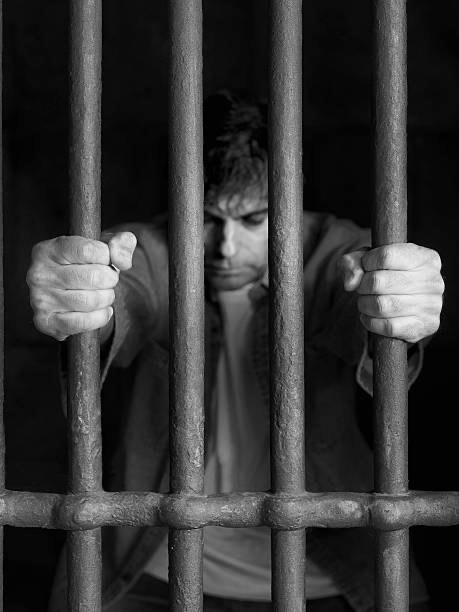
While the conditions aren’t the same by any means, men walking free face a similar imprisonment placed on them by the greater society at large. Even though it’s no longer the 1900s anymore, the stigma of men having to be stronger, masculine figures who do not express emotion and provide for the women and children is very much still alive and well. It’s a quieter, more invisible form of imprisonment; boys can’t cry, can’t ask for help, and don’t talk about what hurts because at the end of the day, even if they do talk about what hurts and cry, they show weakness and failure to be a pillar of strength in society’s eyes. And like the men in “The Strike” the only agency they do have is that of their own bodies, throwing that pent-up emotion in the gym, building muscle, cleaving away the pain of their psyche by tearing the muscle fibers keeping them whole. Becoming what society wants, a strong man who doesn’t show weakness, is what true strength is to society.

The reason I’m able to describe how it is, how these invisible bars keep men inside, is because I am one of those men; a subconscious reason of why I started going to the gym is because I was skinny as a twig in middle school, and I was made fun of for my poor posture and the fact that you could see my rib cage with my shirt off. I couldn’t really vent any of these feelings to anyone; my dad is a stoic person who himself doesn’t really express a lot, unless he’s drunk off his rocker. And my mom, who is the complete opposite of my dad, can’t really understand me, even when I try to convey my anger. I just had to shut up and forget. That was in my early development years, and so into middle and high school, I never really talked much. I had friends, but I was known as a quiet kid. It wasn’t until high school that I started taking serious issue with how I looked and how others viewed me. I wanted them to see me as a strong, dependable person, so I started working out. Not choosing to, but was suffering in silence; this was also the time I realized that I hated myself. I distinctly remember telling my friends that I hated myself, after years of never really talking about how I felt. This was how one friend responded to me, “No, you don’t hate yourself.” After this point, I lost faith in trusting others with how I felt when I started putting all that pain and feeling into running and lifting weights. This is how I’ve been living for years now, not really thinking that anyone could or would want to hear what I truly felt. It’s been put into my head, “Men can’t cry,” and I think a lot of other men would resonate with this feeling or story of myself.

Roughly 75% of deaths by suicide in America, Canada, and the UK are by men, and after years of pent-up emotion, the final state a man has to go to rebel is by taking his own life. I myself have faced thoughts of suicide, but never planned for it; it’s only been up until a few months ago that I was able to confide in really close friends about these past feelings. Nothing really gets me to talk much about a certain topic or subject, but I champion and proudly stand for the mental health of men everywhere, to please go and find help, and to realize that it is ok to cry in this painfully messed-up world. While I’ll probably never go through the trials and tribulations of the men in the California hunger strikes, I can connect to the feeling of rebelling against your own body to make a statement to others and having agency over the one thing you can never lose: your body.

What about the “right-to-live?”

I remember when Jahi McMath died—for the second time. 

Senior year of high school, I came across an article about Jahi McMath, a 13-year-old Black girl who was declared brain dead after her tonsils were removed. It was Jahi’s first surgery, and she was scared. She didn’t want to go through with it, but her mom convinced her it would make her life easier (Jahi had sleep apnea, and removing her enlarged tonsils was intended to help). After speaking with the doctor, Jahi consented to the surgery, and she was fine for about an hour afterwards.

Jahi’s blood vessels were unusually close to the surface of her throat; the doctor had noted this in his chart for her, but the post-op staff was unaware. So when Jahi started coughing up blood, they didn’t see it as the alarm that it was, although Jahi’s family did. They repeatedly raised the alarms for her, but no one listened until her heart stopped.

Jahi was declared brain dead; her brain had stopped functioning due to the massive blood loss. In California, brain death is legal death. But Jahi’s family didn’t accept that. Her mother, Nailah, was convinced Jahi was still alive; Jahi responded to some stimuli and questions. Nailah asked Jahi if she wanted to be taken off life support, and Jahi said no through physical movements her mother taught her.

In the long legal battle that followed, Nailah and her family were forced to flee the state with Jahi under threat of legal action and jail time. Nailah’s insistence that Jahi was alive, and refusal to take her off life support, violated California’s medical ethics, so they went to New Jersey, where families can reject the notion of brain death on religious grounds—Nailah technically “kidnapped” Jahi to do this. There, Jahi had at-home around-the-clock medical support from nurses and doctors who were willing to lose their medical license or be shunned from the medical community; the doctors that treated Jahi were treated as quacks by the medical community. In the view of the community at large, you cannot treat a body that is already dead, and although Jahi’s body was not dead, her brain technically was. The California hospital where Jahi had been declared dead consistently disavowed the McMath family’s efforts and actively disparaged them for “desecrating a body.” But they were wrong.

With consistent care, and rogue researchers willing to look into her case, Jahi was able to exhibit signs of life, brainwave activity, and even underwent puberty. In 2017, a neurologist at UCLA independently confirmed that Jahi was no longer “brain dead.”

Jahi died—for the final time—in June of 2018, not even six months after the New Yorker article was published due to internal bleeding from abdominal complications. Despite overwhelming evidence, the hospital that issued Jahi’s death certificate refused to ever accept Jahi’s recovery and overturn her death certificate.

In 2020, I, much like Jahi, was preparing to go into surgery to get my tonsils removed for sleep apnea, just as she had been. Her name haunted the back of my mind in the days counting down to my surgery, but I, just like Jahi, spoke with my surgeon and asked him how many times he had done the surgery, what the risks were, how long he had been a surgeon. I had the insight that a 20-year-old had and a 13-year-old didn’t, but we were in the beginning of a pandemic, in the middle of the shutdown, and my mom wasn’t even allowed in the waiting room with me. Though I was nearly certain I would be fine (my surgeon routinely did much more complex and precise surgeries, like removing tumors that had grown into the blood vessels of the throat), I was alone when I frantically pulled the anesthesiologist aside and had to shamefully admit that I had been taking quinine pills until yesterday morning, a stupid superstition I had bought into as a way to stave off a Covid infection.

Quinine, for those unaware, is an herbal supplement that used to be used as a “cure all” back in the days of the Black Plague and the Spanish Flu. It didn’t work back then, but I’m a big believer in the placebo effect, and I needed to take something to put my mind at ease. One of the side effects of quinine—that I didn’t know until the morning before my surgery when I actually read the bottle—is that it can thin your blood. This makes you a higher risk for surgery; you’re more likely to bleed uncontrollably because the blood is much harder to coagulate. The bottle said to stop taking quinine two weeks before surgery. Feeling like I was going to cry, and possibly even about to die, I waited anxiously to be taken back and prayed that I would wake up afterwards.

Obviously, I did, or I wouldn’t be writing this right now. But I’m aware how lucky I was, and am. Jahi’s case is in direct opposition to Terry Schiavo’s: Terry Schiavo was a White woman declared brain dead who the hospital refused to stop treating, whereas Jahi was falsely declared brain dead and refused further treatment. Jahi’s family noticed this too; they knew if Jahi had been White, she would have likely received the attention she needed, and even if she had still been declared brain dead, her family’s choices would have been respected. Having come after both of them, and being light-skinned myself, I know my family would have had the respect and space they needed to make whatever decision for me they felt was right if my surgery had gone wrong.

Still, it haunts me; Jahi’s story is barely told outside of fringe medical pieces, but Terry Schiavo’s is well-known enough to be casually referenced in feminist writings. Who gets the right-to-live? Who is allowed to die? Why are our bodies’ needs and wishes ignored depending on the kind of body we inhabit? I hope Jahi is resting peacefully now, but I carry the anger and fear of what was allowed to happen to her.