have you missed me? i’ve missed you. terribly, terribly so. i look in our bathroom mirror (the one that you would let your body draw smiley faces on when the glass fogged from a too-hot shower, remember?) and see you again. we share the same eye-bags and bright, big eyes that are hard to miss. i think that is one of my favorite things about you two.
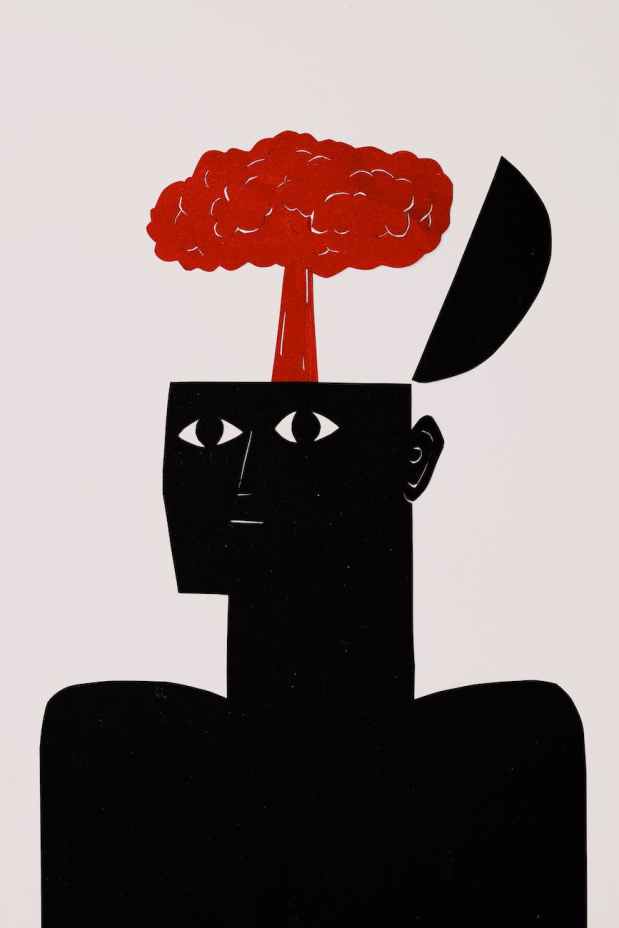
Perhaps you’ve heard of something called “Aphantasia” which is when someone can’t visualize things in their mind. This comes from the Greek words “a”, meaning “without” and “phantasia”, which is “the capacity to form mental images. (Metivier, 2022) Apparently, only 2-5% of the population has aphantasia, assuming people figure it out about themselves. Curious? Try the VVIQ test.
“People with aphantasia reported a reduced ability to remember the past, imagine the future, and even dream. This suggests that visual imagery might play a key role in memory processes,”
Alexei Dawes, PhD Candidate in the UNSW School of Psychology
Some aphantasics are still capable of reliving other senses, such as a feeling (how water feels on your skin, sun warmth, etc.), audio, or tastes. However, there are still many who don’t have any of these mentally. Everyone is a little bit different when it comes to what’s still present and what’s not, especially since we don’t know very much about “minds” at all. In a study about aphantasia, 26% of participants reported a lack of multi-sensory imagery.
If this is too hard to grasp, look into your own mind with such: Can you visualize a beach (No cheating with the picture)? Can you smell the salty air? Can you feel the sand on your toes or the sun on your skin? Can you hear the waves crash or the seagulls in the sky? Are you feeling emotions associated with the beach? Joy? Excitement? Irritation? Maybe you can do all of these. Maybe it’s a little vague. Maybe you can only see the image. If you take this idea, those 26% participants either can’t do any of these senses, or can’t do a majority of them (besides visualizing, because of course they can’t).
So what if none of these exist in your “mind’s eye”? For myself, who can’t visualize any of these things, it’s like a story. I have an inner voice, which does everything for me. It has my current thoughts, it speaks of my memories, it even does the sound effects as if my own voice made them. My memories are written like a story, which is hard to grasp for people who have always visualized a story when they read it. My memories are made up of only words and descriptions. Sometimes when I want to remember a situation I’m in, like a day out with my friends, I think of specific ways to describe things for later. It’s got a huge benefit because this means I can describe ideas or things to someone very easily, compared to someone who has to translate mental images into words.
That doesn’t apply to everyone, of course. I’ve talked to someone who was able to visualize something they’ve seen before, like an apple. On the other hand, they experienced memories similar to myself, where it’s like a book.
I highly encourage you to look within your own mind, and maybe you’ll learn something new.
While attempting to define what a cyborg is in class, I was struck with inspiration for a discussion topic on the blog. Fast forward two weeks and I had completely forgotten it, racking my brain for what I wanted to write on. I knew I wanted to write on cyborgs and how people don’t realize how common they are, but I couldn’t remember the specifi-It was memory!
Last week on Wednesday, there was talk that the English department puts on to showcase a professor from that department. The department choose Professor Rudacille, my English 383 (Science Writing), to present her different projects she is taking on and how they all relate to one another. So far she is writing a play that is loosely based off of the Triangle Shirtwaist Factory fire in 1911, she is writing a piece on the mountaintop removal issue in West Virginia, and she is finishing up doing interviews of individuals of the Catholic Faith in regards more radical ideas outside of the church. It was interesting to see how all these vastly different things relate to the idea of healing.