Why Do I Feel Like Nothing When Everyone Else Feels Like Something?
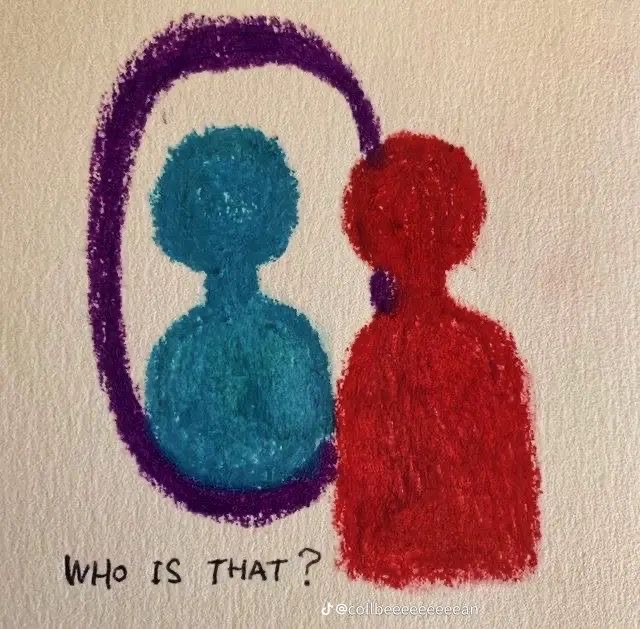
Have you ever scrolled online and see people confidently declaring their gender and sexuality like they’ve had it figured out since birth? “I’m nonbinary.” “I’m a lesbian.” “I’m pan.” Meanwhile, I’m sitting here wondering, why do I feel like nothing? This question has been bouncing around my head for a while now. But after reading Nonbinary: Memoirs of Gender and Identity, specifically Christopher Soto’s “What Growing Up Punk Taught Me About Being Gender Nonconforming” and Aubri Drake’s “Clothes make the Gender/Queer,” made me realize that maybe this feeling of nothingness isn’t emptiness, but simply uncertainty in a world that demands certainty from everyone.
Soto writes, “I tell my friend who still presents outside the binary that I want to be alive. I want to live. And so this is my gender: a desire to live.” That line hit me like a ton of bricks. For me, identifying as a woman has always been about survival. It’s safer, easier, less questioned. I don’t have to explain myself or fear someone reacting violently because I don’t fit their idea of what a woman “should” be. Soto ties their fear to capitalism and violence because the way safety, livelihood, and even love feel like privileges granted to those who conform. Sometimes I wonder if I’d feel freer to explore my gender if the world wasn’t punishing those who step outside the binary.
Growing up, everyone labeled me a “lesbian” before I could even figure it out on my own. I was the tomboy wearing my dad’s clothes, obsessed with comic books instead of makeup. My mom used to tell me to “act like a lady,” for simply sitting in my own home with my legs open. Then puberty hit, and suddenly I had curves I didn’t ask for. Aubri Drake’s words that “clothes started clinging to my body in all the wrong places… they stopped being a form of expression and instead became material to hide in”described exactly how I felt. I started hiding under oversized clothes because my body no longer felt like mine, but a spectacle for others.
For years, I bounced between labels from bi, lesbian, pan, and now to queer. Each one feeling right for a second and wrong the next. I even dated men exclusively at one point just to prove something, though my attraction to women has always been stronger. Every time I picked a label, I felt like a fraud and that everyone knew I was out of place.
When it comes to gender, being called “masculine” or “feminine” makes me physically recoil. I don’t feel like either. I identify as a woman because it’s practical since it’s what fits easiest in the world’s boxes, but that’s never been the only reason. I’ve briefly thought about identifying as nonbinary, but fear always stops me: fear of losing cis privilege, fear of not being taken seriously, fear of violence. Like Soto, I get what it means to feel “illegitimate” just for wanting to live safely.
That’s why the label queer has been a relief. It’s flexible. It’s fluid. It lets me breathe. I don’t have to get a headache by searching for answers I don’t have yet. My gender and sexuality are personal, evolving, and maybe a little messy, but at the end of the day, that’s ok.
A few months ago, before reading these essays, I went down a rabbit hole on Reddit trying to understand why I felt “genderless.” I remember scrolling for hours through different threads from queer and neurodivergent people describing the same sense of in-betweenness I couldn’t name. One that stood out to me was called “Does anybody else feel genuinely genderless?” on r/NonBinary, more specifically this one quote:
“When I lean more towards masc or femme with my presentation that’s all I feel it is — a presentation. Or really what it actually is is society interpreting my presentation as gendered. Ultimately it’s still just me. I don’t feel more feminine when I wear skirts — but it’s perceived that way.”
When I lean more towards masc or femme with my presentation that’s all I feel it is — a presentation. Or really what it actually is is society interpreting my presentation as gendered. Ultimately it’s still just me. I don’t feel more feminine when I wear skirts — but it’s perceived that way.”
That line felt like someone cracked my brain open and wrote down my thoughts. It echoed everything Soto and Drake described; that gender can feel more like a performance that others interpret than a truth you embody. Re-reading that thread and other ones I mindlessly scrolled actually helped me realize I wasn’t broken for feeling detached from gender. I was just tired of performing one.
I still feel like “nothing,” but I don’t see that as a bad thing anymore. That nothingness feels like freedom; free to move, question, and change without being boxed in. Reading these essays made me realize I’m not alone in that uncertainty. There’s comfort in knowing gender and sexuality don’t have to be solved; they can just evolve. Maybe “nothing” is true freedom. Maybe my gender isn’t nothing — maybe it’s just mine.
2 thoughts on “Why Do I Feel Like Nothing When Everyone Else Feels Like Something?”
I personally also understand you feeling I myself also felt “confused” when I was in middle school, I was close with one my friends that was a girl then school started to make up that me and her where sleeping together this caused us to drop out because she did not want that label on her. It made me question everything the more I learn there more than male and female I also felt relief I never felt like I was completely in either category nor did I feel I fit in nonbinary either.
I love that you express how the pressure from society, on both the micro and macro level, to embody a set of strict expectations is so extensive. Anyone who falls outside of a given norm has labels imposed on them, whether with positive or negative intent, and either as a heavy push toward the identity deemed to fit within the box, or a commentary on the stereotype of another. Yet, simultaneously, the illustration of certain concepts that may align with how one feels is often inaccessible, discouraged, or otherwise kept out of reach. It seems as though many people today forget that one’s identity and presentation are not aspects that “have to be solved; they can just evolve,” in the sense that nobody is entitled to some sort of ‘right’ to sort people into neat or subjectively ‘correct’ categories. As Susan Stryker excellently described, even those who are within the bounds of ‘uncertainty’ enforce the ‘boxes’ that oneself and others are told they must fit into.



I personally also understand you feeling I myself also felt “confused” when I was in middle school, I was close with one my friends that was a girl then school started to make up that me and her where sleeping together this caused us to drop out because she did not want that label on her. It made me question everything the more I learn there more than male and female I also felt relief I never felt like I was completely in either category nor did I feel I fit in nonbinary either.
I love that you express how the pressure from society, on both the micro and macro level, to embody a set of strict expectations is so extensive. Anyone who falls outside of a given norm has labels imposed on them, whether with positive or negative intent, and either as a heavy push toward the identity deemed to fit within the box, or a commentary on the stereotype of another. Yet, simultaneously, the illustration of certain concepts that may align with how one feels is often inaccessible, discouraged, or otherwise kept out of reach. It seems as though many people today forget that one’s identity and presentation are not aspects that “have to be solved; they can just evolve,” in the sense that nobody is entitled to some sort of ‘right’ to sort people into neat or subjectively ‘correct’ categories. As Susan Stryker excellently described, even those who are within the bounds of ‘uncertainty’ enforce the ‘boxes’ that oneself and others are told they must fit into.