
College Life Under Pressure

Every day, I always feel like I haven’t done enough. I haven’t accomplished enough. There is more I need to do. Ever since starting college, I noticed how easy it is to feel this type of way. From attending classes and lectures, studying for exams, completing assignments, and trying to maintain a social life, it feels like I could’ve done more. With 24 hours in a day and even when I finish everything I planned, it’s never enough. This makes me wonder why we put so much pressure on ourselves to always be productive.

I’m a Pre-Mechanical Engineering student and I’ve come to the realization that college is way more than attending classes and getting good grades. Expectations such as joining clubs, networking, and building connections, gain experience all to prepare for a future career. Although these opportunities are important, trying to do everything tends to get overwhelming. Sometimes, seeing other students accomplish so much makes me question if I’m enough myself

To be more in depth, Chimamanda Ngozi Adichie’s TED Talk, The Danger of a Single Story.Adichie explained how people can create their own understandings of others when they only see one story or perspective and how it can truly be wrong and or hurtful. I can somewhat relate this with college students to experience something similar when comparing themselves to others. We often see someone’s achievements without seeing their struggles, failures, or sacrifices. We create an unrealistic image of how a successful college student should look like. There is also a saying for this; “Comparison is the thief of joy.”

In Roxane Gay’s My Body is a Cage of My Own Making. Gay discusses how society placed expectations on peoples’ bodies and how those expectations effected their every day lives. Her article focused on weight and body image, but from a more broad view on this, the idea of being judged by society’s standards can also apply to college students. Instead of being judged by their body, some students are often judged by their grades, achievements, and productivity.

There is a term called “LARP,” where it is to pretend that you know or are a part from something when you are not. On social media and even around campus, people would often show their achievements. However, we rarely see stress, sleepless nights studying, and struggles. This creates pressure for other students to act like they are doing just as well even if they are being overwhelmed. Instead of being honest about our struggles, we sometimes feel like we have to play the role of being successful college students.
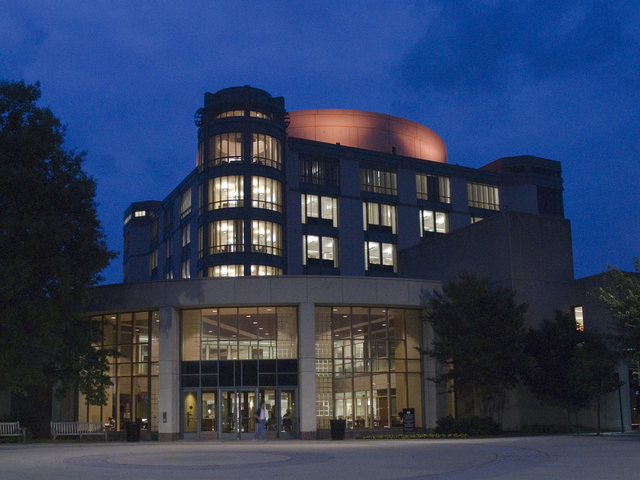
The UMBC Library; where students are able to study and do their assignments or to hang out with friends.

Although having goals and being able to push ourselves to greatness is good. Without such expectations, we will not challenge ourselves to reach our potential. There is a difference between working toward success and believing that our accomplishments are worth everything.

I think college students feel like they are not doing enough because we are constantly comparing ourselves to expectations that could not be realistic. These readings remind me that we will not always see the full story behind someone’s accomplishments. Doing your best with the time and energy you have is always enough.
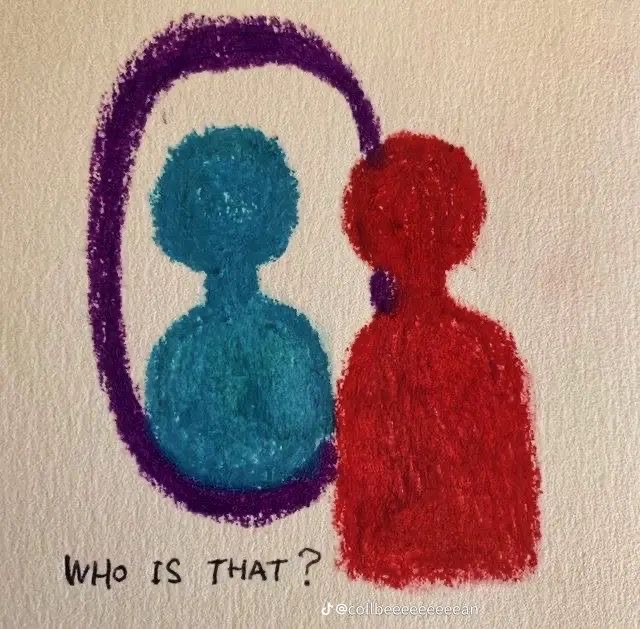

Why Do I Feel Like Nothing When Everyone Else Feels Like Something?

Have you ever scrolled online and see people confidently declaring their gender and sexuality like they’ve had it figured out since birth? “I’m nonbinary.” “I’m a lesbian.” “I’m pan.” Meanwhile, I’m sitting here wondering, why do I feel like nothing? This question has been bouncing around my head for a while now. But after reading Nonbinary: Memoirs of Gender and Identity, specifically Christopher Soto’s “What Growing Up Punk Taught Me About Being Gender Nonconforming” and Aubri Drake’s “Clothes make the Gender/Queer,” made me realize that maybe this feeling of nothingness isn’t emptiness, but simply uncertainty in a world that demands certainty from everyone.

Soto writes, “I tell my friend who still presents outside the binary that I want to be alive. I want to live. And so this is my gender: a desire to live.” That line hit me like a ton of bricks. For me, identifying as a woman has always been about survival. It’s safer, easier, less questioned. I don’t have to explain myself or fear someone reacting violently because I don’t fit their idea of what a woman “should” be. Soto ties their fear to capitalism and violence because the way safety, livelihood, and even love feel like privileges granted to those who conform. Sometimes I wonder if I’d feel freer to explore my gender if the world wasn’t punishing those who step outside the binary.

Growing up, everyone labeled me a “lesbian” before I could even figure it out on my own. I was the tomboy wearing my dad’s clothes, obsessed with comic books instead of makeup. My mom used to tell me to “act like a lady,” for simply sitting in my own home with my legs open. Then puberty hit, and suddenly I had curves I didn’t ask for. Aubri Drake’s words that “clothes started clinging to my body in all the wrong places… they stopped being a form of expression and instead became material to hide in”described exactly how I felt. I started hiding under oversized clothes because my body no longer felt like mine, but a spectacle for others. 

For years, I bounced between labels from bi, lesbian, pan,  and now to queer. Each one feeling right for a second and wrong the next. I even dated men exclusively at one point just to prove something, though my attraction to women has always been stronger. Every time I picked a label, I felt like a fraud and that everyone knew I was out of place. 

When it comes to gender, being called “masculine” or “feminine” makes me physically recoil. I don’t feel like either. I identify as a woman because it’s practical since it’s what fits easiest in the world’s boxes, but that’s never been the only reason. I’ve briefly thought about identifying as nonbinary, but fear always stops me: fear of losing cis privilege, fear of not being taken seriously, fear of violence. Like Soto, I get what it means to feel “illegitimate” just for wanting to live safely.

That’s why the label queer has been a relief. It’s flexible. It’s fluid. It lets me breathe. I don’t have to get a headache by searching for answers I don’t have yet. My gender and sexuality are personal, evolving, and maybe a little messy, but at the end of the day, that’s ok. 

A few months ago, before reading these essays, I went down a rabbit hole on Reddit trying to understand why I felt “genderless.” I remember scrolling for hours through different threads from queer and neurodivergent people describing the same sense of in-betweenness I couldn’t name. One that stood out to me was called “Does anybody else feel genuinely genderless?” on r/NonBinary, more specifically this one quote:

“When I lean more towards masc or femme with my presentation that’s all I feel it is — a presentation. Or really what it actually is is society interpreting my presentation as gendered. Ultimately it’s still just me. I don’t feel more feminine when I wear skirts — but it’s perceived that way.”

When I lean more towards masc or femme with my presentation that’s all I feel it is — a presentation. Or really what it actually is is society interpreting my presentation as gendered. Ultimately it’s still just me. I don’t feel more feminine when I wear skirts — but it’s perceived that way.”

That line felt like someone cracked my brain open and wrote down my thoughts. It echoed everything Soto and Drake described; that gender can feel more like a performance that others interpret than a truth you embody. Re-reading that thread and other ones I mindlessly scrolled actually helped me realize I wasn’t broken for feeling detached from gender. I was just tired of performing one.

I still feel like “nothing,” but I don’t see that as a bad thing anymore. That nothingness feels like freedom; free to move, question, and change without being boxed in. Reading these essays made me realize I’m not alone in that uncertainty. There’s comfort in knowing gender and sexuality don’t have to be solved; they can just evolve. Maybe “nothing” is true freedom. Maybe my gender isn’t nothing — maybe it’s just mine.

Expectations VS Reality

Parents and guardians are lovely people because they provide for us and take care of us while we grow up. I grew up with both my mom and dad, who had the highest expectations for both me and my brother. I always heard the words “doctor”, “lawyer”, “engineer”, etc. Even from a young age, I knew that it was not something that I wanted to do because all those careers are very closed-minded compared to my personality. I would not be able to be in a career where I am not free to have fun and be myself. I am not saying that the careers my dad wanted me to have are boring, but they are very serious jobs that limit my personality.

Continue reading →

Wild Nature & My Attraction to its Lack of Control

Wild Nature & My Attraction to its Lack of Control

Our class discussion regarding nature and its many forms caused me to question my own understandings of how to define nature. I suppose I never really considered that nature can take on varying forms, and the concept of nature can exist on a spectrum Continue reading →

To Cry or Not To Cry

Has anyone ever been told ‘You shouldn’t (insert action) here!” or “You shouldn’t (insert action) in front of others”? You know, that moment when you’re doing something completely normal in life but it gets marked as socially unacceptable? Sometimes, I feel like there’s this weird aversion in seeing people cry or even people themselves crying, myself included. Continue reading →