I was 12 years old when I first experienced aversion to my family’s concept of gender. It was fall 2019, and I was staying with family in New York City for a weekend. I have a clear memory of being in the shower when my older cousin walked into the bathroom to get something. I don’t remember what I said to her, but I must’ve expressed the extreme discomfort I felt at the time, because I remember her responding with something like “we have all the same parts. Why does it matter?” I just wanted to have some privacy during the 10 or so minutes I was in the bathroom, but apparently it was okay for my cousin to come because we were both girls, because “we have the same parts”. I didn’t know it at the time, but this was the start of my years-long critique of my family’s version of womanhood.
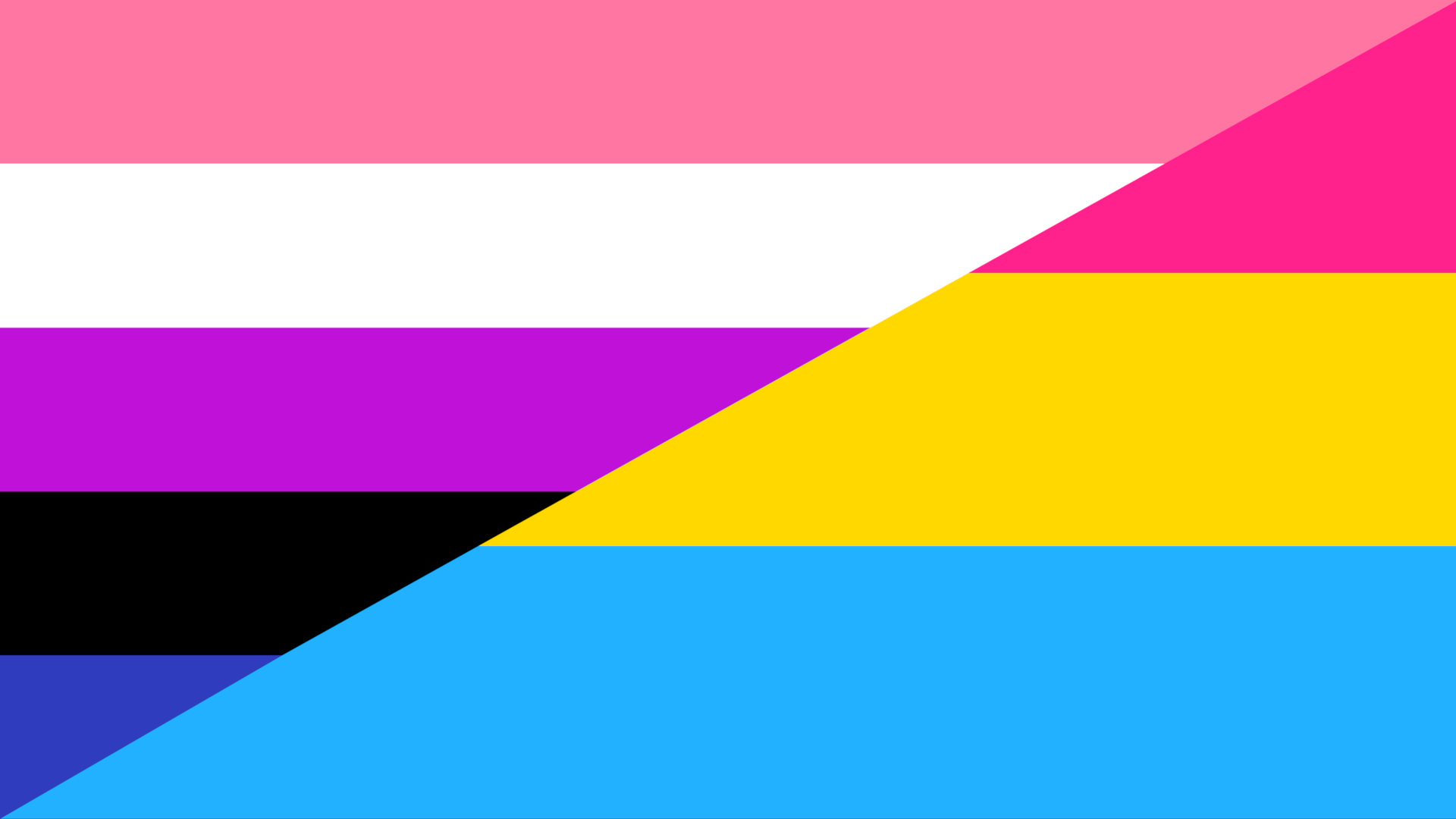
Label the foundation of modern society. Why is labeling yourself or someone so important? Why does it matter so much to someone what my gender or sexuality is? I never really thought about this until recently and the more I think about it the more I question everything. When I was young, I always assumed I was a girl and straight but as I got older and learned more about myself, I learned that no I am not. I learned more about myself. I would describe myself as gender fluid, pansexual and asexual. At the same time labels are not that important to me when come to gender personally but as for sexuality it matter more because I have been with a man for a few years and because of this many people assume I am straight when I tell them I’m pan they seemed confused why I be with a man this irritates me internally because it make me feel like I am not a part of the LGBTQ+ community this way of thinking I have faced more by those in the community then thoughts outside of the community.
Until I started back at college in fall of 2023 when I met the amazing group of people I love dearly I always felt like an outsider I did not feel wanted in the LGBTQ+ community nor the straight people community I felt like I was just drifting in space in a way, this not feeling like I belong the more I go to therapy and work on myself the ,ore I realized this sense of not belonging truly affected me. In the book nonbinary I relate with many of the stories although myself am not nonbinary the questioning of faith and the not feeling like I belong and the questioning of why labeling matters so much. No matter if you feel labels are important to you personally or not, I think things like this should be spoken about more in society, so people like me and many others know they are not alone and feel like they belong somewhere in this strange world we live in.
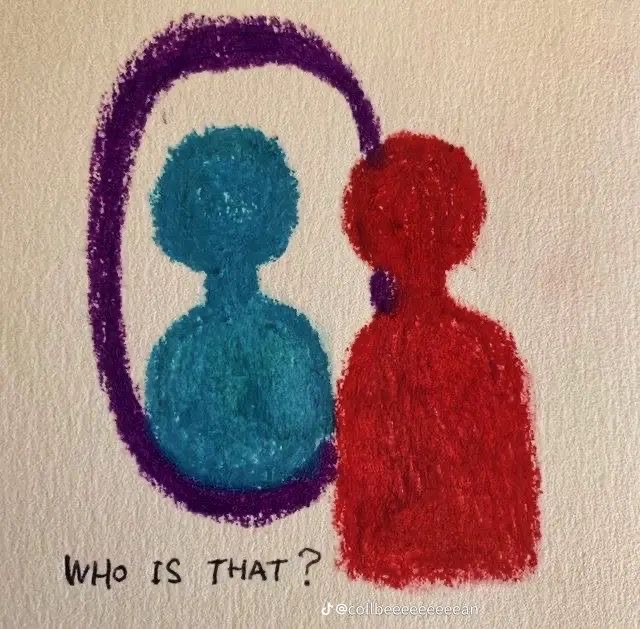
Have you ever scrolled online and see people confidently declaring their gender and sexuality like they’ve had it figured out since birth? “I’m nonbinary.” “I’m a lesbian.” “I’m pan.” Meanwhile, I’m sitting here wondering, why do I feel like nothing? This question has been bouncing around my head for a while now. But after reading Nonbinary: Memoirs of Gender and Identity, specifically Christopher Soto’s “What Growing Up Punk Taught Me About Being Gender Nonconforming” and Aubri Drake’s “Clothes make the Gender/Queer,” made me realize that maybe this feeling of nothingness isn’t emptiness, but simply uncertainty in a world that demands certainty from everyone.
Soto writes, “I tell my friend who still presents outside the binary that I want to be alive. I want to live. And so this is my gender: a desire to live.” That line hit me like a ton of bricks. For me, identifying as a woman has always been about survival. It’s safer, easier, less questioned. I don’t have to explain myself or fear someone reacting violently because I don’t fit their idea of what a woman “should” be. Soto ties their fear to capitalism and violence because the way safety, livelihood, and even love feel like privileges granted to those who conform. Sometimes I wonder if I’d feel freer to explore my gender if the world wasn’t punishing those who step outside the binary.
Growing up, everyone labeled me a “lesbian” before I could even figure it out on my own. I was the tomboy wearing my dad’s clothes, obsessed with comic books instead of makeup. My mom used to tell me to “act like a lady,” for simply sitting in my own home with my legs open. Then puberty hit, and suddenly I had curves I didn’t ask for. Aubri Drake’s words that “clothes started clinging to my body in all the wrong places… they stopped being a form of expression and instead became material to hide in”described exactly how I felt. I started hiding under oversized clothes because my body no longer felt like mine, but a spectacle for others.
For years, I bounced between labels from bi, lesbian, pan, and now to queer. Each one feeling right for a second and wrong the next. I even dated men exclusively at one point just to prove something, though my attraction to women has always been stronger. Every time I picked a label, I felt like a fraud and that everyone knew I was out of place.
When it comes to gender, being called “masculine” or “feminine” makes me physically recoil. I don’t feel like either. I identify as a woman because it’s practical since it’s what fits easiest in the world’s boxes, but that’s never been the only reason. I’ve briefly thought about identifying as nonbinary, but fear always stops me: fear of losing cis privilege, fear of not being taken seriously, fear of violence. Like Soto, I get what it means to feel “illegitimate” just for wanting to live safely.
That’s why the label queer has been a relief. It’s flexible. It’s fluid. It lets me breathe. I don’t have to get a headache by searching for answers I don’t have yet. My gender and sexuality are personal, evolving, and maybe a little messy, but at the end of the day, that’s ok.
A few months ago, before reading these essays, I went down a rabbit hole on Reddit trying to understand why I felt “genderless.” I remember scrolling for hours through different threads from queer and neurodivergent people describing the same sense of in-betweenness I couldn’t name. One that stood out to me was called “Does anybody else feel genuinely genderless?” on r/NonBinary, more specifically this one quote:
“When I lean more towards masc or femme with my presentation that’s all I feel it is — a presentation. Or really what it actually is is society interpreting my presentation as gendered. Ultimately it’s still just me. I don’t feel more feminine when I wear skirts — but it’s perceived that way.”
When I lean more towards masc or femme with my presentation that’s all I feel it is — a presentation. Or really what it actually is is society interpreting my presentation as gendered. Ultimately it’s still just me. I don’t feel more feminine when I wear skirts — but it’s perceived that way.”
That line felt like someone cracked my brain open and wrote down my thoughts. It echoed everything Soto and Drake described; that gender can feel more like a performance that others interpret than a truth you embody. Re-reading that thread and other ones I mindlessly scrolled actually helped me realize I wasn’t broken for feeling detached from gender. I was just tired of performing one.
I still feel like “nothing,” but I don’t see that as a bad thing anymore. That nothingness feels like freedom; free to move, question, and change without being boxed in. Reading these essays made me realize I’m not alone in that uncertainty. There’s comfort in knowing gender and sexuality don’t have to be solved; they can just evolve. Maybe “nothing” is true freedom. Maybe my gender isn’t nothing — maybe it’s just mine.
I was socialized as a girl and had to learn to undo the thinking and processes that held me back from being myself as since I was taught to fit in the role of “girl” from a young age. I was a performer in ballet and Irish Dance, and praised as a good one at that by both adults and my peers. Simultaneously, I became an expert at performing my assigned gender. That’s what my life was, dance and being a girl and a daughter and a niece and a sister– and femme. I didn’t know any different. I didn’t see myself as being able to be any different. I only did, said, dressed, and convinced myself to feel like a “girl” would. I had played so far into being a “girl” that I completely disconnected with my body and lost myself. I never considered who I wanted to be. The modality of femininity, ‘Discontinuous Unity,’ observed by Iris Mariam Young in “Throwing Like a Girl” perfectly describes how I felt in my adolescence with femininity. I felt like I was constantly in a spotlight– viewed by a crowd I couldn’t see, critiqued for not pointing my feet enough, and convinced my body must play the role of “girl” correctly.
It was years until I realized that I had been struggling with internal homophobia and transphobia. It was okay for others to be LGBTQ+, but not for myself? The convincing wasn’t good enough though, because as the world around me crumbled with my first sense of self-realization, I saw that nonbinary lesbian inside of me. It took me 16 years to understand that I wasn’t straight, and another 3 to realize I wasn’t a part of the gender binary. Those last 3 years were the toughest. Validating myself was one of the hardest things I’ve done and continue to do daily. It feels so crazy looking back and sometimes it feels so unequivocally dumb that I couldn’t find myself and still doubt myself, but this is what happened to me and I’m still trying to accept it. I see a sense of femininity still lingering in the jewelry I wear, my short hair that I can’t ever seem to like even when it’s an inch from my head, and the mannerisms I can’t seem to shake. I hope to use these parts of me to empower myself rather than promote disunity of my mind and body. This has been my personal journey from “Discontinuous Unity” to “Ambiguous Transcendence,” where I can freely be myself regardless of others’ views of me.
TLDR; Society pushed me into a role without my consent that led me to disassociate and play pretend as a straight girl until I learned I had free will.
Pronouns. Pronouns are things that we learned about in grade school and for most people, something they haven’t thought about since (unless we get into learning other languages but that brings up something else entirely). Pronouns are almost always read off the body, which is funny because they actually have nothing to do with bodies. Pronouns are related to gender, so within the gender binary, it makes sense that he/him/his or she/her/hers are the only pronouns people know, and are almost always the pronouns that people read off of others’ bodies. I’m gonna let you in on a little thing called “there are more than two genders” (it’s shocking, I know. I’ll let you think about that for a minute).