Face Transplants

I saw this article relating to a face transplant that occurred in Maryland within the last week or so.  This article is extremely relevant to the book we just discussed (Autobiography of a Face).  The man who received the transplant needed one due to a gunshot wound and damage from about 15 years ago.  The article can be found here:

36-hour face transplant ‘most extensive’ ever

The story is an amazing one.  The medical technology and techniques that we now know are phenomenal.  I wish I could interview this guy and ask him how he feels about having a new face after hiding behind a mask for so long and having to use a breathing tube to breathe.  The transplanted face came from a donor whose other organs were also donated to save 5 lives.  The article states that the recipient’s new face is a combination of his own face and the donor’s face and a little bit of customization.  I wonder how this man feels about having another person’s face fused into his.  I also wonder how that impacts his identity.  How would you feel?  Would you be relieved to have the new face so you can appear what is “normal” to society?  Or would you have some reservations and other ideals about how this re-creates your identity?

Summer, Sandals and Socialized Feet

So summer is swiftly approaching. The heat will of course cause a large shift in the way bodies are covered. Shorter and shorter skirts, barely there shorts, sleeveless tops and if your really hot, just bikinis all day! This of course horrifies the conservative sector of society that prefers woman cover up for moral reason. I however am concerned with a very specific body part that suddenly gets over exposed. FEET.

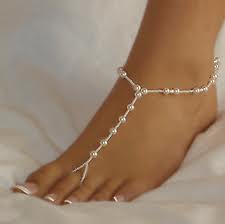
They are everywhere. There are flip-flops, peep-toe heals, strappy sandals and more, all overly exposing the foot to the population. I recognize this is not generally considered a big deal. I’m sure members of the foot fetish society community love this time of year. As for me, it is dreadful.

Here is why. All winter I had the luxury of socks and boots, fully protecting my feet from the public view. Now I have the added hassle of constantly preparing my feet for society. Painting my nails, making sure my heels and toes have lotion at all times, and making sure they have a generally attractive appearance. No one told me explicitly that I need to put the extra effort toward my toes. Yet I know, from the sexy models with the perfect feet in the DSW and Payless commercials. Every single one has toes painted with wonderfully bright colors, their toes fit perfectly in the shoe as if the designer tailored the shoe for that specific foot. Meanwhile, I have to pull of the same strappy sandal with my imperfect feet.  This may just be a personal dilemma, but I’m certain I’m not the only one who has noticed how even the barely noticed parts of our bodies have been subjected to socially constructed norms.Image

Bleach is for clothes, not faces (but apparently not to everyone)

I remember hearing about skin lightening over a year ago. I recall being surprised that such a practice even existed, but in retrospect, perhaps I should not have been. The media seems to purport an overwhelming amount of imagery that caters to those with white/light skin (but that’s a topic that may be for another blog post).

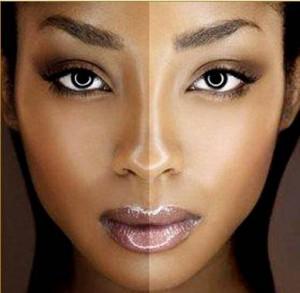
Skin bleaching uses chemicals or natural products to lighten skin, and is common in communities of colour. Thus, it is apparent why the practice is problematic: it erases the very aspect of color from people of color.

Interestingly enough, a model who works in Mumbai stated, “obviously what you don’t have is what you want. The Western world, they go in for tans. They want to get a little brown touch to themselves. They think that’s hot…so, what we think over here, since we are brown-skinned people, white is hot.” So, does skin bleaching merely exemplify that people can never be satisfied with their bodies, and that they will always engage in different forms of embodiment in order to change their natural states?

Or, is there a more grim truth?

Lightening the skin can actually be traced back to colonization, when white skin was often preferred. Furthermore, it has been said by psychologists in an article that consumer demand (I assume they are referring to demand for skin bleaching, as the aforementioned article revolves around the topic) can be traced to perceptions that lighter skinned or white people are more sexually desirable, etc. The aforementioned insights appear to indicate that there is a standard of beauty that is playing out here, one that holds that white skin as favorable. Thus, it seems as though skin bleaching is a product of racism.

While thinking about skin bleaching, a few questions came to mind. What if people were to dye their bodies a color that no one was born with (i.e. purple)? What may reactions to that body modification be? Would the modification be considered a product of racism, as it involves a divergence from natural skin color? Also, are there any other forms of body modification that are a product of racism?

It is interesting to watch the way prescription drugs are consumed in America. We tend to obsess over the benefits of prescriptions and gloss over the possible side effects. Every commercial for a prescription drug is required to announce the side effects, but who can actually hear them? There is usually a man with low-pitched voice racing through the possible inconveniences as if they are minor possibilities.

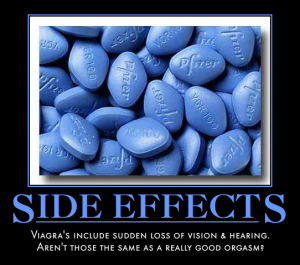
Apart from a 4 hour erection, Viagra can also cause loss of vision, diarrhea, dyspepsia, and dizziness. It can also be fatal when taken with other drugs, especially drugs for heart related health problems. This information is not commonly discussed. Every commercial has the side effects mention as mandated by the FDA. It is the consumers responsibility to understand these side effects, ask questions, and take necessary precautions. Unfortunately, as a society we are more eager to reap the benefits then we are to take caution over the adverse effects.

I felt that Viagra was a great attention grabber for this post, but this is greater than the erection verses vision debate. There are so many prescriptions out there for a wide range of serious and minor illnesses that have side effects of varying degrees of significance. We have become comfortable putting chemicals in our body for self medication or as instructed by a health professional without thinking about the consequences. I don’t remember ever pausing to think that my aspirin can give me stomach ulcers before consuming it. Whether it is an over the counter drug or a prescription medication, we need to pay closer attention to the warnings labels, especially if the drug is a personal desire and not necessary for health maintenance, like Viagra or Latisse.

Tattoo

I honestly thought about getting a tattoo on my hand, because i think it looks cool and i always wanted to get one.But my boyfriend stopped me. He always think that if i get a tattoo, i would look totally a different person.Last week,I read this article about tattoos. It said, ” Tattoo placement can negatively impact a person’s life if ink location is not careful considered.”

Tattoos and Professional Disadvantages

And it listed the disadvantages of Tattoos:
“· Career Limitations
· Style of Clothing
· Relationship Conflicts
· Decrease in Community Involvement
· Negative Self-Esteem
· Compromise Health”

I think it is true that tattoo really can impact our life. After this article, i thought about if i really got a tattoo on my hand. i would have to worry about hiding it from my parent, or when i go to a job interview, how would people think about me when they see my tattoo, and so on.I also did some research about tattoo ink.Tattoo ink contains pigments. It is bad for body. It can cause infection, such as hepatitis and skin infections.Because of the tattooing equipment if they are not unsterile. Tattoo can results Granulomas.It is an allergic reaction from tattoo ink.The treatment for it requires medical attention for antibiotics. I am wondering, for those you that have tattoo, have you consider about skin problem or have an allergic reaction before you walk into the tattoo store?

Scalpels vs. Needles, and the Body as Art or a Canvas for Art

ImageWarning: this post does contain mention of self-injury.

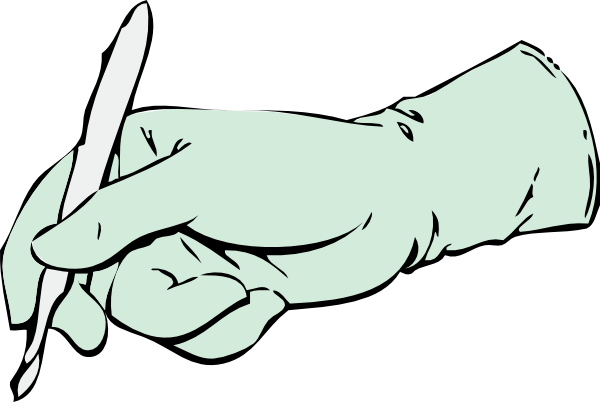
I recently came across this article on scarification. Scarification is a process that involves using a scalpel to carve patterns into flesh. This may seem gruesome to some, but some who are attracted to it are looking for a way to disguise old wounds. One person who had scarification had been a youth who had engaged in self-injury and said that scarification was a form of reclamation.

What is the purpose of disguising scars with more scars? The idea of putting more scars on top of preexisting scars being reclamation is baffling to me. I can’t help but think that scarification may make self-injury worse, or, at least, make people believe that placing scars on their body is a healthy coping mechanism.

What if someone got a tattoo to cover their scars, though?

ImageWhile scarification carries stigma, the cultural status of tattooing has evolved from an anti-social activity to a fashion statement. Tattooing involves placing needles into the body instead of scalpels. Since both processes involve piercing the body, one may wonder which one is worse – or if they are both processes that are equal in magnitude (i.e. in terms of harmlessness, morals, destructiveness of the body, etc.). To me, tattooing is better than scarification, as in my view, no matter the method, producing a scar as opposed to producing an image that does not resemble a scar (given that one is not attempting to tattoo what looks like a scar onto the body) encourages self-harm. However, I am aware that I can’t speak for everyone.
ImageOn a different note, while thinking about the process of scarification, I wondered about the body as a  work of art, or at least a canvas upon which practices such as scarification, which is done in the name of art may be carried out. Another practice is tattoo art, and one may be able to perceive plastic surgery as a procedure that makes the body a work of art or creates art upon it as it sculpts parts of the body. However, more subtle forms of art/processes that make the body art can be simply applying makeup or combing one’s hair. These processes, although they may be viewed as mundane parts of daily life, all involve “fixing” or “adjusting” the body to create a certain visual image for the viewer (whether that viewer may be oneself looking in the mirror or others). That, to me, is art.

I remain on the fence about scarification. However, I believe the practice can bring about some interesting discourse on what makes a body practice acceptable or not, and on the body as art/a canvas for art.