
I remember talking to my mom about the book I was reading, “Feminist Queer Crip” by Alison Kafer. When I talked to my mother about disability, she pointed to an experience in her past. She said, she remembered back in her country seeing a man without legs or arms in the streets with a sign that asked others for food. My mom made a point to tell me that the man wasn’t sad, but was singing about the glory of God. Continue reading
body
How are you doing?
Lately, I’ve run out of creative, small talk-ish responses to when folks ask me how I am doing.. I’ve now resigned to just a soft smile and ‘I’m doing okay.’
I’m not lying… I am doing okay. I mean, I’m graduating in 27 days…I got my very first full time job interview at a place within the very narrow field of sexual assault advocacy (which is actually tough to come by).. so you know, all things considered, I’m doing okay.
Every now and again though, I get a weird tug on my heart strings and it reminds me that Donald Trump is president elect. A man who loudly endorses xenophobia, transphobia, homophobia, sexual assault as “locker room talk,”islamophobia, white supremacy, ableism, and the list goes on. We’ve chosen him to represent us to the remainder of the globe. This dude. It’s all just wild.
I’ve seen folks move on from sadness to beginning the process of normalizing this. I’m not mad, really.. It’s human nature to take something so traumatic and violent, namely electing this dude, and immediately try to find a way to rationalize things. Otherwise, how would any of us ever sleep at night?
What bothers me is this move to normalize this person’s dialogue and rhetoric…
“Give it a chance”
“He might not be so bad”
“It’ll be okay”
Really? For whom exactly will it be okay? What bodies will benefit or even minimally impact?
I’m a queer, immigrant, woman of color, and a sexual assault survivor.
Where exactly am I supposed to seek shelter? Where do I find the safety that’s been so violently taken from me?
This expectation that it’s now November 24 and therefore I should be over it.. I should just accept it.
Accept that I’m not welcome here.
Accept that my beloved friends will have their rights stripped from them further
Accept that folks a community that I love and am a part of will be hurt even more.
Accept that despite working toward it, I won’t be able to dry all the tears that I want to.
Accept this violent bursting of my safety bubble followed by an attempt to take boiling emotions and make them lukewarm so that the we don’t disturb the peace.
I hope that soon I will be able to move from this, at times, paralyzing sadness soon.
I have every intention in being active in resistance, in allyship, and in radical love for myself and for others.
Please feel free to share thoughts. I’d love to hear from you. I’d love to build community.
What if Videogames are Hell?
While wandering through the internet recently, I discovered a Youtube series called Epic NPC Man. In this series, the main character is an NPC (Non-Player Character) and we are seeing things that are normal in a fantasy videogame, but from a different perspective. As I was watching this, the realization that this character is capable of independent thought and reflection was forced to do scripted things slowly dawned on me. As this happened, I began wondering if this was Hell?
A for effort?
My brother and I were driving to school on Friday last week and on the radio they were talking about Obesity. Obesity is a huge problem in the United States of America. More than one-third (35.7 percent) of adults are considered to be obese. More than 1 in 20 (6.3 percent) have extreme obesity. Almost 3 in 4 men (74 percent) are considered to be overweight or obese. These are just numbers and there is more to it than that. But we cannot ignore the amount of health problems that comes with obesity.
So apparently right now some companies are trying things out to reduce the level of obesity in America. I heard them talk on the radio about how companies are considering taxing and also reducing the sugar quantity in all these soft drinks or beverages, in order to get people not to buy it as much and also drop a couple of pounds.
In my opinion, while these sound like interesting methods to cut down the obesity level in America, I just don’t think they would really be effective. Like how much tax are you really going to be allowed to put on something like soda to get people who really want it not to buy it? Maybe reducing the sugar quantity might help, but I feel as though a lot of people might be angered by this.
Body Problems on Live TV
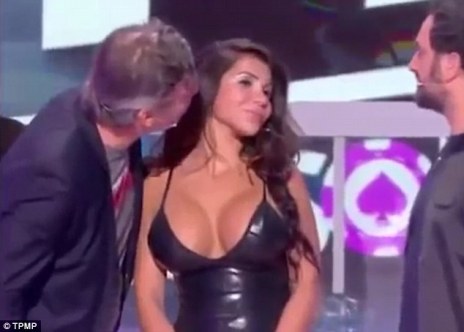
Television can sometimes be the most reflective form of cultural mirroring that can show what society truly thinks of certain people, and the behavior that they find suitable for those types of identities. Dramas and comedies often reveal stereotypical tropes of characters that can often be unrealistic and uncomfortable to experience, while live-action news programming can show the true thoughts that organizations from around the world are attempting to pump into the minds of humans in our society. The least drastic form of television that I would expect catastrophe from would definitely be a game show. I mean, really?
Gender Policing of Halloween Bodies
For Halloween this year my girlfriend and I decided to go as Shaggy and Velma. While looking for clothes in a thrift store, my girlfriend started playing with the idea of going as a sexy Velma. Going along with it I suggested I go as a sexy Shaggy as well. Continue reading
Blue Pills
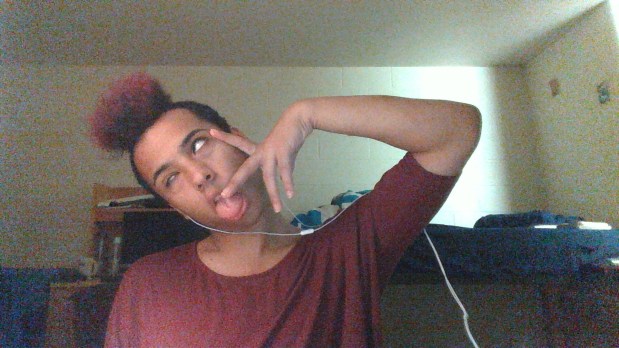
I went on estrogen almost four months ago. I don’t really pay attention to it much –I had to check to see if that was even right. As someone who is on HRT I think there is a serious gap in the discussion.
Can you see my oppression?
For a couple of weeks, I have noticed something that has been circling my life, that something is oppression. Continue reading
You Must Be This Tall to Ride
Content Warning: Height dysphoria, transphobia
I recently joined the millions of users on Tinder, a social networking app that allows for mutually interested individuals to communicate if they are within a predetermined distance. Tinder functions simply. Users are presented one-by-one with other profiles—which include up to six photos, age, distance, and a brief text description—and are given two options: swipe left to “dislike” and thereby remove the profile as a potential match, or swipe right to “like.” If both users have mutually swiped right, the application allows for text communication between the two profiles to occur.
While the app can be used to find friends, Tinder is most frequently used as a dating services app. As I have swiped through profiles and read their short descriptions over the past few weeks, I have picked up on certain trends in the information users present to potential romantic and/or sexual partners. One of the most frequent descriptors used is height, revealing what many view as an important physical factor. This mark of importance ranges from implicit, such as simply listing one’s height, to extremely explicit, in which I’ve seen a profile’s description read, “Do not swipe right if you are under 5’10”.”
A recent national study showed that 48.9% of the heterosexual women surveyed wanted to only date men taller than them (Yancey & Emerson 62). Height preference was important to the heterosexual men surveyed as well, but not as important, with 1.3% wanting to only date women taller than them and 13.5% wanting to only date women shorter than them.
Height is clearly an important characteristic when it comes to choosing a partner, yet there has been some debate as to whether this is due to biological tendencies (evolutionary perspective) or social expectations. Ultimately, these gendered-height expectations are rooted in patriarchy. The women surveyed in the study often listed protection and security as reasons to why they prefer taller men (Yancey & Emerson 62). Others stated that a taller man made them feel more “feminine.” The men surveyed in the study who set upper limits for height were “not considering physical or sexual difficulties but societal expectations” (Yancey & Emerson 66). These men did not explicitly speak on traditional gender roles, but they did convey a desire to avoid possible stigma. Men were “reinforcing societal expectations with their higher height limit just as women reinforced those expectations with their lower height limit” (Yancey & Emerson 66).
Like many gender norms, height expectations have the harshest impact on the transgender community. Height dysphoria, an invasive dissatisfaction and discomfort with one’s height, is a frequently seen dilemma among online transgender support forums. Height is very difficult to amend, and because it is wrongfully associated with masculinity and femininity, transgender individuals suffer greatly. Posts in these online forums express a sense of futility. While it can be achievable to possess societally-deemed masculine traits such as hair growth, muscular strength, and body parts, height is nearly impossible to change. Some responders recommend shoes with platforms or boosters. Others simply recommend an attitude adjustment.
This attitude adjustment should not be the responsibility of the trans community, but rather those who have the privilege to actively challenge gender norms free from danger, particularly white, cis, and heterosexual individuals. It is human and understandable to have height expectations, as patriarchy is deeply embedded and can be difficult to unearth, but I ask the reader to truly consider their own expectations and from where they have been created. Just as we work to untangle the mess of patriarchy in our coursework, conversation, and minds, we must also work to distance ourselves from harmful gendered-height expectations.
Works Cited
Yancey, George, and Michael O. Emerson. “Does Height Matter? An Examination Of Height
Preferences In Romantic Coupling.” Journal Of Family Issues 37.1 (2016): 53. Publisher
Provided Full Text Searching File. Web. 29 Sept. 2016.
You want a piece of me?
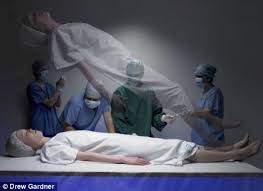 Every day I question my appearance. I ask myself, what makes me ……. me? If I lose a part of me will I still be me? These questions may not make sense to you but these are some things that I ask myself. Continue reading
 Unruly Bodies