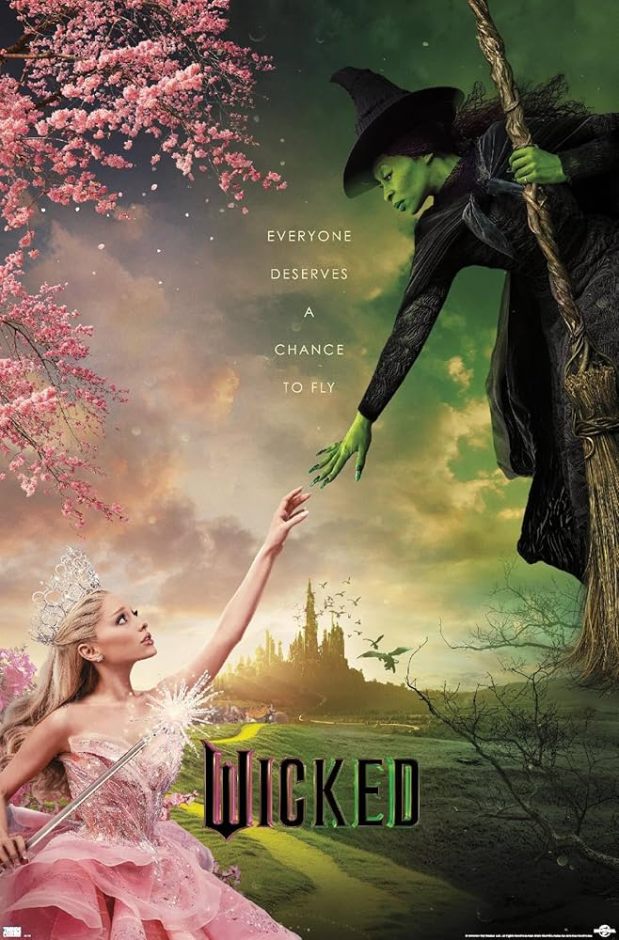
You don’t have to watch Wicked to know its famous line—“No one mourns the Wicked”—which basically means that some people aren’t worth grieving. This kept echoing in my head when I heard that both lead actresses of the Wicked: For Good film recently tested positive for COVID.
According to a recent Guardian article, “Both Grande and Cynthia Erivo tested positive for Covid during the filming of the first movie, temporarily delaying production. Erivo reportedly contracted the virus days before shooting the climactic first-act number Defying Gravity, while Grande tested positive before filming the song “Popular.”
The same article notes that during the current press tour Ariana Grande again tested positive, forcing her to miss several events.
That news made me think of Mia Mingus. In her blog “You Are Not Entitled to Our Deaths”, Mingus challenges the idea that disabled or sick bodies are disposable and that those lives aren’t worth protecting or grieving. After reading this blog and our discussion in class, it made me remember hearing about the Wicked news. It made me realize we’re acting like COVID is just a production hiccup, an inconvenience to filming or press tours, rather than the ongoing threat which is killing and disabling countless people. The fact that both leads got sick, during filming and promotion, yet the media and public reaction centers on delays, missed appearances, and disappointed fans speaks volumes.
There’s something horrifyingly Wicked-like about how illness is framed now. If someone masks, they’re “paranoid.” If they don’t appear for a photoshoot or premiere, fans complain. When someone gets COVID, the conversation is about wasted money on promotion, fan backlash over missed premieres, or travel delays , but rarely about health, recovery, or the toll illness takes. The framing treats sickness as a hiccup, not as human suffering. It treats the sick body as a burden to the show, not as a person in need of care.
“Grande’s positive test was the latest hiccup for the full-court Wicked press blitz that has seen the cast hop continents by the day. Due to flight delays, Grande was unable to make the premiere in Brazil, triggering fan backlash she also addressed on her Instagram.”
That is exactly the kind of abled entitlement Mingus warns about: a culture that assumes certain bodies can and should be sacrificed for convenience. Under this logic, “the show must go on,” regardless of who gets hurt. The Wicked cast situation isn’t just celebrity news, but it’s a reflection of a larger societal pattern where health, disability, and our shared vulnerability are minimized, ignored, or erased entirely.
What’s even worse is how normalized this erasure has become. COVID has become “another thing,” something to power through so cameras and promotions stay on schedule. Workplaces expect people to show up sick. Students are told to push through fevers. Long-term effects are brushed off as “just fatigue.” Public health infrastructure? Largely forgotten. Masks, ventilation, testing are all optional. People who get sick frequently or live with chronic conditions are expected to adapt or be pushed aside.
Mingus doesn’t just name this as negligence, she instead frames it as violence. When we treat care as optional, when we prioritize productivity over people, when we mourn canceled premieres more than lost lives, we are making a statement about whose lives matter. We’re deciding who gets protection, who gets grief, and who doesn’t.
We shouldn’t act like the pandemic is over. We need to stop shrugging when someone gets sick, framing illness as inconvenience, or acting like the only thing that matters is the show going on. Production, entertainment, or convenience is not more important than actual human lives. Because if we care at all about disability justice, about valuing every life, then we can’t pretend the pandemic is done. We have to mourn the sick. We have to fight for care. And we have to stop believing the myth that pushing on by ignoring risk, ignoring illness is normal or acceptable.