Mental health wasn’t something that was introduced to me until my junior year of high school. Growing up I knew about things like depression and anxiety, but the way it was presented to me was that those things only appear when something severe happens to you. Like it’s only normal/okay to be depressed when someone dies. My family pushed the idea that when you’re young with little to no responsibilities and all your needs are met then there is no reason to have mental health issues. So when my friend in his senior year of high school, who lived down the street from me, in a nice suburban neighborhood, headed to college, in band, with a dog, nice family, swim team, with a car committed suicide I had difficulties processing. Like everyone else my number one question was “why?” You can list a number of reasons why he didn’t fit the “could possibly commit suicide list”. You could also list a number of conspiracies that possibly could have been the reason why he did it. Now that I’m older I’ve realized that those are just questions and answers we search in order to make ourselves feel better because in reality there could be no reason why. Not everything needs an explanation and that’s okay. Realizing that has personally helped me navigate through hard days.
On the weekend of this past Halloween, I ate shit on the stairs of a frat party. In the 30 seconds it took for my friend behind me to realize that I was sprawled on the floor, it took just as long for everyone to realize they needed to ignore the fat girl on the ground. I didn’t know what just happened to me, but I was embarrassed, in pain, and scared. I was also ignored.
Later in the party, I moved around from group to group trying to awkwardly join whatever conversations my friends were having. I don’t hate parties, but I was pretty fucking uncomfortable. I don’t fit into the white standard that’s present at my PWI, no matter how diverse it may pitch itself to be. I told myself that’s why people probably think I don’t belong here. I believe my constant discomfort everywhere I go stems from my inability to let go of whatever I am feeling.
This whole entire semester I’ve been letting go. Letting go of anger, depression, hobbies… anything that could stop me from focusing on getting my degree. When I do “feel my feelings”, I tell myself it’s the paranoia talking. Worrying about which friend cares enough, or how much someone has wronged me has done nothing but make me spiral. I don’t talk enough about my feelings, I shove them down like I have since I was 3. I never let the people around me know how much I wanted to die everyday in elementary school and that it’s a feeling that has never left me. The abuse of my adoptive aunt stays with me today because of the moments she told me I deserved whatever pain was coming to me, pain that I ignore.
I don’t exactly love to talk about my childhood, but there was also a time when I was in therapy after my mother’s death. I vaguely remember the hours after school between 6PM and 8PM where I would sit in a room playing with toys, refusing to acknowledge my therapist who had eagerly wanted to talk to me.
My relationship with therapy has never been an easy one. On one hand, my family’s culture has led to internalized feelings about therapy that I can’t ignore. On the other, I know it’s important for me to address the issues that hinder me. Is paying someone to talk to about my feelings really worth it if that was not an accessible resource to my ancestors? They had to overcome so much worse than me.
I think that comes down to the responsibility of our generation. Most of us have dealt with overbearing parents, ones that project onto us, and haven’t acknowledged any of their own trauma. At the end of the day, we are the only ones that can solve our problems… therapy is just a way to do that.
I hate how people feel they can say their options so quickly. I recently went to a wedding with my boyfriend, and we took a picture; my grandmother pulled me to the side and said jokingly you look fat next to him. I think you should lose some weight to look more attractive. I was very offended but never said anything because I should respect my grandmother. I didn’t particularly appreciate how my grandmother said that; that day, I felt such self-contusions; instead of feeling pretty being all dressed up, I felt sluggish and disgusting. After the wedding, my family, boyfriend, and I were on our way back home, and in the car, my dad started talking about how I needed to lose weight and that I will have a hard time in the future. He even stated I overeat and need to control my food intake! He said that when I decide to have kids, I would be so “fat” after like he is disgusted by fat people. I felt so embarrassed because my boyfriend was in the car. What was he thinking of me? It’s one thing for my parents to believe that I was fat, but my boyfriend thinking I’m not perfect, would hurt my soul like someone shooting me in the arm. Although I have gained quite a bit of weight since I moved to Maryland, I am still able to walk 5 miles without stopping, and I am still able to do everyday things. I don’t think it is fair that people are so quick to judge when someone doesn’t like something about someone. I have a lot of confidence problems with my body now.
An analysis on the reclamation of the word bitch, and if it’s doing more harm than good.
In class we spoke about the British mental health movement, the “Mad Pride Movement”. In which participants reclaimed the word “mad”, a word commonly used against people with mental illness, to take back control and empower themselves. In relatively recent times the same could be said about the word “bitch”, an insult commonly thrown at women. Its increased usage being perceived as taking power away from the word and reappropriating it as something endearing or empowering. But is this true? Can bitch truly be reclaimed? Is it really empowering?
Firstly, we all know the history of the word “bitch”. It is the term for a female dog, but most commonly a term used for an argumentative, slutty, stuck up, weak, or normal woman. Bitch is thrown at everyone, regardless of age, race, or gender. It’s within the group of insults making reference towards women or women’s parts, such as “pussy” or “whore”. The word has probably been thrown at you, and it’s probably stung. For a while it was common knowledge this was a disrespectful and belittling word, a word mostly hurled at women to keep them down.
I have lived my whole teenage years on social media. Post after post I have been exposed to different topics, but one that I have seen are posts surrounding mental health. As someone who grew up in a household where mental illness simply meant that you weren’t worshiping God enough or it was a sign you were a bad person, my family never spoke about mental health. It wasn’t until I was way into my teenage years (like 18 years old) when I realized that my anxiety and depression wasn’t a reflection of my actions or a form of punishment. Not only was I surviving undiagnosed, but I was also unaware. I had no understanding of what this intense amount of uncalled for sadness was coming from or trying to explain to anyone why I brushing my teeth in bed seemed like climbing a mountain. At one point I was becoming scared to leave my house because I didn’t know what these anxiety attacks were for. I have since been on a self-learning journey of having a basic understanding of what mental health is. In one of our classes we learned about mental health disability, and I was taken back by the title. I never even thought of myself for having a disability. Reading the article about how being a good disabled person resonated with me because I have always had to push past the hard times because of the 0 flexibility that I was surrounded by. On days where I couldnt stop crying, I would put on mascara so that it would “force” myself to stop crying unless I wanted to look “stupid.” Although there is always the normal amount of forcing yourself to be positive in a public setting or work environment, I found myself forcing myself to put my struggles to the side when I was around my family because of the heavy stigma it carried. I was not allowed to rest unless I was sick. Because I wasn’t given the space to feel my emotions, it has honestly come with detrimental effects and in turn made everything worse. I didn’t turn a corner until after I hit rock bottom and my parents finally decided to listen and understand. I’ve now started getting treatment, but I feel embarrassed or ashamed to have this illness because even though I know that the stigma around mental health is null, I was still raised that way, so for me to accept my illness is a whole different step that I have to work through. Lastly, my own journey towards increasing my knowledge around my religion has shown me the compassion, love, and empathy that God has for those struggling with mental health issues. I discovered that struggling with mental health was not a form of punishment or made me a bad person at all. Right now, I am in the weirdest stage of my life where I have a wider understanding of myself and my issues that I am dealing with, but I am still working towards accepting it and myself + be more compassionate and patient with myself.
“An artistic interpretation of my uniform at Chick-fil-A”
Out of desperation, I used to work at an establishment called “Chick-Fil-A”, where’s earth holiest chicken sandwiches came to be, and the guests are seemingly holier than God. Each day, I clocked in physically only to clock out mentally and pretend I’m playing a fast-food simulator to pass time. Usually, the script went, “Hi, welcome to Chick-Fil-A, can I have a name for your order please” and then the guest proceeded to tell me their name and their order. Periodically, I’d have a guest break the script to leave a joyful compliment such as the usual, “Keep it going!”, “Your customer service skills are excellent”, “You’re so articulate”, or “I bet I can guess your ethnicity; I’m usually really good at guessing these kinds of things”. Upon hearing these delights, I would flash a big grin and redirect the conversation to their order because we also had to keep in mind our speed of service, but how do you professionally keep your composure after working for 7 hours straight, with your back aching from not being able to sit, enduring that one co-worker who joined three weeks ago passively aggressively reminding you every minute to “pull up the cars”, and grin your way through a guest trying to guess your ethnicity like guessing the breed of a dog? The answer is you don’t because once a guest goes off-script, my mind begins to combust into flames because the amount of physical labor required for my position exceeds the wage tenfold. On top of that, I had to regulate my “own emotions that were required by [my] certain profession” (Hochschild 2). In other words, I also had to provide emotional labor. This heavy emotional labor played a huge factor in my decision to quit.
During that time, we were also required to wear masks inside, which hindered our facial expressions, so I had to be extra peppy when I spoke to customers in case they decided to leave a bad Google review or fake a complaint to get a cookie (true story). I as an employee had to “become a body on display” (Slavishak 161), in order to contribute to the friendly, attentive image of the company. I was basically a robot with a permanently etched smile that spewed out pre-programmed lines 8 hours a day. From the company’s perspective, I understand that they have a reputation to uphold because they are a business after all. The issue with that is, I am not a robot. I have a moral compass and should have the right to stand my ground when I’m being disrespected, but every time I think of shutting them down, I am reminded that I could be laid off for not tolerating racism. I am reminded that I am just a cog in the machine that can be easily replaced.
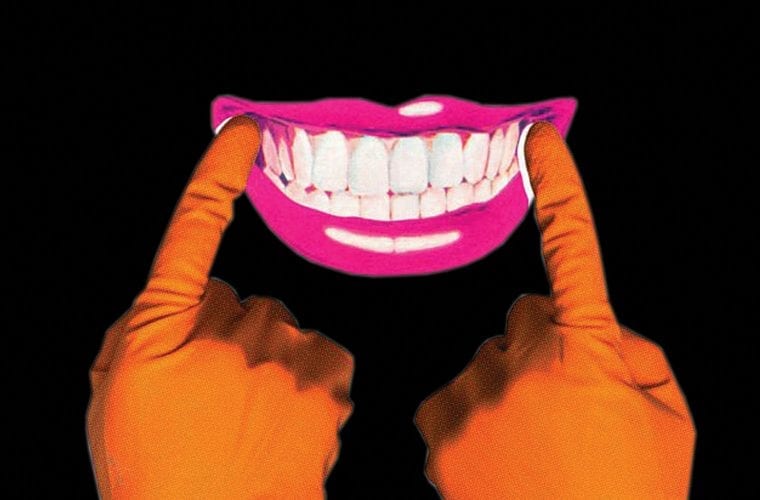
“Picture of two fingers between the edges of the mouth to create a smile”
Growing up, I was made to feel like my body was not good enough. Not beautiful enough. Not healthy enough. Not loveable enough. Whether it was through unrealistic beauty standards, constant nagging of needing to cover up my own body because it serves as a “distraction”, or through daily comparison of my body with other people’s. I felt as though I needed to constantly be self-critical of my body, in order to be better and healthier. However, this did the complete opposite. When I looked in the mirror, I felt angry and disappointed with myself because I did not look a certain way. I realize that I was so focused on my outer beauty, that I never showed what I had to offer from the inside.
I’m writing this letter to tell you I want to break up. We’ve been trying for too long, when will the trying stage end? Never clearly.
We have been disagreeing for a while. Just because we don’t get along as well as we used to doesn’t mean you always have to be in the gym. Come on you’ve been doing this for too long, don’t you think we deserve a break? Of course, just like in real life, you’re unresponsive, like when you have your headphones on, completely zoned in.
This is reoccurring behavior of my brain. It’s been like this since middle school, I mean you take a few downfalls and it’s all work. Work. Work. Can’t you just move on and act like nothing happened? Yawn. You’re barely here for me because all you do is go out.
I get it. Sometimes it’s hard, with all the flashbacks and stuff. Quite frankly, sometimes I think you’re faking it for attention. I mean sure I remember some of it, but who cares? I hate this. It’s always questions and no answers with us. When I’m confused and need your help, you’re never around; all you do is try and get stronger. Do you really think it’s healthy that you’re forgetting things so easily, you can’t even remember what the task you were going to do was, or how about how you used to remember lyrics so quickly as a child and now you can’t even remember the first words correctly.
Of course, I can’t just forget the good times. I remember those moments when we actually did good on tests and remembered the things we studied or the moments when we felt happiest even while being stuck at home for months. I know you’re a “stay at home and watch Modern Family for the millionth time” type of person and I want to be out there hanging out with everyone. Still, you have to keep in mind how I’ve stayed in with you many times, crying at Phil getting emotional over “Cat’s In The Cradle” by Harry Chapin. I do enjoy doing that a lot with you, having little discussions with you, and loving that no one else will ever know.
You actually help me a lot, sometimes the flashbacks and scary thoughts are a lot I wish we could tone it down a little, but most of the time you’re very reassuring. You’re smart and give great advice to our friends when they’re in similar situations as we’ve been through. I know there are moments when you’re not so sure of yourself, you don’t want to get vulnerable and talk because it always leads to tears. “I look pathetic when I cry,” you always say. To me, you don’t. I like when you’re vulnerable but when you’re trying to distract yourself and not open up is how our problems start.
Maybe it’s because of me that you work so much. I’m reading over this letter and I’m starting to think I might be the reason. Wow, way to go self-reflection. Now, this is messed up. I promise I wasn’t trying to constrict you, I’m just really tired of constantly having to come to terms with the things that happen to me. I know you blame yourself often but you’re not to blame at all, sometimes I think it’s my own fault but you’ve taught me that that’s not true at all either. It wasn’t fair to us and it’s not fair that I keep damaging our relationship by constantly trying to shut the truth out.
I don’t want to leave you. I want to work it out and get through these difficult times together. Like we’ve always done. I want us to heal each other, learn to cope, and find peace with the past. We’re a little messed up, but hey, sometimes mushy bananas make the best smoothies.
I’ve been on my feet since 7am. It is currently 2:45pm. Waiting, obviously, very patiently for the clock to strike 4 so I can get out of here. Sometimes I wonder if I complain too much about working, I mean look at my mom. Sometimes, while pregnant, she works up until the day she gives birth. I don’t think I was given the bones to work for hours, I mean yeah I have some pretty strong calves from when I played Volleyball and from walking miles after I had to take a bus that left me at a farther stop from my house on multiple occasions but still all this standing is gonna bite me in the behind in a couple years.
I’m getting distracted… What was the task they asked me to do?
…
Oh yeah!
Clean the shoes and tag them. I like just being told to do a task and being left alone in one spot. Of course, that’s ruined once the customers come to check out, I get that they’re what keeps the company running but sometimes I don’t feel like a human to them. I do like this job more than my last one but I can’t help but feel drained when I come in and even more when I leave, knowing I have to come back in tomorrow. I used to work a lot more but I don’t feel like the recovery period is quick enough for me to work more days.
I think about how my coworker, who is much older than me, tells me about the back pain she deals with constantly at work, I get it. Man do I get it. I can’t lie down immediately when I get home from work because my legs will turn to jelly once I have to stand up. Anyone who does this every day of the week for even longer hours has all my respect. Honestly though, why do we even allow ourselves to be subjected to this? I’ve seen some stores where the workers have chairs and other benefits to alleviate pain and strain. Something I realized during one of my shifts was that no matter how friendly I am with my managers and bosses, I will never be seen as a human by them too. So first it’s the customers and then mix in the employers too. Makes sense though right? I mean companies don’t care if you have school, they don’t care if you’re injured, they don’t care if you’re a primary caretaker for a relative, instead, all they see is a pawn who failed to play their part, replaceable too. Why should they even care though, it’s not like my personal life affects them, if I miss a class because I had to work, it doesn’t change their life. If I miss the deadline for an important quiz because I had to work late, It doesn’t get back to them.
Since the beginning of employment history, it’s been known that employees are mistreated. I mean look at the industrial revolution, workers had little to no protection from equipment and dangerous conditions, and kids were also pushed into working in these conditions as well. Also look towards The Jungle by Upton Sinclair, a novel written in 1906 about the poor working conditions of immigrants in the United States. In his novel, Upton writes, “If we are the greatest nation the sun ever shone upon, it would seem to be mainly because we have been able to goad our wage-earners to this pitch of frenzy.”
The mistreatment of workers has become sneaky, is it really surprising when there are constant news stories about workers unionizing or going on strike because of the treatment they receive at their place of employment? Keep an eye on what companies exactly have the most complaints, you don’t really hear of LinkedIn getting bashed for being a terrible work environment, how could they when they literally host brunches for their employees and provide them warm towels to alleviate themselves. What companies come to mind? McDonald’s? Starbucks even? These are companies that barely pay their employees a living wage. Employees who can barely make ends meet, not because they’re “lazy” but because of their own physical incapabilities and other elements that constrict them. If you didn’t get a higher education, you’re not a person in the workforce, you’re just a worker. The companies that treat their employees “best” are those that require higher levels of education, certifications, and degrees. DO NOT let these little perks distract you from how a lot of companies fail to take their employees seriously too. Sexual misconduct reports are often not taken seriously, some people are required to come into work quickly after giving birth, and in most cases, mental health and disabilities are not taken seriously and employees are overworked or pressured.
Working is not bad. Wanting to have your own income is not bad. Money is important. Not all of us can afford to just drop our jobs and reject the agenda like we wish we could. The real issue is the mistreatment of our bodies, not by us, who are trying to progress in life and get by, but by those who rope us into straining and almost damaging working conditions that do not accommodate to our personal and natural struggles. It is tiring for employees to continue unionizing and grouping up to yell out their beliefs, companies need to speak to their employees and create professional but healthy relationships. Our future generations will be messed up and those who benefit from walking all over employees will continue having all the power if this system is not changed to be more productive and beneficial for all parties involved.
In today’s age, we are very fortunate to have an abundance of technological and medical advancements available to us. These advancements have increased the quality of life of many abled and disabled people. They often make the difference between life and death. But is it possible to have too much of a good thing? Is there enough ethical intervention and regularization in utilizing these advancements?
The medical model of disability focuses on finding cures for people’s disabilities, on making them more “normal”. A common, and often devastating, disability is infertility. Infertility is when a female cannot conceive, or when a male cannot impregnate their spouse. This kind of disability is subjective because some people may not find this as an inability. Regardless, the medicalization of infertility and pregnancy complications has come up with the technology of IVF and surrogacy. Where a female egg is taken and fertilized with the desired sperm outside of the body, then implanted into another female’s uterus to be carried. Undoubtedly, this procedure has brought joy and life to many families unable to conceive. But, some able-bodied people are capitalizing and taking advantage of this advancement simply for their convenience.
Firstly, I would like to consider accommodations for disabled people. Do all accommodations meant for disabled people need to be exclusively for disabled people? This isn’t a case of taking the ramp when you’re able enough to walk up the steps. This is not a case of using the bigger stall in the bathroom when you can use the regular stalls. This is a case of medical intervention which is meant to better a disadvantaged person but is abused by abled persons. This is a case of ableism and its new rise to ethical issues.
Although, there are regulations and guidelines set for pharmaceutical medical interventions for disabilities. Such as who can get Adderal prescribed and who cannot. People who truly need their prescriptions for behavioral disorders have to be questioned and interrogated even more, due to abled people taking advantage of these drugs. Ozempic is a really big issue in the news now. Celebrities who have connections with physicians buy this drug to conveniently lose weight when millions of individuals with diabetes need this drug to survive.
Yet, for surrogacy, there doesn’t seem to be any regulation for who is qualified and who is not. It’s a trend now, as casual as a new pair of shoes. A new procedure that is crucial for some, but casual for others is being over-utilized by high-class able-bodied people to keep them from experiencing the inconveniences of pregnancy. How does this affect disabled people or women as a whole? We learned about Marx’s views of organized labor and alienation. Surrogacy is becoming like a business transaction. You pick a healthy fertile female and use her body to carry your child, which is a product the surrogate creates but is not able to obtain or enjoy. The surrogate is alienated from her product faster than any other transaction. In most cases, the surrogate births the child, and it is taken from her and given to the mother of the child lying in the hospital bed next to the surrogate. This can be a beautiful heartwarming moment for couples who truly need this. But the beauty of this miracle is taken away when infertile couples need to wait months and even years due to the high demand for this process by abled body people.
The effect of ableism causing this phenomenon will also set back feminist movements. Although, it is often celebrity figures who take on a feminist character that abuses this procedure for their convenience. But there is nothing empowering about an able-bodied female not wanting to gain weight, go through hormonal changes, or all the difficulties of pregnancy and postpartum issues. But inflicting those permanent bodily and mental changes on another female in exchange for temporaryfortune, out of convenience, is and should be unethical.







 Unruly Bodies