Mental Challenge 

Mental disability and physical disability are often spoken about in the same breath, lumped together as though they were the same. However, mental disability and physical disabilities are present in quite unusual ways.
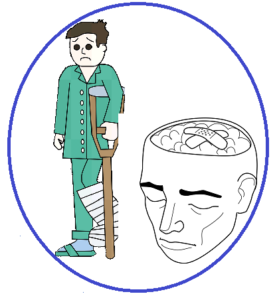
Disabled veterans often face unique challenges when it comes to their disabilities. Mental disability often goes unseen, while physical disability is immediately apparent. Mental disability can be just as disabling as physical disability, if not more so. However, mental disability often goes undiagnosed and untreated. This can be especially true for disabled veterans, who may not seek help for mental health issues because of the stigma surrounding mental illness. Disabled veterans may also feel like they do not deserve help or that they are not entitled to it. This can lead to a spiral of mental health issues, as the veteran becomes more withdrawn and depressed. Disabled veterans may also have a challenging time readjusting to civilian life after their military service. The structure and support that the military provided are no longer there, and they may feel lost and alone.
Veterans with mental disabilities often suffer from depression, anxiety, and post-traumatic stress disorder (PTSD). These conditions can be exacerbated by the stress of dealing with a physical disability. Veterans with mental disabilities may also find it difficult to socialize and form relationships. They may feel like they are a burden to others and that no one can understand what they are going through. This can lead to isolation and loneliness, which can further worsen mental health issues. Disabled veterans often find themselves in inconvenient situations. In addition to the challenges they face, disabled veterans also must deal with the stigma of being seen as less capable than their able-bodied counterparts. They may also have a tough time finding and keeping a job. Veterans with mental disabilities often find themselves unable to work, and as a result, may be unable to support themselves or their families. This can create a significant financial burden, as well as a tremendous amount of stress. This can create a few challenges for disabled veterans, who may find it difficult to get the benefits they need and deserve.

Interview with Someone on the Spectrum

“Buck”, 25, is an able-bodied white transgender man (he/they pronouns).

Read more: Interview with Someone on the Spectrum

Q: When did you first suspect you were on the autism spectrum? How did that feel?

Buck: That’s a two fold question. I didn’t have the thought until the last few years that I could be autistic, but I have always known I was weird/different growing up. I knew I was different in elementary school, but I never had a word to explain it until now. But having since found the word to explain why I’m different, it was nice. It explained a lot, but it was also difficult because all of the autistic people I knew growing up were on the high support level, and I didn’t have an image of what I was “supposed to be” as an autistic person.

Q: Would you say your experience is universal, or widely relatable within the autistic community?

Buck: It’s not universal, but probably individual traits or experiences are relatable. It’s a blanket statement that life events and experiences are not always comparable, since my life experiences have shaped how my autism presents – which is entirely different for any autistic person.

Q: What were things you recognized as autistic traits that you did in childhood, and now looking back you’re like “ooohhhh, okay, yeah, that makes sense”?

Buck: I was always the “stick to the rules” kid growing up. I thrived on routines, and was the “narc line leader” in school. There’s one experience where my daycare teachers told us to “grab a buddy” when going out to recess – and when we all went outside, no one continued to stick with their buddy. This stressed me out so much that I ran to the teacher and said, “No one is with their buddy! Do you want me to pair them back up?” to which the teachers went “…no, it’s okay.” When I got older, I then had a decade-long Harry Potter “obsession” (looking back, it definitely was a special interest) – I would discuss intricate plot points to family members who did not care, and had to have every book and read them all (even if it meant buying them on vacation).

Q: What is your favorite stimming activity? Can you describe it to me?

Buck: Oh, I dunno. I’ve learned to mask all of my stims growing up, and I feel like I present stimming in a different way than others. My favorite would have to be scream-singing along to a song in the car, it’s a whole body sensory experience for me.

Q: Do you feel the world disables you as a person on the spectrum? Do you think the world disables other people on the spectrum?

Buck: Like, yes, but I struggle with the word “disables”. I personally have other characteristics that put me at a privileged place to where people will overlook my autism and instead describe me as “eccentric, easily excitable”, etc. Because I am male passing and white, that makes it easier to overlook. I think the world definitely disables autistic people, especially those with higher needs of support. There’s a spectrum, just like autism, where the world has effected people with autism based on their other identities, how they grew up, etc. It’s all intersectional.

Q: What is your point of view on identity-first language? How would you prefer to identify?

Buck: I prefer identity-first language (ie. autistic person), because I can also view it within the context of being transgender. It’s weird to me to be called a “person of transgender experience”, right? It feels like people are trying to separate the identity from the person, but these identities are important to me. You can’t separate being transgender and being autistic from me. But I know that is my personal opinion and feeling, and if others disagree – that’s fine. But for me, personally, it’s identity-first.

Q: What is one thing you wish was less stigmatized about the autistic community, or neurodivergent community?

Buck: Understanding neurodiversity in general. That people think in different ways. Not that there needs to be any accommodations to these different ways of thinking (because I wouldn’t know what that looks like), but just the idea that the way information is presented in a “normal” way doesn’t mean it’s the “right” way of presenting this information. Just the acknowledgement in schools/workplaces that there’s thinking in different types of ways across the board.

Q: Is there anything else you’d like to say or want people to know about you?

Buck: Nope! Thank you.

Being Bisexual

I don’t feel like I am a part of the LGBTQ+ community, even though the “B” stands for bisexual. I am a bisexual female in a very happy and healthy relationship with a cis male. I see posts everywhere that make me question whether I am bisexual or not just because I happen to be in a relationship with a man. It’s a complex feeling, because I am attracted to both men and women; but have only been in two relationships, both with men. I struggled for a while fully coming to terms with my sexuality and didn’t understand at first that the feelings I got towards some women had the ability to be more than platonic. I think some part of me felt shame. Not in the sense it was wrong to have romantic feelings towards women, but shame in the sense of having the fear of being fetishized. So while some people make me feel like an invalid part of the community, I contribute to making myself feel that way. I do understand that me being with a man means that I do not experience the struggles that those who have partners of the same sex sometimes do (homophobia, general hate, nasty looks). I’m not sure how I can go about feeling more included and accepted within a group I support with my whole heart, when I feel so fake. I hope that this post makes some bit of sense.

some of my thoughts on the public school system

a graphic image of some children standing by their teacher. children have bookbags on and some have books in their hands.

the other day in class, we had a discussion about when we first heard of autism and/or neurodivergence. a lot of the answers included learning in school or from personal experiences. like most people, my elementary school had a special education class. because children are followers and since they don’t know any better, a lot of my peers would constantly taunt the students in the special education class. they’d find an excuse to walk past their classroom and make faces or obscene jokes. as a child, i did not understand why those students were made fun of or why they were in a separate class. even now i still don’t understand why.

Continue reading
My journey to rebranding disability through achievement

My journey to rebranding disability through achievement


Disability is not a monolith, nor is it within a void, absent of other influences like class and wealth. I am a great example of this. Like many people, my experience with disability is quite unique, but it was a journey paved with class struggle, and an unpredictable home life. These experiences paved the person you see in front of you today, and as much as I wish everything could’ve been different, but I don’t think I would have the grit I have today without my struggles.

            Being born in a lower-middle class family is tough. Especially with ADHD and Autism. When you make a mistake you can clearly see how your actions which are out of your control affect your family financially. It feels me with guilt to see how difficult I made my parents lives with just me, being me. My home life wasn’t much better…. This was during a time when my father and mother were going further apart. My father brought prostitutes home, and my mother neglected us. As a result I started acting up in school, causing more hardship in my family. My childhood was an experience forever marred by guilt and self-doubt. I was also bullied in school and was constantly reminded that I will amount to nothing in this world.  

            While my father was becoming a better parent and my mother became more resentful, my teenage years were filled with me trying to find an identity. During high school, I decided to run track. My coach had become a second father figure to me, and together with my father, helped me cope when my mother abandoned us during my freshman year. Because of Covid, I had to revisit this all over again during my first years of adulthood. Not only did it ruin my dreams of running track in college, but it also caused my mother to pass away after years of not seeing her. I regressed back into my self-loathing self, and I felt that it was my fault that I never forgave her so that I could be at peace, and it made me ponder about my own mortality. In my subsequent semester, I was worried that I was going to amount to nothing in the world, like what those bullies told me. Throughout this episode of self-loathing, I forgot about the reality that I am failing my classes.

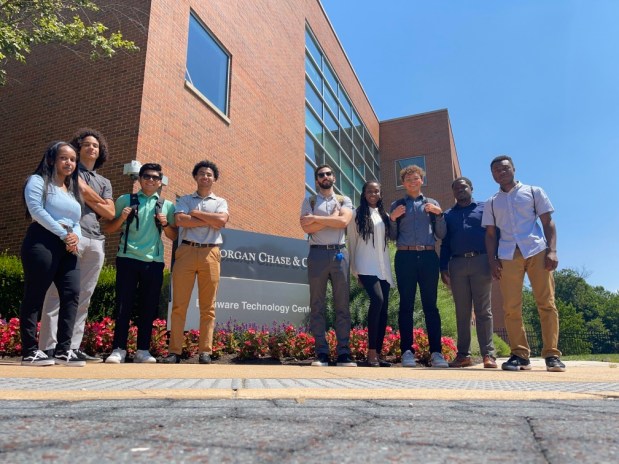
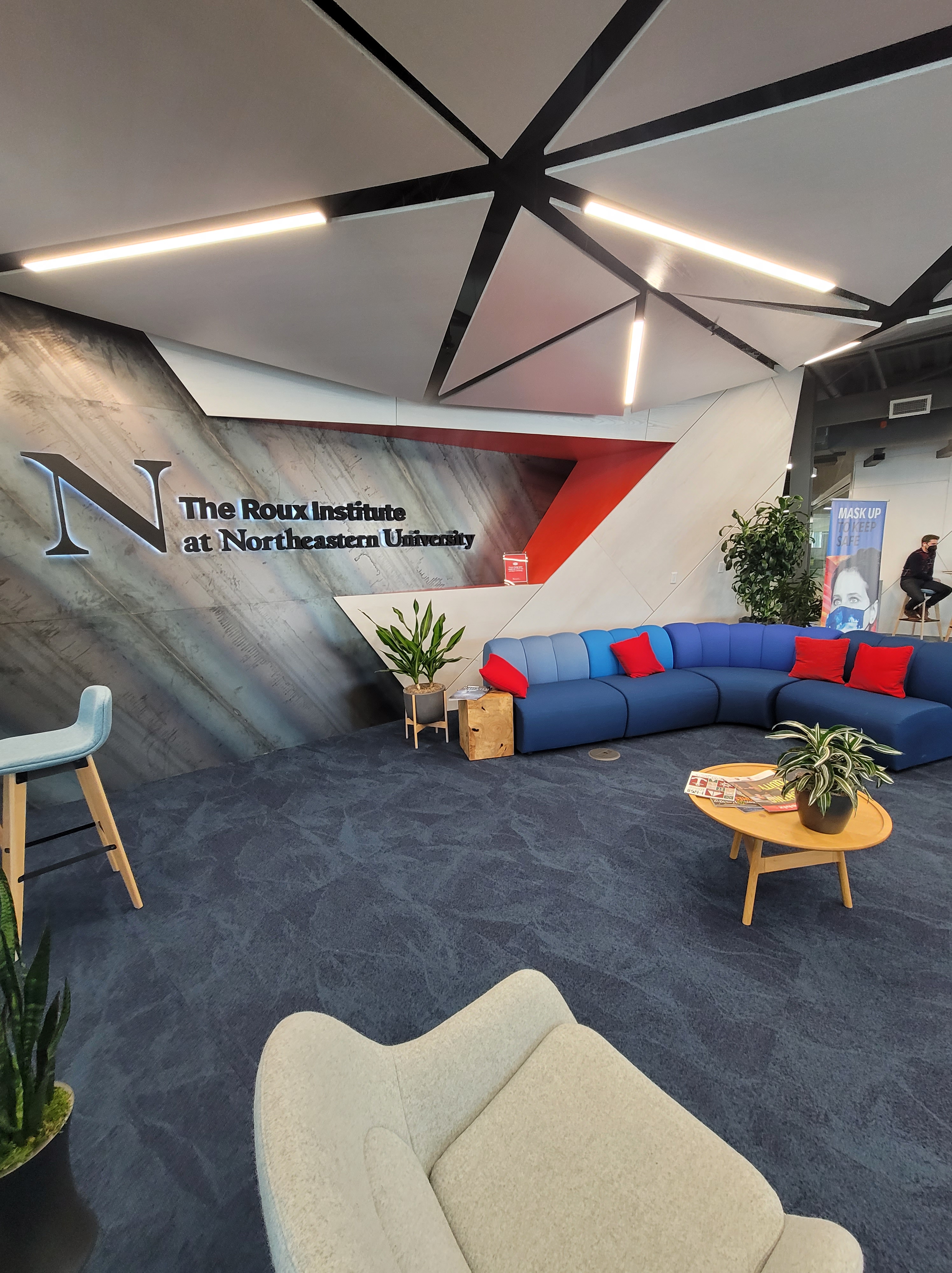
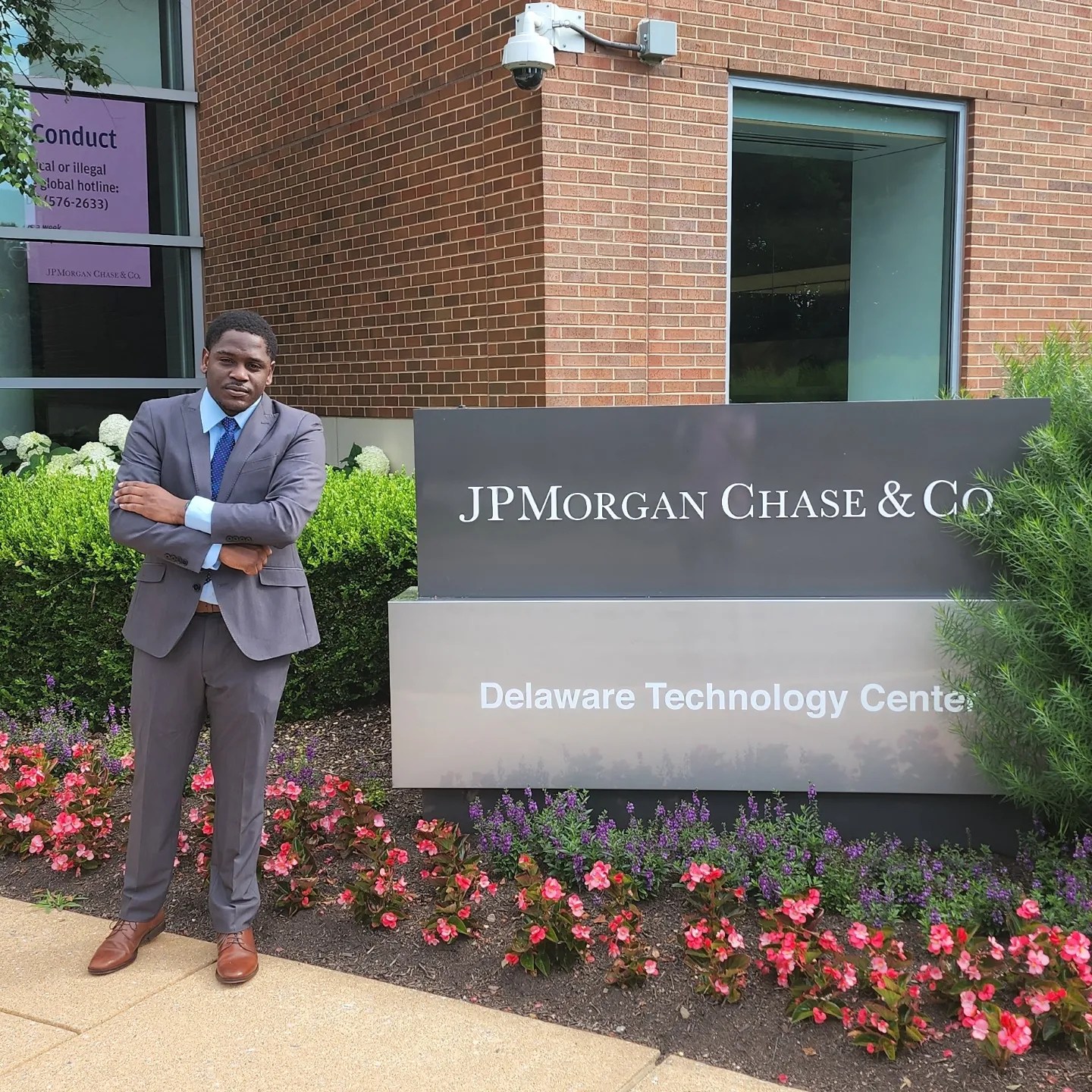
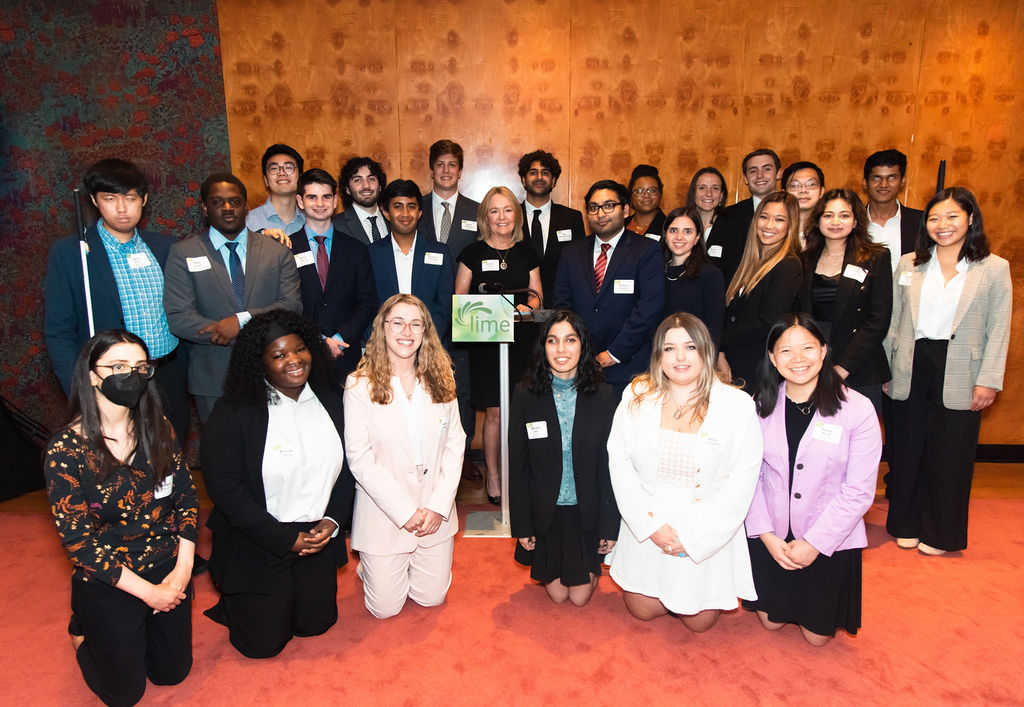
The summer of my freshman year, I set a goal in front of myself, and that goal was to never feel like this again. I am pleased to tell you that not only did I achieve that goal, I surpassed it! Over the past year, Ive gotten invaluable opportunities like heading to Portland Maine to northeastern university’s roux institute to learn how to be a successful entrepreneur, applied that knowledge gained in Johns Hopkins university’s Summer business academy, received a highly competitive spot in Chase bank’s advancing black pathways internship, and finally, being a part of an exclusive group of highly accomplished college students who happen to have a disability in the lime connect fellowship, and even got accepted into the university that denied me 2 years ago. This year is an allegory for my life. I started from the bottom, and now I’m here.  I climbed mountains, and crossed canyons. I learned that everything isn’t my fault, and I conquered the purgatory of negative thoughts I had about myself. I finally got medicated for ADHD, found out that I’m not only bisexual, but Non-Binary and now I am more prepared for my next phase of my journey, which is being there for my community, and making sure that any black kid in the slump that I was in knows that they aren’t alone. That a life of tragedy, sacrifice, and self-loathing can be turned into something positive.

How I came to learn about Autism

Growing up middle class in East Africa was itself an experience. I don’t remember learning about neurodivergence in class, however, that could be because I was in the lower classes and maybe the school system didn’t think that we needed to know about autism and such. I learned about many neurodivergent disorders much later in American high schools. In Tanzania, if a kid is acting strange or out of the norm, people would just say “oh that kid is crazy!” or sometimes they would say “he is not receiving proper care from his parents.” Never once have I heard someone say “oh maybe that kid has a disorder or neurodivergent.” Now that I’m looking back, a lot of those “crazy” kids in my childhood probably fell somewhere in the autism spectrum, they just never had someone to diagnose them.

I grew up in a very religious family, I attended a Christian boarding school for 4 years. I remember one time at school, a kid was talking to himself and he would display multiple personalities. When the students saw that, they reported him to the matron and as soon as she saw the student, her first reaction was to pray for him believing that he is possessed by some evil spirits. Again looking back, that kid should have probably been diagnosed with some neurodivergent disorder but instead, we just kept treating him like he was possessing demons. This blog is just to show that education in neurodivergence and autism is highly needed because people are out there getting sprayed with holy water instead of receiving medical care that is highly needed.

Learning about mental health and neurodivergence has opened my eyes because I now know why some people act the way they do. I am judging people less, and most of the time I don’t really care. We all have some form of mental issues; some people are just really good at suppressing them, and some people are terrible at it.

Inclusiveness on College Campuses

Colleges are always talking about how they strive for inclusivity and diversity. From my perspective, a lot has been done to make campuses more accessible to a lot more people, but there are still many changes that could be easily implemented to make college a more attainable place for more people. Looking at UMBC specifically, ramps have been added to different parts of campus, a lot of the big buildings have elevators, there are lots of accessible doors and bathroom stalls, and there are some accessible dorms on campus. I have also seen sign language interpreters in some of my lectures, and there is the Students Disability Services to make accommodations for students or help get them notes for class. While all of this is great for many students, this still makes the parts of campus that are accessible very limited. A lot more still needs to be done in order for UMBC to be a truly inclusive place. Many classrooms or lecture halls don’t have space for wheelchairs, lots of professors do not give much or any flexibility to students who need more time to complete assignments, and much of the campus is made up of hills with no way to get around them. There are probably many more things that I have not noticed as a person without any disabilities that exclude people with disabilities around campus. For that same reason, there are probably more accommodations that are available around UMBC that I don’t even know about. Although, this does show a flaw in the school that they are not making this information known for all students. Some more things that could be done to make UMBC more inclusive would be to have a more flexible attendance policy, make technology such as talking calculators or text-to-speech systems more available to students, and making sure that things that are already implemented on campus are maintained and kept up to date. Disability justice movements, like the one shown in the documentary Crip Camp, are a great way to help get a point across about what needs to be done at an institutional level. More people need to learn about what it is like to live with a disability in a world that isolates them because of it. Although, these kinds of accommodations and services should be provided to people without them having to prove themselves to other groups of people.

Ain’t it ironic

Perhaps the greatest irony behind ADHD is that in order for the world to give accommodations to you, you have to pass through approximately ten billion hoops that you are just less capable of passing through. I have major issues with executive function, and it is precisely these skills which I need in order to get accommodations.

You can’t just request accommodations or medication on demand. There is massive fear that someone “unworthy” might get extra time on a test or more flexible deadlines. With medicine its more understandable perhaps as amphetamines are pretty serious drugs, but the process still fucking sucks even when you consider all that.

Currently I’m on Medicaid and am served by Kaiser for most of my medical stuff. That was a pain in the ass as it forced me off a lot of my old doctors, but there was in theory a benefit to this. All my care was supposedly centralized in one place. In reality, for whatever reason, psychiatry is different because Medicaid rules apparently so now I have to get care outside of it, and have to look and find a new psychiatrist who accepts Medicaid.

I can’t just present my old diagnosis once I get to a psychiatrist because quite frankly my record keeping is kinda crap (my bad, but like this is due to my ADHD). For some reason, I have to know everything and there is no govt centralized record keeping. I don’t remember my old psychiatrists office so like I’m screwed. This adds to more delays as I would have to get tested.

Even once I would get a new diagnosis, I wouldn’t even likely get meds which I know would improve my functionality. I might be able to get accommodations for school at least, but that adds another point of friction, the School. Its yet another bureaucracy that I have to navigate. And of course, when I leave school, I will have a new point of friction, i.e Work. Especially earlier on, I am terrified of asking for accommodations because its much easier to get retaliated against in a workplace.

Each new point of friction adds more and more difficulty. I have trouble managing my appointments, dates, homework, projects, life, friends and all this just adds up more and more. With so many points of friction, its almost like you have to be well organized. There is much bureaucracy, so many appointments you have to make on time, so much you have to get right.

Is it a wonder that I give up before I even try. I can tread water as I am. I don’t want to exhaust myself and drown.

“Learning About Autism”

Photo by Pixabay on Pexels.com

The first time I learned about Autism was when I first watched tik toks about it. It first came up on my for you page of educatinal facts about what autism is. As I learned more about it I thought of how odd it was that I didn’t know more about this before. Soon after “Love on the Spectrum” came out and watching the show I thought it was interesting of how the show was. I don’t think I’ve ever seen a show before it was nice to see a positive change (yet now hearing others opinions of the show I think I want to education myself more about representation in media). I feel like representations and sharing voices of those in the community is extremely important and learning about this in our class discussion fully proves that.