Vellus Hair Underneath an Aero Jacket

Vellus Hair Underneath an Aero Jacket

Technically speaking, body acceptance has not been around for that long. Considering that human civilization has been dated to 6,000 years ago and yet racism, ableism, colorism, and many other stereotypes continue to isolate and insult natural human bodies is very terrible. In class, we learned how to define the different types of bodies and all our different perspectives. In Alcoff’s “Towards a phenomenology of racial embodiment”, the author states that in this era, the newly emerging sciences understood knowledge primarily as a practice of ordering and classifying on the basis of essential differences. We all have many differences but at the same time many similar traits; facial features, body hair, bones, organs, and I want to add common sense but alas I can not. It’s kind of ironic how common sense isn’t common at all. 

I switched elementary schools in first grade and entered a new environment filled with cliques. I was accepted in my old elementary school but not in the new one; I distinctly remember being the outcast. I would eat lunch alone and I was never fully a part of any friend groups. I just had fun floating around. At the new elementary school, a white boy made fun of the fact that I have a lot of hair on my arms. So I wore a long-sleeve jacket the next day. And the next. And then the day after that. And now suddenly, it’s the end of eighth grade and I’m still not comfortable with my arms. 

The whole situation about hairy arms was heightened when I was in line in school one day in May and the teacher asked if I was hot because I was wearing my jacket inside. I said, “No I’m fine”. But she asked again so I shook my head. And then she made a comment about me to another student and teacher, shaking her head in disapproval, whispering that it was weird that I didn’t take my jacket off. 

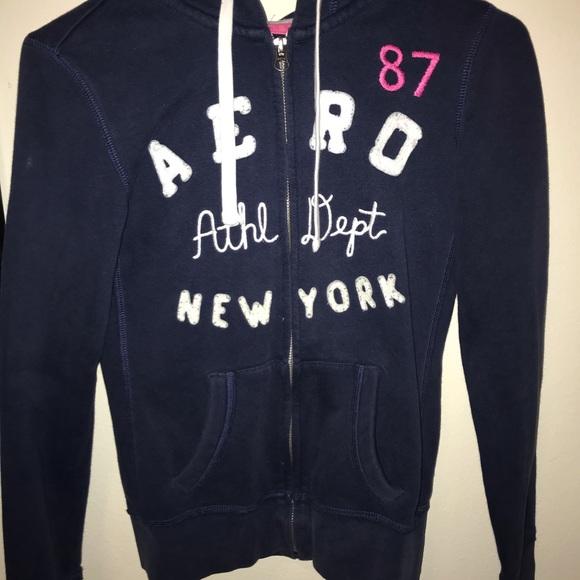
I become afraid that the next person would bully so I didn’t give them the chance. I wore a jacket every single day, I made sure to stock up on sweaters, and all my dresses had to be long-sleeved. My favorite jacket at that time was a blue Aeropostale with pink letters, a classic. 

All that changed in high school. My high school was very diverse and many students had hair on their arms. It was not only me. Then I learned that everyone had some length of hair on their arms. Vellus hair grows everywhere except the lips, the back of the ear, the palm of the hand, the sole of the foot, some external genital areas, the navel, and scar tissue. Vellus hairs regulate your body temperature and help sweat evaporate from your body (Healthline.com). 

Finally, the realization dawned on me. If that boy from my elementary school had common sense, maybe he wouldn’t have made fun of the new kid and made everybody laugh at her because her vellus hair was a contrasting color to her skin color. So then I lived happily ever after wearing my short sleeve tops, crop tops, and *gasp* even sleeveless tops. 

On Childhood Sexuality and Kink

During our last class meeting, we discussed how disabled people are infantilized and, by extension, de-sexualized by society. I noted that the pipeline (??)) from infantilization to asexualization itself assumes that children do not have sexuality, which is clearly untrue. Although it isn’t the most comfortable thing to discuss, our culture places a lot of social and commercial value on sex, and it’s misguided to think that children aren’t also affected by this.

I can at least speak for myself in saying that child me did have some sort of sexuality. Growing up, I was lucky to have a mom who basically told me that it was ok to do things with my body that felt good, as long as I did it in private by myself. This was maybe a limited form of sexuality though, as at that point I wasn’t really connecting physical pleasure with specific fantasies or thoughts.

Continue reading →

Expectations

In my family, I am the youngest child. Overall, expectations have always been placed on me to be as good as, if not better than, my older siblings. Most of those expectations were kind of unsaid and not really difficult to bear but some caused my family to look down upon me when I failed to meet them. All besides one. For some reason, those expectations carried over to relationships. I am the youngest in my family, being 2 years younger than my step-brother and 4 years younger than my sister. For whatever reason, I was expected to have as many relationships as my stepbrother. I never quite understood what was going on, but every other week he was dating a different girl. My mom and stepdad didn’t really expect me to have relationships as well, they just wanted me to be me and enjoy life. However when I went over to my father and stepmother’s place, I was always greeted with the “are you with anyone yet?”. It didn’t really hurt much but what did was that when I said no, the response at some point became “Are you gay?”. I don’t get why not actively dating would make my sexuality known to anyone. It made me uncomfortable that they were assuming my sexuality was something different then it was, merely because I was not actively dating a girl to prove my sexuality. It just made no sense to me and well, still doesn’t. I don’t get the expectations from my father that as a 10y/o I was expected to date otherwise I was doing wrong as I was not like my stepbrother. A few years ago I made it clear to them that it was an issue and I wanted them to stop and well, its caused a little awkwardness in our conversations when we talk about relationships as they are respecting my lifestyle choice.

Maybe I want to be called “virgin”

*TW for sexual assault*

This is not something I usually talk about, but I’d like to take advantage of the anonymity of these posts. 

When I was 13, just about to turn 14, in my freshman year of high school, an upperclassman asked me out. He was 15 then. Once again, I was just 13, fresh out of middle school- I didn’t know any better, and I no longer blame myself for it, but it’s still always something I wish I could go back and stop him from doing. 

Continue reading →

Sex Ed

Sexual education is something that is often avoided or pushed to the side. From my experience, in 5th grade we had a class that lasted for a couple weeks called “family life” were they would separate the boys and girls and tell us about our bodies and how they would change or continue to change in the coming years. Then, in 7th grade, we had a unit of sexual education in our science classes. In this class, we mostly talked about anatomy and biological processes in a very scientific way. The last required sexual education I remember having in school was when I took half a year of health in 9th grade. In this class we talked about everything from giving birth to sexually transmitted diseases to abusive relationships. The health teacher I had in high school was a man, and he definitely skipped some of the topics we were supposed to cover. We had a sub one day and she talked to us about contraceptives and the different options, which was actually very informative. All of the other health classes also had to watch a video of a woman giving birth, which we did not watch in my class. Throughout these years, for the majority, the attitude towards these classes is that no one wants to do it, but it is something that is required, and we just have to get through it. There was still a lot I didn’t know or understand after taking these classes, even about my own body. These classes don’t give children the wrong idea or influence them to make bad decisions, they will look for answers to their questions on their own, so it is best to give them the information in a safe way. Learning this information in an age-appropriate way and connecting it to real people’s lives will help protect kids and teens and help them make healthy decisions.

There should also not be certain children being left out of sexual education because they are seen as not needing to know the information. It is important for people with intellectual and physical disabilities to also learn this information because just like everyone else, they need to be able to protect themselves from unwanted pregnancies, disease, and abuse. Denying them of this information will just serve to put them at a higher risk of these things. In school, I also don’t remember learning any information about sexual education for people in the LGBTQ+ community. This information should be taught along with everything else because there is no need to keep it from anyone. It could be beneficial for anyone to know, and it shouldn’t be kept from the people that need to hear it.

Where do I fit in?

Where do I fit in?

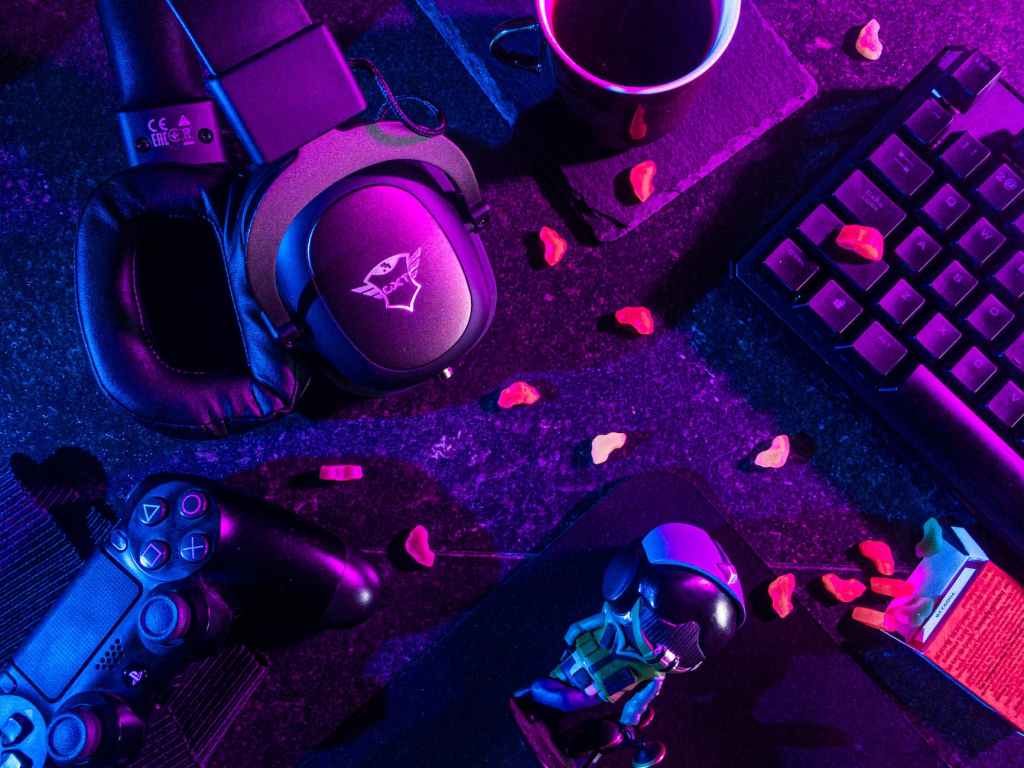
It really is a blessing to be born having siblings. They can be a permanent lifelong friend to a person. Me having an older brother and younger sister growing up, I felt like I always had someone to entertain me whether my siblings liked it or not. I feel like being the second male child in the family, it was expected when I was growing up that my older brother was going to be a role model for me.  As a young child, I had actually developed a mindset where my older brother was supposed to initiate activity and I simply just followed in his footsteps. Living in different neighborhoods as a child growing up, I would rely on my brother to make new friends for me. At first I did not think this was a bad thing. I only cared about meeting people and calling them “friends”. I did not care about what type of person they were. I simply just thought that if a person will like my brother, that they should like me too. I thought that we were brothers and that people identified us as an inseparable pair. However, I was a very quiet and shy kid. And compared to my brother, he is sort of the more masculine type. He was also more sociable than me. He eventually got more involved in participating in more “masculine” hobbies like playing neighborhood football and basketball . I participated in these activities as well for conformity. Wanting to also portray my masculinity so that I could keep up with my brother and the other boys. I had this motive that I wanted people to see me more as just his little brother that follows him around and has no emotions. However, hanging out with him and his friends which I also called my friends, I realized that the masculine displayed by boys in hobbies like football and basketball was struggling to come out of me. I felt like these types of activities were not me at all. This feeling made me feel that my brother and I were different. That those were his friends that enjoyed those types of activities. From this situation, I had this feeling of loneliness because I feel I did not fit in anywhere. I could not really express my true self hanging out with other boys without bring judge about my more feminine nature which caused me to feel more isolated from society and I always struggled to make friends. My only outlet I had when I was growing up was playing video games. I would feel a sense of accomplishment when I were to complete a game or beat up a CPU in a multiplayer game. Video games is an activity that is portrayed as a more masculine hobby. I felt that this was one of the only hobbies that I was decent in to compete with my brother and and with his friends. I realized I could more easily prove myself to others in this hobby. I felt like I can express myself to others and feel more accepted by other boys in society in gaming. Throughout growing up and even today, I feel that playing video games really made me less shy and made connect with more people. For example, during the pandemic, I got involved with Twitch and discord due to the restricted social interaction. I also made tons of online friends that I am got pretty close and I have also hanged out with them in local gaming events. I am a very shy and introverted person in general but I feel like the gaming community is were I can feel a bit more comfortable and find people who are like me. I feel like in today’s society, people like to classify lots of things as either more masculine or more feminine. People should just do the things they love without caring about how “different” they might be and but it can be hard because society is filled with stigmas that can hold people back.

Women=Mothers

I think that being able to have a child is amazing. I believe that children are amazing and wonderful blessings. I believe mothers are there to love their children to the fullest.  I also believe that I don’t think I want to have children. I am not sure to be honest, I am still young and have a lot to think about before that happens but I don’t think that I want to go through all that pain and what I truly see as torment. A lot of people, especially mothers will tell you that all the pain goes away once you see the baby. However, even though I never went through it. I find it very hard to believe that’s the truth. That birth is just painless after the fact. I think this also goes into the fact that mothers want other women to be moms as well. I think our society in general thinks women are just moms waiting to happen if it didn’t already. 

I told my mother one day that I think having children is scary and sucks for the mother’s body. And she said that I will get over it and it doesn’t make sense to not want a kid. She said when I am older, I will want like 10. Then as I got older I decided I wanted to adopt because I want to be able to give a home to kids who don’t have one and she said…no…you will want your own first. I told her the adopted kids are mine and she said no they are not. It’s almost as if being a mother isn’t even enough. I must go through the process of pregnancy and birth to be deemed important or a real mother. Which makes no sense at all.

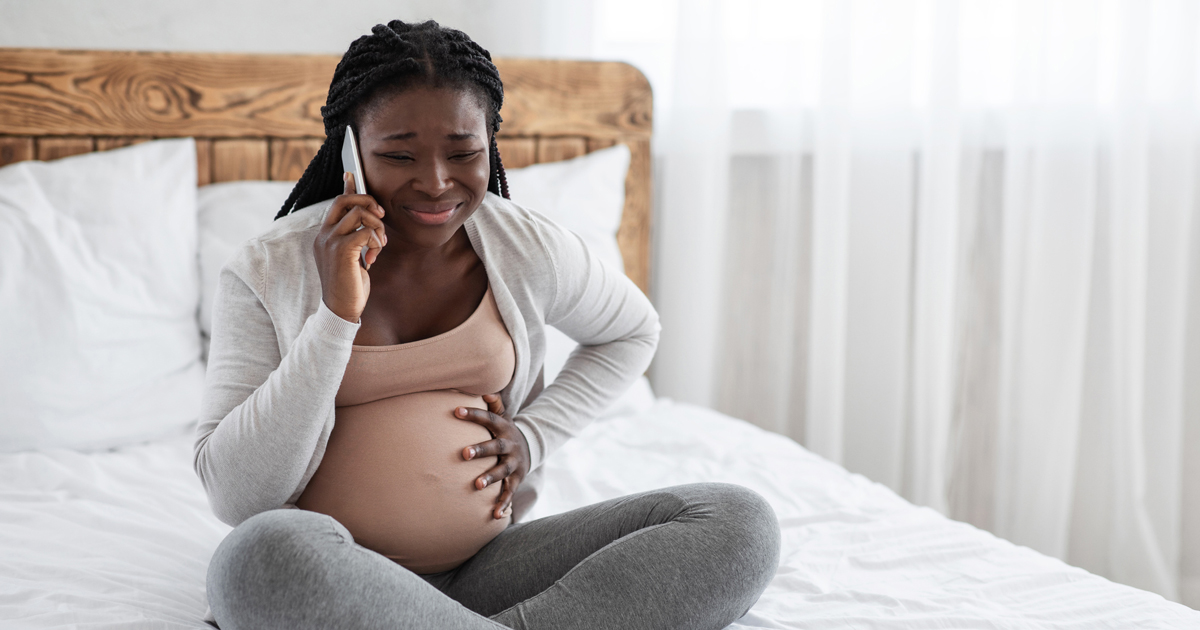
Also as a woman until you give birth and are pregnant do you learn all the terrible things that can possibly happen during birth. Like I did not know that your vagina can rip all the way to your anus or clit during birth. That is so crazy. I also did not know about the “after birth” which is sometimes more painful than the real thing. I just don’t find any of this appealing and the fact we don’t learn this in school, suggests that they dont want us to know the terrible, messy things. So that women will choose to reproduce and have more kids. I heard someone write they would rather regret not having children at all, than regret having them and I can not agree enough.

Discrimination

Obviously discrimination is very prevalent in todays society. But, I didn’t expect someone in my social work class to say what she said. I was taken back slightly. She said “Gay people cannot be discriminated against because they can hide their identity when Black people can’t.” I was kinda confused and at the moment it seemed like it could make sense. When I thought about it again it made less and less sense. 

I know that looking straight is a privilege (that I have) but that doesn’t mean I have never been discriminated against or targeted. A few years back at UMBC there was this guy at late night. One of my friends (at the time) was somewhat friends with him when he came to our table and gave us a Christian talk. He went on and on about how religion has impacted his life and asked us questions. Then it got to the gay part of the conversation. He asked “has any of you ever experienced homophobia in your life?” my girlfriend said “yeah, this is my girlfriend” and you could see he panicked slightly. Then he started raising his voice and saying how we will be going to hell and that we are a disgrace and many other things that were really harmful. After looking into this guy, he pulled this with MANY other people on campus and had the campus police called on him several times. 

Although we did not have to tell this guy that we were in a relationship, it was obvious since we were holding hands the whole time and our “friend” was standing next to him and she knew about us. Gay people are discredited and pushed into the closet time and time again, socially or legally like the Don’t Ask, Don’t Tell bill did to LGBTQ+ people in the military.

Pretty Priviledge

Pretty privilege is a term used to describe the advantages and benefits that individuals with conventionally attractive features receive in society. This can include opportunities in the workplace, higher self-esteem, and more favorable treatment from others.

Pretty privilege is a form of unconscious bias that stems from societal beauty standards. These standards dictate that certain physical traits, such as being thin and conventionally attractive, are more desirable than others. As a result, individuals who possess these traits are often treated differently than those who do not.

For example, research has shown that attractive individuals are more likely to be hired for jobs, receive higher salaries, and be perceived as more competent and trustworthy than their less attractive counterparts. This can create a feedback loop, where attractive individuals are given more opportunities, which in turn reinforces the notion that they are superior.

When I was in high school I never did much to make myself attractive, I wore sweatpants and a baggy t-shirt to school everyday and thought nothing of it. Looking back I must have closed myself off of certain opportunities via the first impression I made on people when they saw me, a lanky white man with no drip. Came college I decided to make myself more conventionally attractive and change up my personality a bit. I immediately noticed a sudden shift in the way people were interacting with me, and started taking advantage of the new opportunities that presented themselves to me. While the concept seems totally unfair, feeling like a loser in high school encouraged me to change myself into a person who is more likely to succeed.

Pretty privilege can have a significant impact on an individual’s self-esteem and mental health. Those who do not possess conventionally attractive features may feel like they are not good enough or worthy of the same opportunities and treatment as those who do. This can lead to feelings of inadequacy and low self-esteem.

It’s important to recognize and challenge the notion of pretty privilege. By acknowledging and addressing the ways in which beauty privilege affects individuals and society, we can work towards creating a more inclusive and equitable world. This can include challenging societal beauty standards and promoting diversity and inclusion in the workplace and beyond.