The Angry Black Woman

The Angry Black Woman Stereotype has been a longstanding prejudice against African American women in American society. The Angry Black Woman stereotype is a bias against black women who show any emotion relating to being upset, irritated, or angry. Although on the surface this stereotype can seem relatively harmless, when looking deeper at the root of the stereotype and the lasting effects it can have on the emotional vulnerability of African American women it can be quite damaging.

Anger is a natural part of life. Every person gets angry at some point in their life. Someone getting enraged does not seem like it would be a big deal There are many situations in a person life that would make them upset. Some African Americans have other things they must consider before getting angry including:

  1. How will I be perceived by the others around me?
  2. Will I be thought of as belligerent and uncontrollable?
  3. Will I be seen as a threat?

These questions are not the only things that some African American women wrestle with before getting angry. Another thing that must be considered is the emotional tolls that the person must take on as a result of bottling up their emotions. Continuously refusing to express emotions can lead to deeper emotional issues that are difficult to recover from. The emotional baggage that comes with perpetuating this stereotype is not the only disadvantage involved. A person is often looking for a resolution of the situation that they are angry about. If a person does not express their anger, they are placed at a disadvantage and may not have an opportunity to resolve the problems that are causing the anger. 

Society determining who is allowed to release anger is just simply not fair. Certain people are allowed to express feelings of anger and irritation without fear of how it will reflect on them and perpetuate a stereotype. They are able to publicly display rage (justifiable or not) and are not met with contempt. It is ridiculous that whether a person can express anger or not is determined by their bodies and the social constructs that control them.

Disconnecting Our Bodies from Our Minds Through Substances: Why Do We Do This? (TW: Addiction, Substance Use)

Disconnecting Our Bodies from Our Minds Through Substances: Why Do We Do This? (TW: Addiction, Substance Use)

How do we soothe ourselves when our bodies react to our mind? In discussing the relation to our bodies and minds, the concept of mindfulness comes up, and we think about our bodies reactions to anxiety, depression and distress. The pit in our stomachs, the sweating, the insomnia, the fast heart rate, forgetting to breathe, dissociating and everything in between. These questions and thoughts have permeated my mind since our class discussion on how each of us interpret our bodily reactions, and how we deal with this and work through it.

We often search for a solutions for bodily discomfort when our minds are the cause of the discomfort. ‘Healthy’ solutions are always at the forefront of the discussion when dealing mental discomfort. For anxiety, you could do deep breathing, or practice mindfulness. For depression, you could go to therapy or practice self-care (taking a warm bath, eating your favorite comfort food, lighting a candle). Some of these ‘healthy’ solutions are inaccessible. Some of us weren’t taught about these solutions.

So, what about those who search for a solution with a substance? Substances such as alcohol, nicotine, or marijuana are feasible and accessible solutions for some who struggle with their mental health. I am someone who has relied on marijuana and alcohol for self-soothing and for an escape. For me, I grew up never wanting to drink, or smoke despite the mental/physical distress and trauma I’ve endured. But at one point, life took me in the direction to try marijuana for the first time–to drink for the first time. I remember the first times I smoked marijuana. I felt free. It felt like my soul and mind, were detached from my body–in an ethereal way, I felt my third eye open. I felt like I could analyze my life in a better way–to think myself through my depression, my trauma, and my anxiety. I relied on that feeling for so long. The feeling of mental escapism. To no longer associate my mental distress with physical distress. To give my physical body a break from the reaction it would have to my mind when trying to process my feelings.

There are multiple people in my life that have leaned towards a substance for relief and coping. For some, it turned into an addiction and for others, they manage it well and maintain healthy lifestyles and behaviors. For me I can view using a substance as a tool to numb, at least for myself; To shut your brain off for however long the high or buzz will last. Our body relaxes, and your brain just stops for a moment. For that moment or short period of time, you can finally slow down, be happy, laugh a little, escape from our daily lives, maybe process your emotions differently. But what are the costs of relying on this too often? Or relying on solely on substances? Do we really think about what our physical bodies are going through when we constantly reach for that whiskey, or when we need that toke before we go into work, go to the store, or go to class?

Yes, we know the physical implications of smoking or drinking too much–shortness of breath, high blood pressure, liver and kidney problems, cancer, etc. We’ve seen the Truth commercials on Nickelodeon, MTV, and The Cartoon Network since we were kids. We have been to countless school presentations in the auditorium with an anti-drug activist hammering the idea that drugs are bad into our minds, instilling fear in us as children: Showing us pictures of what will happen to our lungs, our teeth, and skin. The anti-drug campaigns, like D.A.R.E., that have statistically made people do more drugs were present in many social institutions. We grew up in an era that was obsessed with the “War on Drugs.” But we never cared what drugs could do to our physical bodies–there are still people who have grown up to be dependent on a substance to escape and cope.

So why do we do this…Is it because it’s easy? We don’t have to pay a therapist to sit in a room and divulge all of our trauma to a stranger. When using, do we think about how our physical bodies are coping with the substance in the same way our minds do?

Why don’t we care about the probable damage we do to our bodies? Do we view our bodies as only a vessel or less important than our minds? That…we will risk our physical health for our mental health, even if the relief doesn’t last long?

I think we all want to escape. Some escape more than others. But within that escape, some of us lose ourselves and end up abusing our bodies in the process.

Disclaimer: I write this not to shame or pathologize those who use substances to escape, cope or heal–but to ask ourselves to reflect on why we choose these solutions, and create a deeper conversation. I say this in solidarity with anyone who is struggling because I struggle too, and it’s okay. Most importantly, not everyone has a substance abuse issue; One can use a substance without it becoming a disorder.

Going back on the meds

When I think about my body right now, my first thought would be about my mental health. I have been on and off different antidepressants and ADHD medicines for the last few years. I use them to treat my Generalized Anxiety Disorder, Obsessive Compulsive Disorder, and Attention Deficit Hyperactive Disorder (Inattentive type). My meds make feel all types of things and sometimes those things cause me to make the rash decision to go off them.

Almost a year ago I decided abruptly to go off my SSRI’s which had been treating my OCD and GAD. SSRI stands for Selective Serotonin Reuptake Inhibitor. These medications work to treat anxiety and depression by increasing the amount of serotonin available in the brain. I have a love/hate (mostly love) relationship with a specific SSRI I have been taking on and off for 3 years. Last year when I went off it, I did it because I felt so good, I thought I did not need medication anymore. It was the most awful time dealing with the withdrawal and then dealing with anxiety all on my own for almost a year. However, I did find that I am able to survive without the meds which is why I stopped taking them. But living is soooo much easier with the meds. While I was off them, I ended up losing 20 pounds but, in the meantime, I had to work harder to deal with anxiety my disorders and had lots of trouble sleeping. I even began to fear sleeping and would stay awake as much as possible.

A year later and I decided to stop fighting treatment which is a fight that has been ongoing since I was 10. Now that I am back on my meds my mind is the most at peace it has been in months. But so is my body. I feel relaxed. I can sleep. I missed sleep so much. But I am eating quite a bit and I have already gained some weight back. I have decided though that the weight gain is worth getting that extra bit of help with my anxiety. I hope I can find a way to coexist peacefully with my meds so that I will not quit them so often. 

Chadwick Boseman and the Expectation of a “Normal” Body

Chadwick Boseman. The Black Panther, the King of Wakanda, Jackie Robinson, Thurgood Marshall, James Brown, a family member, a friend, a loved one. Most people knew him as one of his many memorable roles, both fiction and nonfiction, but people who were close to Chadwick knew him as a man of great character, and had nothing but high praise for him. He stole scenes in the Marvel Cinematic Universe, MCU, and paid homage to many historically Black figures, but most of us did not know what Chadwick was going through in his everyday life.

Continue reading

Being in Pain in Public

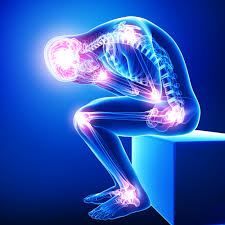
A person where “pain spots” are highlighted.
The joints, head, back, etc.

Lately, I have been having trouble with back pain and have always struggled with sporadic headaches and migraines at times. As I have been taking this course I have been paying more attention to how I feel in my body or, in this case, how I hide or joke about how I feel.

Anti-Heroes and Being Differently Abled

Superheroes are a great example of an ideal, unattainable body, but what if they’re differently abled? Heroes, especially super ones, seem to always stand for something. Superman, for example, stands for the American dream, a perfect specimen who is strong, white, and has good samaritan morals. Superman is considered a hero because of what he stands for, but what about Anti-heroes? To bring it further, differently abled heroes?

Continue reading

Black Bodies Are Dispensable

I’m so tired of hearing news in the media about a murdered African American that’s passed and their families receiving financial “compensation” for their loved ones death. I recently learned about advancements in two major cases: the Emmett Till case and the Breonna Taylor case. First, I learned that senators are fighting to get Emmett Till and his mother the highest civilian honor. Then, I heard about the family of Breonna Taylor being granted a $12 million settlement. (Links to articles are below).

As a Black American, I have to acknowledge that the family was “compensated” in some kind of way for their trouble and grief; and/or in the case of Emmett Till’s family, they now have someone fighting for them, but is it really making things right? I say no. I feel like the message being sent with these money compensations is that “Black bodies are dispensable”. I feel like the country is saying, it’s okay for Black bodies to be sacrificed, as long as their remaining loved ones receive some kind of financial “reimbursement”. I also feel it sends another message to society; and that’s that African Americans only really care about money in the long run. Many bystanders have their eyes glued to the victims’ families and may feel these cases have been “won”, but who really wins when your loved one is taken from this world and all the world has to offer up is money..? Not prosecuting the violent offenders and the police officers responsible for the death of both Emmett and Breonna speaks volumes and let’s the Black community know that we are dispensable; especially when it comes to having to save others or us.

As a result of this and as a Black American, I feel that this country believes Black bodies are dispensable. I feel that no matter how much I go against the stereotypes and try to really make a difference, I will always be seen as dispensable. What will it take to change this?

Continue reading

UMBC’s Dance Team Scares Me

I originally went to the dance team’s prep classes as part of a class project. The goal was to go to a club that we’d “never imagine we’d join”. So the former high school football player went to a chess club meeting, the international student went to an election night event, and I – a marching band girl who’d exclusively wear one-piece bathing suits to the beach – went to Dance Team. I went there because they scared me. I saw them at Involvement Fest with their slightly revealing uniforms and their shining confidence. I imagined myself in their position and thought it was ridiculous but a few months later, there I was, in front of the whole Event Center in that same uniform. I was attracted to the feeling of sisterhood.

Continue reading

Rated R for Nudity

I recently led a discussion on banned and censored films in the United States. During the discussion the topic of nudity came up. It struck me that the United States has a taboo around nudity. And that is shown very clearly in films. What is typically shown is the illusion of nudity. The “naked” person is covered by a sheet or hidden behind camera angles.

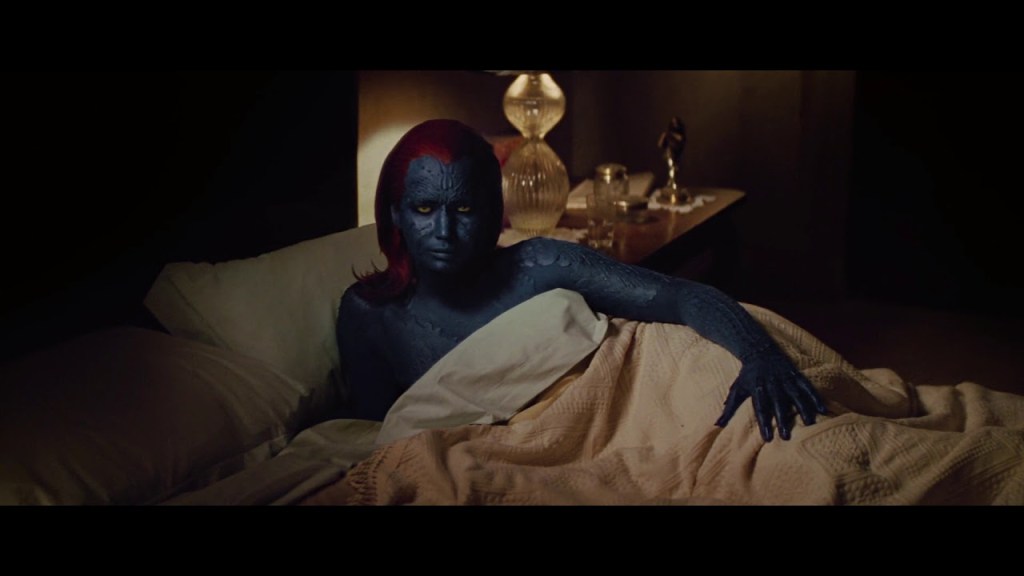
Live Action Mystique/Raven from X-Men: First Class

Whenever actual nudity is shown it tends to shock the audience. Which is weird right? People are reacting in shock to seeing a human body.

It seems to me even when direct nudity is shown there tends to be a hierarchy of which body part is acceptable to be shown on screen. For example, butts are the rare exception for nudity. Shots containing butts are usually played for shock and laughter. Those shots are actually pretty common and may be shown in all age rated films. Then there are the chests scenes. Men go topless all the time. Topless women are usually only seen in R rated movies. And finally film scenes containing genitalia are essentially unicorns. You have to go looking for them, myths and legends surround them, and there is generally massive controversy whenever one is spotted.

Continue reading

Misophonia: a new sense of disability.

Misophonia is a neurological disorder that is defined as the extreme hatred of a sound. These sounds are usually common sounds caused by other people, such as chewing food. The sound will trigger a fight or flight response in the misophonic person which can have psychological and physical manifestations. Misophonia is a relatively new and understudy disorder, only first being recognized in 2001. While new, the disorder is still impactful, and that is where this story begins. 

Brief 2017 Harvard Medical School article on Misophonia.

My sister has Misophonia. It started when she was about 6. We would be at the dinner table, I would take a bite, and she would turn to me, tense up, and scream. This continued for years. It advanced to even my coughing or sniffing my nose triggering her too. After years of therapy, doctors, and diagnosis she is now finally able to control these responses.  

Continue reading