Is A Pandemic Ever Over?

When we think about a pandemic, our mind will often wander towards the state and federal declaration of a state of emergency. But if the disease is still around, why do we treat as if it’s over when the funding is pulled?

During the height of COVID, most took precautions. Not only for those who are abled, but especially for our loved ones who were most vulnerable. This can include those who are immunocompromised, those of older age, and people with chronic illnesses that would make it hard to overcome not only the symptoms of COVID, but their bodies’ ability to fight the disease. We saw people wearing masks, face coverings, and being extra aware of how close we are to others. From the height of the pandemic, we also started to really think about how diseases can spread and how to prevent the spread.

After all we have learned about slowing the spread of disease with technology, like vaccines, we are still willing to take a chance today. We found it crucial to protect the non-abled bodies, but once the government tells us that it is no longer a “current issue,” we should move past all those policies that were put in place to keep us safe. In reality, we can now understand that the government has no interest in equity in public health.

We see it in accessibility. We have our close-knit communities that gather with no care for those same people in their communities, who could face serious consequences if they were to be put into an environment where they could be exposed. In “You Are Not Entitled to Our Deaths: COVID, Abled Supremacy & Interdependence,” Mia Mingus highlights the stigma around basic safety measures that would help aid the entire public rather than just those of abled-bodies. I could even go on to connect this to those data centers being built that are exposing vulnerable communities to an excessive amount of pollutants that have already given some of the populations diseases like COPD. These populations have no means of just leaving that area to be safe. In the past, we have shed light on the importance of reducing the environmental pollutants for the greater good of public health, but still, governments still accept companies to build high-energy consuming data centers for financial and political gain just like in Memphis where Elon Musk’s data centers have been brought in.

I watched this video, “We Went to the Town Elon Musk Is Poisoning” about the Colossus by Elon Musk’s xAI a while back, and thought about the video during our class discussion when we talked about different communities with COVID that are impacted by the disregard for basic safety measures. Improving our environment has always been the talk, but in policy, we often times see our environment being pushed to the limit.
Paper Promises

Many students in the education system today have a disability. This can range from having autism or being in a wheelchair. There are protections for children, but without proper enforcement, there is room for bullying or even hate to happen in an education system. We know children don’t know any better. We can give them a little room for forgiveness in some cases, but it is up to the adults in the children’s lives to teach them principles in a diverse environment. It’s usually easy for some to be respectful to others, but there are always those cases where we love to give a side eye to those who are awfully disrespectful, blatantly or passively.

We establish rules. It’s a policy. If you don’t follow this rule, we will penalize/punish you. But, we all know it is very easy to get away with things in a crowded environment like a public school (all schools are different, but I am speaking from my experience). How do we enforce rules when broken rules are missed? We don’t. We leave it up to those around them to have to courage to go and tell an adult. This can be difficult for some children, especially when there are so many factors that come into play. A child can know something is wrong, but feels socially unable to tell their teacher when they run the risk of getting shamed by their peers.

This happens out in the real world. “Snitches get stitches.” We’ve all heard this phrase. It’s used from the smallest things to elaborate criminal organizations. Sometimes we feel as if the negative consequences will always outweigh the positives when it comes to speaking up. We can see this when we second-guess asking for a re-mark on an exam to asking for help when we cannot make ends meet. In Crip Camp, they demanded that their rights actually be enforced. This shows the importance of actually saying something about what is wrong with the laws in place. Section 504 of the Rehabilitation Act is a federal law that prohibits discrimination, not a policy that we can miss with the consequence being well-being. The things that they protest for are rights that have been passed by legislation and signed by the executive. Although policy is still enforced by regulation, like consequences, a law is something that we should, by no means, have to be compliant with being ignored.

Media Backlash: When It’s Taken Too Far

Have you ever seen a content creator who is trying to find an outlet? Next, you may go into the comments to write something nice and supportive, seeing others doing the same. Your heart warms as you read these messages to scroll further and see a hateful comment. You see replies that are validating them. It makes you realize there really are people who take their time to put down people instead of clicking not interested in moving on with their day. You even go ahead and click on their page to see that there is nothing posted. Someone is hiding behind a screen, doing nothing productive.

I’ve always thought being a content creator takes a lot of courage, no matter if you’re page is about sports, politics, gender identity, mental health, etc. People are making content to connect, relate. All the people I personally know who make content do it to show others that there are other people like them. Whenever you see someone who posts something that you relate to, you like it, and it kind of brings a sense of community. You see all these people on the internet who also relate to what you may be going through, what you believe in, and it can heal some insecurities of maybe being a “freak” or “too different.”

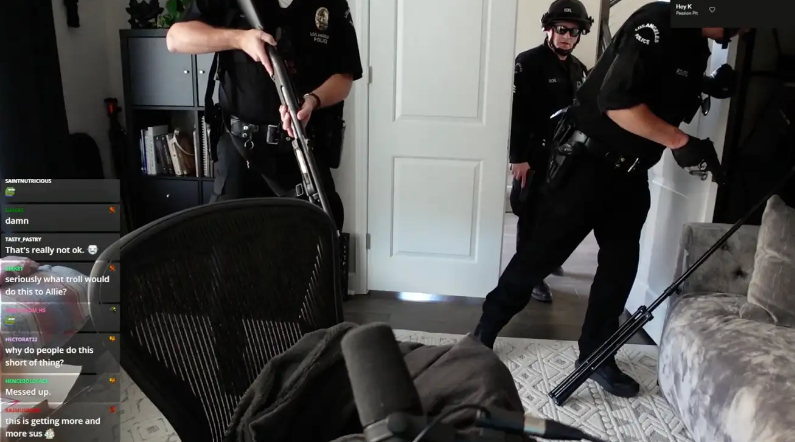
In “Nonbinary: Memoirs of Gender of Identity,” one specific chapter from Jeffery Marsh titled “Life Threats” really made me think about this concept; the courage to be seen on as big a platform as social media is. You are putting yourself out there, making yourself visible to all types of people, knowing that you have a chance of facing backlash that can just blow up in your face. Those same people who may write those hateful comments might have enough passion to even put you in danger. A specific example that comes to my mind is when streamers get “swatted.” They take this extreme step to prank them even though it is not a prank and is a traumatic experience. Especially because the people who are calling the police on them don’t really know what they’ve experienced and what toll it could take. These streamers are spending quality time entertaining people just to be put in danger.

The Real Cost of Microaggressions

Constant microaggressions is something that really is a shared experience. My introduction to phenomenology was not that microaggressions takes a large toll. Microaggressions are comments that can be so subtle even I shake it off and disregard it with expression and then internalize it. Whenever I read something in this class, I always find myself reflecting on experiences and realizing how quickly I will “simply” internalize it and not express the discomfort. I put the term simply in quotes because how simple can it be to internalize the feeling of being put in a majority when you are not the same as every person in that majority? For me, the word “simply” in that context is the repeated, chronic discrimination is something that I have had to deal with my entire life. There is never a time when I think about what would be the outcome of this everyday internalized discrimination against myself.

“Perceptual practices can be organized, like bodily movements used to perform various operations, into integrated units that become habitual.”

Alcoff, Linda Martin. “Towards a phenomenology of racial embodiment.”

Alcoff’s article made me critically think about my own and shared experiences with discrimination. In her article, I took away a new perception about microaggressions. I think this shift is because of that “simple” term I mentioned before. Someone in a constant routine usually will start to be able to do those things with so much ease that it becomes automatic. So automatic I never thought about these costs. An emotional performance is put on when faced with microaggressions. An example is suppressing anger. Something you are constantly emotionally performing for is something that takes on the body. That constant suppression can lead to a breakdown and an overwhelming feeling that makes you feel exhausted. Some days there will just be all those performances that take a toll on self-efficacy.