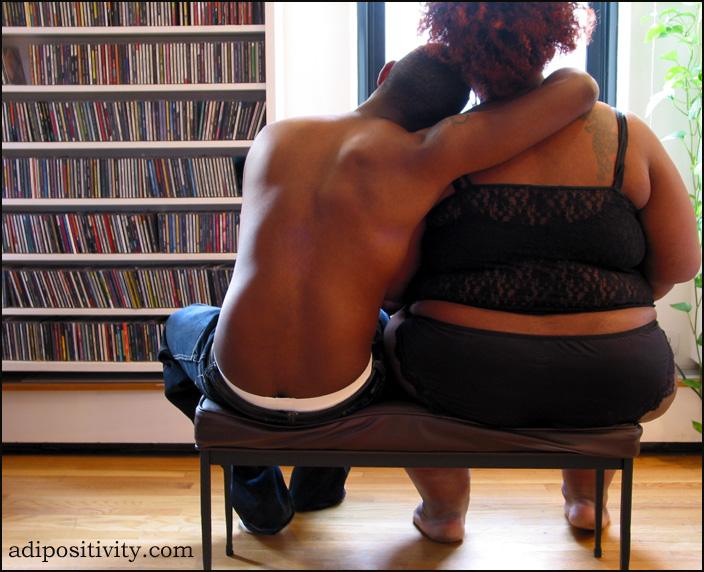
Because a bunch of people have asked, here is a link to my final paper on mpreg, or male pregnancy fan fiction. Please be gentle- it’s not a prefect paper, and only scratches the surface on this subject, theoretically and otherwise. In the end, fan fiction represents a fascinating place for intersectional theories to do their thing- I wish I had more time to dig deeper on it.
art
“Boobs Don’t Work That Way”…No really, they don’t!!!
 Images such as these pervade comic book character art. Women are normally in sexy, revealing outfits; and, their bodies are often doing some pretty impossible things. A blog called Boobs Don’t Work That Way brings awareness to how ridiculously women are portrayed in comic books. The picture of Wonder Woman displayed here is not unique. Attempting to make her sexier, she is drawn into this impossible pose where her breasts and behind are shown at the same time. Also, her breasts are extremely large, and there is no way that her costume could logically support them. The commentary on the blog regarding this picture is as follows:
“It always freaks me out when boobs are drawn as almost a separate entity. This one looks like it’s about to pop off and and start a solo career.”
Other interesting points the blogger makes include the way fabric unrealistically stretches over breasts in some costumes, suctioning itself to each breast individually, the fact that nipples rarely have areolas in comics, and that breasts are not always perky and perfectly spherical.
I find it interesting that beauty for women in comic books is literally impossible for us as humans. The beauty standard is completely unrealistic. Do comic book artists feel that women will not be sexy without their impossible breasts? Or do they enjoy creating a fantasy woman? I’m not personally sure which reason correctly demonstrate how artists feel, or if there are other reasons. The blog is not being updated, but the pictures and commentary are excellent. Check it out!
The Adipositivity Project
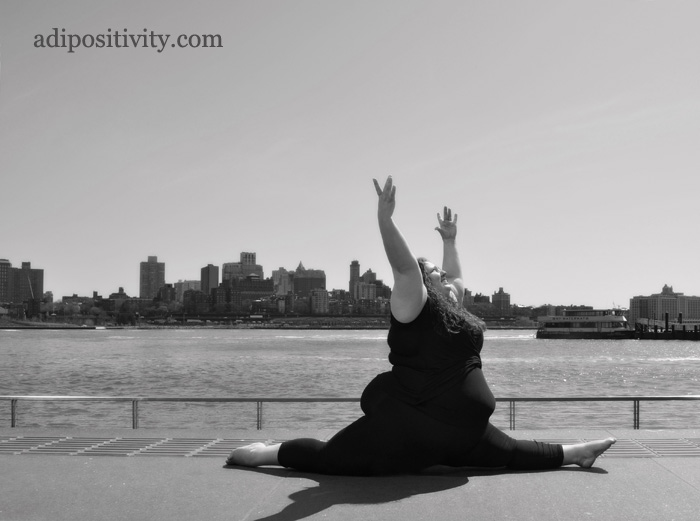
I’ve been aware of The Adipositivity Project for a number of years. Most people who float around Fat Acceptance circles online are aware of it, but when I’ve shown it to friends who aren’t aware of FA, it’s always surprised them. I thought, given the reading for our next class, this was at least visually on topic. I’m also always a fan of activism through art and you can’t say Substantia Jones’ photographs aren’t beautiful or radical. Many of the photographs are nudes, so beware if you decide to click through. I’ve pulled some of the more modest ones to show the intent of the images.
Adipose: Of or relating to fat.
Positivity: Characterized by or displaying acceptance or affirmation.
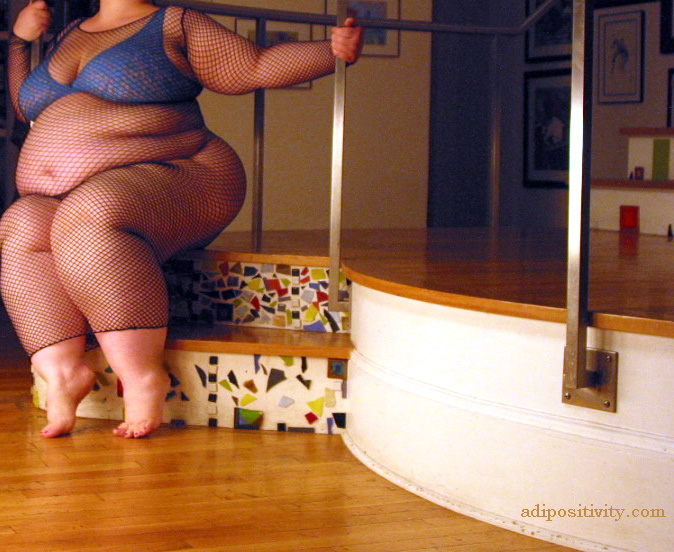
MISSION: The Adipositivity Project aims to promote size acceptance, not by listing the merits of big people, or detailing examples of excellence (these things are easily seen all around us), but rather, through a visual display of fat physicality. The sort that’s normally unseen.The hope is to widen definitions of physical beauty. Literally.
The photographs here are close details of the fat female form, without the inclusion of faces. One reason for this is to coax observers into imagining they’re looking at the fat women in their own lives, ideally then accepting them as having aesthetic appeal which, for better or worse, often translates into more complete forms of acceptance.
The women you see in these images are educators, executives, mothers, musicians, professionals, performers, artists, activists, clerks, and writers. They are perhaps even the women you’ve clucked at on the subway, rolled your eyes at in the market, or joked about with your friends.
This is what they look like with their clothes off.
Some are showing you their bodies proudly. Others timidly. And some quite reluctantly. But they all share a determination in altering commonly accepted notions of a narrow and specific beauty ideal.
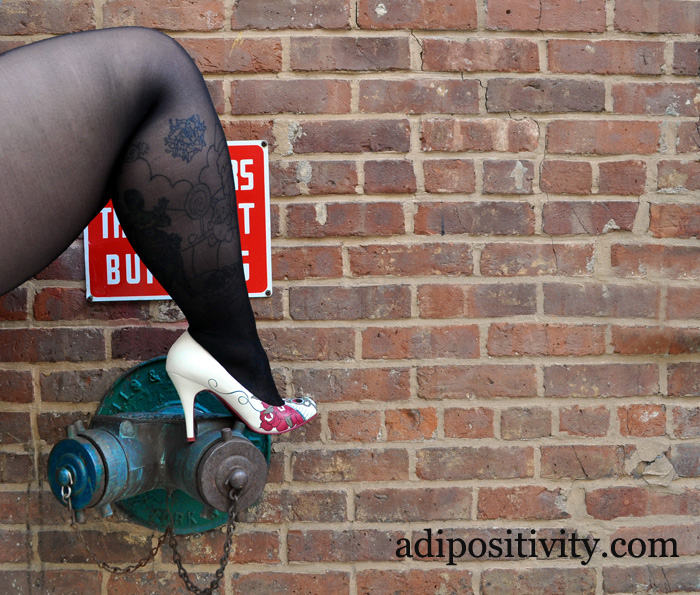
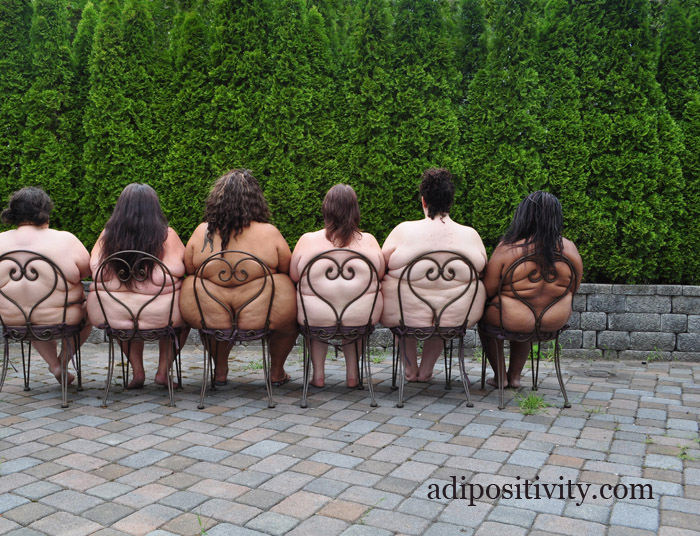
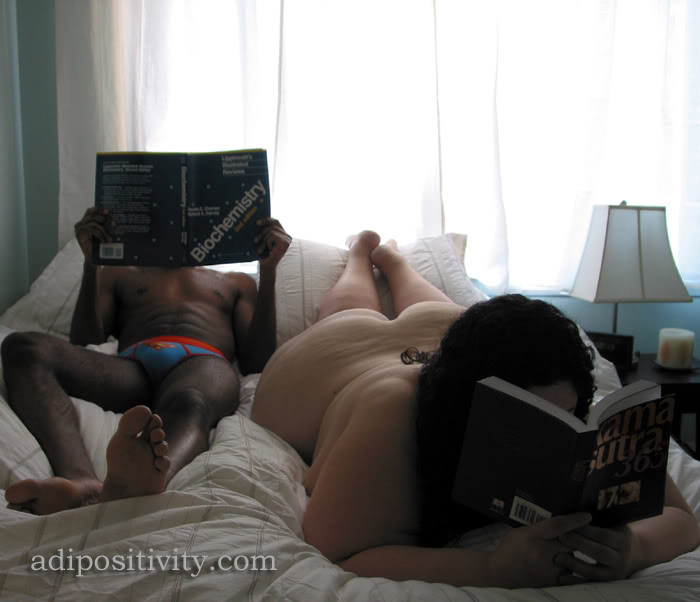
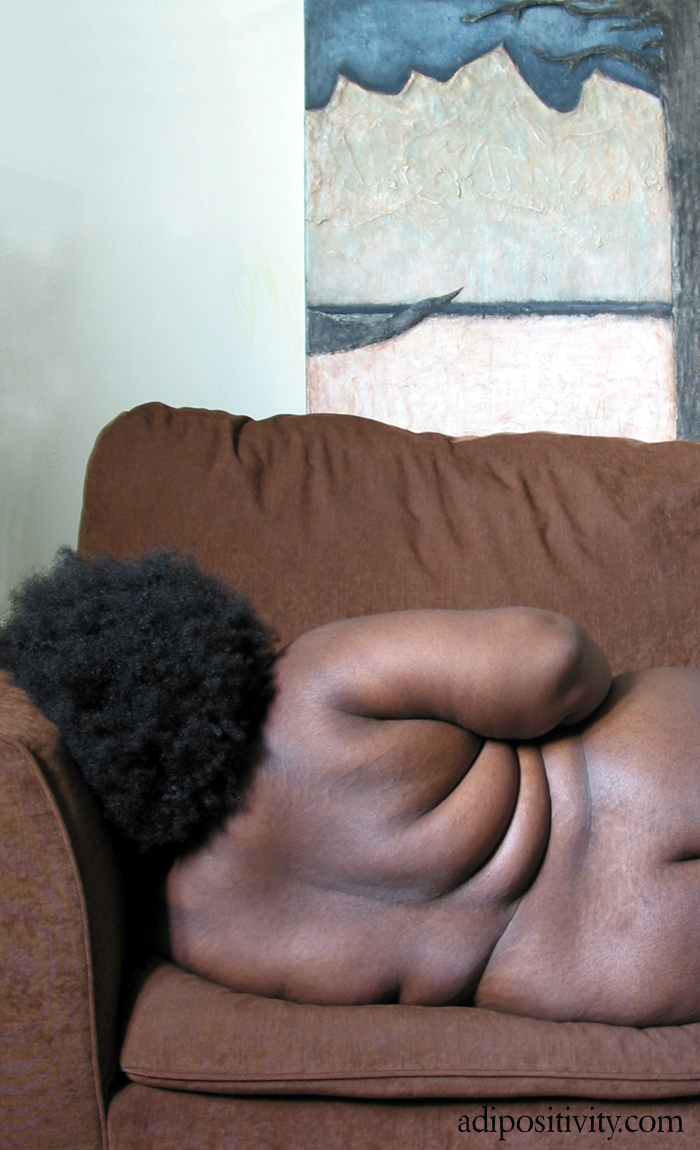
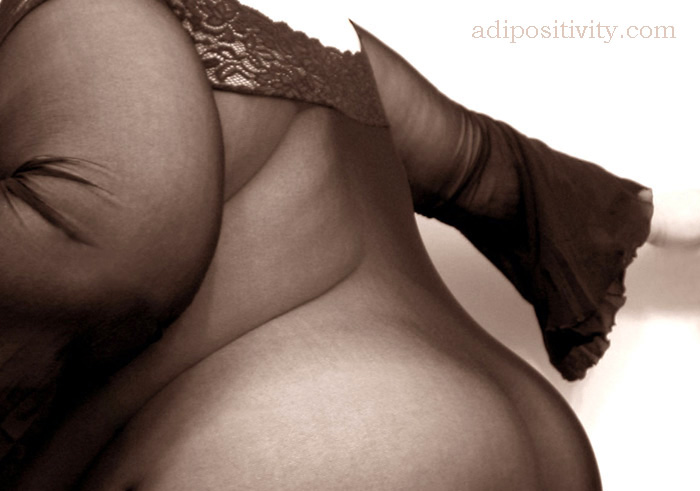
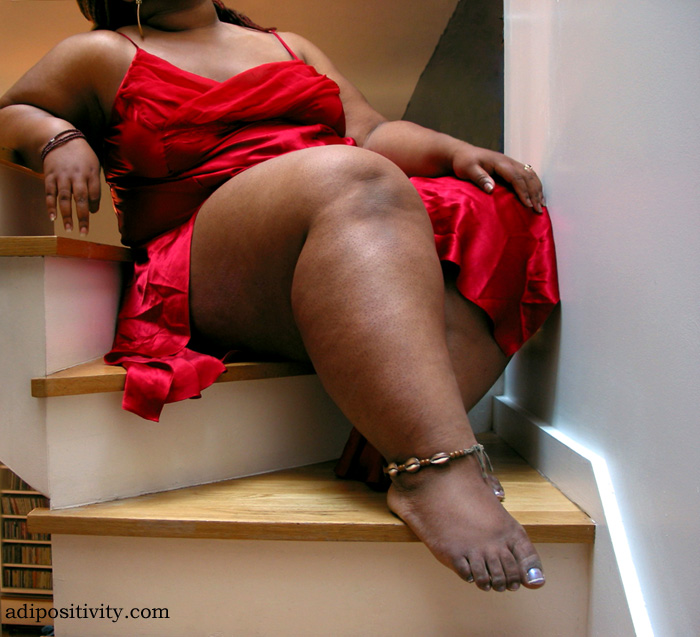
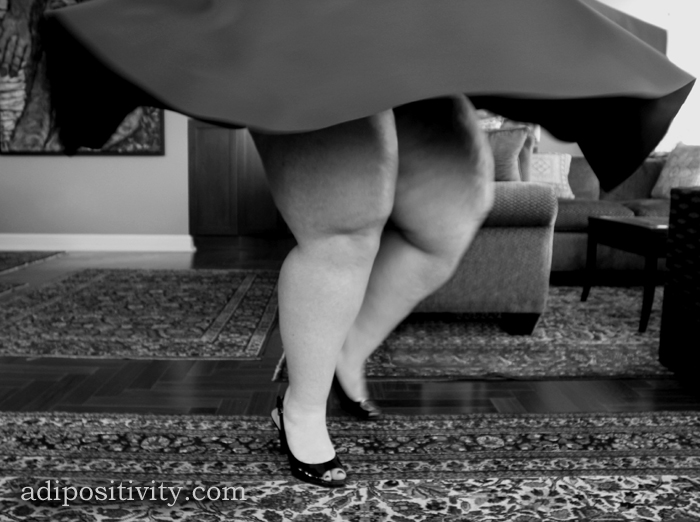
I love this project, especially considering the attempts by the media to include “real” bodies through the use of marketing like the Dove Campaign for Real Beauty and “plus size” (really a size 6-12) models, and how different these fat people look from those culturally approved fat bodies. These aren’t the media portrayed idea of what is “real” (and how problematic is that word in regards to any person?). These (mostly) women, 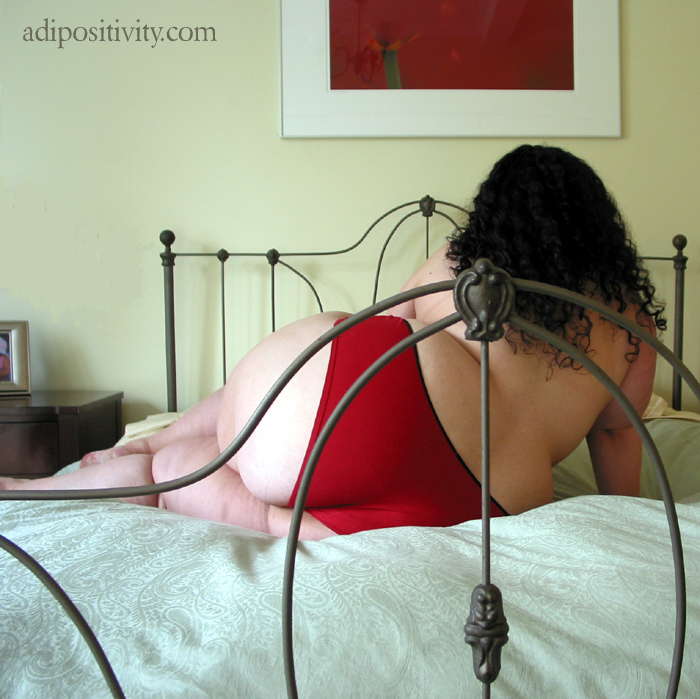 according to the BMI (another problematic method of judgment!), are obese, or more likely morbidly obese (sometimes called Death Fat in the FA community). Most of them probably weigh somewhere in the neighborhood of 200 or 300 or even 400 pounds – yet I don’t think they look like the stereotypical bed-ridden mordibly obese person most non-fats think of when they hear those numbers. Or maybe they do look like those ZOMG FAT people to you.
However you see them, these people are fat, but they have accepted the bodies they have and are living their lives in them.
The Great Wall of Vagina
Artist Jamie McCartney is trying to start a sexual revolution… but not the kind we usually think of.

He is attempting through art to change female body perceptions and show us that every woman’s vulvas are normal. McCartney is a life cast artist; he spent five years collecting casts of volunteers’ vulva mounds and has turned the result into The Great Wall of Vagina.
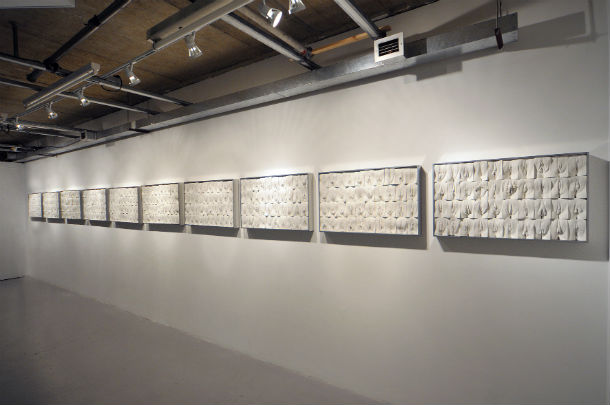
The work includes 400 casts, as accurate as photographs, displayed in ten wall panels. They range in age from 18 to 76 and include mothers and daughters, identical twins, transgendered men and women, women pre and post natal, and another one pre and post labiaplasty. It is impressive and at times overwhelming, but by reducing the body part to a simple white plaster cast, he removes the sexualization we would typically attach to such a display. His use of spectacle shows us how absolutely diverse each and every woman’s vulva is – on the website it mentions how each one is as unique as a face. And they are!

“For many women their genital appearance is a source of anxiety and I was in a unique position to do something about that.” - Jamie McCartney
There are several things I find interesting about this art project. First, by bombarding us with 400 vulvas in a small space, he reduces the body to a single part, from a view many of us have never seen. And while we ARE viewing the diversity and differences in vulvas, it also manages to emphasize the similarities. We see the similarities in our differences.
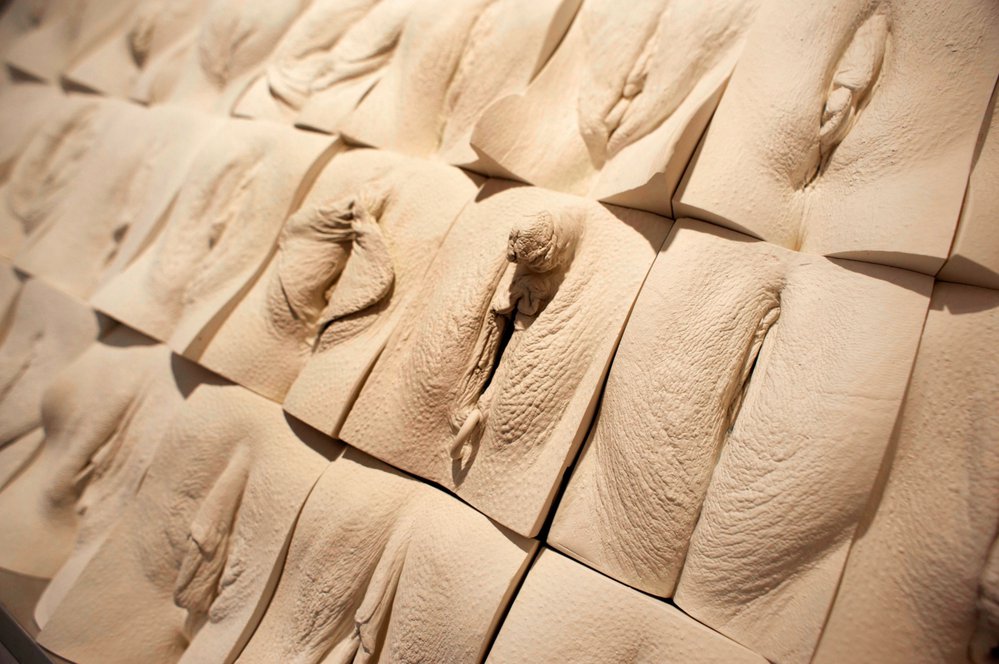
And second, if women are shocked and surprised at the diversity shown here – why is that? Is it simply because most heterosexual women haven’t seen other women’s open vulvas? Or is it the “pornification” of our modern culture? If labiaplasties are on the rise, do you think an exhibit like this would help stop that trend? Do you think hetereosexual men and lesbians are surprised by this diversity?
So, would you go see the show? And if you are the owner of a vulva, are you looking for one that looks like yours?

“It’s time our society grew up around these issues and I’m certain that art has a role to play.” - Jamie McCartney
Bows and Arrows vs. Vampire Fangs
If you’re a nerd like me and spent this past Thursday night eagerly waiting for The Hunger Games midnight premier, you might recognize the name Katniss Everdeen. Katniss is the heroine of the wildly popular Hunger Games series by Suzanne Collins. If you haven’t had the opportunity to read these books yet I highly recommend checking them out at your local library.
Recently, I’ve noticed a lot of media comparing Stephanie Meyer’s Twilight with Suzanne Collin’s The Hunger Games, or more specifically, Katniss vs. Bella.
I did a little research and I found this article: http://www.washingtonpost.com/lifestyle/style/in-katniss-of-hunger-games-a-lasting-heroine/2012/03/20/gIQAXvVbUS_story.html
The main point of the article is Katniss is not a new character, her physical and emotional strength are not new concepts to female heroines. However, many of the “sheroes” depicted in present day teen fiction, such as Bella Swan, are the exact opposite of the force that is Katniss Everdeen. Bella doesn’t push herself forward, and fight. Bella’s route is different, but her choices are her own. I am not a Twilight fan in any sense of the word but this article had a fascinating insight: there is room for both sheroes. Katniss needs to exist alongside Bella, both are representational of different aspects of feminism and the choices it allows women to have.
I appreciated the article for having the insight to point out characters like Katniss, who defy the norm, have existed in literature for ages. Has anyone besides me read Little Women? Jo and Katniss would have been best friends.
Ultimately I have to agree with the Washington Post article; Jo, from Little Women is remembered as is Alana from Tamora Pierce novels, and I don’t think anyone will ever forget the brilliant Hermione Granger from Harry Potter. These women, along with Katniss Everdeen, are powerful, dynamic creatures who put their complete selves into a struggle against all odds.
So I offer up the question, of all the female characters in modern day literature, whom do you think will be remembered? Will our daughters read about Bella Swan while Katniss fades quietly into the background and is eventually forgotten? Or will it be characters like Bella, who passively accept their surroundings, who will eventually be forgotten?
“Boobs Don’t Work That Way”
Has anyone come across this tumblr? I really like it.

“Okay, so we want two sexy women on the front cover. Both with tops that don’t cover much and you know what? Maybe one of them is pants-less. Yeah! And have them pose in a really sexy way. Woah, woah woah! What is that? Did you just draw nipples? That’s too far man. Children read these things."
“Boobs Don’t Work That Way” is a “blog about tits and the impossible things artists make them do,” according to the homepage. And it delivers! Each of the 22 pages features numerous renderings of women and their breasts, or I should say, their impossible breasts. Because let’s face it, friends, Real Breasts Don’t Work This Way.
Conversations about our breast-obsessed culture are not new or radical. We know we love breasts, and it doesn’t take a lot of looking around to be reminded of this fact. Breasts are all over the place! On billboards, commercials, movies, magazines, and oh yes, on many of the women we encounter every day. For a lot of us in women’s bodies, we’ve experienced having a conversation with a man and noticing his eyes conversing with our breasts, rather than our faces. I noticed this for the first time when I was about thirteen.
What “Boobs Don’t Work That Way” does that I love is expose some of the absurdity of our breast obsession. Artistic depictions of women’s breasts are often realistic, but this tumblr gives us a cache of the ones that are NOT. And it is refreshing to see someone make fun of these pictures! I mean, they’re so ridiculous! If I were an alien from another world, what would I think if I saw all these pictures? Would I think women have globes of flesh attached to their chests, devoid of nipples? Would I think these globes are perfectly round and humongous compared to their waists? Would I think these globes were detachable? Some of these breasts look like they’re about to fall right off the women who possess them.
And what is particularly interesting about that point what it brings to mind about embodiment. Women who have breasts experience their breasts are part of their bodies, as part of their embodied selves. Women bring their breasts everywhere with them (maybe if they had a choice, they wouldn’t?). Yet pictures like this one obscure this reality. These breasts are for display and affect, and give no indication that they are experienced for any reason other than to tantalize the viewer.
Get Naked to Fight Negative Body Image!
My sister, Lisa, goes to Northwestern University and put the poster to the right on her facebook page. I glanced at it, and 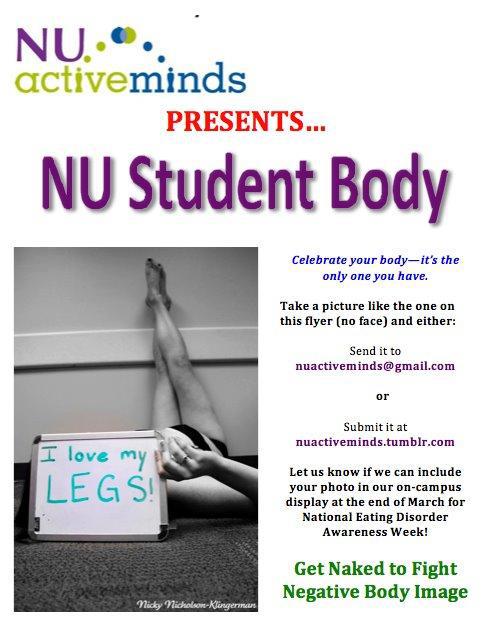 immediately loved the idea. A student organization “Active Minds” is asking average students at the University to submit pictures of themselves with their clothing off (without showing anything inappropriate) and without showing their faces to put a cute slogan on a whiteboard or paper and say something positive about that part of their body. I asked her if there were more pictures like the one in this poster. She said yes, go HERE. So I did.
The pictures on this blog are the ones I found on that website. I loved the clever ways people wrote about their bodies and that everyone seems comfortable in their own skin. In a way, it reminds me of the POST SECRET website where people anonymously send in secrets about themselves they’ve never told anyone, and they are viewable publicly on the internet. But unlike PostSecret, this community is just college kids and they’re saying that instead of giving in to the public perception of how bodies “should” be, this is simply the way they are and they’re proud of that and they’re willing to put it in a public place.
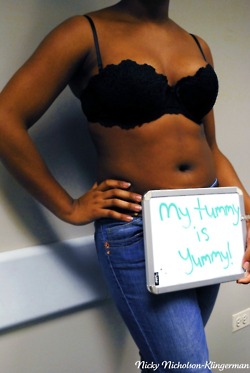 I can’t wait to see the kinds of pictures people post, and am also curious to see if anyone will send in a picture of a scar they’re proud of, or if people will send in pictures of their tattoos or piercings like what we’ve discussed in class. I am going to continue to follow this project even after I post this blog and I encourage you to do the same.
The goal of this project by Northwestern University’s “Active Minds” is that they will have lots of pictures of average people who like their bodies the way they are and they will be displayed at the university for National Eating Disorder Awareness Week at the end of March. I couldn’t be happier with this idea.
As a child, I was a ballet dancer, and I was severely underweight. But I thought I looked great because the standard in that 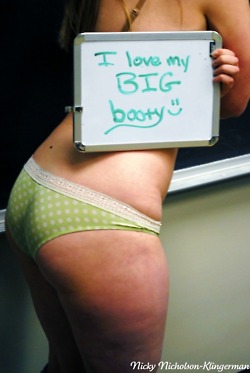 environment was, and is, that you are not supposed to have excessive body weight, even in areas like your hips and breasts where you should be gaining weight at puberty. I was exposed to eating disorders at a very young age and know several people who have suffered and nearly died from them.I really like the idea that they’re promoting eating disorder awareness and simultaneously promoting a positive body image. In fact, I like the idea so much I want to start something like this at UMBC. So my question is, if I did, would you join me, and do you think other people would join in?
The Rebellyon
Amanda Palmer (probably my favorite musician, artists, what have you) has a disagreement with the managers of Roadrunner Records, her then point of contact for making music. The short version of a long story is that for her solo album entitled Who Killed Amanda Palmer? the manager of Roadrunner Records (who also has bands such as Kiss, Korn, Theory of a Deadman, and Nickleback) told her that the video for “Leeds United” would need to be altered because her stomach looked fat. He said according to Palmer, “i’m a guy, amanda. i understand what people like.” The longer version of these events was posted on her blog which is linked here. Amazingly enough, I do believe this is the body he said people would not like:
She proclaimed a return to love the belly, although in her own vanity she was frequently self-conscious of it. After posting a photograph of her belly, many of her fans felt inclined to follow in her actions. At one point there was a website devoted to those pictures (which I can’t happen to find now), but they have been collectively amassed and put on various sites. There have been discussions about how the body should be loved as it is. An interesting take of the Rebellyon is discussed here.
I am actually really saddened by the fact that this occurred because by one man’s standards, the body was judged as if by societal judgement. The amazing thing is that her fan base provided the grounds for substantial protest against the record company (which she was finally able to drop after harsh criticisms). Her body has been put on display by the mediums she works in and it is evident there is a place for politics in this space, but was it fair for the manager to assert the ideal body that her audience would like?
Bodies that bleed
The crucifixion of Jesus have been painted for decades. But for some reason they all look the same. He has little to no blood and has a halo that surrounds his head. Different artist my add his mother or other disciples but the amount of blood is little or none. Now this is a quite interesting depiction when from the 39 stripes on his back, the nails in his has and feet and not to mention the crown of thorns on his head one would think there would be more blood. But is we compare a picture like this:  now if you would compare this typical portrayal of Jesu to the most recent depiction done by Mel Gibson and the Passion Of Christ in this youtube clip (start watching from 2:10-4:05… be advised it is very bloody. The movie is R rated) http://youtu.be/G52Ejcf2qu8
So my question is why did earlier depictions of Jesus show Him as barely having a scratch on Him what that depiction is unrealistic. The whips they had were adorned with nails. So the nails on the whips went in his skin and then ripped off his flesh. Not only that but to make sure He was dead they pierced His side with a spear so that blood came gushing out. But society has it that what is on the inside of the body must remain on the inside. The that raises the question is there an inward and outside part of the body? Because I thought they were one in the same. But the parts of the body that we can not see should remain unseen. As soon there is a breach between the seen and unseen there is a problem. Heaven forbid we sneeze or leak and by all means possible defiantly do not bleed. We get cuts and bruised but of course we have bandaids to cover it up. And then heaven forbid we talk about females that might bleed five times a month. But don’t worry there are ways of hiding that too. So please do not bleed because that makes you human and we al know society basically wants us to be robots.
Tattoo
I honestly thought about getting a tattoo on my hand, because i think it looks cool and i always wanted to get one.But my boyfriend stopped me. He always think that if i get a tattoo, i would look totally a different person.Last week,I read this article about tattoos. It said, ” Tattoo placement can negatively impact a person’s life if ink location is not careful considered.”

And it listed the disadvantages of Tattoos:
“· Career Limitations
· Style of Clothing
· Relationship Conflicts
· Decrease in Community Involvement
· Negative Self-Esteem
· Compromise Health”
I think it is true that tattoo really can impact our life. After this article, i thought about if i really got a tattoo on my hand. i would have to worry about hiding it from my parent, or when i go to a job interview, how would people think about me when they see my tattoo, and so on.I also did some research about tattoo ink.Tattoo ink contains pigments. It is bad for body. It can cause infection, such as hepatitis and skin infections.Because of the tattooing equipment if they are not unsterile. Tattoo can results Granulomas.It is an allergic reaction from tattoo ink.The treatment for it requires medical attention for antibiotics. I am wondering, for those you that have tattoo, have you consider about skin problem or have an allergic reaction before you walk into the tattoo store?