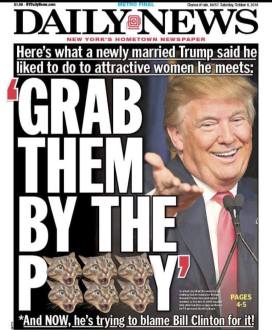
There you have it folks!
Not only is Donald Trump a bigot, but now he is also a sexual assailant. Continue reading

There you have it folks!
Not only is Donald Trump a bigot, but now he is also a sexual assailant. Continue reading
Change happens very slowly. You can feel it weighing down on you overtime.
It squeezes you until you can’t take deep breaths anymore. It’s a white entity that gets heavier and heavier until you feel suffocated and start seeing flashing lights. It’s a gloomy creature that rests on your neck and crushes your vocal chords, until your voice crackles and then disappears.
When you least expect it, your eyes lose their shimmer and are replaced by glass with no reflection.
Change happens slowly. But I saw someone change before me in a matter of seconds. Continue reading
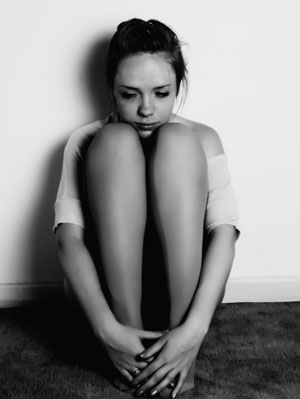
I guess we all know the feeling of being heartbroken. The nonstop crying, the headache, the baggy eyes, the hate, the loneliness and the list goes on. Most of us associate heartbreak with only the psychological effects, and forget how much of a tool this can have to our body. See, being heartbroken has so much more to do then just going into depression. Continue reading
For a couple of weeks, I have noticed something that has been circling my life, that something is oppression. Continue reading
A red faced woman stands in front of me with her lips pursed and a pink plush pig toy on the counter in several pieces. She reaches into her bag and throws more white stuffing onto the counter. Along with a balled up receipt, she throws at my chest. “I want a refund.”
I hate this part. Continue reading
As I was growing up I went to the farm house every Eid-Al-Adha to make sacrifices of cows, goats, lambs, etc. This is a religious obligation that every muslim person has to perform. Growing up to this practice it became a norm for me. But for these past couple of years, I’ve come to the realization that this practice is not performed properly most of the time.
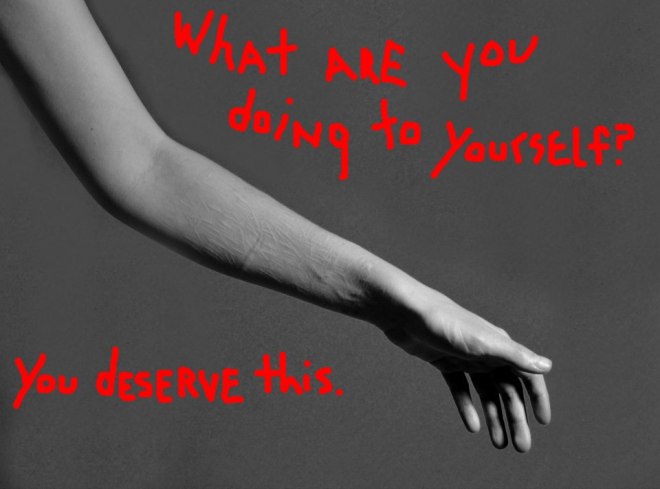
I never knew that one’s skin could tell so many stories until I realized that the most common questions I get are about my skin. Continue reading
The Book, “An Unquiet Mind” follows the story of Kay Redfield Jamison journey with bipolar disorder. I had to read this book for one of my college classes and was not looking forward to it. I have been on my own journey with bipolar disorder and was afraid the author would portray people with bipolar disorder, as being “crazy”, but aren’t people with bipolar disorder crazy anyway? Continue reading
The internet creates a strange liminal space where we must invoke our bodies in order to represent ourselves. In the absence of facial expression, body language, or verbal description, one can express emotion and identity with other methods, like pictures, gifs, and emojis.
This video talks about how people on the internet often represent themselves through pictures, gifs, and videos. They caption or tag it with the phrase “Me RN” meaning “Me right now”. Even though these gifs or pictures are taken from shows, movies, or places that don’t relate to the user, through their abstraction and decontextualization people can appropriate these images to create themselves in webspace. These images capture a feeling or mood that can be difficult to evoke on the internet because it would require long descriptions, finesse of diction, and/or visual depiction that’s not possible or desirable to pull off.
In a similar vein, emojis are abstracted images used to represent emotions and ideas in internet liminal space. However, emojis differ from things like reaction images in that they are designed by the owners of the webspace themselves. Whereas reaction images derive from a third-party source and can be easily manipulated to suit the user’s needs, emojis are dependent on its creators. We could assume that while reaction images derive from a bottom-up appropriation of culture, emojis represent a top-down system that is limited by the ideology and resources of website owners and creators.
However, I’d like to think it’s more complicated than that. We cannot characterize website owners and creators as from the “top” and users at the “bottom”, when many creators derive from lower or middle class backgrounds and found their work through their own funding or crowdfunding. Users can be creators and creators are also users. Thus, while some of the same privilege systems are recreated on the web, we cannot assume that this is always true.
That’s why I believe that the internet represents an amazing new space for people to represent themselves and perhaps create new identities away from everyday restrictions.