Queer Brokenness: Intersection with Mental Illness

feature-470x260

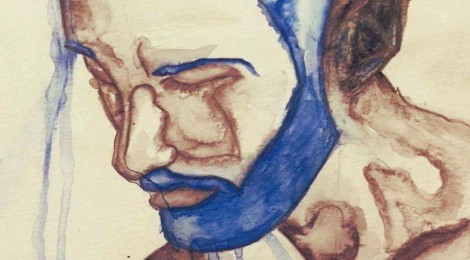
Image Source: http://trauma.blog.yorku.ca/2015/12/south-asian-queer-community-lacks-visibility/  (Artist – Jinesh Patel)

(Content and Trigger Warning: Self Harm, Suicide, Substance Abuse, Emotional Abuse, Intimate Partner Violence, Bullying)

.

.

I often find that mental illness and queerness aren’t addressed properly or constructively when talked about together. So often the public at large would have us believe that queerness is a result of mental illness or that mental illness is the result of queerness exclusively. With this in mind, the queer community will often push back on society’s behavior by talking about the two exclusively from each other, frequently ignoring all the ways mental illness intersect. That’s does not go to say that queerness is the result of mental illness or vice versa at all, but rather it shouldn’t be ignored that many people in the queer community go through both because of the way society has constructed and reacted towards queerness. For example, queerness has often been perceived as a deviant thing, it has historically been punished and worked against in a variety of ways. Continue reading

Queer Identity Discovery: The Domino Effect and Queer Time

9601

Image Source: http://www.avclub.com/article/theres-mash-rainbow-road-themes-all-8-mario-karts-206528

I’ll focus on my own experience here but I know there are going to be things about my experience that many other queer people can relate to in this regard.

My experience with queerness has never been linear, it has indeed been very queered. It has consistently involved not knowing about a way of being queer and then being introduced to the concept, a moment of reflection and then realizing “oh shit that’s me.” But I’ve also consistently struggled with coming to terms with these new labels and seeing how they fit me.

From the age of 12 to about a month away from turning 21 I had been on a journey of denial, internalization, grief over myself changing and growing, complete secrecy, exploration, etc. etc. about me being bi. I had come out after years of being afraid of myself, but in that time I also developed a yearning for community. When I came back to UMBC after two years of community college I knew that I’d want to seek out my community. Since then my reality as a queer person has shifted so greatly. I feel so liberated. Yet I grieve. I grieve for the ways I have been, not knowing if they are different than who I am now. My sense of self has been questioned. I don’t know if my new state of existing is just blurrier, or if things have just been just out of my sight this entire time and it constantly feels like both. I don’t know how consistent this person who is me is. Continue reading

But I like this show mom!

toddler-tantrumsAs a 90’s baby I look back at the old cartoons and listen to old hits, reminiscing the good ole days. I joke around with the children at my job, telling them how the best shows were on cartoon network . I expressed that my favorite shows were the Power Puff Girls, Courage the Cowardly Dog, Dexter laboratory , and other hit TV series.

As I continued to share my stories, one kid goes “I like Loud House”. Of course I did not know what he was talking about , but another child replies ” It’s that Gay show! My father said I cannot watch it”. Then it clicked. I remember this being a controversial topic on Facebook before the shows premier. The show contains a married, biracial , Gay, male couple that has a child.

In this blog I will explain what makes this show inappropriate .

Point #1  It goes against the social norm : How dare you show a child who is the product of the american dream two men together! That’s absurd ! How dare we show children that there is more to life than just mommy and daddy. Boys cannot be feminine ! They must be rough. If my child see’s this he will not be the man I want him to be! (sarcasm)

Point #2 STICK WITH YOUR OWN RACE! :  How dare we promote outside our race ! ( Sarcasm)

Point #3 THIS GOES AGAINST OUR RELIGIOUS BELIEFS ! :  who cares.

Point #4  How can you reproduce if your gay : Well if there’s a will there’s a way……. who cares

At the end of the day no one said you had to be gay, but just respect them as humans. The world must embrace change!  Whose to say your way of living is right!? If anything I see it as this, we are letting people finally be themselves. Many people have been killed, have been shunned, have killed themselves,or have had something tragic done to them because they were considered ” not normal” ( Much like blacks were considered way back when but I shall not go there 😀  ). Now we have same sex marriages, Tv shows, Gay parenting, etc! All of these things that were considered abnormal are now part of our norm and should be! At the end of the day we are people. Accept it!


PSA: Transgender ≠ Gay

In the way gender and sexuality operates in our world, often times they are highly construed and mistaken for each other. Are they related? Yes. But they are still separate things. Because these identities are often mistaken in this way many people have this idea that being transgender is an identity that’s ‘chosen’ to receive some kind of access to heterosexuality and that to be validated as a trans person you need to be engaged in this effort to be on some end of the gender binary only performing gender in ways that are widely accepted in a hyper policed way, this includes heterosexism as it relates to transess. In fact there’s  a whole other level of heterosexism that is applied to trans people.

But sexual diversity is just as diverse in the trans community as it is in the cis population. I can only speak deeply about my own experience, and I realize it is but a mere single experience in a sea of many others and I do not speak for other trans people, though I feel like my story is relevant to this topic. My personal experience with my gender identity and sexual identity, has been a long and arduous journey that starts out in the closet as being reluctantly bisexual, often leaning towards my attraction to women. Then I was introduced to concepts of there being more than two genders, and it struck me. There were months of tears, denial, and confusion. Once exposed to different genderqueer, nonbinary, and trans identities that I suddenly felt aligned with I couldn’t go back to a reality where my sexuality was the same in relation to my gender identity ever again. Ultimately this ended up being a positive thing, something freeing, something that just ended up feeling more comfortable. But my initial reaction was fear, uncertainty, and feeling disingenuous because of the way the world saw identities like mine and I reflected that back into the way I saw myself. I still do feel internal conflict, I still get scared that I, in no way, have all of the answers about my identity, but as I come into my gender identity I find that I’m making progress in establishing peace with my bisexuality. It’s as if I didn’t want to identify as bisexual before, something about seeing myself as a ciswoman before I knew about the trans identities that fit me,  dating a man really did not sit with me well, it just wasn’t me and it isn’t. I’m finding that being trans and accepting it has essentially worked me into actually being more comfortable about my bisexuality. Now I find new complications in grieving my previously thought of lesbian/queer woman identity, but again I can’t go back, it’s just not me. I am a transmasculine person who is bisexual and with that I am queer and transgender. I think it’s a timeline and identity that defies this heterosexist view of trans people, as different stories and sexual identities of many trans people do. I wanted to provide my own experience as an example of how transness does not equate to gayness. There are certainly many other narratives out there that proclaim trans does not equal gay as well and encourage people inside and outside the LGBT community to realize that there is no one way to be trans or queer and that there is no reason someone can’t be both.

Split Second

Change happens very slowly. You can feel it weighing down on you overtime.

It squeezes you until you can’t take deep breaths anymore. It’s a white entity that gets heavier and heavier until you feel suffocated and start seeing flashing lights. It’s a gloomy creature that rests on your neck and crushes your vocal chords, until your voice crackles and then disappears.

When you least expect it, your eyes lose their shimmer and are replaced by glass with no reflection.

Change happens slowly. But I saw someone change before me in a matter of seconds. Continue reading

Everyone Else Wants a Dick in My Mouth (In which society takes one glance at my body and assume they know my whole life)

A few months ago when eating lunch with friends, one of my friends offhandedly commented that ‘men must love [me]’. I realized that she was referring to my ability to fit a large amount of food in my mouth, and assuming that I would use this ability to give great blowjobs (something I have no interest in doing). This got me thinking.

Continue reading

On the ‘trans race’ argument people use to try to invalidate transgender identities

Before  anything I’m going to start of by pointing out that I’m trans but I’m white. So my space in talking about this will come largely from the fact that I’ve had many people including my father try to invalidate transgender identities by saying “well if trans race identities aren’t a thing then I’m sorry transgender identities can’t be either.” So this is mostly coming from a place of defending my own identity but also calling out racism. But since I don’t actually experience racism or understand all of the complexities of this topic I invite this to be a discussion and something people can add to via comments.

So often I hear this argument that tries to invalidate transgender people, and a large response in retort to this attitude is “well you just can’t compare them because they’re different things.” I totally agree with this and it is in fact the reason. Unfortunately, for some, it’s not enough to understand. So in order to justify my identity and also keep people from muddling race and gender, I’ve thought about it a lot and decided to share my reasoning so far in explaining why we can’t simply equate the two. Continue reading

The Burden of Emotional Labor

A red faced woman stands in front of me with her lips pursed and a pink plush pig toy on the counter in several pieces. She reaches into her bag and throws more white stuffing onto the counter. Along with a balled up receipt, she throws at my chest.  “I want a refund.”

I hate this part. Continue reading

You Must Be This Tall to Ride

Content Warning: Height dysphoria, transphobia

I recently joined the millions of users on Tinder, a social networking app that allows for mutually interested individuals to communicate if they are within a predetermined distance. Tinder functions simply. Users are presented one-by-one with other profiles—which include up to six photos, age, distance, and a brief text description—and are given two options: swipe left to “dislike” and thereby remove the profile as a potential match, or swipe right to “like.” If both users have mutually swiped right, the application allows for text communication between the two profiles to occur.

While the app can be used to find friends, Tinder is most frequently used as a dating services app. As I have swiped through profiles and read their short descriptions over the past few weeks, I have picked up on certain trends in the information users present to potential romantic and/or sexual partners. One of the most frequent descriptors used is height, revealing what many view as an important physical factor. This mark of importance ranges from implicit, such as simply listing one’s height, to extremely explicit, in which I’ve seen a profile’s description read, “Do not swipe right if you are under 5’10”.”

A recent national study showed that 48.9% of the heterosexual women surveyed wanted to only date men taller than them (Yancey & Emerson 62). Height preference was important to the heterosexual men surveyed as well, but not as important, with 1.3% wanting to only date women taller than them and 13.5% wanting to only date women shorter than them.

Height is clearly an important characteristic when it comes to choosing a partner, yet there has been some debate as to whether this is due to biological tendencies (evolutionary perspective) or social expectations. Ultimately, these gendered-height expectations are rooted in patriarchy. The women surveyed in the study often listed protection and security as reasons to why they prefer taller men (Yancey & Emerson 62). Others stated that a taller man made them feel more “feminine.” The men surveyed in the study who set upper limits for height were “not considering physical or sexual difficulties but societal expectations” (Yancey & Emerson 66). These men did not explicitly speak on traditional gender roles, but they did convey a desire to avoid possible stigma. Men were “reinforcing societal expectations with their higher height limit just as women reinforced those expectations with their lower height limit” (Yancey & Emerson 66).

Like many gender norms, height expectations have the harshest impact on the transgender community. Height dysphoria, an invasive dissatisfaction and discomfort with one’s height, is a frequently seen dilemma among online transgender support forums. Height is very difficult to amend, and because it is wrongfully associated with masculinity and femininity, transgender individuals suffer greatly. Posts in these online forums express a sense of futility. While it can be achievable to possess societally-deemed masculine traits such as hair growth, muscular strength, and body parts, height is nearly impossible to change. Some responders recommend shoes with platforms or boosters. Others simply recommend an attitude adjustment.

This attitude adjustment should not be the responsibility of the trans community, but rather those who have the privilege to actively challenge gender norms free from danger, particularly white, cis, and heterosexual individuals. It is human and understandable to have height expectations, as patriarchy is deeply embedded and can be difficult to unearth, but I ask the reader to truly consider their own expectations and from where they have been created. Just as we work to untangle the mess of patriarchy in our coursework, conversation, and minds, we must also work to distance ourselves from harmful gendered-height expectations.

Works Cited

Yancey, George, and Michael O. Emerson. “Does Height Matter? An Examination Of Height

Preferences In Romantic Coupling.” Journal Of Family Issues 37.1 (2016): 53. Publisher

Provided Full Text Searching File. Web. 29 Sept. 2016.