Face Transplants

I saw this article relating to a face transplant that occurred in Maryland within the last week or so.  This article is extremely relevant to the book we just discussed (Autobiography of a Face).  The man who received the transplant needed one due to a gunshot wound and damage from about 15 years ago.  The article can be found here:

36-hour face transplant ‘most extensive’ ever

The story is an amazing one.  The medical technology and techniques that we now know are phenomenal.  I wish I could interview this guy and ask him how he feels about having a new face after hiding behind a mask for so long and having to use a breathing tube to breathe.  The transplanted face came from a donor whose other organs were also donated to save 5 lives.  The article states that the recipient’s new face is a combination of his own face and the donor’s face and a little bit of customization.  I wonder how this man feels about having another person’s face fused into his.  I also wonder how that impacts his identity.  How would you feel?  Would you be relieved to have the new face so you can appear what is “normal” to society?  Or would you have some reservations and other ideals about how this re-creates your identity?

The Great Wall of Vagina

Artist Jamie McCartney is trying to start a sexual revolution… but not the kind we usually think of.

Image

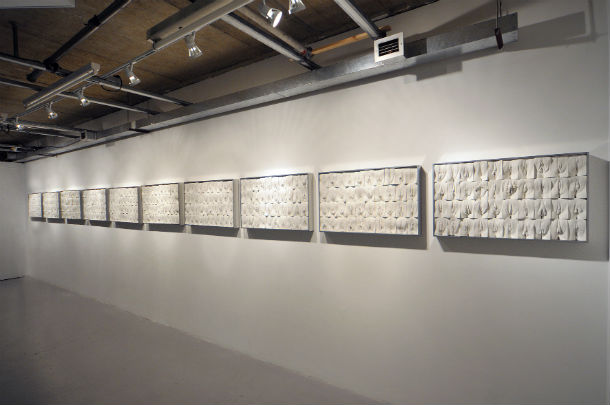
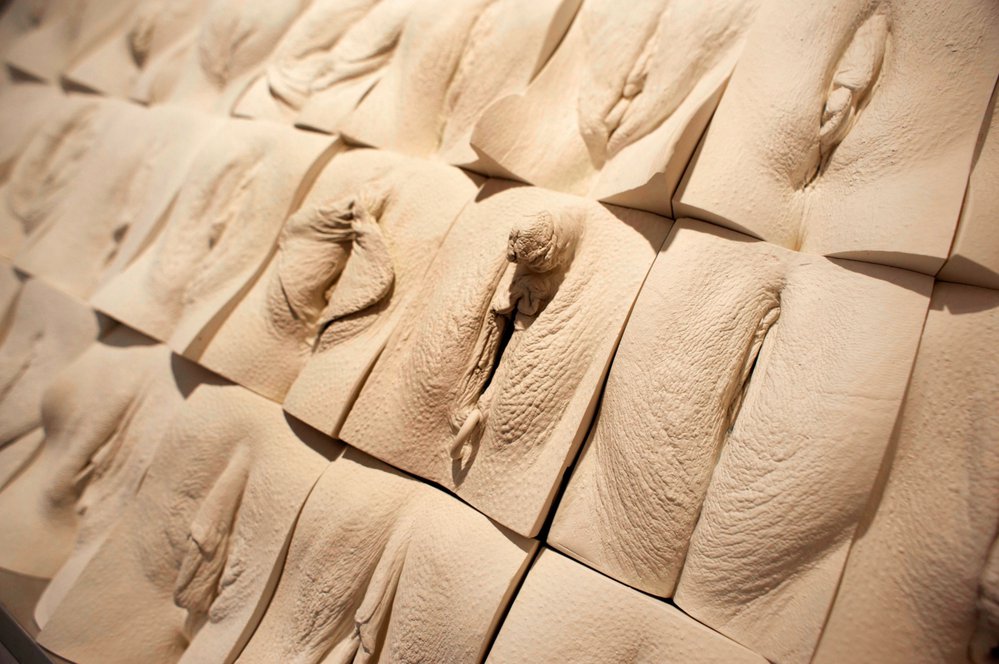
He is attempting through art to change female body perceptions and show us that every woman’s vulvas are normal.  McCartney is a life cast artist; he spent five years collecting casts of volunteers’ vulva mounds and has turned the result into The Great Wall of Vagina.

Image

The work includes 400 casts, as accurate as photographs, displayed in ten wall panels. They range in age from 18 to 76 and include mothers and daughters, identical twins, transgendered men and women, women pre and post natal, and another one pre and post labiaplasty. It is impressive and at times overwhelming, but by reducing the body part to a simple white plaster cast, he removes the sexualization we would typically attach to such a display.  His use of spectacle shows us how absolutely diverse each and every woman’s vulva is – on the website it mentions how each one is as unique as a face.  And they are!

Image

“For many women their genital appearance is a source of anxiety and I was in a unique position to do something about that.” - Jamie McCartney

There are several things I find interesting about this art project.  First, by bombarding us with 400 vulvas in a small space, he reduces the body to a single part, from a view many of us have never seen. And while we ARE viewing the diversity and differences in vulvas, it also manages to emphasize the similarities.  We see the similarities in our differences.

Image

And second, if women are shocked and surprised at the diversity shown here – why is that?  Is it simply because most heterosexual women haven’t seen other women’s open vulvas?  Or is it the “pornification” of our modern culture?  If labiaplasties are on the rise, do you think an exhibit like this would help stop that trend? Do you think hetereosexual men and lesbians are surprised by this diversity?

So, would you go see the show?  And if you are the owner of a vulva, are you looking for one that looks like yours?

Image

“It’s time our society grew up around these issues and I’m certain that art has a role to play.” - Jamie McCartney

Obesity in our current generation

Obesity is prevalent in our current generation especially among women due to a variety of factors. Ironically, the price of eating out is cheaper than cooking food in your own kitchen. For example, the price of a cheeseburger is cheaper than a salad. Trying to buy organic food which is considered more healthy for our bodies is more expensive than fast food that is easily accessible. If we go to McDonald’s we can get a cheeseburger from the dollar menu but if we walk into Whole Foods market, a salad can range from $5 to $10. Ironically, employees at Whole Foods who weigh less are given a greater discount than their fellow employees whose BMI are above a certain range. Although this is supposed to be seen as motivation and an incentive for their workers to become more “healthy” it seems discriminatory. Their thinner workers receive an additional 10% off their discount for having a lower body mass. Therefore, if your BMI is above 30, you get to keep your original 20% employee discount, but “thinner” co-workers get as much as a 30% discount.

For some people it is harder to lose weight due to restrictions from their body or even genetic disorders. Also, looking at our society in the United States our portions for food are larger than countries everywhere else. Everyone’s lifestyles are different and so the convenience of getting cheaper and fast food is easier than attempting to cook a healthier meal that is more costly. When I went to Korea, their McDonald’s big mac was half the size of our big mac in the states and they didn’t even have the option to get larger sized fries. Only in the United States do we have the option to “super size” and it seems that our lifestyles provoke this problem of obesity.

Sharing the Experience? The Menstruation Machine.

Image

To the phenotypical male, menstruation will always be a mystery that we will never experience.  Or is it?

Growing up as a boy, the only information I received about menstruation was by eavesdropping on girls whispering to each other, or the odd incomprehensible schoolyard insults about PMS.  Television provided images of pads (with wings!) that women were supposed to wear in order to catch an unnaturally blue liquid, but no indication of where those pads went, or what that odd liquid actually was. Sitcoms taught men to just stay out of the way during “that time of the month,” lest all hell break loose.  It wasn’t until many years later, when I screwed up my courage and started to ask questions of my partner, that I was able to come to understand what happened.  Sort of. I mean, I could be sympathetic, but how can one be empathetic of a bodily process you can never experience?

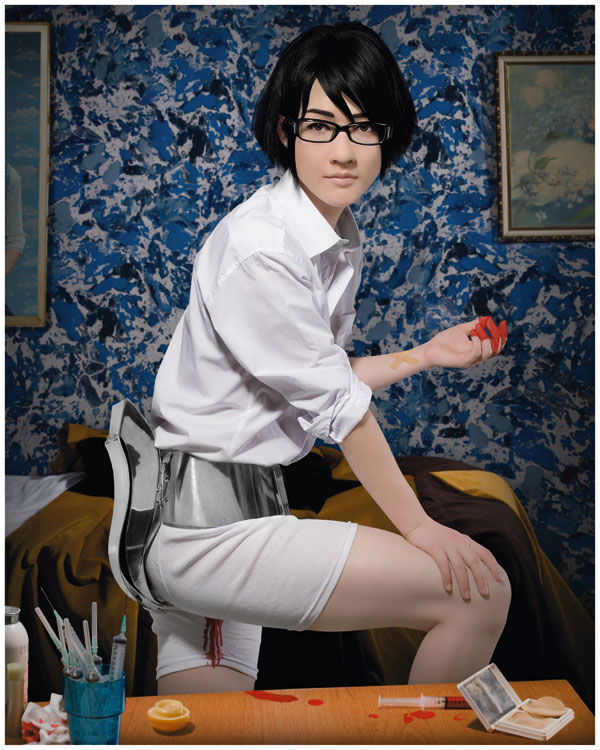
Performance artist Sputniko! (aka Hiromi Ozaki) seems to have developed a solution of sorts to this conundrum.  The Menstruation Machine, a gleaming chrome device that straps to the abdomen, is meant to simulate menstruation for those who would not otherwise experience it.  Prior to putting it on, a vial inside the machine is filled with the wearer’s own blood.  Once on, the strap around the abdomen simulates cramps, and the vial inside slowly drips blood into the wearer’s underwear.  Sputniko! created a music video of Takashi, a drag performer, wearing the machine out on the town and experiencing cramps and bleeding:

On the surface, this seems like a really interesting opportunity for someone who doesn’t menstruate (whatever their gender identity) to experience what goes on during this part of the menstrual cycle.  But in the end, it is just a simulation, and like all simulations, it can be stopped.  And it has limitations- it does not simulate the anxiety of a late period, or account for variations in severity over time.

Obviously, Sputniko! created this as an art piece to stimulate discussion.  Can such a machine be used to bring about empathy in those who don’t menstruate? Or would it create a sort of false empathy because the experience of menstruation is a fully embodied, ongoing experience? I find myself sort of in-between these two stances. What do you think?

What is up with all the breastfeeding hate lately?

Facebook is deleting personal pictures of Mom’s breastfeeding and calling them obscene.

Moms are being ordered to cover up in malls and Target if they are breastfeeding.

Isn’t breastfeeding what women are encouraged to do?  Hasn’t the healthy party line been to breastfeed for at least the first few months to build immunity in babies?  Some communities are encouraging women to breastfeed to help curb childhood obesity.  There are proven health benefits for both the child and mother.  So, women are being told to breastfeed on the one hand and then told they can’t do it anywhere but in their homes on the other.  If they want to breastfeed in public, they must hide themselves away in a bathroom.  How dare they offend anyone with the view of their children breastfeeding!

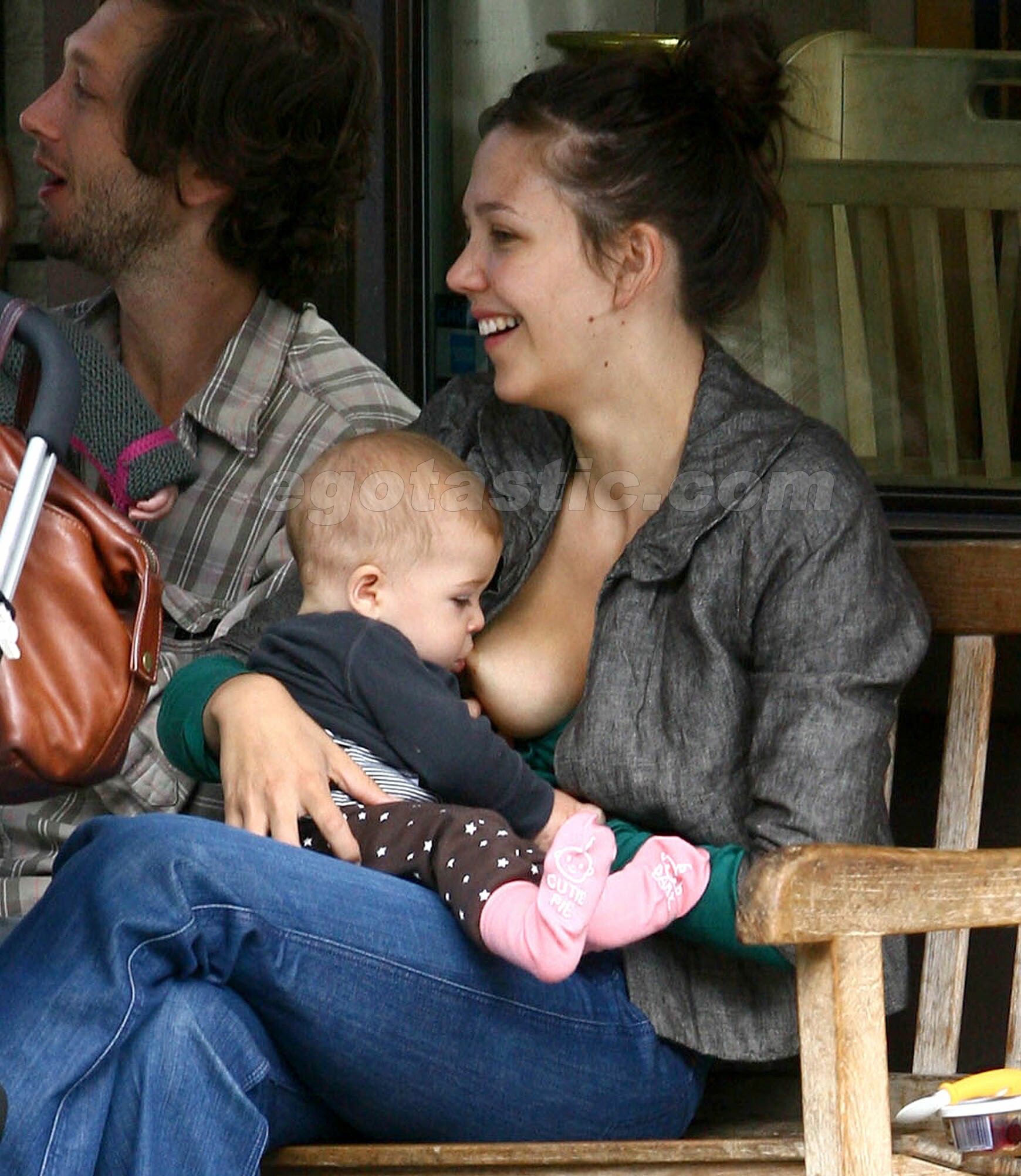
Maggie Gyllenhaal breastfeeding

Women spend their entire lives held up as sexual beings, as objects.  But where does that end when a woman becomes a mother and wants to breastfeed her child?  Hasn’t the image of “the mother” become one that is without sexuality?  Maybe breastfeeding blurs that line for some.  We see this attitude in breast cancer awareness campaigns crying to “Save the boobies!” as well.  Women’s worth is in their sexuality and if they use their breasts to feed their children (some might say the breasts most primal and “natural” purpose) they are being viewed under that same sexual gaze.  Is our society so sexually repressed (and obsessed) that we can’t separate breasts from being sexual objects?

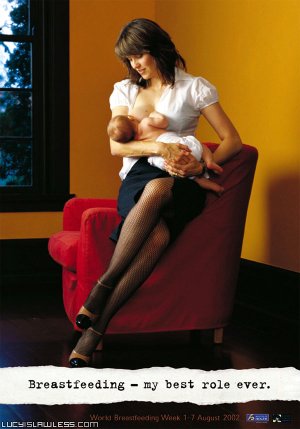
Part of the British campaign to encourage breastfeeding

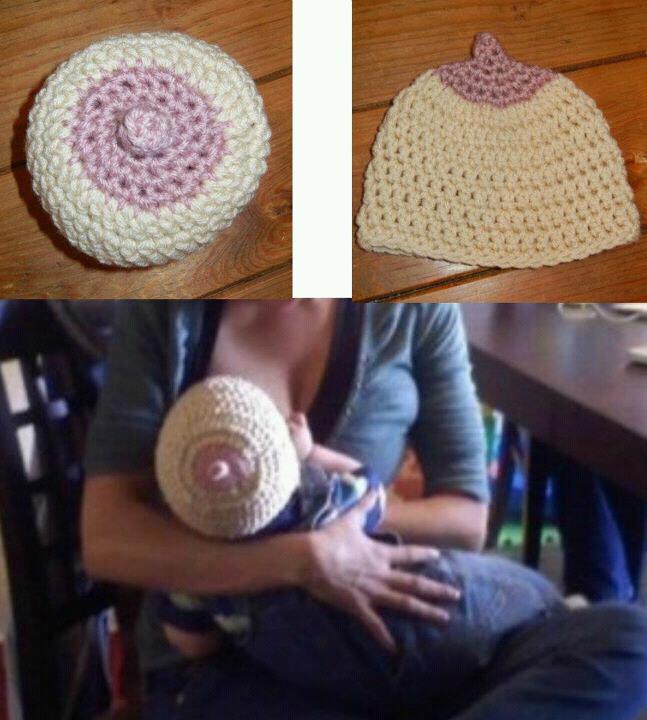
Many breastfeeding moms are taking to activism to try and bring awareness to the issue.  Recently on etsy, an innovative breastfeeding mom created a crocheted “boobie beanie.”  They can be made in any skin tone and nipple shade, to match your own.

The Boobie Beanie!

Other mom’s are holding “breastfeed-in’s,” at facebook’s corporate headquarters or at local malls.  Celebrities have also taken to the cause, breastfeeding in public and allowing the paparazzi to take pictures of them with their children.  In Britain, they even had a celebrity campaign to encourage breastfeeding.  Unfortunately, until we as a society can move past this constant sexualization of breasts, I fear things will still be difficult for breastfeeding mommies.

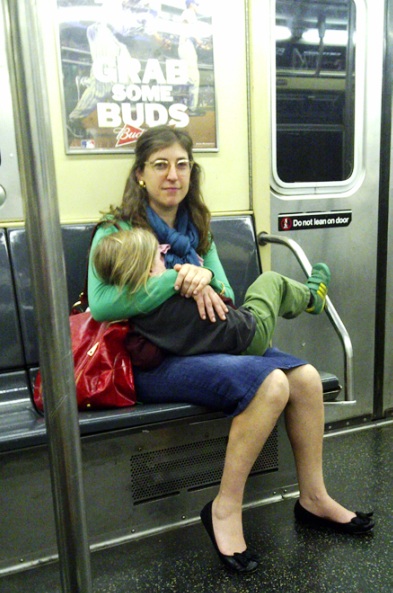
Mayim Bailik breastfeeding on the subway in NYC.


It is interesting to watch the way prescription drugs are consumed in America. We tend to obsess over the benefits of prescriptions and gloss over the possible side effects. Every commercial for a prescription drug is required to announce the side effects, but who can actually hear them? There is usually a man with low-pitched voice racing through the possible inconveniences as if they are minor possibilities.

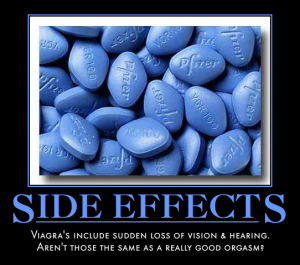
Apart from a 4 hour erection, Viagra can also cause loss of vision, diarrhea, dyspepsia, and dizziness. It can also be fatal when taken with other drugs, especially drugs for heart related health problems. This information is not commonly discussed. Every commercial has the side effects mention as mandated by the FDA. It is the consumers responsibility to understand these side effects, ask questions, and take necessary precautions. Unfortunately, as a society we are more eager to reap the benefits then we are to take caution over the adverse effects.

I felt that Viagra was a great attention grabber for this post, but this is greater than the erection verses vision debate. There are so many prescriptions out there for a wide range of serious and minor illnesses that have side effects of varying degrees of significance. We have become comfortable putting chemicals in our body for self medication or as instructed by a health professional without thinking about the consequences. I don’t remember ever pausing to think that my aspirin can give me stomach ulcers before consuming it. Whether it is an over the counter drug or a prescription medication, we need to pay closer attention to the warnings labels, especially if the drug is a personal desire and not necessary for health maintenance, like Viagra or Latisse.