Faking Disabilities

I was reading the news the other day and came across an article that got me so angry. A man had been using the medical condition of epilepsy to get out of paying for his expensive meals. Luckily he got caught but his punishment is a very small punishment; a slap on the hand if you will.

The reason why this story got me so riled was because of the fact that my mother has been living with epilepsy for 26 years.She has to deal with the repercussions of her disability daily. For someone to mock and mimic an invisible disability is a despicable act. She has had to recently stop driving because her seizures have gotten so bad. Her seizures have taken a toll on her memory slightly so the small task of reminiscing becomes a difficult task of the realization that her disability is becoming more and more relevant each time we talk.

The man who decided it is acceptable to skip out on paying for a meal by faking a seizure makes me sick. It is disgusting and I wish he could understand epilepsy more in depth; this disability is no joking matter. Since he used the disability to his benefit, it makes me worried for my mother. If she has a seizure in the grocery store, restaurant, and any other public place, will people be less likely to help her if they think she is faking. I hope that if people see someone having a seizure they can recognize it and stay by that persons side until they come out of it. I hope that this mans acts did not make people want to turn a cold shoulder to a person actually having a seizure.

Leaving The Labyrinth of Self Loathing

I was recently perusing the world wide webs when I came across an article entitled “7 Things To Look At When You Feel Bad About Your Body“. I encourage everyone to go read it now. Right this minute and then come back here…Go ahead…I’ll wait… (Warning: Contains bodies, in various forms and fashions)

Continue reading

Extreme Bodies, Extreme Defiance [Warning for discussions of vomiting]

Every morning I make the same breakfast sandwich: two eggs and cheddar cheese between two slices of toasted bread. As a kid I never ate breakfast, but as an adult I look forward to it. Breakfast not only tastes good, it also gives me energy I need to start my day.

Today isn’t like the other days. On any other day, I would wash down my breakfast with a glass of milk. Today I feel brave, defiant; today, I feel like taking a risk.

Before making my breakfast sandwich, I open the fridge and peer inside. I could have milk, with its comforting pH of almost 7. It’s not much different from water, which in its purest form is a perfect 7. Courage, or maybe stupidity for all I know, floods me as I reach past the milk and pull out a bottle of orange juice.

‘Yes,’ I think to myself, ‘This will work.’

Continue reading

He called me a waste

The guy I went to prom with called me a waste the day I came out to him. He looked me in the eye and said this with a smile on his face as if it what he were proud of what he just said. This wasn’t the last time something like this had ever been said to me. On multiple occasions I have been called “selfish”, “unfair”, and “a waste” by a number of men because of my sexual orientation. And on every one of these occasions I ask them all the same question, “Why?”. Continue reading

“I’m Having Their Baby”

The Oxygen Network will be presenting a show entitled “I’m Having Their Baby” on July 23rd, 2012. The show highlights women who will be giving their children up for adoption. The adoptive parents include gay couples, infertile couples, etc. The interesting part is that we see the story from both sides. Oxygen shows us what the birth mother experiences along with the adoptive parents. I believe that it will be interesting to see how the families of both sides feel regarding the adoptions.

I believe that this is a show unlike any other on television at this time. Adoption is rarely discussed, especially from both points of view. Since abortion is such a charged topic, adoption seems to follow. Women who chose to give up their children are looked down upon at times, depending on their situations. Sometimes, society feels better about a woman choosing to give their child up for adoption that abort the pregnancy, but sometimes the situation is reversed. It is even more interesting that adopting a child is seen as a noble cause or creating a family, but giving a child up is looked down upon. Isn’t what a woman does with what is inside her body up to her?

I definitely see birthing a baby to give to someone else as an interesting body project. Anyway, I’m looking forward to this show! Will anyone else watch with me?

Self-Diagnosis

According to a “recent study,” conducted by a company that maintains an online self-diagnostic tool and then misinterpreted by some website on the internet, “1 in 4 British women has misdiagnosed themselves on the Internet.”  Mind you, this wasn’t just posted on any old internet, it was posted on the Internet, so it’s totally legit, guys.  I believe it.  (By the way, Jezebel has some commentary that, while not problem-free, tickles the funny bone.)

This blog needs more color, so here's a rainbow.

Regardless, it raises some important questions about the role of diagnosis and self-diagnosis.  When overused or used irresponsibly, self-diagnosis on the internet can lead to a lot of unnecessary worry.  It’s an especially big problem in a culture that does not openly discuss bodies or illness, making it difficult to determine what is “normal” and “abnormal” for a body to do.  Female bodies, disabled bodies, older bodies, trans bodies, and non-white bodies, in particular, are susceptible to this kind of worry.  If your body was never “normal” to begin with, how can you possibly know if something is wrong?  If your body has always been strange or mysterious or untrustworthy, when does it cross the line from weird to dangerous, or sick?

I don’t have exact answers to these questions.  I do know, however, that since the majority of people cannot afford to see a doctor every time their body aches or something leaks, and since most female, aging, disabled, trans, and non-white bodies (to name a few) are not given serious consideration in the doctor’s office, the internet is an important diagnostic tool.  Several years ago, for reasons I can’t remember, I found a diagnosis for myself on the internet, and it was a major turning point.  As far as I knew, this was the way that I had always been, but at that time, I started to realize that it wasn’t the way that I would always have to be. It didn’t change my anxiety, but just having a name for it allowed me two conceptualize the phobia and my personality as two separate things.

These people stared at this x-ray for hours before realizing that it was blank.

When I later filled out an inventory or questionnaire, I hit every one of the symptoms.  But I never would have known that these were symptoms without coming across that page on the internet.  How could a doctor have possibly diagnosed me if I never expressed that anything was wrong?

Of course, my story might be unusual, and it might be somewhat unique due to my class privilege.  Still, I maintain that the internet should have a place in diagnosis, since no doctor can ever know a person’s body better than the person themself.  What do you think?  Does self-diagnosis cause more harm than good?  How can the internet be used or changed to improve diagnosis and available medical information?

Stress Kills, or “I don’t have time for a body”

At some point this semester I began screaming at my boyfriend, “I don’t have time for a body!” I was having a pulsating migraine, my skin was breaking out, I had had no sex drive for weeks, and had an endocrinologist appointment and blood test the next morning prior to three classes that day. I was having an anxiety attack at 1a.m.

Everyone says college is stressful. I have found that no longer having the body of a twenty year old makes it exhausting. Running around a hilly campus, trying to get to class on time, parking about a mile from any buildings. All of this physical activity is also time consuming, adding stress to days packed with classes, work, homework, making dinner, buying cat food, paying bills, keeping in touch with friends and family, attempting to relax, and trying even harder to sleep. I often find my inner dialogue about stress going something like: “It’s because I’m a woman” or “It’s because I’m not upper middle class.” I have many found my stress triggers to generally be gender or class oriented.

I found the following documentary on stress very interesting. The director, John Heminway posits stress as not only as detrimental to mental health, but as someting that can kill the body over time  through exposure to dangerous levels of stress hormones. It also argues that stress levels are relational to class structure, with lower rung workers experiencing higher, and more deadly, levels of stress hormones. The documentary follows Stanford University Neurobiologist Robert Supalski in his studies of stress hormone levels of baboons in Kenya. He measured both adrenaline and glucocorticoids in these baboons and found differing levels according to the gender and social class of the baboons. The non-alpha males have higher stress hormones than the alpha males. When most of the alpha males died off due to tuberculosis infection, the stress levels of all the other baboons in the group went down. This documentary is very much worth watching, I believe all parts of it are on youtube and hope you can check it out.

A New Type of Ideology

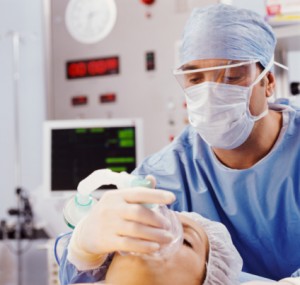
Plastic surgery has become an increasingingly common practice in western and affluent societies. Spending hundreds to thousands of dollars can alter the appearance of humans in dramatic ways. The advancements in science and medical procedures have allowed plastic surgery to be portrayed as having moderate to minimal risks for patient. In addition, over the years people tend to regard medical surgery as having fewer complications than the previous years. Despite the superb medical improvements   the possibility of danger to the patient and liability of the doctor/hospital are still very significant.  Anesthesia awareness is rare but it is possible for anyone to experience this traumatic ordeal. This occurrence poses a threat to anyone who undergoes plastic surgery or any other type of medical procedure involving anesthesia.

Anesthesia awareness occurs when a patient wakes up during surgery.  The individual’s body is in a state of stagnation but their mind is still cognizant. The patient’s body is under the influence of powerful anesthesia medications but the mind is attentive to its surroundings and the procedure being performed. Although this state occurs at the administration of the drug, anesthesia induces a separation between mind and body. The Cartesian dualism ideology alleges that the mind and body are separate entities and anesthesia awareness depicts this notion. The body is heavily sedated by anesthesia; therefore, the body is constrained by the physical science of medicine but the mind remains cognitive and free from the effects of the drug.

After further examination of the Cartesian ideology, a new theory should emerge encompassing aspects of both the Holistic and Cartesian dogma. The Cartesian phenomenon brings forth fundamental questions regarding the essence of the human body. Is the mind and body interlinked with one another or, are these two separate entities independent from one another? During the course of our class, Unruly Bodies, I have struggled with this vital question. Answering this question is problematic because there are several events that would be categorized as Holistic Embodiment, a strong alliance between the self and the body. One such example of holistic embodiment is self-esteem being linked to our physical appearance.  Anesthesia awareness is one example of Cartesian Dualism. I believe both ideologies are correct and should co -exist for different scenarios the body can be placed in and experience.  Perhaps a new ideology should be studied in mainstream literature which would include principles from both of these ideologies.

Sharing the Experience? The Menstruation Machine.

Image

To the phenotypical male, menstruation will always be a mystery that we will never experience.  Or is it?

Growing up as a boy, the only information I received about menstruation was by eavesdropping on girls whispering to each other, or the odd incomprehensible schoolyard insults about PMS.  Television provided images of pads (with wings!) that women were supposed to wear in order to catch an unnaturally blue liquid, but no indication of where those pads went, or what that odd liquid actually was. Sitcoms taught men to just stay out of the way during “that time of the month,” lest all hell break loose.  It wasn’t until many years later, when I screwed up my courage and started to ask questions of my partner, that I was able to come to understand what happened.  Sort of. I mean, I could be sympathetic, but how can one be empathetic of a bodily process you can never experience?

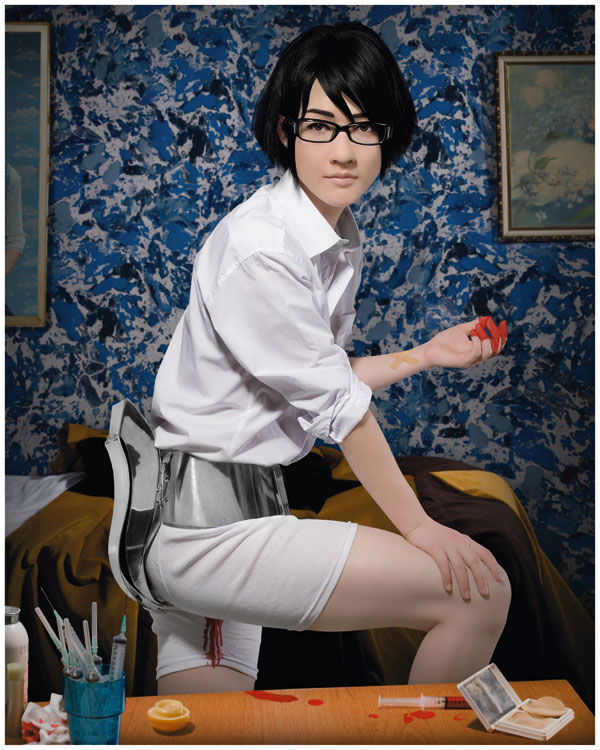
Performance artist Sputniko! (aka Hiromi Ozaki) seems to have developed a solution of sorts to this conundrum.  The Menstruation Machine, a gleaming chrome device that straps to the abdomen, is meant to simulate menstruation for those who would not otherwise experience it.  Prior to putting it on, a vial inside the machine is filled with the wearer’s own blood.  Once on, the strap around the abdomen simulates cramps, and the vial inside slowly drips blood into the wearer’s underwear.  Sputniko! created a music video of Takashi, a drag performer, wearing the machine out on the town and experiencing cramps and bleeding:

On the surface, this seems like a really interesting opportunity for someone who doesn’t menstruate (whatever their gender identity) to experience what goes on during this part of the menstrual cycle.  But in the end, it is just a simulation, and like all simulations, it can be stopped.  And it has limitations- it does not simulate the anxiety of a late period, or account for variations in severity over time.

Obviously, Sputniko! created this as an art piece to stimulate discussion.  Can such a machine be used to bring about empathy in those who don’t menstruate? Or would it create a sort of false empathy because the experience of menstruation is a fully embodied, ongoing experience? I find myself sort of in-between these two stances. What do you think?

Bodies that bleed

The crucifixion of Jesus have been painted for decades. But for some reason they all look the same. He has little to no blood and has a halo that surrounds his head. Different artist my add his mother or other disciples but the amount of blood is little or none. Now this is a quite interesting depiction when from the 39 stripes on his back, the nails in his has and feet and not to mention the crown of thorns on his head one would think there would be more blood. But is we compare a picture like this: now if you would compare this typical portrayal of Jesu to the most recent depiction done by Mel Gibson and the Passion Of Christ  in this youtube clip (start watching from 2:10-4:05… be advised it is very bloody. The movie is R rated) http://youtu.be/G52Ejcf2qu8

So my question is why did earlier depictions of Jesus show Him as barely having a scratch on Him what that depiction is unrealistic. The whips they had were adorned with nails. So the nails on the whips went in his skin and then ripped off his flesh. Not only that but to make sure He was dead they pierced His side with a spear so that blood came gushing out. But society has it that what is on the inside of the body must remain on the inside. The that raises the question is there an inward and outside part of the body? Because I thought they were one in the same. But the parts of the body that we can not see should remain unseen. As soon there is a breach between the seen and unseen there is a problem. Heaven forbid we sneeze or leak and by all means possible defiantly do not bleed. We get cuts and bruised but of course we have bandaids to cover it up. And then heaven forbid we talk about females that might bleed five times a month. But don’t worry there are ways of hiding that too. So please do not bleed because that makes you human and we al know society basically wants us to be robots.