Lavender Menace

Body Comfort

I can’t remember the last time I truly felt comfortable in my body. I’ve always had a lot of issues with how I looked and how my body was. I was very skinny in my early years in elementary school where I did Tae Kwon do which had a lot of conditioning and exercise that kept me “in shape”. After that, middle school and quarantine were spent sitting in a chair for what felt like days on end just eating and eating. I never even realized it until someone mentioned it offhandedly and I looked down and didn’t like what I saw. One of the quotes that really stood out to me from Roxane Gay’s “My Body is A Cage of my Own Making” is when they say “Feeling comfortable in my body isn’t entirely about beauty standards. It’s about how I feel in my skin and bones”. After gaining a lot of weight into high school, my body ached. Everything was slower, I felt like my feet were so heavy and every step I took hit the floor harder than I wanted it to. With activities, I started to feel better about myself and my body, losing the weight that I had put on before but injuries riddled my life until I was practically forced to quit. See, I’m hyper flexible but what they don’t tell you about hyper flexibility is that it just means you can be comfortable in a position that puts your body at risk of injuring itself. At every moment, I was either not happy with how my skin folded over itself and how I looked in the mirror or not happy that I couldn’t do any more because of my injuries. At one of the meets, I was slammed so hard on the ground that my lower back muscles spasmed and I was couch ridden for two days. It was getting harder and harder to become comfortable in my own skin. I never even realized that at the end of the day, as hard as I worked and worked and overworked my body into the ground, I was never going to be happy.

I trapped myself in this cycle of hating my body so I try and work until I’m finally happy until my body gave up on me and then I hated it again. I like to think that I’ve finally learned how to accept and love my body but to be honest, It’s still a process for me. I still wake up and look in the mirror to see my progress and I still always skip breakfast, even if it’s bad for me. Until I finally free myself and love my body the way that it is, I will always look in that mirror hoping for this perfect body that I don’t even know if I can attain. Day by day, I will work towards loving myself and my body but until then, breakfast is overrated and it being the most important meal of the day is a lie.

Hunger strike for the evening

A hunger strike — what is it exactly? According to Google, it is “a prolonged refusal to eat, carried out as a protest by a prisoner.” I find the whole concept of a hunger strike very interesting. Why would we, as humans, intentionally refuse to eat as a form of persuasion or protest? At first, it seems strange, but maybe it’s not as unusual as we think.

Think back to when we were kids. Have you ever had a moment when your parents said, “You can’t leave the table until you finish your food”? That used to happen to me all the time, and I can confidently say that I would stand my ground. I’d sit at the table for as long as it took, not taking a single bite until my parents agreed to let me eat something I made for myself.

Now, let’s go back to the definition. The first part mentions a “prolonged” period of time — would an evening be considered prolonged? Probably not. And the second part mentions a “prisoner.” Would I be considered one? In a way, maybe. I wasn’t locked in a cell, but being unable to leave the dinner table could feel like a small form of imprisonment, especially since I didn’t want to face the consequences of disobeying my parents.

So, considering these two factors, I wouldn’t call an evening of childhood stubbornness a hunger strike. However, this small example might help us understand something deeper about human nature. Even as children, we use our bodies — in this case, refusing to eat — as a way to express resistance and assert control when we feel powerless. On a larger scale, hunger strikes work the same way: they become a form of protest when words or actions no longer seem enough to make change.

Taking What’s Mine

Under the First Amendment, we have the right to protest, so why is it that when we do, it’s just seen as an annoyance? Why do they believe that some bodies don’t have the right to form one big body of people? The truth of the matter is that they feel we don’t belong. The biggest protests known to America have been over civil rights, the rights to just be seen as human and nothing less. people felt as if those bodies didn’t belong on their streets and sidewalks. How dare our bodies occupy space reserved for theirs?   People will scare you from your position, run you out with fear and violence. You must remember that the reason you are there is for bodies like yours no longer have to run in fear, but stand in comfort. They feel as if their space is being taken away when, in reality, they must realize that it is meant to be shared. The earth belongs to no one and everyone. It is our right to take up that space and even hold more than what is needed for our bodies to allow more to stand with us. Every time we subject ourselves to the world of protests, the better the chances for the children of tomorrow to not have to. We all once had that fire in us when we were children ourselves. The fight we gave to our parents when we refused to eat dinner,  and the rage-filled letters we slipped under doors, all show the fight inside. When we relearn how to unlock it, we regain our wonder and imagination, the imagination of what this world could be if we all stood together in unity. In everything you do, remember you are deserving of the space you use. Do not shrink yourself, do not move over, own it. This can be exercised in your daily life by the way you walk and talk, be bold and brave. You have the right to exist, don’t let anyone tell you otherwise.

Black Disability (A Short Poem)

My Black disability ain’t about ability 

My Black disability is about your perception

You see my blackness first then get to offending me

You feel my disability and use it like a weapon

The diss ability I carry ‘round like a gun

Shaming myself for slowness of thought

If I could transmit my body to another one

I’d do it but still I’d feel lost

My Black disability ain’t about ability 

But you sure make it seem like it is

Crip Camp Reaction

A image of the Crip camp, a disability revolution Netflix documentary there is an African-American man holding a guitar while holding onto a wheelchair with a white boy in it. They are standing on what looks to be a dirt road with buildings behind him and trees. They both look really happy. They are smiling.

Watching Crip Camp honestly had me sitting there like… wow. I had no idea any of this even happened. I didn’t know a place like Crip Camp existed, and I definitely didn’t know how much the disability community had to fight just to have basic rights. The camp itself was actually beautiful to me having kids and adults come from all over, with different disabilities finally getting to to be able to just live life. No overprotective parents hovering, no being treated like they were made of glass, no feeling like they were “different” in a bad way. They finally got to have what everyone else calls a “normal” experience, which is crazy because it shouldn’t have taken a whole camp for that to happen.

And honestly, it kind of bothers me that I had never heard about this before. In school we always learned about the civil rights movement, the women’s movement, all these big historical moments happening around the same time but the disability movement is it really talked about.  It’s like because so many other movements were happening, theirs just got pushed to the back sort of being pushed as not important as the other movements. Fact that it’s not true they were fighting for their rights, equality, and accessibility just like everyone else. And that just leads me to the question of why they don’t talk about this movement.

What hit me the hardest is how far they had to go. Some of them were starving themselves, camping out in a government building for weeks even though some of them needed home aides or medical help. But you know what the government still ignored them. All they wanted were things like being able to enter a building or ride public transportation things that can be simply resolved yet they didn’t want to spend extra money to have all these changes made. It just goes to really show how  trashy our government is how are you supposed to be for the people when you’re not really for the people.

The wildest part is these are recent changes that took longer to happen in the women’s movement and the civil rights movement the ADA was passed not to long ago it makes me mad to think a powerful movement like this is being ignored and it just reminds me of the quote that I wrote down which is” You can pass a law but until you change society’s attitudes that law won’t mean anything” and I really like this quote because I feel like it it sort of means what is still happening today yeah they have these laws but society’s attitude hasn’t changed. I feel like since these laws have happened it still feels as though they try to shut people with disabilities out.

But this documentary opened my eyes. I feel like more people need to see it this should be shown in high school, in history classes. Because this isn’t some small side story it’s real history that deserves attention. I really enjoyed the documentary, and it made me think a lot about how we still don’t talk about it enough. It really made me feel like why did they have to fight this hard for rights they should’ve had from the beginning? And why did I have to wait until now to learn about it?

“I finna be in the pit”

I had an experience recently that I really wanted to write about for this post so forgive me if my connections to the readings are a bit of a reach. On November 1st, I took my girlfriend, Madison, to see Sabrina Carpenter at Madison Square Garden for her birthday and while it was like the best night ever, I noticed a lot about how the people around us were using their bodies.

In Roxanne Gay’s ‘My body is a cage of my own making’ she writes, “I am, perhaps, self-obsessed beyond measure. No matter where I am, I wonder about where I stand and how I look…I am the fattest person. This is a constant refrain and I cannot escape it.” When we were assigned to read this for class, I definitely related to constantly being aware of how your body moves and what it looks like and in Madison Square Garden, a place that holds thousands of people, I was feeling it a little extra heavy. I know realistically that I was not the biggest person in that audience, but as I was standing there, it felt like everyone around me was aware of how much space I was taking up. This was not made better by the fact that I was holding a tote bag carrying the merch we purchased on my shoulder.

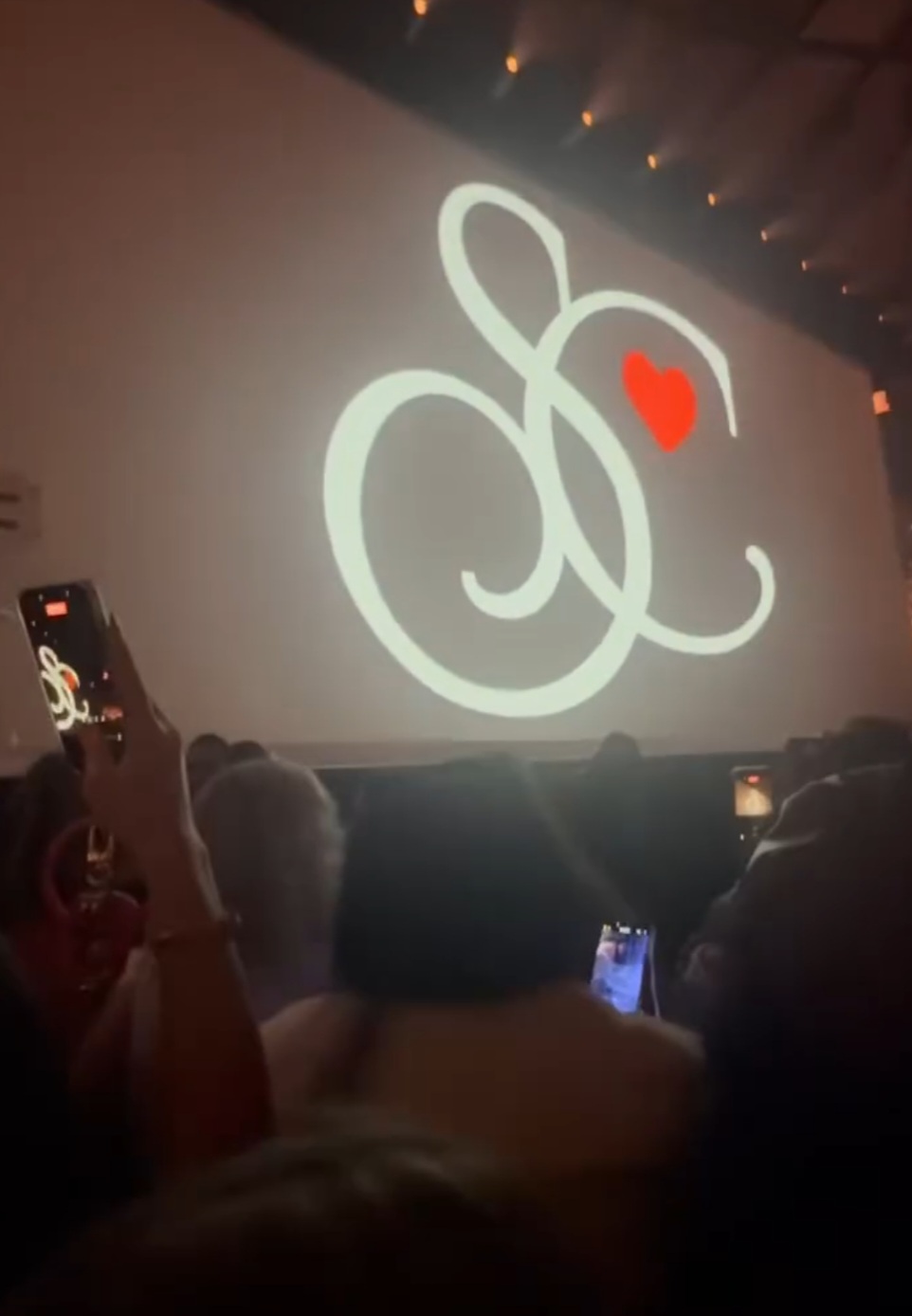
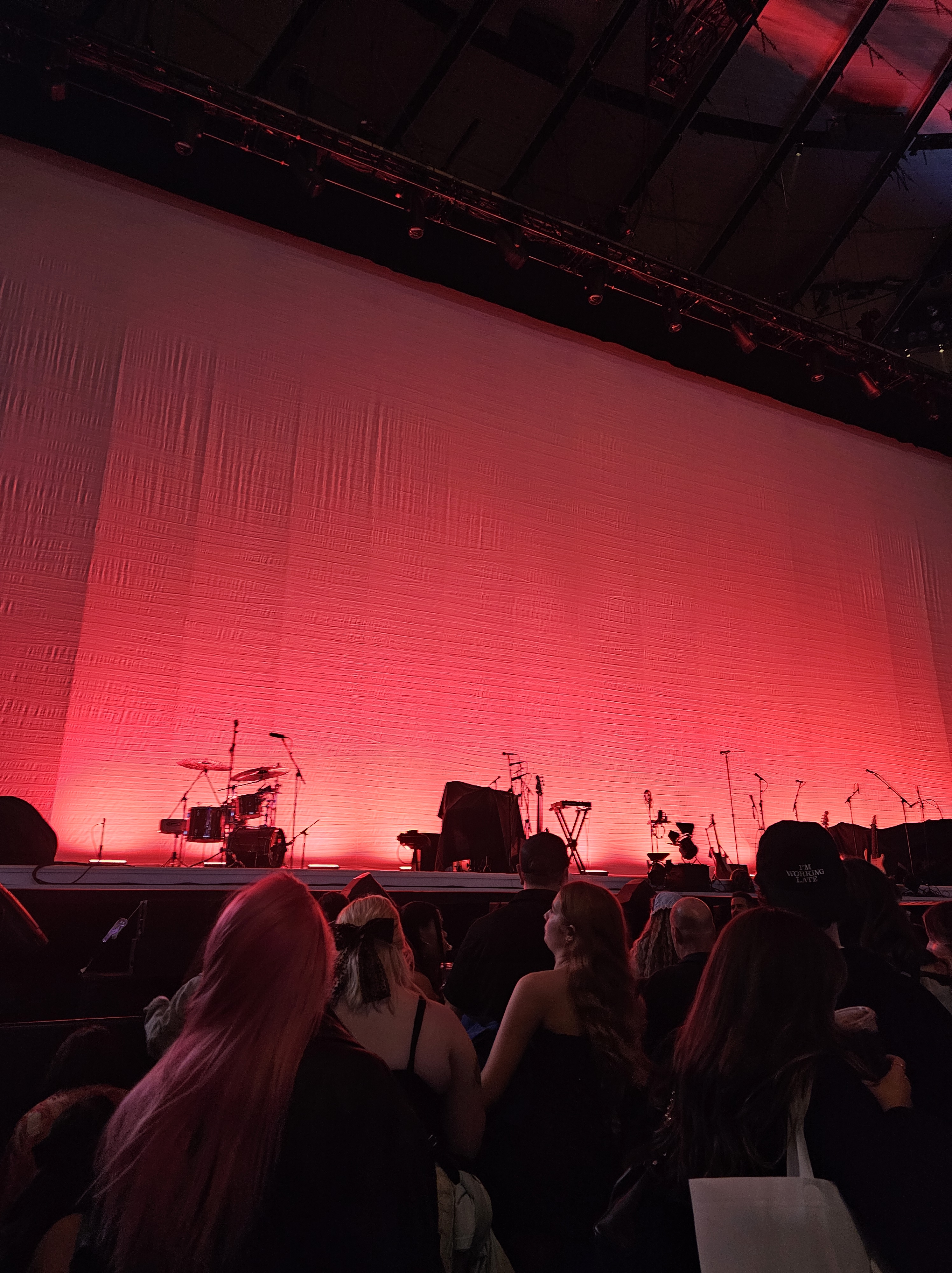
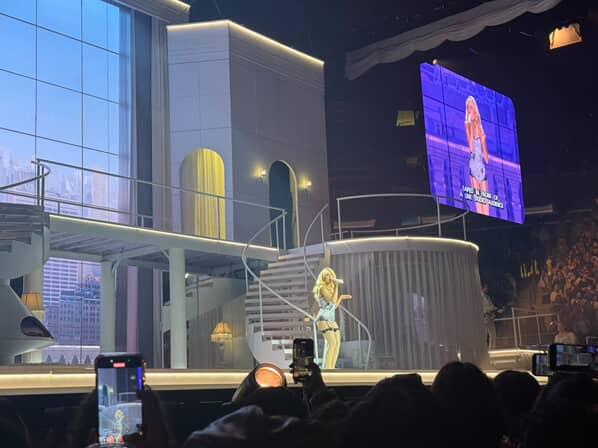
Everything seemed pretty much fine when the opening performers were on stage. My girlfriend and I had our space and were enjoying the show. Then, however, Olivia Dean exits the stage and a large ‘SC’ appears on the big screen on the stage. Sabrina Carpenter is about to come out and people are ecstatic. All of a sudden, everyone around us (for context, we were in the pit) is pushing and shoving their ways past us to get closer to the stage, seemingly not realizing that there is not enough space for the matter of their body to take up. It’s a little difficult to tell, but the pictures below show where we were while the openers were performing vs when Sabrina came out.

Now, I don’t think all of these people are just selfish scum of the earth. I understand that they were excited to see this person that they idolize so much. As I was standing there, still waiting for the main event to start, I began to think about how people desire physical proximity to the people they admire. For me, just seeing her up there on the stage was enough to conceptualize that she is a real person. I am left with the question of what is it about celebrity that makes one so desirable to simply being close to? Why did all of these 14-year-old girls feel so called to force themselves in front of Madison and I and why did they feel that they had a more of a right to be close to her than us?

Our view before the show started.
Our view after Sabrina came out.

The double edged Word

Don’t eat. Don’t drink. Starve. 

Don’t fight back. Sit there. Take it

protest. 

Break windows. Throw fire. Stand up

March around.  Yell out. Break rules 

PROTEST.

Same word, different meaning. One vs the other yet still the same

Working towards different ends and starting from the same beginnings yet different.  

Black lives matter 

     All lives matter

My body My choice 

       Their body their life 

No justice no peace 

      Law and Order 

Always a double edged sword that’s never dull.

Never a solution to what’s always there.  

Two sides of the same scream.

Both believe they’re saving the world.

Both afraid of being forgotten.

Weaponsmithing 101

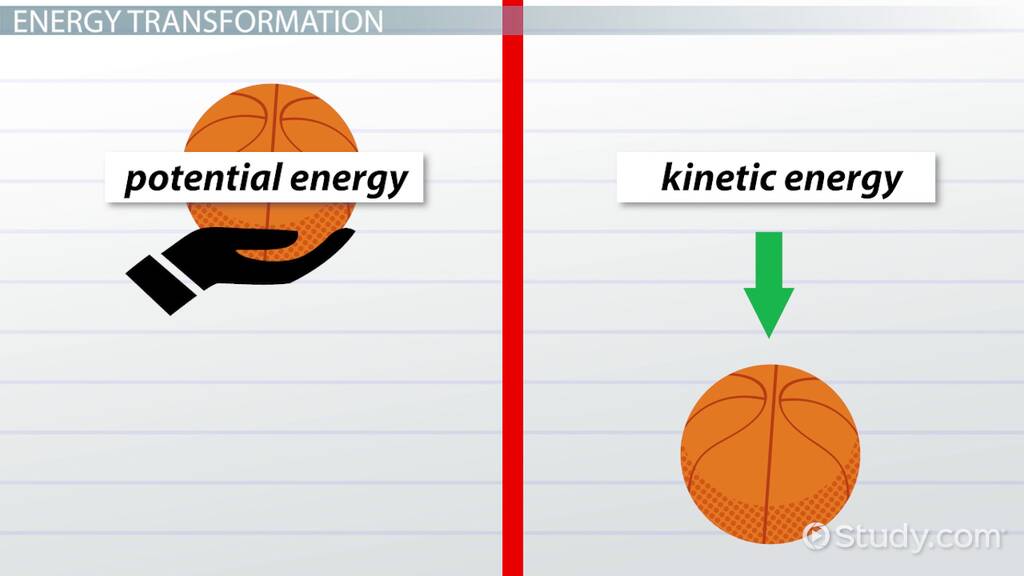
Throughout our class discussions about various communities using their bodies for change, I got flashbacks to middle school science class when I first learned about potential and kinetic energy. I think the thing that makes non-violent protests so powerful is that they mirror the concept of potential energy. Potential energy is defined as “the stored energy an object has due to its position, state, or composition.” The part of the definition regarding position is what stuck out to me. For example, with the Susan Foster Reading, and how we learned about various social justice movements, particularly the lunch counter sit ins. During these sit-ins, the activists weaponized the perceived kinetic energy that the media places on the black community, that they always lash out and are always violent. With these sit-ins, they flipped that media narrative on its head by weaponizing the potential energy and power that their bodies had. I think it is so important to note how non violent protests in general tips the scales in favor of marginalized groups, such as the black community, LGBTQ+ community, disabled community, incarcerated people, and anyone whose power has been stripped away from them because of their position in society, I am in no way saying that violent protests do not also tip the scales as well, but oftentimes these communities have to resort to non violent protests because they cannot afford to further or reinforce any sort of negative sterotypes pushed onto their community.

Protesting In Antici….pation

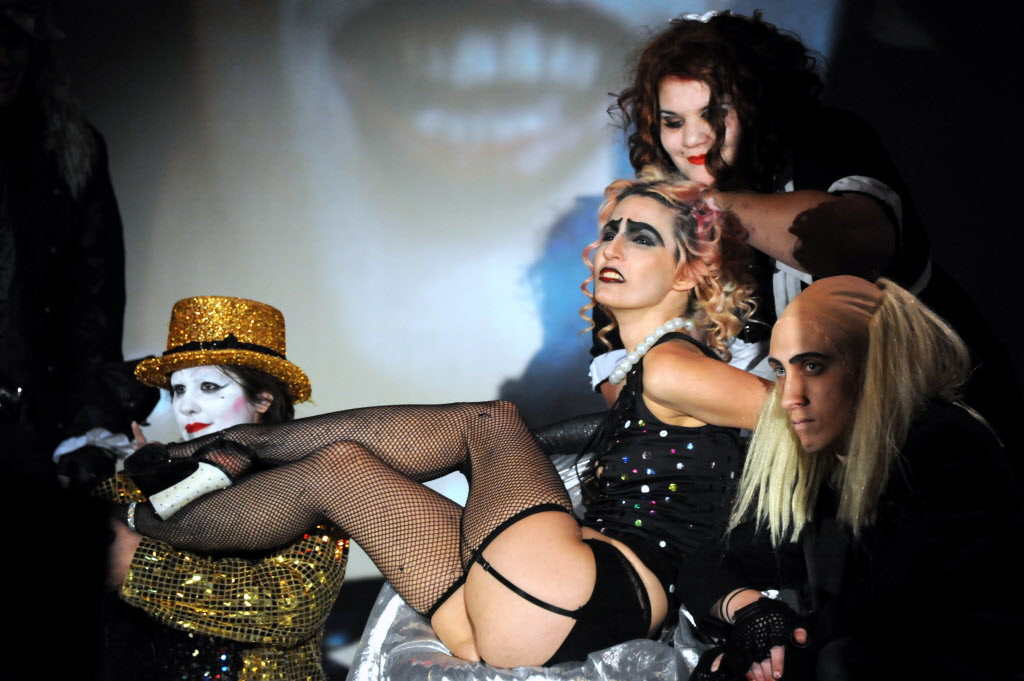
Keely Sherpinskas as Dr. Frank N. Furter performs with Riff Raff and Magenta at the showing of The Rocky Horror Picture Show at Lakewood Theater in Dallas, TX on October 25, 2013. (Alexandra Olivia/ Special Contributor)

After watching Crip Camp there was a scene with a preformer with cerebral palsy preforming in what looked to be a shadow cast of rocky horror (although they could’ve just been singing the one song) it made me start to think about theatre casting version shadow cast casting. 

When you see a theatrical show often the actors are beautiful able bodied people. Who is allowed to play what role is highly gate kept and usually based off of the physical appearance of the performer. 

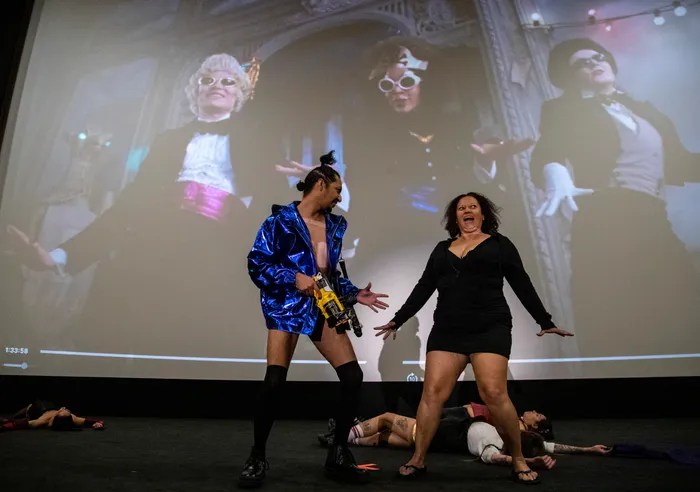
However shadow casts aren’t kept to that same standard. For those who don’t know a shadow cast is a performance in which a movie is being projected in the back and actors mouth along and do the movements of their parts in front, usually adding in their own gags or jokes. In a shadow cast, anyone can play any role. Regardless of weight, race, disabilities, or even sometimes gender expression. 

This practice started with the rocky horror picture show in the 80s but nowadays plenty of cult classic films have shadow casts such as Refer Madness or The Room. 

Rocky Horror is a gem of it’s time. The plot line follows a cast of queer and gender nonconforming characters through one strange night. Throughout the years of shadow casts it became known as a safe place for anyone who lived outside of the norms. It became a meeting place for those who didn’t have or didn’t feel safe going to gay bars in their area. Because the bar for entry was so low, a lot of people were able to find and explore themselves here. 

There are a lot of reasons why Rocky was so successful but the biggest one was that it was the community that it built. A big part of these shows became shouting things out at the screen (Statler and Waldorf style) to make each other laugh at different things each week. 

They might not have realized it but a laugh is a powerful thing. They connect us. 

A laugh can help us feel less alone and more willing to fight for each other. 

Over the years I have been to many Rocky Horror Shadow casts and let me tell you there’s nothing like it. Some of them are better than others so stay safe if you do choose to go, but no matter what you will laugh, you will feel weird, and you’ll have some fun memories.