Fear Of Failure

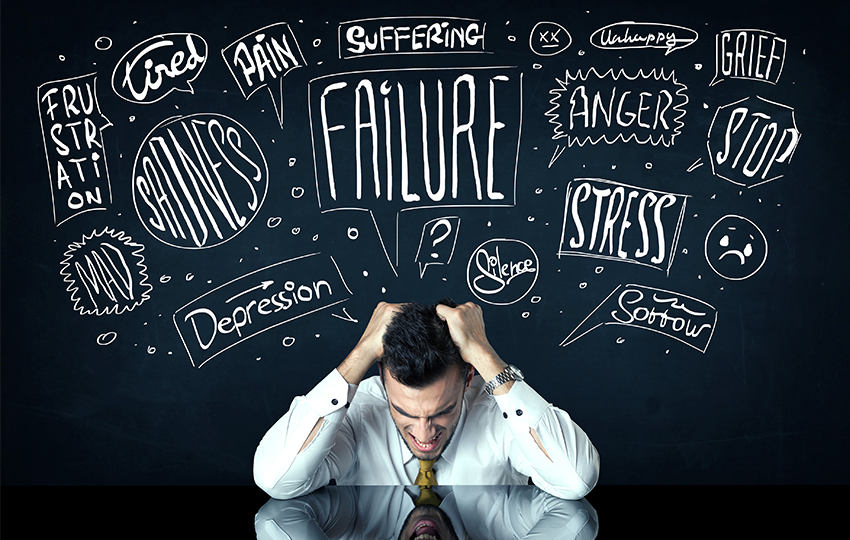
As a child I always had a fear of failure. Coming from a family that didn’t have much early on, I was conditioned to work hard towards my goals because of the expectations set above me. My parents have always been hard working thus the same teachings and conditions were set on me. I like to think of it as a hustler’s mentality. People of color in this country are often more challenged by society as a whole, thus my parents were very much strict and disciplined early on like some if not most foreign households. Their experiences as people of color molded them to be of hard-working class that caused them to pass down those same ethics and beliefs of struggle and success down to me because of societal pressures, borderline phenomenology.  

They held me to high standards that made me feel like failure wasn’t an option. Back then I couldn’t afford bad grades or get in trouble because there would be some clear consequences which at that time made me feel confined in a box because I couldn’t just slack off and what not like other people who were more privileged could, especially with the pressures and constant distractions of society back then. That alongside with personal issues I had going for me at the time, led to a lot of pent-up frustration causing me to look a different way, act a different way (Nonchalant etc.) and think the world was against me because I had too many factors going against my favor (intentionality). Wouldn’t say my story is just like everyone else’s but it is relatable. Furthermore, I was always taught to go hard or go home, so that’s what I did with everything, fights, arguments, school, relationships, jobs etc. In the end as an individual, my experiences (Phenomenology) led by this social structure molded me to have thick skin to the point where nothing really affects me anymore, which is relatable to a lot of men and how they are programmed to physically and mentally endure certain trials and tribulations.

For me it all reverts back to my fear of failure, weather it’s not getting the right grades, having test anxiety, not be an outstanding individual, not being the best that I could be, being ignorant towards a lot of things and other stuff that this society brings and faults that other men might not want to be able to express, which now leads me to strive to be the best that I can be. For me a lot of things have changed during my years, I’m more of an open-minded person now than I was before, less ignorant & more conscious; just better overall as I continue to grow. I sympathize with people going through things now a days to the point where so far, I’ve had like seven people (male & female) tell me personally that I should be a therapist. It puts a smile on my face every time I hear that because who would of thought that someone like me could feel for and be integral in someone else’s struggles. I’ve always been aware of people while having good senses to read people and help guide them through situations as I get satisfaction from motivating and uplifting people.
Finding Your Voice as an Introvert

Do I really have the loudest mind?

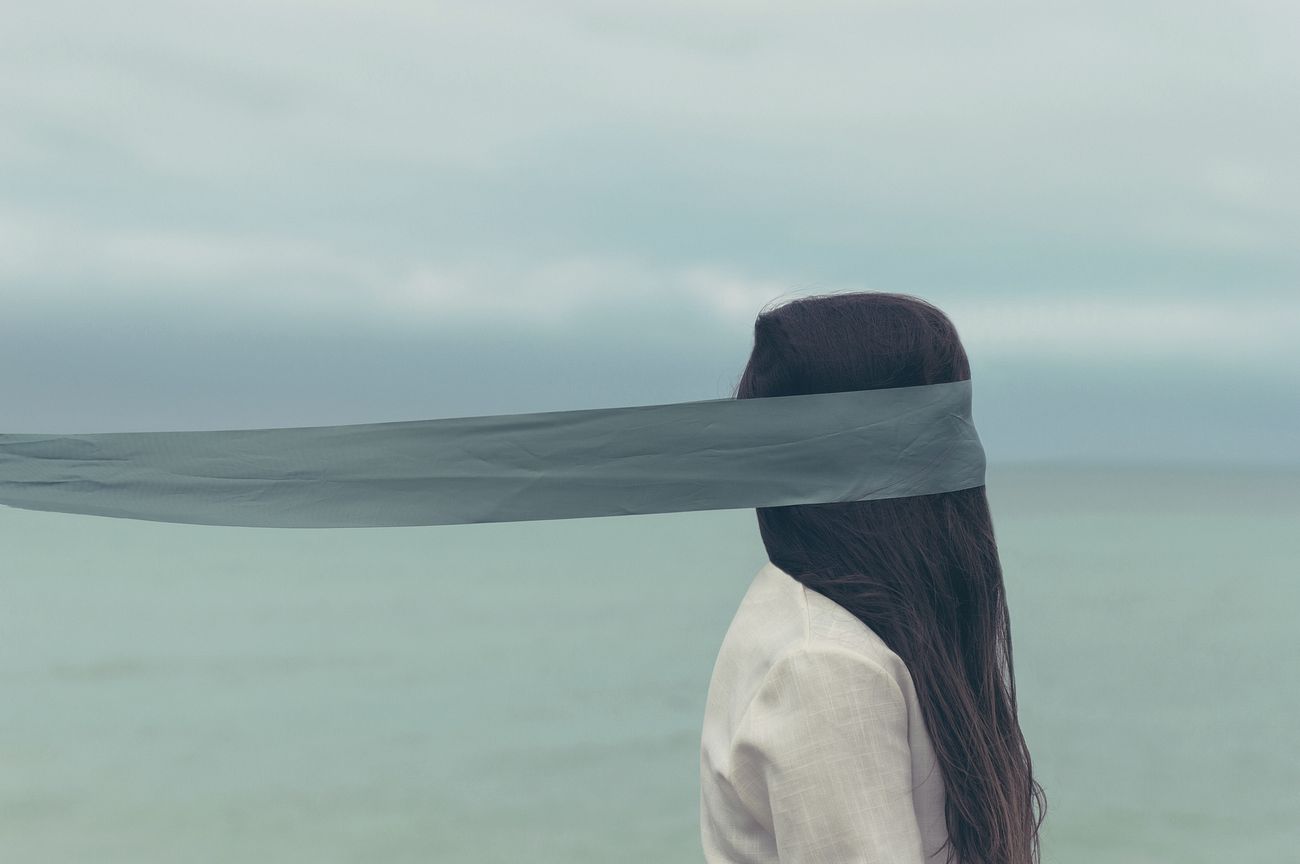
As an introvert, navigating conflicts and hurt emotions can be tough. For the longest time, I handled such situations in a very different way, withdrawing and cutting off communication with the person who had hurt me. I often blamed myself for the situation, making it even harder for me to confront the person who had hurt me. However, I soon realized that this way of handling hurtful situations was not healthy or sustainable. If I didn’t express how I felt, and instead held onto those feelings, it could lead to anxiety, depression, and stress. It was crucial for me to give myself permission to feel and process my emotions in a healthy way.

Discovering my voice as I journey ahead ………!

While it was uncomfortable, I began to approach situations with clarity, trying to be clear and direct about how I felt and why. It can be challenging to confront someone who has hurt you, but it’s important to remind yourself that in doing so, it can be a healthy and constructive way to resolve conflicts. I learned to stay calm and focused during difficult conversations, so that I could maintain a respectful and constructive dialogue.

By being open to feedback and listening to the other person’s perspective, I found it helpful in promoting understanding, which indeed led to positive resolutions. Sometimes, however, the person’s behavior continued to be hurtful or harmful, and I found it important to set boundaries or distance myself from the relationship to take care of my mental health. It took time, but I learned to prioritize my well-being and communicate my needs effectively.

I finally found that it was okay to make mistakes, approach situations with patience and forgiveness, and navigate my relationships and emotions as an introvert. Ultimately, expressing my emotions and talking to the person who had hurt me, while difficult, led to positive outcomes and improved my relationships.

As an introvert, it’s normal to have difficulty navigating conflicts and hurtful emotions. But with practice, expressing emotions and processing feelings in a healthy way can bring great positive effects to our lives. By giving ourselves permission to feel, reaching out for support, and approaching difficult conversations with clarity and focus, we can improve our relationships and promote our mental health and well-being.

Affirmative Action is Gone and it’s White Supremacy’s Fault

I am not going to lie. I did not know what to write about for this blog post. We discussed race, phenomenology, and the relationship between other races and Black people. The term racial triangulation was tossed into the conversation, and I mentioned something about affirmative action. Dr. Kate had said something to the effect of “That is a great blog post,” so here I am. Welcome to my book report about how racial triangulation is to blame for why the Supreme Court ended affirmative action. 

“Racial triangulation” was coined by Dr. Claire Jean Kim, an American political scientist. I will heavily rely on her journal, “The Racial Triangulation of Asian Americans,” for this post’s majority, if not all. Racial triangulation “occurs by means of two types of simultaneous, linked processes: (1) processes of ‘relative valorization,’ whereby dominant group A (Whites) valorizes subordinate group B (Asian Americans) relative to subordinate group C (Blacks) on cultural and/or racial grounds to dominate both groups, but especially the latter, and (2) processes of ‘civic ostracize’ them from the body politic and civic membership” (Kim, 1999, p. 107). White supremacism makes the stereotypes and societal standings for both Black and Asian people, then pit each community against the other. Most importantly, white people see “each racial group as a fixed cultural-biological entity…” (Kim, 1999, p. 109), or these stereotypes follow each racial group and will never change. Before the Civil War, Chinese immigrants in California were not subjected to slavery so that California could be a free state in the Union but were seen as a source of cheap and plentiful labor. Asian Americans were seen as temporary guests and not citizens, meaning they were not entitled to a political opinion. They were subjected to the same discrimination as black people in California. However, racial discrimination against Asian Americans was not enforced consistently, and they were seen as having a culture and intelligence that Black people did not. As workers, Asian Americans are more appealing because they are more controllable and less demanding than black people. For these reasons, Asian Americans were seen as better than Black people but not good enough for White people.

But what does this have to do with affirmative action? After the Civil Rights Movement, schools had to integrate, and colorblindness was how to deal with race. In reality, colorblindness is just a way to mask the current racial inequity and continue white supremacy. Instead of using biology to justify racism, white supremacy insisted that “certain cultures” are better at leading society than others. Moreover, because Asian people are seen as having some respectable culture, they become the model minority, something others should look up to but never good enough to be “White.” In the 1980s, Asian American application rates to Ivy League schools increased, but acceptance rates did not. Asian Americans claim schools are only meeting their racial quotas and preserving their schools’ traditional whiteness. White conservatives took the momentum against affirmative action. They twisted the narrative: affirmative action turned into a program that benefited Black and Brown students and unfairly discriminated against Asian American students. Thus, it turned into a Black and Asian issue; while White conservatives side with Asian Americans against black demands, they can appear as sticking up for what is right and un-racially motivated. 

I guess my point is that nothing is unintentional. That everything happens exactly how it is designed to. In the beginning, there were two races (Black and White), and when a new third option presented itself, it fell in line with the white supremacist system.

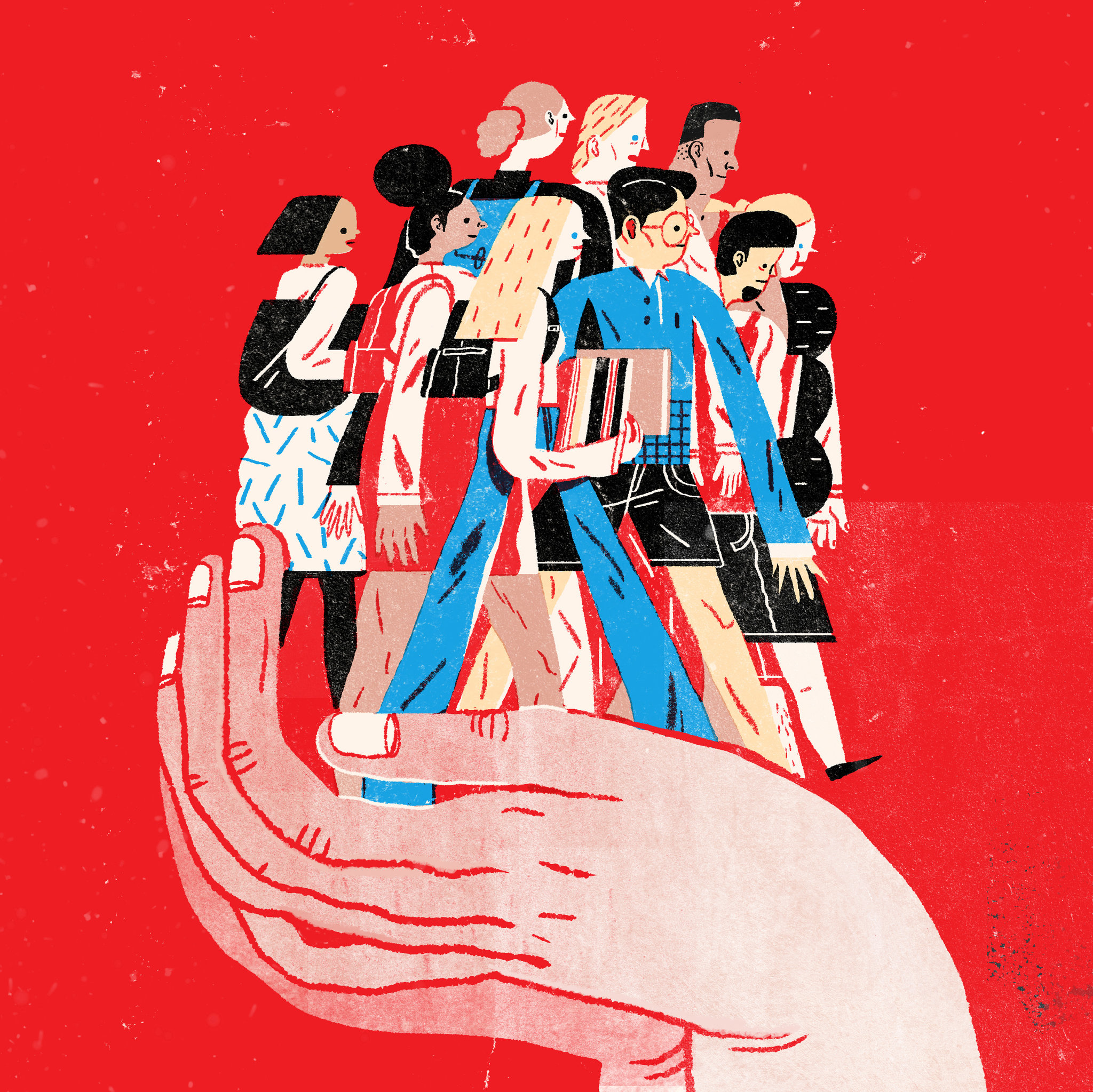
Image from the New York Times opinion piece titled "Affirmative Action Survives Again." It shows white hands holding several multiracial students carrying backpacks and holding books.

Bodies & Embodiment: how do males and females view themselves?

The body has been around since the beginning of time right? It has always been male or female, with the rare individual that has both sexes. The human body can be defined as being precious and the raw material through which we navigate the world. We use our bodies everyday for various activities such as sports, and for motions that we may take for granted such as walking, talking and breathing. When we can’t do simple tasks that we used to, it can cause a decline in the body from being disabled and depressed. The body is not only a subjective individual act, but also a political and cultural act. Growing up as young children, you noticed the different between boys and girls through their bodies and actions. Girls like to play with dolls and indoors and boys like to play with trucks and outside with dirt. Even at a young age, we are taught that boys are the better sex because they are stronger and more respected. It still rings true today, the political world, there are only 25 women in the Senate and the cultural world, the males are viewed as dominant. There are binary dualisms of the body such as gender, race and ability. The body has the ability to do whatever you want it to do. A female can do a male’s “job” and a male can do a “females” job because the body doesn’t know the difference. The humans have made the divide by shaping our understanding of our bodies through representation, medicine, beauty and fashion, religion and industries (fitness, fat loss, mindfulness, etc.) Let’s talk about the topic of beauty and fashion and what the cultural expectations are. For women, beauty is characterized as being thin, full lips, small waist and a large butt. For men, it is having muscles, being tall and athletic. For example, the BBL’s are extremely popular, even though there could be potential complications including death and every man doesn’t need to be built like a movie star (The Rock, Irdris Elba or Chris Hemsworth) to be respected. This way of thinking is setting us up for failure because it is not allowing us to value and accept our own individual bodies as they are. Also, there isn’t an in between for the transgender community or the woman that can bench press 300 lbs or the man that is a beautician. I think that self-esteem shapes our minds of what is expected of each gender, which can cause an individual to self-conscious about their body. Is it not enough that us women are viewed as sexual objects and not what our bodies can do, such as create life? The pressure is overwhelming, which sometimes can lead to body-shaming, intentional or unintentional. The men are under alot of pressure as well. For example, steroids are easy to get to and they help you to have a great amount of muscle, but the negative is not promoted as much as the positive, like as the man ages, he could develop heart issues and potentially die. There are several Pro Wrestlers that have died after years and years usage. Both females and males view their bodies as gifts, but I feel that the pressure is more on the females to look a certain way.

New Body

I woke up one day with a new body and it wasn’t the first time.

The earliest memory of my first body was when I asked my father, “if I cut myself and then bleed out, will I get smaller?” He laughed and said that it doesn’t work like that. I remember having thought long and hard before asking him this question because at 6 years old, it just made sense. Perhaps that was the first time I got a new body. Surely I had one before but I didn’t notice it but this new one I saw was too much. Too much of what exactly, I wasn’t sure yet but I knew I hoped it would shrink some to make me feel better. I kept that body for a while, probably until 8th grade right before I went to high school. Throughout that time I began to realize what I didn’t at six. That this body was too big. I was always the tallest person amongst my peers and sometimes I was the fattest too. In middle school I found a way to cope with these feelings of taking up too much space by making that body the punch line in jokes. I saw how others who had bodies like mine were treated and figured it was better to be the one to take charge of my own disparagement rather than be on the receiving end. When we learned about whales having blubber in science class, some students started naming classmates who had “blubber” (i.e. were fat) and I quickly decided that it would be funny to call the fat on my arms blubber and I would shake it to make my friends laugh. For me, it was better for that body to be laughing, not crying even though it felt the same inside.

I got a new body the day I was helping my older sister move into her college dorm and she commented on the size of my butt. I was confused because we all knew to have a big butt meant you were sexy and attractive and everything this body was not. I was suddenly aware that the body didn’t look the same as when I was six but was somehow the exact same. It seemed that the body I gained that day had new forms. It was still Ugly but…? I kept that one until I was 19 years old. I grew to accept the polarizing experiences I had in that body. That body got catcalled while playing volleyball because of the spandex we wore but also was stared out because of how it looked compared to the white, thin girls who dominate the sport. I could go a day with it being the last thing anyone wanted to be around and later that same day it could be the object of someone’s desire. That desire was typically sexual and the person was likely older than me. I always thought that this body had potential but…… At 19, I hated that body. I saw myself going back to the ways of my youth by saying to people, “I’m so ugly. Aren’t I ugly? Tell my the truth, I’m ugly right?” Initially I got the responses I likely was looking for, denying my assertions and telling me no. Then one day after I went through the whole act with my sister she sighed, exasperated and said “Yes!” I think that was something I wanted to hear too. I needed validation for my feelings of hatred towards the body so many other people told me was not the ugly I saw in the mirror.

Since 19, that body changed shape a few more times but really it’s still the same. What’s really changed is how I view it. I enjoy being in this body despite constantly working to change it. This body likely has an eating disorder (LOL) but I don’t remember a time when I didn’t avoid mirrors or taking selfies so I wouldn’t have to look at it so I’m taking that as a net positive. I haven’t decided whether or not my body is my own. I thought I was getting a new body (it’s always either a “good” one or a “bad” one) every time I realized there were different ways that people were perceiving it. In reality, this body may have grown taller, changed shape, or lost and gained weight but it was the same fat Black feminine body in an anti-Black, anti-fat, and misogynistic world. This world both fetishizes and disposes of people with bodies like mine and it’s always confusing to be on the receiving end of such differing responses to it. A question that has always stuck with me in regards to our bodies and positionalities is “How can I live differently in the same world that harmed my parents when I look just like them?”

“Yes, and the body has memory. The physical carriage hauls
more than its weight. The body is the threshold across which
each objectionable call passes into consciousness— all
the unintimidated, unblinking, and unflappable resilience
does not erase the moments lived through, even as we
are eternally stupid or everlastingly optimistic, so ready to
be inside, among, a part of the games.”

Claudia Rankine, “Citizen”

How is this body my own when it holds the history of my ancestors’ first body in a new world? How can I get rid of the negative thoughts that always linger? This current body has never changed but becomes new whenever its beholder has a new use for it.

I’m hoping for just one more body but I want to see it in a new life.

Can’t wait to see your new body
Don’t be actin’ like you don’t know nobody
No body count on your new body
I’ll be the first one to hit your new body,
 woah

Audio of the lyrics I posted above. The lyrics are of just the first 30 seconds.

The Body as an Entity

There is something strange and unsettling about living within a body and at times being so keenly aware of that body, and at other times observing this thing from the outside. One moment, feeling every nerve, every joint, ever stretch and tensing of the muscles. The next, existing solely as a hypothetical. Understanding that there is a body in which you are tied, but not having any real sense of what that means.

I often struggle to feel control of my mind and body. Between chronic pain and fatigue, grueling mental stress, and an innate distrust of my own perceptions, there is no wonder why I journey through these phases of sensory overstimulation or complete dissociation. My body often feels not like a safe haven or a medium through which I can experience the world, but like a thing that I must manage and shape and drag through the day with me. To me, my body has rather become like an entity. A thing of its own, with its own experiences, goals, abilities.

Young writes, “We often experience our bodies as a fragile encumbrance, rather than the media for the enactment of our aims” in Throwing Like A Girl. And how true these observances ring for me! As a child, I had trusted my body so much. I hiked and climbed and ran and I was a gymnast, performing stunts that required so much control and trust in my body. But as I grew older, I was cautioned and held back and encouraged to be less rambunctious, to be more ladylike, to be safe, calm, quiet. I was inundated with the fears and anxieties of my mother, with the expectations of politeness from my church and school community, with the judgment from the other children at school, encouraged to become something digestable, something other than the rowdy and adventurous child that I was. I tried desperately to be what everyone wanted me to be, to be likeable, to escape from the constant deluge of opinions and rules and admonitions. I ran away into my mind, focused on school, read books, read people, became a chameleon. I stopped running, playing. Had to quit gymnastics as we moved, and never joined another sport, lost touch with my body. I became so lost, so depressed. I wasn’t myself, didn’t know who “me” was or could be, didn’t know how to find her. I was terrified of being perceived yet so vastly lonely and desperate to be seen. I didn’t know how to reconcile these opposing needs, and my brain learned how to just turn off, to walk away from it all while my body went through the motions of the day. I was not living an embodied experience, in the way that Kosut and Moore describe, or really even living at all. I simply existed.

It took me being harassed and assaulted to hit my limit, to decide that I needed to be present within my body, to be a person again, or at least try, before I really went off the deep end. An intense anger fueled me for two years as I worked to learn who I was, what I thought and believed, gave me strength to shed the skins I had grown to disguise myself, to shed the need for approval, to be willing to stand as a person outside the expectations of my parents, of my peers. It took another two years to realize that part of why I had struggled so much in the first place was that I was raised and expected to behave and think the way a neurotypical person would, but I wasn’t neurotypical. Definitely ADHD, most likely autistic, my brain functions so differently from what was seen as “normal” and when I expressed those traits it was labeled as weird or defiant or annoying. I learned to mask those traits, my body learned to turn itself off and dissociate in order to fit into the expectations of those around me. When I realized those things, I finally began to come back into my body, to feel as though it were MINE. And then the consequences of long term shut down and chronic stress began to take effect. Chronic illness struck, pain and hormones and fatigue combining to make this body that I had once trusted my enemy. I sought the things that had brought me a sense of joy and freedom and belonging in my childhood, ran back into nature. But now, I was living in a body I didn’t know, one that had changed with age and had betrayed me. I monitored myself constantly, hedging myself, not taking any risks lest I create more pain for myself. I lost my sense of wonder. Like Young, hiking across a stream was not something I could do without thinking, without planning, it was something to assess, to plan. I needed a safeguard, that branch from the tree to balance me. I had spent so long not using my strength. my balance, my physicality to exist in the world, that to do so now required energy.

I miss myself sometimes, that young girl who might have made a game of jumping from rock to rock to cross a stream, who would have climbed to the top of the pines and swayed in the wind with them, who might have sprinted across a field without fear of rolled ankles or a migraine that lasts a week. I grieve the woman I could have been without fear, without the strain of existence weighing her down, that caused her to lose herself so thoroughly in her youth. I wonder what it would be like to live fully within my body, what it would have been like to live without pain and fatigue, had I had the chance.

Going to the doctor is scary

Ever since I discovered that I could download music on my phone and listen to it whenever I’d like, I’ve been a headphones addict. Throughout middle school, I constantly listened to my favorite artists, and looking back now I’d probably be embarrassed if anyone found out who I used to listen to. Going into high school I discovered music production, and it became my main hobby. Every day after school I would work on music in some way, still listening to my headphones the whole time. After a few months I even started to make some money off of it, which was really cool for a fourteen year old. I also loved going to concerts, and an upcoming concert was enough to keep me motivated to keep going until it came up. I say all of this to say that music was my main outlet throughout my teenage years. 

About two years ago, I noticed that something was different about my ears. They started to get fatigued really quickly and would cause me a lot of pain. I also started to hear a loud ringing noise whenever it was too quiet. These things really freaked me out and I sat with them for a while without telling anybody. The worst part of my experience with hearing problems weren’t the problems themselves, but the feeling of stress. I was stressed that I would lose my hearing, that I would never experience silence again, that I wouldn’t be able to listen to music the same way again, and that it was all my fault for wearing headphones too frequently.

Eventually, I built up the courage to go to the doctor’s office for my problems. I felt so nauseous going there that I almost fainted when he started to describe what could be wrong with me. It turns out that my hearing issues weren’t caused by my headphone use at all, and they were actually related to my orthodontic work. I also finally got names for what I had been experiencing; hyperacusis and tinnitus. What I noticed was that once I went to the doctor, the worst of it was over. Even though there isn’t really a treatment, just knowing what was wrong alleviated me of much of the stress. It was then that I realized that most of my problems were mental.

My experience showed me just how much the mind and the body are connected. It also made me wish that people talked more about the other aspects of having a physical problem. I’ve never really heard people talk about how mentally taxing it can be to have a health problem and not know what it is. One positive thing that I took away from my experience was listening to ambient music. Sometimes, listening to quiet music was all that my ears could handle. I also discovered the joy of ear plugs, and got some custom made to fit my ears that are super comfortable and great at concerts.

One of my favorite ambient albums that I discovered in my time of listening to quiet music. If you have the time, check it out and put it on in the background before you sleep or when you’re doing work.
Another ambient album that I recommend for anyone who’s interested. I really like this one for studying and it got me through finals week last year.

Big Boobed

I don’t think a day goes by where I am not aware of my body. One of our readings “Throwing Like a Girl” brings up how some girls do not put their whole bodies into potion because they see their bodies as a burden, and at first I did not realize that I could relate to that. When I walk, I have to wear an uncomfortable, lined bra that holds my breasts in place. Unfortunately, my breasts move up and down when I walk and this is something I cannot change. While I like my body, I am also made aware through the stares of random men that my body is not for my eyes only. It feels even worse when I see a grown man staring at me while his wife is beside him at the grocery store.

When I was in middle school, I remember being told for the first time that I had to cover the strap of my bralette. Back then, I used to wear nude-colored bralettes because I obviously did not wear bras yet. I was told by a teacher, while walking to lunch with a friend beside me, that I had to cover my bralette strap and it was the first time I felt embarrassment from my chest. And I remember seeing my breasts as a burden from middle school to high school.

During my first couple years of high school, I developed an eating disorder and became obsessed with looking slimmer. This included wanting smaller breasts and even saying that I would get breasts reductions when I was older. Having bigger breasts made my silhouette look bigger than I would like. I was jealous that people with smaller breasts could wear whatever shirt they wanted without worrying about it fitting over their chest or showing too much cleavage and getting stares. It was not until turning 18 when I started to appreciate my body for what it was and I no longer wanted to change the body I had. I started to realize that people with different bodies have to go through different obstacles of their own. While I still get self conscious about the stares I get, I try to ignore them because at the end of the day I will wear whatever I want with the body I live in.

Held Back by my Mind Again

I myself do not identify as a cis woman, but I was born with female anatomy and that is still how the world perceived me. At the same time that the world was perceiving me, I was right there, taking in all of the experiences and learning from them. The perception others saw of me has been reflected back onto me. I say this meaning that I have been treated as a woman my whole life, treated as if I needed help, as if I were dumb, as if I was hysterical, and always that I was in the wrong. This perception and energy stays with me, even today. I doubt myself in every action I take, my biggest fear is taking up space, or being a burden. The gender roles are in fact deeply ingrained in my brain, and I find myself in these situations often.

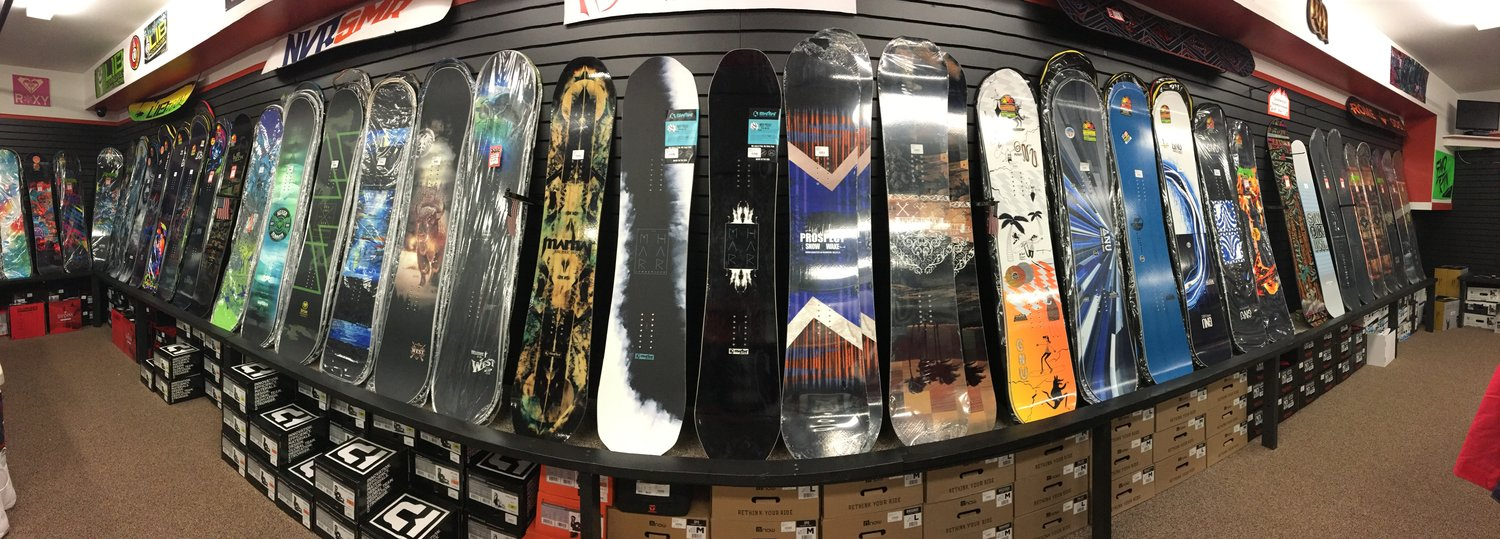
(Image by the Mothership Snowboard Shop)

The other day I was in a ski supply warehouse with my partner looking to get him a snowboard. While my partner was getting his feet measured and chatting with the man who was helping us, I just sat on a bench staring at a huge wall of snowboards. More than anything, my brain wanted to touch the boards and sift through them. I could see that there were so many different types and I wanted to feel the patterns and the differences. I also wanted to find the cutest one for my partner, obviously. But I was too afraid to touch them because I know snowboards are hundreds of dollars and I wasn’t sure if I was allowed to them. I thought if I touched them I would get yelled at or someone would tell me to stop or I would immediately break something or maybe even an alarm would go off. So I just sat there for 25 minutes. Then, as my boredom was hitting peak, our friend (he/him) came in to our joint appointment. He was 25 minutes late, had never been there before, is not even a snowboarder (he ski’s) and just started feeling up the Snowboards immediately like it was his birthright. I stood there shocked, waiting for someone to yell at him. I thought surely his entitlement is about to get slapped with reality. But no, he was right. This was a place built for him and he is there using the space as he should. I am sure I could have also done this, but my conditioning in society put a huge roadblock in my path. I saw the path that I could take to fulfill my desire, but I didn’t have the mental capacity to do it.

No matter how they identify, people who grew up AFAB are instilled with a discontinuous unity. The gender roles associated with being born as a female include; weakness, empathy, staying on the sidelines, taking up as little space as possible, thinking of others before yourself, and more. Phenomenology explains how the body and the mind are the same. The experiences of growing up like this will teach a person that they do not have the capacity to achieve their highest goals. This holds women and AFAB people back from big things like advocating for themselves and little things like sifting through snowboards.
Women have an inability to transcend the way that Men in society do.

Discovering My Hidden OCD: A Personal Odyssey of Late Diagnosis

My initial recollection of experiencing symptoms indicative of Obsessive-Compulsive Disorder (OCD) dates back to the eve of my fifth birthday. I distinctly recall experiencing distress as I grappled with the concept of aging, a concern that revolved around the perceived inevitability of losing loved ones in tandem with my own maturation. This psychological episode unfolded contemporaneously with my parents’ tumultuous divorce proceedings, marked by my father’s departure from our family home. Given my tender age of five, my cognitive faculties were ill-equipped to comprehensively process these complex emotional circumstances. Consequently, I found myself unable to rationalize the apparent loss of my father and the underlying reasons for this disruption in my familial structure. 

I experienced several recurring episodes of Obsessive-Compulsive Disorder (OCD) before ultimately deciding to seek professional help. Initially, I became preoccupied with the unwarranted fear that my hair was falling out, leading me to adopt two distinct coping mechanisms. On one hand, I would refrain from brushing my hair altogether, and on the other, I meticulously counted the hairs that would accumulate in my hairbrush every time I attempted to groom myself.

However, the predominant intrusive thought that haunted me was the persistent dread of dying, particularly in my sleep. To mitigate this fear, I developed the compulsion of staying awake until the early hours of the morning, often disregarding the necessity of waking up early. In my mind, this self-imposed vigilance was rooted in the belief that if any adverse event were to befall me, it would inevitably transpire by 3 AM.

Regrettably, these intrusive thoughts extended to include distressing visions related to harming my beloved cat, prompting me to entrust her care to my sister temporarily, as I grappled with my own well-being. Similarly, I experienced intrusive thoughts revolving around causing harm to my mother, leading me to diligently lock her bedroom door each night to prevent any potential actions stemming from these distressing thoughts.

As the severity of these OCD episodes escalated, I reached a point of profound despair, contemplating suicide. Paradoxically, the fear of dying itself served as a deterrent, rendering me unable to act on these distressing impulses. This tumultuous period underscored the urgent need for professional intervention and support to address the debilitating impact of OCD on my life.

The reason for my initial diagnosis of Generalized Anxiety Disorder (GAD), as opposed to Obsessive-Compulsive Disorder (OCD), can be attributed to a combination of factors. Firstly, at the time, I lacked a comprehensive understanding of what OCD truly entailed, leading to a profound fear that the distressing thoughts I experienced reflected reality. This fear of potential consequences, such as being institutionalized, compelled me to keep my struggles hidden.

Secondly, my compulsions did not conform to the stereotypical external behaviors often portrayed in the media or typically associated with individuals displaying Type A personalities. Instead, my compulsions primarily manifested as internal mental rituals, making them less conspicuous to others and potentially less recognizable as classic OCD symptoms.

Lastly, many healthcare professionals are not be fully aware of the complexities and varied presentations of OCD. This lack of awareness can lead to the condition being overlooked or mistaken for something else.

It was not until I reached the age of 28 that I finally received an accurate diagnosis of OCD. The moment I began to educate myself about the disorder was both bittersweet and enlightening. I experienced a profound sense of sadness for my past self, who had endured the torment of OCD without understanding it, and frustration at the prevailing misunderstandings surrounding this condition. The belated recognition of my OCD was a pivotal moment, allowing me to access appropriate treatment and support, and fostering a greater appreciation for the importance of mental health awareness and accurate diagnosis.