Visual Impairment

I have poor eyesight but I can still see. My prescription glasses are pretty strong and I know this because my friends will try on my glasses and start saying how blurry it is and “Bro you’re blind”. This is interesting because a while back I became friends with a blind person. Someone who has no vision at all and uses a white cane. Everytime I hung out with them, I was reminded of how blindness effects their life. They would put their arm through my arm so I could guide them. I went into their apartment and it was pitch black. I just stood there for a couple of seconds becaue it shocked me so much that they didn’t need the light to see, which makes sense, but not something I’m used to. They wouldn’t know if they spilled sauce outside of the plate they were eating off of. They were constantly bumping into things. They used text-to-speech option on their iPhone so Siri read everything out to them. 

This person was the one who introduced me to National Federation of the Blind (NFB). I learned about the organization last semester and they stated in their website that they are very progressive and forthright in their movement because because low expectations create obstacles between blind people and their dreams. I recommend everyone to set apart some time and read through the incredible stories and journeys the board of directors went through https://nfb.org/index.php/about-us/leadership/board-directors. Each person has a unique story and the crazy thing is, this is just a small number of stories. There are so many hardships and accomplishments that each disabled person has conquered that we don’t know about. As I read through them, I felt as though I stepped into a different world. I wish I interacted more with diverse people because nowadays, I always notice how my surroundings are inaccessible. From the words I read campus to how I walk around from point A to point B. Only through watching Crip Camp was the movement for social justice solidified in my mind. We must strive for more equality for our peers and the impaired people in our community. 
Is Getting Older Really So Bad?

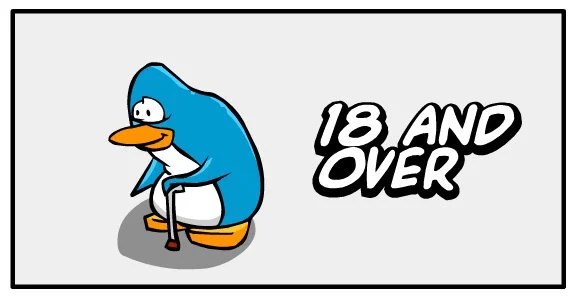
An elderly penguin from the online game "Club Penguin" leaning on a cane. Next to the penguin is text reading "18 and over"

I’m the youngest person in my extended family by ten years. I have two cousins in their thirties and when we sit together it’s not the kids’ table—it’s the everyone under sixty table. I’ve always been the outlier—the youngest one, the mixed-race one, the one who is suspiciously queer, and, of course, the one who was a sad little chronically ill child. Now I’m a trying-not-to-be-sad tall chronically ill adult! Funny how time passes.

Being at UMBC has been a shift, because suddenly, I’m one of the older people in the room in most of my classes. Everyone I went to high school with has their bachelor’s and is off pursuing their future. Hell, almost everyone I know from my first attempt at college has graduated. Adulthood is upon me.

My mom turns sixty next month, and suddenly she acts like she’s dying. She told me where she wants us to spread her ashes, she asks me which life insurance plan she should pick, she makes me the executor of my parents’ will. She complains that she has prescriptions to pick up for herself now, because she’s old and she’s dying and to age is to suffer. 

Watching her go through these motions is giving me a headache. For years I’ve stood in line at Target to pick up my prescriptions, I’ve set aside half an hour every Sunday to watch youtube and cut tiny atenolol tablets in half and put them in a weekly organizer, I’ve had to limit the kinds of activities I do in fear that maybe I’ll just keel over. My mom has never been diagnosed with a chronic illness, has never even broken a bone, hikes two hours nearly every day and has seemingly limitless energy to worry about her impending demise.

We discussed in class how autism is seen as mainly affecting children, erasing the experience of autistic adults. I think chronic illness is seen to mainly affect people as they get older, as their weary bones start to creak with the constant toil of living. And then there’s me, and every other person living in the “prime” of their life with a funky little diagnosis. Sometimes I feel like I’ve already gone through some of the mental hoops that typically come with aging—I’ve gotten used to the doctor’s visits, to the sporadic pain, to the fear of looking weak, frail, disabled. Sure, maybe it all goes downhill from here. Maybe I’m at my own absolute prime and it’s where most people would be in their fifties, at least. Somehow that makes aging seem even less scary to me.

“You’re Autistic”

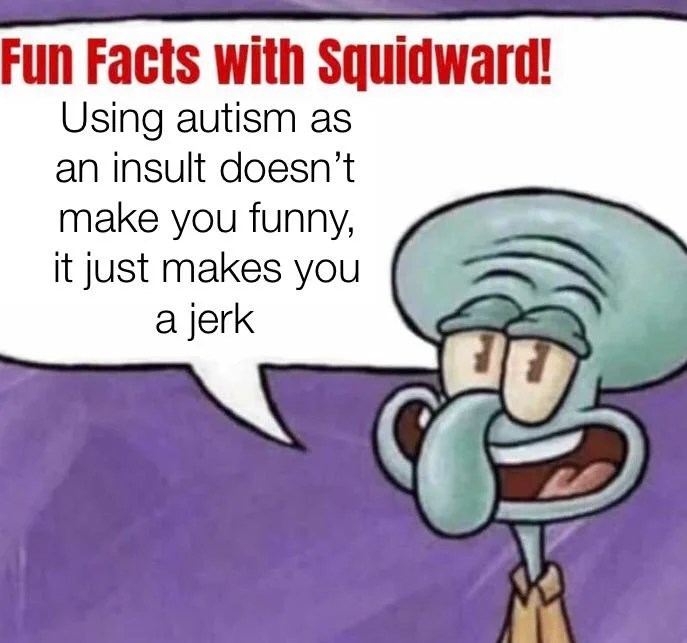
As a person who is chronically online and oftentimes playing online games, I hear many “insults” thrown around. I put quotations around insults as they should not be considered insults but oftentimes are used as such. “Insults” such as “gay” “autistic “retarded” etc. I’m not even going to get into the insults I hear as a woman playing such male-dominated games. 

The use of these words as insults is more prevalent than I’d like to think and I’m sure many of the people reading this if not all of you have heard the word “autistic” used as an insult, especially if you have ever set foot in a middle school. I feel as though the main reason this word gets thrown around so much by people, especially youth is because of desensitization to the word.  Hearing it over and over again and by your friends or even family may make one think that it isn’t that bad to say yourself, and boom ignorance is born. Although I do believe that a percentage of people who call someone autistic don’t actually intend great harm, most kids with autism are targeted by bullies so intention does not matter because these kids are being harmed.  As I said before desensitization to the word makes others believe it is okay to say, so the population of individuals who don’t understand the impact of using that word as an insult only grows larger causing more harm to the kids and adults with autism. 

You never know who you might insult with your words, silence does not equal agreement or acceptance, and oftentimes it means discomfort. You don’t want to contribute to the growing desensitization of using “autistic” as an insult. We need to be more loving, understanding, and accepting of everyone around us, not hurt people who already are having a hard time and quite frankly are just trying their best to fit in.

Continue reading

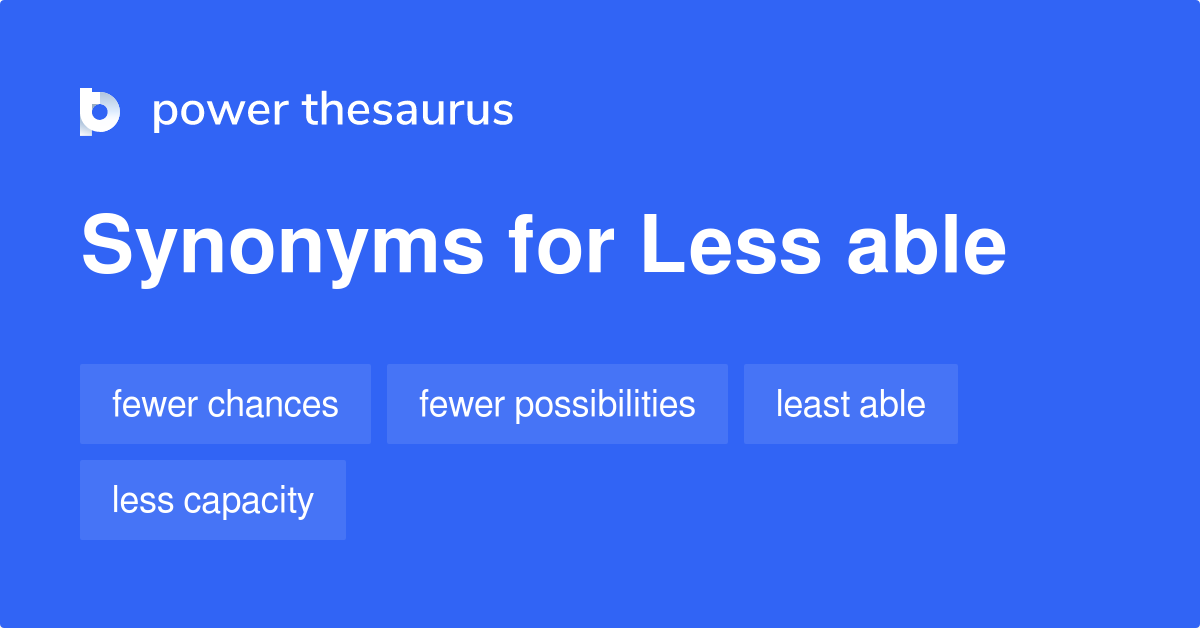
Why are some people “less able”?

https://www.powerthesaurus.org/less_able/synonyms

Here I am referring to people with disabilities/chronic illnesses. Biologically, they might have some limitations but that is not the only thing that makes them disabled. We as a society, fail to recognize their accommodations and needs are what makes them less able. They can be equally competent as anyone only if they are given the right help. For example, when people with certain limitations mess up at their workplace, they are fired. Instead of understanding them and trying to help them through the new process, we set them up for failure by not helping them succeed. This process continues and they’re never given a stable workplace where their coworkers understand their needs. They need the means to survive. Someone has to step up and be that person forging their little mistakes and training them to do better instead of giving up on them.

They are also not given the same opportunities as other people in higher education. For example, an individual with down syndrome or autism would have special teachers/caretakers at school taking care of them, guiding them through everything. But as you enter higher education, you don’t see any of that. Do we give up on them as a society? Do we think they are not able to learn? Our mindset might be setting them up for failure. If we give everyone the same opportunities and put in the effort to accommodate them as well as teach others to be mindful of their certain needs, then we can make this world a better place. We are lacking the motivation to understand from their perspective. It is not fair for them to be given up that easily when the rest of us are told to keep trying and never give up. They aren’t even given a chance.

Let’s Talk about Mental Health in South Asian Communities

“Im afraid to tell my parents”

“It’s not depression, it’s just overthinking”

“They will disown me”

“They wont get it”

Here are only a few comments I have heard from South Asian Americans in my family and social circles. Despite growing up and being reared in the United States, several of us are strongly impacted or afflicted by our family’s beliefs on mental disorder. The number of stories and times I’ve seen many girls and boys commit suicide and ingure themselves because they cant seek help for their mental health. The higher incidence of depression reported in this demographic may be attributed to a number of causes, including familial tension and anxiety. For several years, the neighborhood has battled against the stigma and unease that surround mental conditions.

Photo by Kat Smith on Pexels.com

Being a south Asian myself, I can relate to what it’s like to experience such health. Sharing sentiments can be challenging because it was unheard of in her family, which made it difficult for me to deal with her feelings. When I’m stressed or depressed, I sometimes can’t tell my parents because they won’t understand and won’t know what to say or do. When I was going through something, I wasn’t taught to express my sentiments; instead, I was taught to surpress them, even though that was the unhealthiest course of action.

South Asian immigrants are especially vulnerable to depression and related mental health problems. 24 Hindi-speaking women who had only recently immigrated to Canada were the subjects of a 2004 study that looked at the qualitative impacts of immigration on mental health. Many of the ladies surveyed agreed that they had not encountered any mental health problems in India.

Whenever anything terrible happened to me when I was a child, I rarely came to talk about it.

The brown method, however, favored silence to speech. Fearlessness is the praised way of life of a group that values perseverance, particularly once that community lives in America and is under social pressure to fit into a model minority image.

Medicine Kills

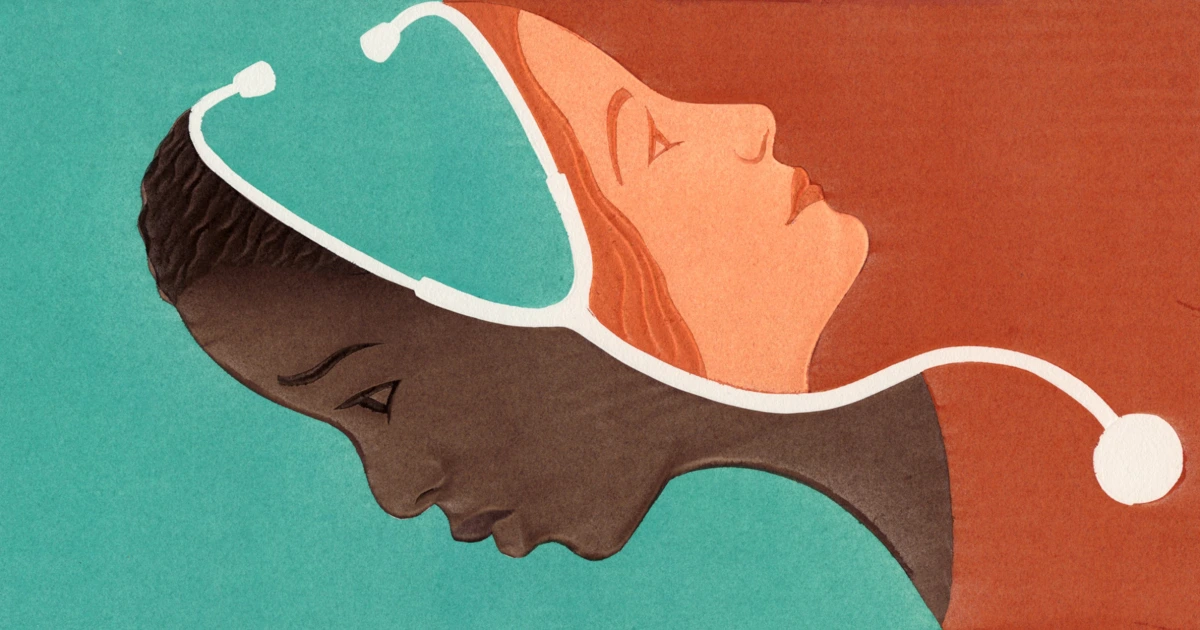
Why is my pain not enough for a doctor to recognize it as such? Pain is something that is subjected to the eye, if you see it, you acknowledge it. “On that looks like it hurts.” But if it comes from within you are “dramatic,” “wasting time,” and “you need to get over it.” The pain you can’t see is most likely going to be overlooked by others, by medical professionals, and even by yourself. The chronic pain millions of people around the world are dealing with not with the help of a medical professional but on their own because their pain is not legitimate enough for a doctor’s visit is discouraging. Not only that but looking at the pain that goes untreated based off of race is disgusting and still plays off with the medical myth that people with darker skin have “thicker” skin. The racism that is rooted within our medical system has caused millions of people to die due to negligence. I commonly see on the internet a black person reaching out to a medical professional for help just for the doctor to do a whole 360 and say that the patient is “lying” or “they just want drugs.” These types of interactions with the same people that are supposed to be saving lives deter so many minorities especially black people from going to the doctors.

 From personal experience and growing up with my grandmother who lived through Jim Crow and seen the evil that society can radiate from the cracks of the foundation that was created by those who society hates, and I say hate because even though we have taken steps to achieve equality, we are still not yet equal and are still being treated like it’s the 50s. My grandmother would talk about the nasty things the doctors would do, and you could forget about chronic pain because if you can’t see it, you can’t treat it. White doctors only understanding white bodily issues because with all the experimenting they were doing on black people they, of course, forgot to include how our symptoms look different than white peoples in the medical journals. Or how black women are dropping like flies if they dare to give birth in a hospital. What is crazy is that people will treat black people (minorities) so cruel and harsh and delegitimize their pain but then wonder why they aren’t coming in for checkups or wondering why they question a vaccinee that was made by the same government that ran unethical experiments on people like them. It is a lot of distrust that is spilling over from generation to generation and if it does not get fixed then a lot of people are going to get hurt or worse.

We cannot continue to blindly support a medical system that is rooted in racism and biases because these ideologies and teachings are being just that taught to every generation of doctors that comes. People should not be hesitant or have to be afraid to come to the doctors because of skepticism in medicine because it can cost them their lives.

The Odd Thoughts of a Bed Ridden Sick Person

To be completely honest I was going to write about something completely different. About my mother’s cancer and how that has all affected us. Blah blah blah. See, it is not really something to laugh about but people in our society tend to take invisible illness, like chronic illnesses and make light of them, almost like they are not real. But here I am, sitting in bed with 102 fevers because I picked the lucky person and sat next to someone with Covid. Hacking up my lungs is no fun. This is something I believe we can all agree on. And to be fair this is just an all-around shitty situation.


Now it may seem like I am just another left leaning snowflake complaining about how people won’t wear their masks, (whatever that is) and honestly, I am. I am complaining, because I am tired of being sick. This is just plain stupid at this point. And of course, the average person nowadays can ease up their mask wearing. But this started all the way back in the beginning of March 2020.


Because of my chronic illness, my response to covid is far worse than the majority of people in this country. I do not blame anyone, as that would not be fair, well maybe Trump for politicizing masks, but that’s a whole other demon to slay later on. I just have to take into fact that this world was not made for me. I can’t live in a perfect bubble my immune therapist wants me to, so I take that risk. And I take it with both feet forward. Because what else can I do? Yes, I can petition and stage walkouts, but who really cares in our society besides the people it directly affects? This is the real problem that I am mad about. People just don’t seem to genuinely care for others. Creating this world that benefits them. As these people can walk, talk, and live freely without wondering if there’s a ramp or is this the day I finally am going to die.

ADULTS AREN’T “AUTISTIC”

Autism spectrum disorder (ASD) is a developmental disability caused by differences in the brain. People with ASD often have problems with social communication and interaction, and restricted or repetitive behaviors or interests. Autism is so predominantly considered a childhood disability that some autism “advocates” claim that autistic adults do not even exist. Alot of person with autism are Infantilize and reason being children are not able to tell their stories and the adults/organization/media who tell the stories, tell these stories how they’re deem it necessary. Shocking fact is ” DO PEOPLE ACTUALLY AGE OUT OF AUTISM” When I hear people say autism is a child’s disorder, it is really weird.

I listened to a podcast by Lyric Rivera, an Autistic self-advocate from Texas, who shared her personal experience of being considered a child because she is “autistic”. She stated that one of the most gross experiences she had with being infantilized as an Autistic Person, specifically, was when she was traveling in an airport. She stated was asking for help on how to find her flight and needed the guy behind the counter to help her out but this person was getting very snippy and impatient, “I said, I’m sorry. I’m not trying to be difficult. I am Autistic and I am struggling to hear what’s going on in this environment”. Immediately, this person stated giving her directions like a 2 year old and started treating her like a lost child. She said it felt really terrible.

The press/media today, shows mostly pictures of children with autism. because parents of autistic offspring promote children, rather than adults, as the face of autism, charities limit much of their discourse to child-based references, and the entertainment industry restricts autistic characters to mostly children. Additionally, When writing news articles about persons with disabilities, reporters historically focused on the emotional aspects of disability, utilizing belittling language (e.g., “suffers from”). Labels like “the naughty child”, “the disruptive one” or “attention seeker” is put on children with autism or any other disability or impairment because we are not all the same. Also, labeling the individual with the disorder like saying ” an autistic person”. This is really sad.

There are lots of effects/ consequences on adults with autism. Firstly because of the perception that adults do not suffer from autism makes it difficult for them to have support. We need to see more autistic adults. We need to use that phrase until it stops being weird to hear it. Infantilizing autism hurts everyone who is part of the equation. Parents, who live with perpetual feeling for their children seemingly uncertain future. Autistic kids, who grow up without being exposed to proper representation. Autistic adults who, since for some people don’t even exist, might not receive the support they require.It is time to bring all autistic people into the conversation. After all, who better to provide the story than those who have survived the judgment of society. Autistic men and women have a lot to say. The true harm comes from not listening and putting an end to segregation and discrimination that occurs up till date.

Autistic Women Don’t Exist

Over the summer I worked for an aerospace and defense company as an intern. It was my first “big girl” job and I was really excited to gain some “real-world” experience and have something to put on my resume. I thought I was doing a good job fitting in and trying to get out of my comfort zone, until my boss had scheduled a last minute meeting to meet his boss. This was not something I was looking forward to, especially since it had come as a surprise. I had a full breakdown after I had completely frozen up on the Microsoft teams call. My boss was really concerned and didn’t understand why I had gotten upset. To him it was a casual meeting to tell his boss what I had been working on. But I had felt an intense pressure to make my boss look good in front of his boss, and I am not very good at coming up with things to say on the spot. He was really worried about me, and probably a bit confused as to why something so small had upset me so much. I explained to him that I like to have lots of time to “mentally prepare” for things, especially meeting new people who are important.

I had thought I was good at masking, until I heard some of the feedback my boss had for me. He noticed that I was not very good at eye contact, or introducing myself to people. He had chalked it up to me being “shy.” He would tell people this almost as a warning that I would be awkward and hard to converse with. The more positive feedback included how he appreciated my straight forward and direct communication, and my efficiency and time management skills…soo pretty much any feedback I received about myself was an autistic trait. It was all right in front of them, but no one could quite pinpoint what it was about me that was different.

Continue reading