Misdiagnosed

My mom has an understanding that her medical concerns may not be taken seriously as a woman of color. At the time of this event, my mom had just recently gotten her U.S. citizenship, which only made it more important for her to find a doctor for her three young daughters who would simply listen. So, she made sure to find a Latino pediatrician who would care for her concerns.

It was nearing the end of my kindergarten year when I started to express pain in my lower abdomen to my mom, and with worry and concern, she decided to take me to the doctor to get an answer. But something was different. This time the doctor who saw me was a white man, training under my actual pediatrician, who diagnosed me with a UTI and prescribed over-the-counter medication for the pain.

However, my pain continued to get worse; I constantly stayed home from school, I was constantly vomiting, and it eventually got to a point where it was difficult to walk and my dad had to carry me around everywhere. As my pain continued, my mom continued to look for answers from this doctor, which he brushed off as “exaggerated” and was even hesitant to give my mom any sort of medication for my pain. He had somehow concluded that my mom was just seeking a way to gain access to drugs, completely overlooking the five-year-old girl in agonizing pain and her mother, who was concerned for her health. 

Eventually, because of my incorrect diagnosis, I had gone untreated for several days. My parents had no other choice but to take me to a hospital in hopes that they would provide an answer. At this point, my appendix had already burst; the woman at the front desk knew exactly what was happening without even asking further questions. Luckily, I was properly diagnosed with appendicitis and given treatment on time; if we had waited any longer, I would have likely not survived. Yet, I can’t help but wonder how this experience could have been different if I had been white or if I was a boy. Would the doctor even think of a UTI as a possibility? Would he have cared more about my mom’s concerns? Could have this near-fatal experience been avoided entirely?

As I reflect on this experience and our class discussion surrounding healthcare and the medical system, it becomes even more clear how gender and race shape not only the experience of pregnancy and birth but various levels of health issues and medical complications. While my experience does not surround labor and pregnancy, it does point out how gender and race impact the medical attention that women of color receive. Evidently, medical professionals frequently overlook women of color, particularly Black women, due to preconceived notions about race and gender. Consequently, they are neglected and placed in situations that could be avoided, and tragically, the situations are often deadly.

Anxious Labored Body

My whole life I’ve been called a busy bee. But as I’ve grown up I’ve lived up to the nickname. I started working at 15 years old, and have not stopped since, and I actually still work at my first job as the Supervisor.

Working is a part of my normal routine and relaxing is a luxury, and for some reason if my days off are not filled with things to do then this heavy weight lays on my shoulders of being guilty for not working if I don’t have anything to do. Taking a break is not easy for me because I am constantly always doing something. 

I almost get FOMO (fear of missing out) or feel shameful if I have nothing to do and I don’t go to work. I guess this explains why I get so anxious when there’s nothing left to do. I hate feeling this way though, because I literally have worked my whole life. When I was a child I would get up early and go to work with my dad on the weekends and then I was forced during the week to get up and to get to school by 630am because my mom worked at my elementary school as a daycare provider for the school. Once I got to high school I was told it was my time to get a real job, so I can “pay my part”. Meaning that I was no longer my parents responsibility and that it was time to fend for myself (to an extent). Since then I have been nonstop.

My parents forced college on me and my brother but didn’t realize that college wasn’t free. They were happy when I expressed my interest in wanting to go to college but were mad when I got accepted into a private thirty thousand dollar a year school. Then they were mad when my brother decided to drop out of college. It has been an ongoing war with my parents because no matter what me and my brother did or how much we worked it was never enough. My parents have watched me and my brother struggle financially numerous times and still continued to ask for our last dollar. My brother and I were the main source of income after we got jobs because my dad got lazy and my mom worked multiple minimum wage jobs just to make her part. 

Then I started college, and college students have it hard enough, let alone balance a full-time job or even multiple jobs with their studies. It has taken me 7 years to finish my undergrad because I’ve had to pay for tuition out of pocket and also balance my three jobs with my academics.

With all this being said, my parents loved the phrase you don’t know what “real stress” is. My parents still haven’t grown out of that phrase even though I work a full-time job, two part time jobs, and am taking 5/6 classes this semester. But, now I think from time to time that maybe they were right. Maybe what I am describing isn’t “real stress,” and maybe it’s just trauma. My trauma response is to crowd myself with so much to do that I literally get anxious and physically ill when I’m not constantly doing something.

Now, my parents aren’t horrible parents. Well definitely not my mom, but my dad is a different story. Maybe I am the way I am because my mom has always had multiple jobs to support my brother and I and my dad was always losing jobs and putting our family in struggle situations. So I can understand that aspect but, the diminishing of the feelings or obliviousness my parents had to the trauma they were causing on me and my brother and is something I can’t wrap my head around. My body to them is just for labor. One day when I have children I will ensure that they don’t feel the way I did/ do and their bodies aren’t just another body for labor. I stay motivated for this reason, because I will do anything to make sure my children do not ever struggle financially or emotionally the way my brother and I did.

Would I Survive Childbirth?

I want to preface by saying that I have always been against the idea of children for a multitude of reasons. One main reason why I do not intend to have children is because it is what is expected of me by society. That’s the thing to do when you grow up, find a husband, get married and have children and provide for those children. I have always gone along with what society expects of me, however, this is not something I was going to given into so easily. As of recently though, I have found myself more and more open to the idea of having children. 

This new development is a slight possibility as I still sit with my many concerns that come with being a mother. One concern I would like to focus on is the maternal mortality rate for Black women. I was fortunate enough to take a Gender and Women’s studies class in highschool that has enlightened me to the struggles of women all throughout our world’s history. We discussed topics such as the women’s suffrage movement, gender equality, intersectionality, gender roles, gender and sexuality, female genital mutilation and last but not least Black maternal mortality rates. The discourse of maternal mortality rate in Black women specifically was a touching subject as I have experienced first hand how black women are ignored and pushed aside in health care. As I’ve gotten older, I’ve come to realize just how real and dangerous the situation is for Black women when it comes to maternal healthcare. The statistics are staggering—Black women are three to four times more likely to die from pregnancy-related complications than white women. What’s even more concerning is that many of these deaths are preventable. It’s not just about access to healthcare; it’s about the quality of care received. Time and time again, Black women’s pain is dismissed, and their concerns go unheard, contributing to this shocking disparity.

This issue is deeply rooted in systemic racism that plagues our healthcare system. Black women are often treated as less credible when they express discomfort or medical concerns, and that bias can have deadly consequences. High-profile cases, like that of Serena Williams, who almost lost her life due to medical professionals not listening to her about her own body, highlight the urgency of this problem. The fear of being ignored or mistreated by healthcare providers is something I would constantly have to consider if I ever chose to become a mother. This reality adds yet another layer to my apprehension about having children, and it’s a conversation we need to have more openly. Every Black woman deserves to feel safe, heard, and cared for in every stage of her pregnancy—and yet, that’s still far from the reality many face today. So, with all of this weighing on my mind, I can’t help but ask myself: Would I survive childbirth?

The art of bodies and labor

The Circle of Life

Have you ever examined certain aspects of life and wondered how everything comes together to form the circle of life? Many individuals are very mindful of the entire process of laboring a child. Many of these individuals spend years becoming educated in this particular field. They will spend hours and hours gaining clinical experience to gain experience in how labor works. These individuals are “medical professionals.” They may hold a lot of knowledge about how a woman’s body works during pregnancy, but they cannot account for those women who have different experiences than the rest. There are normal aspects of pregnancy that all women may face, but unknown symptoms should not be ignored.

Diving into the subject of labor, the question that comes to mind is “Who is in charge” of the laboring body? This question brings so many opinions and thoughts from every individual. It should be a shared responsibility of assistance from the medical team to provide their knowledge to best help the woman who is giving birth. However, there should be autonomy over her preferences of how she wants to give birth. There should be an equal balance of where the mother and medical professional agree to provide support for the mother’s needs.

In early times, the process of how women were taken care of for their pregnancy has completely changed even up to the way a child is delivered. In the reading “African-American Midwifery: a History and a Lament,” the Lamaze technique was mentioned which is “childbirth without pain.” This discussion spoke about the increased rates of “chemical stimulation of labor, episiotomies, cesarean sections.” Why should childbirth be done in a specific way? Why does it matter if a woman wants to have a pain-free birth? These ideas and concepts are still topics that are debated upon. Overall, women should be the only ones who get to decide what she wants. Medical professionals should only guide her if it will negatively impact her.

Medical Terminology and the Patriarchy

I learned about this in another class and found it to be very relevant to this class. In general, Emily Martin’s The Egg and the Sperm: How Science Has Constructed a Romance Based on Stereotypical Male-Female Roles, talks about how the language in medical textbooks reinforces patriarchal views of men’s and women’s roles in reproduction. Enjoy!

In Emily Martin’s The Egg and the Sperm, she asserts that even when we learn about basic biology, such as eggs and sperm, these notions from the patriarchy are reinforced. This subtle but very deliberate assertion is intentional. It reinforces gender norms and says that the sperm is dominant while the egg is submissive. The sperm travels through the female reproductive system and penetrates the egg. This is very much a Western idea. Now, modern research has found that the egg is the dominant one. Instead of the sperm penetrating the egg, the egg, “traps the sperm and prevents their escape.” (Martin, pg. 493)

The reason these narratives are so problematic is because it devalues the egg’s role in reproduction and, in doing so, reduces the whole female reproductive system and women in general and vice versa. Other things also reinforce this. Like how menstruation is viewed as a failure. The language medical textbooks show menstruation, “as a chaotic disintegration of form, complementing the many texts that describe it as “ceasing,” “dying,” “losing,” “denuding, “expelling. ” (Martin, pg. 486) As if a women’s role is purely reproductive and she is deemed useless or otherized when she is dealing with a completely normal biological function.

Reference

Martin, Emily. “The egg and the sperm: How science has constructed a romance based on stereotypical male-female roles.” Signs: Journal of Women in Culture and Society, vol. 16, no. 3, Apr. 1991, pp. 485–501, https://doi.org/10.1086/494680. 

Disability, Pain, & Pride

When we read Shakespeare’s Social Model of Disability, it introduced a concept I had never considered before. At first, I did actually like it, but the more I thought about it, the more my thoughts changed.

I am someone who is both physically disabled and neurodivergent. I have always been neurodivergent, of course, but my physical disability did not become more prominent until recently; and with it has come shame. I think this is why I was drawn to the social model of disability at first. I am ashamed and embarrassed of the visibility that comes with my disability and how I have to accommodate it. Reading this social model helped me think of this shame in a new light, however – it is not my fault I am ashamed. It is the society around me who has made me embarrassed and forced me to push myself past my limits countless times.


At the same time, however, I realized that this is not fair to myself and my identity as a whole. Yes, it is the society around me that has caused me shame and embarrassment and an unrealistic stubbornness that makes me push myself. But that does not take away the pain I am in, or the potential complications of my disability. And even if it is “just” society causing this shame, that doesn’t take away the pain from the nights I’ve wasted staying up wishing with everything in me I could be “normal”, wishing that I could just understand social cues and not have sensory issues or anxiety or mood issues.


It also takes away from the community I’ve found in spite of this pain. I’ve had negative social interactions because of my neurodivergency and my disability, but framing these things as purely societal issues takes away from all of the positive aspects of social interaction while disabled. I am always so grateful for that community and the people that have been there for me consistently. I’ve learned a lot about both myself and the world around me as I navigate being disabled and neurodivergent, and even though there are bad days, I love the community and the people I’ve found, and I love our persistence despite the pain we experience, regardless of where it comes from.

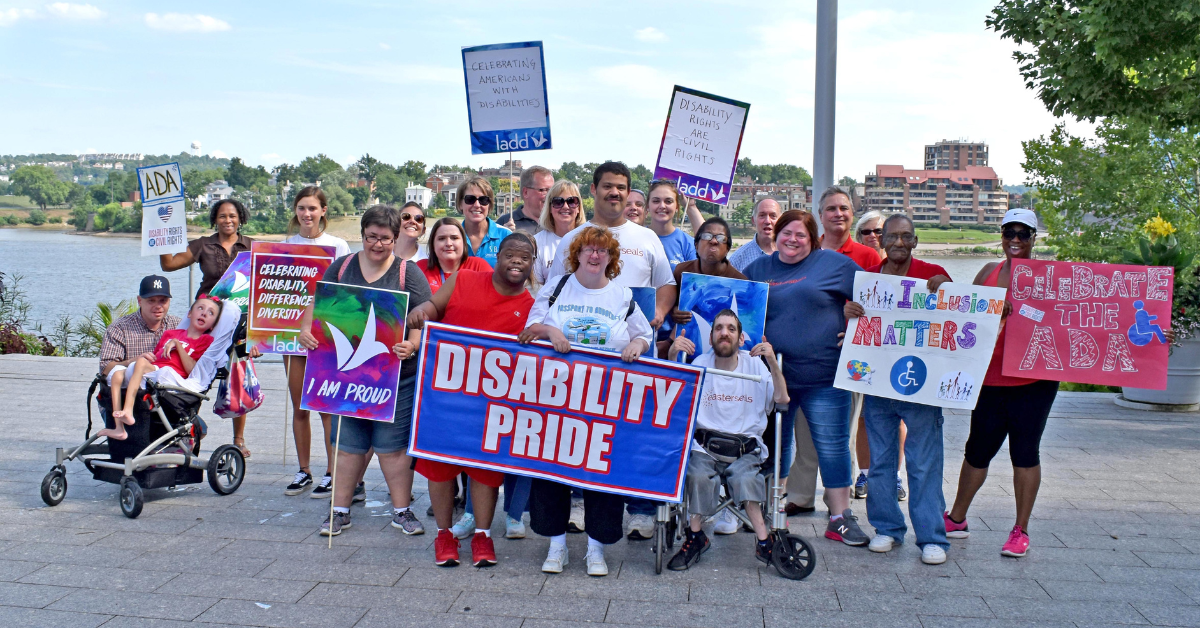
Image source: https://www.hamiltondds.org/cincinnati-region-celebrates-disability-pride-in-july/

I Quit.

Why do we work ourselves the way that we do? Do I actually want to do my job or am I there due simply to societal expectation? How many jobs do I need to juggle to make a decent wage? Why am I told to work myself to death in order to “succeed”? 

Last week I quit a job for the first time ever. Sure, I’ve held many different jobs in the past, but I’ve always simply “moved on”, outgrown it, graduated; I’ve never just quit so suddenly. However, my work environment had become so toxic and taxing on my mental health, I had to leave. This was a really empowering experience if I’m being honest, but it has left me anxiously wondering and stressing. I haven’t been properly unemployed since I was about fourteen. Even though I’m a full time student now and my mental health has been suffering, I still am finding myself anxious about not having any income for an indefinite period. Though I know logically that I need the break and I will be okay if I take some time off, I feel anxious and somehow as though I am failing. 

This has led me to do a lot of reflecting. I feel such frustration at this system and society we have created for ourselves. Living as a full time student balancing classes, extracurriculars, and a social life is enough of a full time job by itself. Yet we live in a world where not having a consistent income is both damning and regarded as a disappointment. Why do we push ourselves to the breaking point every day, expecting the utmost effort and engagement no matter what? I can only dream of how much more productive and healthy we would all be if we simply prioritized our mental health and undertook a balanced, reasonable schedule. How long until I run out of gas money? When do I have time for job applications? Am I failing because I’m not employed while my friends are? What if we stepped back? What if we broke the cycle? What if we chose to prioritize ourselves instead of this toxic loop of waking, working, spending, sleeping, and repeating? Not to mention that emotional labor is interwoven between physical demands, in our jobs and lives. It is always simply expected. Don’t break down, don’t show weakness or frustration or exhaustion or anger. Be pleasant, be professional

What if we had universal healthcare? What if bills weren’t such a stressor? What if the cost of living didn’t grow exponentially faster than the average salary? 

How long until I’m too exhausted to function in this world anymore, until I have to quit? 

Physical labor, Emotional Labor

When I was around four or five years old, I was obsessed with ballet. Angelina Ballerina was my all time favorite show/book series, most nights I would end up dancing around my mom in the kitchen while she was preparing dinner, and I would religiously practice positions one through five on the weekends when I had nothing better to do. It eventually got to the point where my mom had enough and signed me up for beginner’s ballet lessons. 

I didn’t stick with ballet for various reasons, but to this day I’ve noticed a few things about my body that most definitely are a result from my ballet obsession. I’ve noticed that I’m more flexible than my peers, I have a better sense of balance than my friends, I keep a fairly good posture when I’m not thinking about it, and – most noticeably – I stand at a relaxed position two when speaking to people – my legs out wide with my feet pointed outward, instead of (what I’ve been told is) standing normally with of my legs parallel to my shoulders, and my feet pointing forwards. In fact my standing position is apparently so noticeable to the point where I’ve been called out about it, and my friends have made lighthearted jokes about how I stand. 

There are a lot more effects that ballet can have on the physical body. All things considered I seem to have gotten out lucky, but that fact that an extracurricular I decided to take on when I was five has noticeable physical effects on my body almost two decades on since I “professionally” danced, is at the very least notable in what it says about the body and how it is used. 

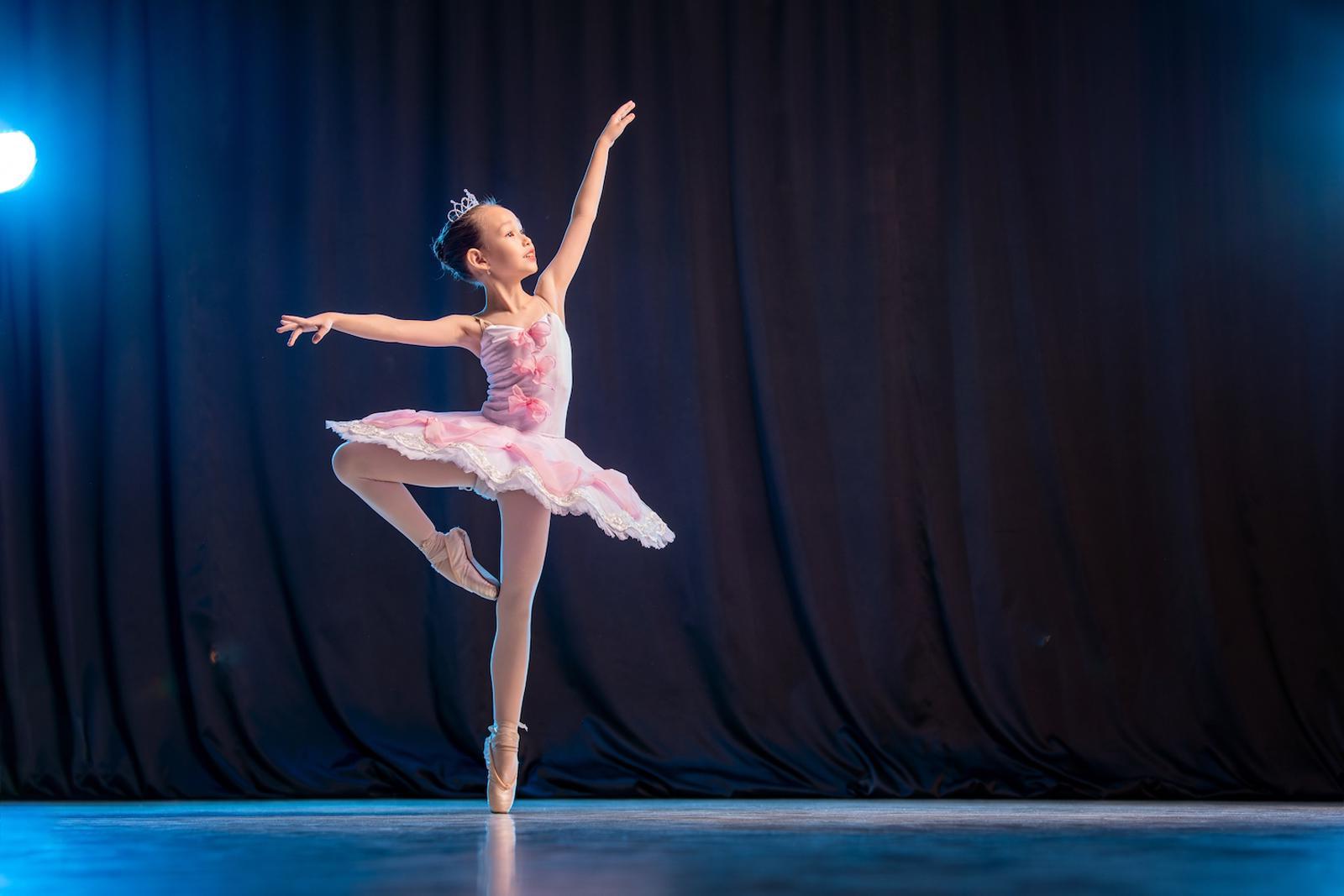
A young ballerina, dancing on a stage

More recently in my life: I became elected, performed the duties of, and subsequently passed on the torch of the presidency of the A Capella group I’ve been a part of while I’ve been studying at UMBC. That entire year was extremely stressful, in no small part thanks to working on my capstone project during the second semester. As an anthropology major, it was my job to perform an ethnographic research study on a group I found interesting. After getting unanimous support from both my professor and the group itself, I was able to study my A Capella group. While I was originally unsure of what to focus my study on, I soon started noticing the emotional and unpaid labor that everyone – not just the group leaders – performed in order to keep the group functional and thriving.

 While I am no longer the president of the A Capella group, echoes of my presidency still linger on, despite my want to “retire” and enjoy the group as if I were a normal member, emotionally I’m still in “president mode”. People still come up to me asking for advice regarding the group, and I have a hard time not interjecting with my opinion when the leaders of the group are having trouble. In a way it reminds me of how ballet affects the way I stand, and I wonder if I’ll ever be able to break out of “president mode” when interacting with the group in the future.

(in)visible labor

Okay, so, no judging, but my suite hasn’t been properly cleaned in weeks. My roommates and I have a schedule that we usually stick to, but this semester has been rough (and that’s an understatement), so things just haven’t been cleaned up as well as they could be.

To give you one idea: our trashcan has been full for a good while. To give you more ideas in way more detail than you’re probably okay with: the couch cover is all scrunched up, stray hair everywhere, there’s leaves and mud that have been tracked in from the outside on our floor, our poor little coffee table has crumbs and juice and tea stains on it- please don’t even get me started on our fridge. Half the time we even forget to turn off the living room lamp at night because we’re so tired… hey! I said no judging.

Today, I got up at 12:30pm and had a good, hard look at our suite and couldn’t stand it anymore. So for two hours I wiped down all the surfaces, took out the trash, cleaned our bathroom, cleaned the microwave, cleaned the sink, vacuumed, watered my roommates’ plants, and all in all just made our living space look more neat. So. Freaking. Tiring. By the end I was ready for a nap, but I knew I couldn’t because I had assignments due at midnight. I kept thinking, no wonder we share the chores; one person doing this all is too much, especially on top of all the homework and projects and midterms we all need to study for.

It reminded me of my mom. My mother juggles so many things at home: doing the laundry, wondering what to cook for breakfast, for lunch, for dinner, sweeping the floor, cleaning three bathrooms, the list goes on and on- all while also having a full-time job at work and a full-time job as a mother. So in the end, she has three full-time jobs, one being invisible or reproductive labor around the household. Invisible labor is I think the worst labor someone could be tasked with, because usually we aren’t even tasked with it directly; it’s simply expected of us. And because of that, no one really talks about how taxing this is on our bodies, or how we should be able to take breaks because of this work.

It’s sad and frustrating. I would argue that yes, knowing how to do basic tasks like washing the dishes and doing your laundry is necessary to living, but its such a different story when you’re doing it for more people than yourself. You take on the labor of other people, and it absolutely sucks when those people don’t even acknowledge it. My father is one of them. He expects my mother and I to do things for him, because that’s our “job” in the family hierarchy- and therefore never says please or thank you. I feel like whenever I do the dishes for him, or fold his laundry, he just sees right through me. Pretty annoying, if you ask me.

I’m lucky to live with people who are appreciative of each other’s contributions to our little makeshift household for the year. My roommates thanked me profusely and it felt good to be validated in that sense. I’m also lucky to be able to have a mother so great as my mom, who does so many things all at once. I express my gratitude via words, gifts, and physical affection, and when I’m home (which is rare nowadays, unfortunately), I do my best to help her in whatever way possible to alleviate her stress. Most importantly, I let her know that her labor is visible to me. Visibility is all some people are asking for, after all.