Life After Diagnosis

Phenomenology is the study of first-person experiences and sensations that give life more meaning. When we were discussing this topic in class I immediately thought about how much my experience and perspective on my life shifted after my adult autism diagnosis. After the diagnosis I began to look back at my life and pick out moments and traits that, in hindsight made so much sense with me being autistic. But before the diagnosis, were just a confused, muddled mess. I remember thinking back on basically every interaction I had ever had and wondering if I would have reacted differently had I known. They say ignorance is bliss, but in all reality the not knowing led me to become a traumatized, jaded individual. The world isn’t built for autistic folk, and imagine going about your life wondering why you are facing barriers and roadblocks at every turn and not even knowing why. It messes with your sense of self and you begin to think something is deeply wrong with you. I am still having to unlearn that one. Yay for therapy!

Something that you do when you spend your whole life not knowing you’re autistic, is you get really good at masking. I was able to play the part semi-well and be sociable, friendly, and well-mannered. And when I got older I became even better. But when you learn that you are autistic, that mask begins to crack. It crumbles away and you are left with a messy, soupy, puddle of sensory issues, lack of social awareness, and fixations. It’s extremely common for adults who are diagnosed with autism to regress in a lot of their skills once they find out about their diagnosis. After holding themselves together by the seat of their pants their whole lives, their whole world is turned topsy turvy. This is what happened to me. It’s taken me years to reacclimate to my new way of perceiving the world, and myself. Slowly I’ve built myself back up and created a new, stronger identity. Diagnosis saved my life.

My Invisible Disability

(Trigger Warning: mention of ABA therapy) 

Although I haven’t formally been diagnosed with autism, the understanding is that if you feel as though you have autism you should treat yourself as if you have autism. As the Stevenson article discussed the infantilization of autism erases the existence of autistic adults. But, here I am an autistic adult. I can discuss my experiences with autism. 

I did not have any experience with ABA therapy. At best it seems controversial at worst it looks problematic. As we discussed in class if we have adult autistic representation in the ways of them talking about their experience with ABA therapy and how destructive it can be. Then, this would lead to a capitalist problem, in that, it would lead to the multibillion-dollar industry of ABA therapy to its demise. 

Growing up I would stim, have trouble with eye contact, not understand or be able to read emotions, and was just in general weird. Not to associate negatively with the word weird just like atypical, not a part of the norm, not “normal.” Whatever that means. No one noticed. Maybe I became really good at masking? Later in life, I thought I had ADHD, another invisible disability, this explained the stimming, but not the other symptoms. But, here I am an autistic adult. And I’m confused about what I should do in the future. A diagnosis is much too costly and I don’t know if it would help. I guess I will just be emboldened by community. 

I wish I could give myself a lobotomy

This is gonna be a word salad but it’s actually crazy navigating this world as a person with anger issues, bpd, anemia and autism. I know, girl pick a struggle. To give you a little glimpse into my life. Being anemic is weird. As stated in class, people only think disabilities you can see are valid. And don’t get me wrong if I’m being honest I don’t consider being anemic disabling but maybe I don’t consider it disabling because of that subconscious bias as well. As someone with anemia one thing I do ( as well as others) is when I get up too fast my vision gets fuzzy like I’m seeing circles and static and I have to lean over and sit sometimes even lay down. One could argue that that is disabling. And I could see why because that affects me when I’m working (as a receptionist I’ve had to do that sometimes) when I’m at a conference or meeting or babysitting just anything in life.

Read more: I wish I could give myself a lobotomy

Don’t get me started on having bpd- I sorry un-medicated and untreated bpd. And yes you guessed it ( that is because of finding a psychiatrist and therapist that will take our parent’s insurance). It affects every aspect of my life as well but especially my relationships with other human beings. People think they are accepting and “woke” until your friend goes off and becomes satans right hand man in an argument and then 25 minutes later is like “bro remember this lmfaooooo” like NOTHING happened. I’ve lost friends over it. And I’m not okay with it. I’m not. I’m not gonna sit here and lie to you guys and be like it’s whatever it’s there loss. No my feelings are hurt and I wish I didn’t have this in my brain. It’s almost kinda debilitating. But idk it feels wrong to call it debilitating because that feels reserved for things like schizophrenia, Down syndrome, paralysis etc… I wish I could just take a pick and fix my brain and be normal. Yes I said it. Don’t believe these people- having mental illnesses is not normal and that’s okay. It’s not a bad word.

Read more: I wish I could give myself a lobotomy

And to TOP IT ALL OFF god just had to make me neurodivergent as the final touch. Everyone in my family is neurodivergent. From my mom to my dad to me and my little sister. Shit we think the dog is too 💀. But it’s so crazy cuz the reason my parents (mainly my dad) never had anything done about it was because not just because they didn’t have the money, but also the community they’re in. It’s already bad enough society is so 👀 about being autistic and then you have the black community which is like worse towards people who are different. For lots of black people who have autism/neurodivergent or physical disabilities, our first and main bullies are the people who look like us, talk like us, dress like us, worship like us. It’s so alienating. Don’t worry it’s gotten better because of the newer generations but it’s just like damn can we catch a break . It’s a good thing this is not an on paper assignment cuz there’d be tears stains all along the page😹.

Disability, Pain, & Pride

When we read Shakespeare’s Social Model of Disability, it introduced a concept I had never considered before. At first, I did actually like it, but the more I thought about it, the more my thoughts changed.

I am someone who is both physically disabled and neurodivergent. I have always been neurodivergent, of course, but my physical disability did not become more prominent until recently; and with it has come shame. I think this is why I was drawn to the social model of disability at first. I am ashamed and embarrassed of the visibility that comes with my disability and how I have to accommodate it. Reading this social model helped me think of this shame in a new light, however – it is not my fault I am ashamed. It is the society around me who has made me embarrassed and forced me to push myself past my limits countless times.


At the same time, however, I realized that this is not fair to myself and my identity as a whole. Yes, it is the society around me that has caused me shame and embarrassment and an unrealistic stubbornness that makes me push myself. But that does not take away the pain I am in, or the potential complications of my disability. And even if it is “just” society causing this shame, that doesn’t take away the pain from the nights I’ve wasted staying up wishing with everything in me I could be “normal”, wishing that I could just understand social cues and not have sensory issues or anxiety or mood issues.


It also takes away from the community I’ve found in spite of this pain. I’ve had negative social interactions because of my neurodivergency and my disability, but framing these things as purely societal issues takes away from all of the positive aspects of social interaction while disabled. I am always so grateful for that community and the people that have been there for me consistently. I’ve learned a lot about both myself and the world around me as I navigate being disabled and neurodivergent, and even though there are bad days, I love the community and the people I’ve found, and I love our persistence despite the pain we experience, regardless of where it comes from.

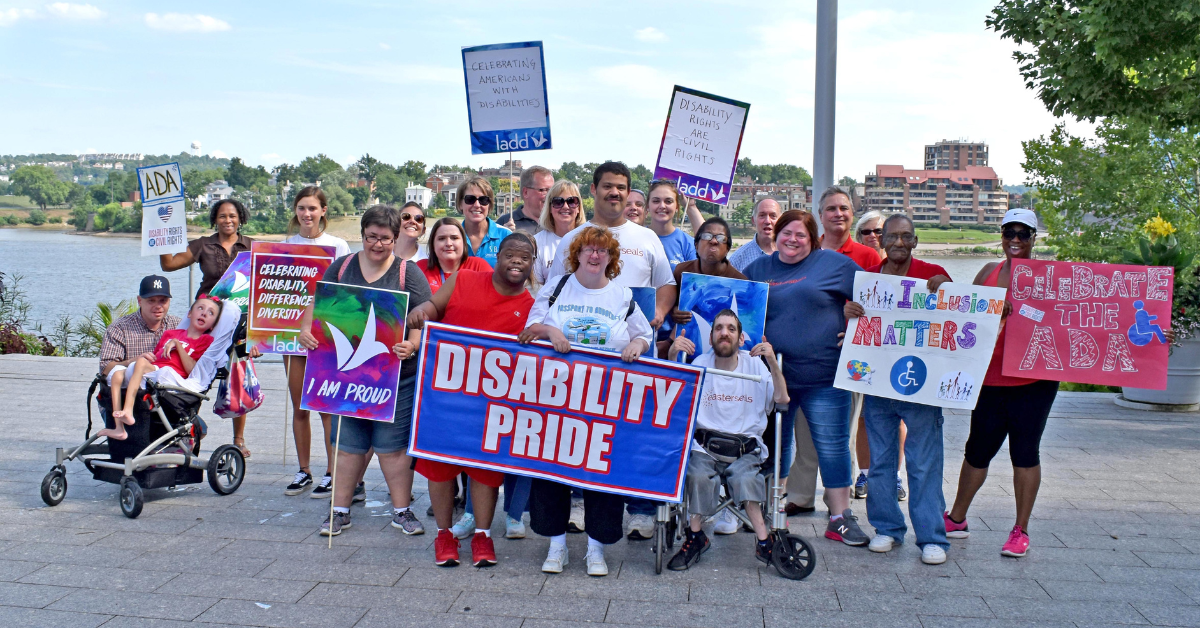
Image source: https://www.hamiltondds.org/cincinnati-region-celebrates-disability-pride-in-july/

OCD isn’t really cute

OCD is like (and I apologize for what I’m about to do to some of you) The Game. Always there, but not a problem until it becomes a conscious thought. And then it’s on replay; like The Game, trying not to think of it only makes it worse.

Years ago, I was luckily “exited” from The Game. Although I’ve not seen this ever described as an “official” rule or solution to The Game, I choose to believe that one could be “exited”. Since The Game functions a lot like OCD does (at least, for me), it’s not some cute mind game that we all play together, it’s a reminder that my brain doesn’t work the same way everyone else’s does. I have a million little “The Games” I’m playing constantly in my head—if a pencil is turned toward me, if I notice it, it has to be turned away. If the “Best By” date has passed and I notice it, I have to throw it out. Well, I don’t have to, but my brain will make it seem like the end of the world if I don’t (and that’s on magical thinking, which isn’t as fun as it sounds).

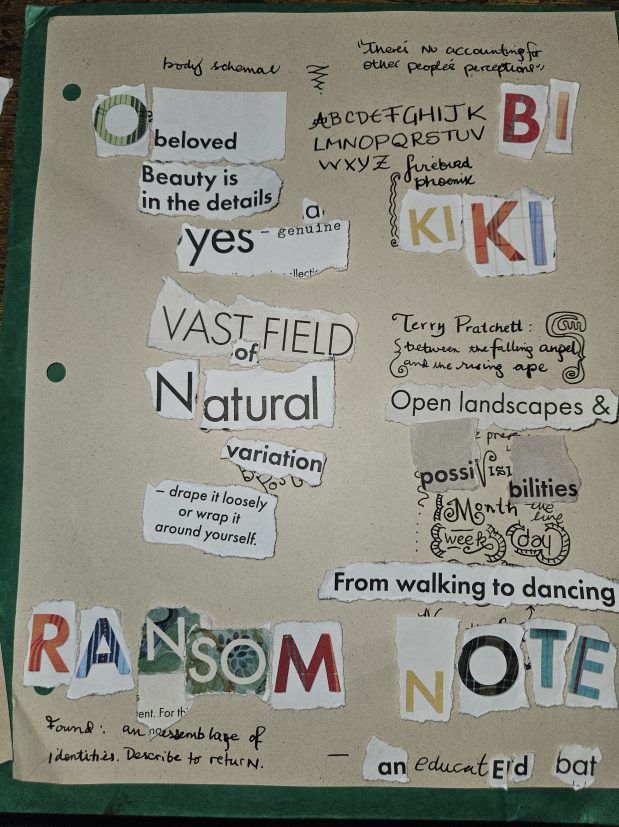
Diagram by me!

There’s more, too: intrusive thoughts, which are not what TikTok makes them out to be; object personification, which leads me to hoarding, unable to give away anything because I fear it ending up trashed, abused, or unloved (which is of course made worse when coupled with ADHD and impulse buying). Like many others, I have to do things in equal measure to my body. If I chew my nails (as I have a bad habit of doing), I have to chew equally on both sides of my mouth, and then the whole nail has to be smooth, which often means I’m stuck chewing on my nails until it’s too painful to continue. Or I have to step on the stairs evenly, which might make me go back and walk back down the stairs if I wasn’t able to get enough steps on my left foot.

The thoughts are easiest to stop when you don’t even give them the chance to talk; you look away from what triggers the obsession, you walk away, leave the room, remove yourself from the trigger, and the voice doesn’t get the chance to talk. You look like a madperson when you literally plug your ears and say, “La la la!” loudly, but you do what you have to to block the thoughts from forming. Blocking them is hard, but resisting is harder.

It’s not fun talking about OCD, I know. I understand the looks of discomfort, fascination, scrutiny, disbelief when I talk about why I do what I do or the process of my thinking. It’s as crazy to you as it is to me. I know how alien it is to many; it’s clear from how I’m treated.

The Game is a reminder that I do not belong to the same world as everyone else; that I cannot escape this, even in the most normal of moments, even in elementary school games. That, at the end of the day, most people can decide whether or not they want to be a part of The Game, but I have a voice in the back of my head telling me society will literally collapse if I allow myself to exit The Game.

But someone exited me from The Game, so I don’t have to play it ever again. Years of therapy and learning how to cope with OCD have helped me learn that I can stop those thoughts on my own (most of the time; I’m still getting stronger).

If you’ve read through all this, I hope this helps you understand a bit more how OCD can work (and it can be more or less extreme than it is for me than it is for others). And, if you need to be exited from The Game too, consider this your official invitation to stop playing the game. I promise, nothing bad will happen.