
I have been trying to get an autism diagnosis for 21-years. Well, not quite the entire time. I didn’t even know what autism was when I was going to see an autism specialist. I was 8-years old and I thought I was just going to see a nice lady who let me play with puzzles and asked me about school and my friends. Of course I knew I was seeing a doctor, but I didn’t understand what it meant at the time. When my parents were considering getting me diagnosed they told me I would have to take a bunch of long tests and talk to strangers, something I am definitely not into. Also I excelled in school and was able to keep one or two friendships. I think the biggest issue was the money, was it really worth it to pay thousands of dollars to get a piece of paper saying I was autistic? Outwardly, I was doing pretty well and I think most people though I was just an awkward kid.
Continue readingBiases
The Stigma Around Bodily Functions
If you are using the bathroom and someone walks in, do you stop peeing? For me, I stop. I try to make as little noise as possible because people can’t know that I, a human being, pees.
Continue readingReady! Set! Stop if you’re a woman!
Let’s say we’re all at the same starting line, we did the same stretches, have similar good quality running shoes, practiced (some harder than others), and yet when the announcer says “Go!” I have to let others get a 30 second head start. He says go and the straight white males take off with the confidence only a straight white male could have. A couple seconds later black men get going, white women follow suit, the LGBTQ+ community, people of color, and people with disabilities are finally able to start sprinting to catch up. This is a very general list and the roadblocks people face to reaching that finish line could continue.
Continue readingWill I Just Be Another Statistic?
The preschool I attended did documentary-style videos throughout the school year and by the end of it, would sit us down in front of the camera and ask us what we wanted to be in the future. Without any hesitation, I answered that I wanted to be a mother. Growing up, I never let go of that dream. Of course, now, I have a career I’m pursuing and am receiving my education toward it, but I would still love to be a mom and raise my kids.
We’re Fed Up: Emotional Labor’s Impact on Women
Women are tired of expectations and responsibilities that society has imposed on them.
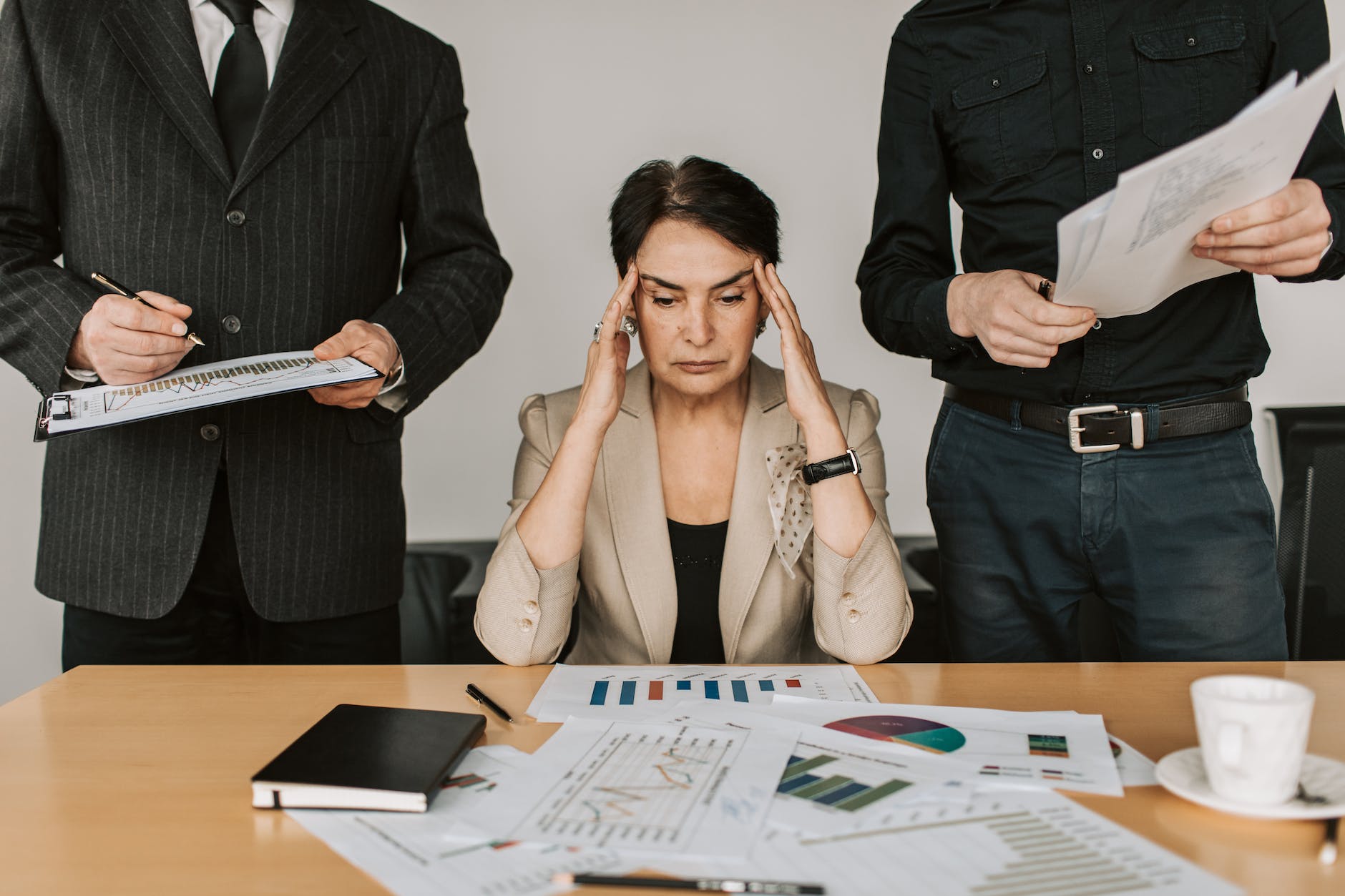
Emotional labor can be defined as the action of managing one’s emotions, thoughts, and outward expressions, in order to conform to the responsibilities and expectations of that individual’s position or job. Women have a number of expected positions that they hold and must fulfill because of the patriarchal structures that imposed that on them; mother, wife, daughter, sister, friend, healer, teacher, worker, and more. Though emotional labor comes with every job, every position, and every relationship, women face a heavier burden of emotional labor because of the exhaustive list of commitments that they hold.
Continue readingadverse effects of hustle culture
we’ve all had to conform to a capitalist society where our value is placed upon how much work we can do. in the past few years, ideas of working and “hustling” have become romanticized, and its seen as a way of working hard while we can in order to see the fruits of our labor later on. my question is, when is later on?
Continue readingWhy is chronic illness a bad thing?
Why is chronic illness a bad thing? But first, let us get a broad idea of what chronic illnesses are. Chronic illnesses are those with conditions that can last a long time such as 2 months or longer and require ongoing medical attention. This also limits the person from doing daily activities due to something such as back pain, sleeplessness, and more. I would say a lot of people have some type of chronic illness and it shows. At my workplace I see a lot of accommodated items in different desks such as some type of foot stool, special work chair to help with their back pain, odd looking keyboard, and an odd looking mouse to help with their wrist issues.
So back to the question on why people think it is a bad thing, specifically companies. In the article of, “Unhealthy Disabled: Treating Chronic Illnesses as Disabilities” by Susan Wendell, she says, “Most workers feel put-upon and frustrated by their working conditions and the demands of their employers on their time and energy. They have to stand up all day, or have few bathroom breaks, or work overtime or at night, and their employer refuses to accommodate to their aching backs, their family pressures, their sleeplessness or difficulty in concentrating. Many workers, that is, find the demands placed on them next to over whelming at times, and they feel barely able to cope. Rarely do they get a sympathetic ear to voice their frustrations, however, and the only agents they are allowed to blame for their difficulties are themselves” (Wendell, 2001). If people have chronic illness, then the company is forced to meet their demands and needs because of the law placed so they can work normally like others. If they don’t get what they want, then they would just simply leave. If a company did not heed my request, I would leave as well because I can only do my work so well if I am actually working comfortably. If I cannot get what I need, why work there in the first place? Before you start going into that job, make sure you do some research on how the company treats their employees. Otherwise, be that person to make some change which will impact the community in a good way.
Am I skinny or are you just fat?
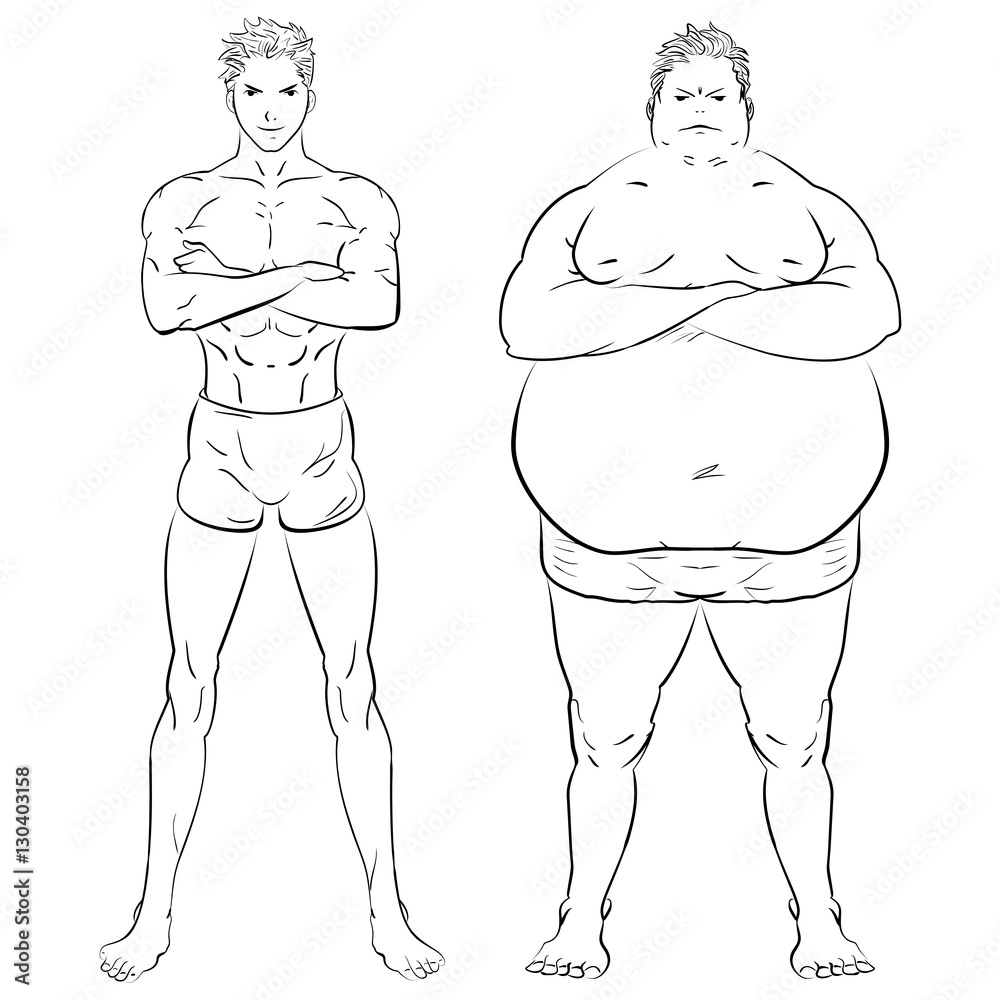
Am I skinny or are you just fat? I see quite often on social media on body shaming or just people looking for shortcuts on how to become skinny or fit. All of these “tips” I see come directly from Instagram for the most part. So whenever you do one search, more searches appear quite often with what you searched previously, so those recommendations will keep appearing until you search something completely different. From these searches, I see videos on how to lose fat easily which is through intense dieting which never works because it is more work than going to the gym and it makes you miserable. In a podcast, I listened to “Is Being Fat Bad for You?” and around 1:17:00 mark, one of the speakers says, “There is not a single method of weight loss that is non-surgical that meets the standards of being evidence-based treatment”. They mention that there are people that are like 250 pounds and are on a heavily strict diet, yet there is barely any progress to their weight loss. People get their weight loss done through surgical means, but it is costly. At this point, you are better off just going to the gym which helps you lose weight faster if you have a personal trainer to get you to the right path. That way, you won’t need to do intense dieting nor surgery. There are videos that show the same food you eat, but with less macros. I am skinny, so I am bulking which makes me eat whatever I want in order to grow. So, if you think you are not where you want to be, ask a doctor for meaningful advice or ask a personal trainer that can help you get on the right path whether you are skinny or fat!
The coexistence of trans bodies and gender binaries
As a trans person, much of my existence has been spent thinking about mine and other people’s bodies. Growing up I had a pretty clear cut idea of what it meant to be a woman and what it meant to be a man. This idea was shaped largely by my conservative Christian upbringing. Even before I started my medical transition, it was apparent to me that I was built larger than most of the AFAB* people I surrounded myself with. My shoulders were broader, my chest larger, my limbs longer, and many things that I felt weren’t “womanly” enough. I spent so much of my youth trying to correct these things as if that would magically fix all of my problems. This sent me into a life long battle with my relationship towards not only my body, but also my relationship towards food. At twelve, I started to lose a lot of weight and I started counting all the calories I would eat in a day. It’s as if the numbers went down, then so did the things that made me seem more “manly”. This was around the time that I started to realize I was transgender. Turns out that eating less than 500 calories a day wouldn’t solve my body dysmorphia or my gender dysphoria. As time went on, I tried to correct these things even more. I wore dresses and makeup, I grew out my hair, and I started to act more “feminine”. After about 3 years of that, I realized how much these behaviors had made me grow to hate myself. I was not only starting to be unhealthy mentally and physically, but I was full of more self hatred than when I started. Looking back now, 4 years after I came out as transgender and accepted these parts of myself, I realize how harmful these behaviors really were. The thing about that is, I still have these thoughts almost daily. I’m in a position now where I can shut them down, but it’s still strange to me how these gendered behaviors and ideals can still coexist with my existence as a trans man. I know that trying to act more feminine won’t erase my transness, but sometimes I still wish I tried harder. I live my life now, knowing that the gender binary is a colonial ideal that really doesn’t do much but harm the individuals in our society but that doesn’t stop me from thinking about them. I love my transness and the transness of those close to me, so why do these gendered ideas still live in my head from time to time?
*AFAB = assigned female at birth
Embracing Suppression: Gender Stereotypes & My Experience as a Trans Person
There’s a struggle at the very heart of my experience as a trans person. The struggle of trying to navigate a society that heavily reinforces the gender binary in ways that most cis people don’t even think about, while also trying to do away with this outdated notion. A prevailing notion on how one does gender is through their performance. Our appearance & the way we use our body signify to others what gender we are. There is nothing in one’s very nature that makes her a girl, it is how she’s been taught a girl looks & behaves that determines her performance as such. I’ve discussed gender in the abstract, but how does it apply to me? How do I experience gender? Well, I am a demigirl, an identity within the non-binary umbrella where I am a girl, but also partially outside the gender binary. Despite this, in circumstances where I have to interact with mostly cishet people, I desire, but do not achieve, to present as femme as possible, to only be seen as a girl, as I don’t trust the general society to grasp that nuance. If someone even for a fraction of a second thinks that I’m a guy, it’ll create gender dysphoria. So if I’m basically trying to present as a girl, this in a way could be perpetuating the gender binary, by erasing the non-binary aspect of my identity in my presentation. But then how does one present as non-binary? There is a misconception that non-binary inherently means androgynous, because you are neither a boy nor a girl, you must not lean towards looking like either. This just creates a gender trinary, which I feel like is only an improvement from the gender binary in superficial ways. It allows for the expansion of gender in so far as it doesn’t mess with the existing structure too much. In other words, as long as it doesn’t challenge the patriarchy. But then, how do I do my part in transforming society such that the general notions of gender match how diverse it actually is? The only satisfactory answer I’ve been able to come up with is for others to be educated about the nuances of gender. After all, I don’t feel that same pressure in queer, especially trans, spaces. In those circumstances I know I’m around people who have the same or similar enough experience & knowledge of gender that I don’t feel obligated to live up to gendered pressures that are thrust upon me. When I’d go visit my ex-boyfriend, or my ex-girlfriend before that, who are both trans, I knew it wouldn’t matter if I didn’t feel up to looking as femme as I could manage, as they’d still see me as the gender I am. So through my experience with other trans people I know it is possible to live in a society that doesn’t require strict adherence to gendered stereotypes. But I can’t really give a presentation on gender to every passerby on the street, so all I can really do is wait, & until then, hope I’m seen as a girl.
Continue reading
