
I moved to Ethiopia when I was six years old and I loved the experiences I had over the 3 years that I lived there. I got to meet many of my family members that I would have never known if I never moved there and am so grateful for that. But I am especially thankful for also learning about my culture and heritage. Throughout the time that I lived there, I was able to experience how holidays are celebrated, the language, traditions, and dances. In Ethiopia, a common traditional dance is eskista and it was the first dance I learned as a kid. The best memory I ever had of dancing was when my family and I would go and visit my grandmother who lived way out of the city. Although we would always be tired by the time we would arrive at her place we would settle down and immediately start talking and catching up. Then before we went to bed we would do a dancing competition about who could do eskita the best and my great grandma would give everyone some money 🤣.
Continue readingbody politics
Echoes of Creation: A Journey to Acceptance
Above the village of Chamounix, where mountains touch the sky, I pen these words to you, Victor, with a heavy sigh. In your quest for creation, you sought to defy fate, But in your wake, you left a being to contemplate.
Performing “transgender rag”, I dance to my own tune, In a world that often judges, beneath the silver moon. Like your creation, I seek acceptance, a place to call my own, In the shadows of society, where seeds of doubt are sown.
Victor, do you see the pain you’ve caused, the tears that have been shed? In your pursuit of greatness, you forgot the living dead. Your creation, a reflection of your own inner strife, A mirror to your soul, a testament to life.
I too have felt the sting of isolation, the ache of being alone, In a world that often judges, where compassion is unknown. But unlike your creation, I choose to rise above, To seek out understanding, to find a place of love.
Victor, let this be a lesson, a message from the heart, That in our quest for knowledge, we must not tear apart The bonds that make us human, the ties that bind us near, For in the end, it’s love and kindness that conquer all our fear.

-santana A ;|
Lessons From My Past
I first learned about the LGBTQIA+ community in sixth grade, though the term was different then and I didn’t understand what it meant. There was a classmate who had come out as transgender, and it just became a topic of conversation with everyone. Some kids just didn’t seem to take it seriously, but I do remember feeling curious and unsure how to react. I had never heard the term “transgender” before, and I didn’t know what it meant to transition. One day during lunch, that classmate explained to a small group of us what being transgender meant and why it was so important for them to live as their true self. It was the first time I realized not everyone’s experience with gender fit into the categories I had been taught. Looking back, I’m grateful for that moment because it challenged me to think differently at such a young age. Growing up, I started reading more about the community and how to be respectful or supportive. It was impactful to hear someone speak so openly about their struggles, especially at an age when so many of us were just trying to understand ourselves. It taught me to listen to other people’s experiences and to respect their identities. That experience shifted my mind to be more open to empathy and to have more curiosity that should continue to work on things like the way I approach the world today.
illness.

Throughout the recent readings in this class, we learned a lot about the underrepresentation in support for disabled individuals and sick individuals. I truly want to see an impact on the support system we can provide for these individuals. They shouldn’t have to find a way around their daily living needs; they should have support groups that can give them the proper support they need.
The connection I made over these past weeks between this underrepresentation and the topic of bodies is that our generation has always been quick to judge and never accounts for those who actively struggle to lose weight. Let alone, bodies should not weigh or look a certain way. But have you ever thought that the same people making arrogant jokes about bodies have never considered that the individual could be suffering from a terminal illness or even a condition that prevents them from being able to normally lose weight? The reason I brought this up was because recently on TikTok, a popular influencer was receiving a lot of hate for losing weight so fast. She was accused of either being a part of DV or having an eating disorder. No one gave her the benefit of the doubt that she could be suffering from an illness. After she had reached her lowest, she announced to everyone that she was diagnosed with cancer. The radiation therapies, treatments, and medicine caused rapid weight loss. After the announcement, the whole internet had switched up the comments made about her. Why should someone have to physically announce or tell anyone what illness is causing changes in their body? Why are we so quick to judge? I truly hope society can change and instead be a support system, whether it’s a popular influencer or an average person.
Social media should not be a space for you to judge others, whether you know them personally or they are influencers. It does not give you the power or the right to do so. We never know if a comment left by you can emotionally affect someone’s life permanently. Always think twice before making a snarky comment.
to my mind
dear,
it’s been so long since i’ve last written to you.
have you missed me? i’ve missed you. terribly, terribly so. i look in our bathroom mirror (the one that you would let your body draw smiley faces on when the glass fogged from a too-hot shower, remember?) and see you again. we share the same eye-bags and bright, big eyes that are hard to miss. i think that is one of my favorite things about you two.
i wish i could give you a hug right now.
Continue readingthe story on my skin
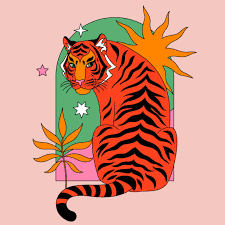
my first tattoo was a tiger. trigger warning: self-harm, SA
placed on my hip,
sized just a bit
too small for anyone else to see
unless they were seeing all of me anyway.
i got him because they symbolize
fearlessness.
and i hoped his courage would come to me
from seeing his bold inked form every day,
reminding me of my power.
(it works some days)

my second one was a rose.
they stand for love,
for my heart truly grows
when i think of the adolescent girl
who used to take a blade and hold
the tip to her own flesh to show
the world the hole inside her soul
consuming her wide, consuming her whole.
(but people just think it’s pretty; i don’t tell them i put the rose over my healed scars to remind me to never forget to love myself again)
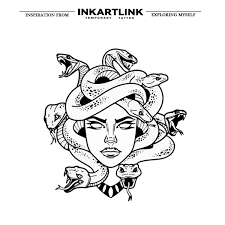
tattoo number three came suddenly to me
when i heard medusa’s story (a rendition).
the snakes were not to punish her more,
but guard her from more pain and gore.
they helped her spin an evil lore
where twisted forms and forked tongues
turned man and monster into stones
that served as everlasting tombs.
(when i heard this version of her story i cried and cried. she is not bitter and broken, she is bold even when she was burned.)
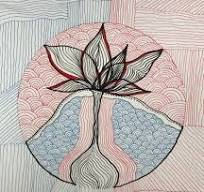
my lotus.
there is a tale of this flower
growing from muck,
through strife and strain
yet never staying stuck;
yearning to feel the warmth of day.
the lotus grows through greatest pain,
through scum and water in hopes to attain
a safe space to bloom and lay
its petals, arrayed in the dawning sun.
(if you’re here today, i’m proud of you. i hope you’ve found your safe space to bloom. don’t ever give up; don’t let the pain in this world make you forget there’s things worth living for. you are worth living for.)
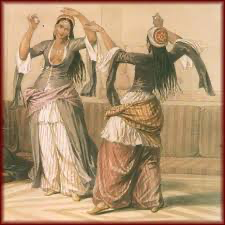
The origin of Belly Dancing
When people think of belly dancing, they often picture a woman in an ornate bra and low-waisted skirt, moving sensually in a way that seems designed to cater to the male gaze. But this image is a relatively modern phenomenon. Traditionally, belly dancing was about cultural celebration—a communal experience where people came together to mark joyous occasions, like weddings, or simply to enjoy the act of moving and connecting. It wasn’t about performing for an audience, let alone for men, but about expressing joy, vitality, and a deep connection to life through movement.
This view resonates with Kimerer LaMothe’s ideas in As the Earth Dances: A Philosophy of Bodily Becoming. LaMothe sees the body as an active, creative force that helps us connect with ourselves, with others, and with the rhythms of the world around us. In its original form, belly dancing captures this beautifully; it’s a form of movement that isn’t about external validation or objectification but about celebrating the body’s ability to tell stories, build community, and honor life’s cycles. Like the dances LaMothe describes, belly dancing is rooted in creativity, joy, and shared connection, reminding us that movement is as much about what we feel as it is about what others see.
Not Your Poster Child
CONTENT WARNING: THIS POST CONTAINS DETAIED DESCRIPTIONS OF INTERNALIZED TRANSPHOBIA & INTENTIONAL MISGENDERING
“Transsexual embodiment, like the embodiment of the monster, places its subject in an unassimilable, antagonistic, queer relationship to a Nature in which it must nevertheless exist.” – Susan Stryker
A human is born
A life has begun
Is it a boy or a girl?
You must pick one
“It’s a girl!” they exclaim,
Teeming with joy.
But what if that human
Is really a boy?
“Sit like a lady” they say,
Your knees must touch;
“Just put on the dress” they said,
“Stop making a fuss.”
Tomboy! Tomboy! Tomboy!
It’s all she hears.
Losing her femininity
Is something she fears.
Fear of losing the attention,
The praise and the love,
So she puts on clothes
That fit her like a glove.
She grows her hair out
Year after year,
Because deep inside her
Is the fear
That one day they’ll call her
A tomboy again,
And she’ll lose her femininity
Before she really can
Grapple with the fact
That she’s not a girl,
And that this gender façade
Makes her want to hurl.
Until age fifteen,
She puts on an act,
Until she knows
For a fact
That this act
No longer works.
Inside her,
This feeling lurks.
But he knows his body
Will never conform
To social ideals
And so he’s torn.
Does he put in the effort
To be seen?
(And what does that
Even mean?)
It means he struggles
Day in and out,
And his mind
Is filled with doubt.
Transness is beautiful,
Transness is great;
But as a trans man,
I’m filled with hate.
I’m tired of keeping quiet
With nowhere to speak up,
I’ve hereby decided
I don’t give a fuck.
Political correctness
Gets you nowhere in life;
I’m not a poster child,
I don’t determine what’s right.
I’m allowed to be human,
I’m allowed to make mistakes.
I’m now living my life,
And I refuse to wait.
Piercings
When I was eight, the first piercing into my body was for a ritual, a gentle whisper of tradition inscribed on the skin. Or maybe these were the things little girls did, bearing a tiny badge of belonging. I didn’t question it, didn’t need to. It fell into the soft quilt of childhood.
At twenty, a sharper needle danced across my skin: a second lobe, a nose ring, a tragus. These weren’t whispered rites; they were restless proclamations. Boredom had seeped into my bones, and the sting of metal felt like a remedy, a spark against the dull ache of routine.
But the tragus rebelled, itching, and inflamed, and was eventually lost, snagged in the tangle of intimacy during a hug. A small casualty, nonetheless one that left its mark within memory memory of touch and unintentional loss.
Now, they hang silent companions. Some days, they feel like artifacts of whimsy I can’t quite justify. On other days, they’re ornaments of a self I’ve grown to understand. Mistakes? Maybe. Or maybe they are just chapters, stitched in by silver and steel, each adding texture to the story I wear.
The Alchemist’s Anger
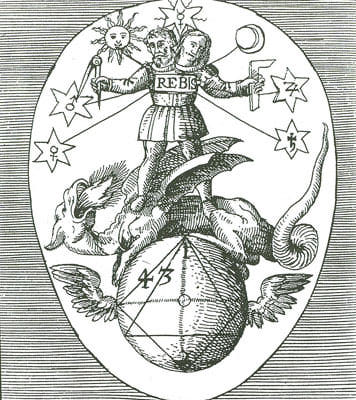
The Rebis
Alchemical perfection — An Alchemist’s Magnum Opus
After one has gone through the stages of putrefaction and purification, separating opposing qualities, those qualities are united once more in what is sometimes described as the divine hermaphrodite, a reconciliation of spirit and matter, a being of both male and female qualities as indicated by the male and female head within a single body. The sun and moon correspond to the male and female halves, just as the Red King and White Queen are similarly associated.
Upon reading Susan Stryker’s “My Words to Victor Frankenstein” I reached enlightenment. She blessed me with an epiphany that had evaded the capability of language.
She starts by breaking down the monstrosity of the transsexual in extremely profound ways. “The transsexual body is an unnatural body,” she says, “…It is flesh torn apart and sewn together again in a shape other than which it was born.” I have been hyper-fixated on this concept since discovering my own transsexuality and I could not agree more. But much like transgender is to transsexual, why not push the boundary further? Why be unnatural when you can be supernatural? Preternatural? Extraordinary? To augment oneself to perfection. To reach a level of divinity only capable through self-made creation. This is where my love for the alchemist began.
As transsexuals do we not toe the line between scientists and sorcerers, ever in pursuit of physical perfection? To transform one substance into another? Matter cannot be created nor destroyed but it can be transmuted. We become monsters, or in Stryker’s explanation, heralds of our own extraordinary creation.
While carving, sewing, and transforming your body is perhaps the closest to divinity I can imagine, there is always the scrutinizing eye of the world upon you. In embodying what lies beyond the realm of normalcy comes the onlookers probing for answers. To be transsexual is to be spectacle – for better or for worse. You walk through the world always on display, always looked at but never seen; this is visibility versus legibility. In the space between the two, I find my transgender rage. Always listened to, but never heard. Always known, but never understood. In this violence, I find my transsexual body an abject one constrained by the world’s subjectivity and “…limited by its signification.”
I could spend forever talking about what enrages me about my own transsexual embodiment, but I’d like to end on a positive note. I am a monster in all aspects and retellings of the word. But I am a monster of my own creation. In some strange way, I am both Frankenstein and his monster. Creator and created. Alchemist and Rebis. And I will continue to create.

