Adding a little sparkle to your genitalia

ImageWhat would you like to accessorize today? Your ears? Your neck? Your wrist?

Perhaps your genitalia?

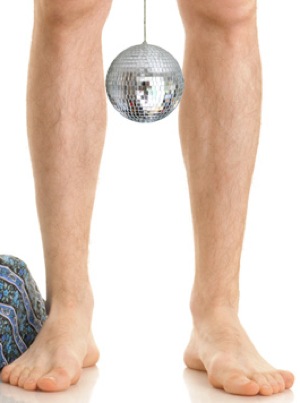
With vajazzling, which is the practice of placing glitter and jewels to the bikini area, and pejazzling, which involves Swarovski crystals being used upon the male genital area, you can now do so.

I recall my initial reactions to the aforementioned practices. I viewed them simply as odd methods of embodiment to engage in, without giving much thought into what they may mean in terms of body-related societal expectations.

While analyzing vajazzling and pejazzling, I wondered about whether or not there could possibly be a link between them and an increasing openness towards body parts that have been considered too taboo to even discuss at times. After all, the method of adding glitter, jewels, and crystals – products that shine, that are meant to be worn in order to increase visibility of oneself – draw attention to the places they are being applied upon. Therefore, it appears as though the phenomenons involve an attempt to incite viewer interest in the genitalia. By doing so, the practices seem to remove the earlier restrictive societal expectations placed upon genitalia (in terms of the encouragement of a lack of thinking about them, discussing them, making them more “apparent”, etc.), and replace them with a more unbarred mindset.
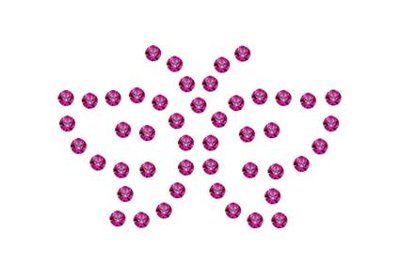
ImageHowever, could vajazzling and pejazzling signal another form of thinking (that may be seen as not so transformative in nature)? Perhaps, they point to beauty standards that are shifting to encompass more body parts (i.e. not just the face) and that delineate that one must consistently change parts of themselves to appear better. In this case, those who engage in the practices could be adhering to a societal ideal that entails they should change their genitalia, or, at least, make it be more visually appealing.

One article states, “following on from the almost cult-level success of the ‘vajazzle’ comes its evil twin brother, the ‘pejazzle'”, delineating that not everyone is all too happy about these forms of embodiment. This may mean that society is still remaining closed-minded about genitalia, that it has not gained much ground in fostering a “need for change” mindset towards the parts, or maybe neither. What do you think?

The Great Wall of Vagina

Artist Jamie McCartney is trying to start a sexual revolution… but not the kind we usually think of.

Image

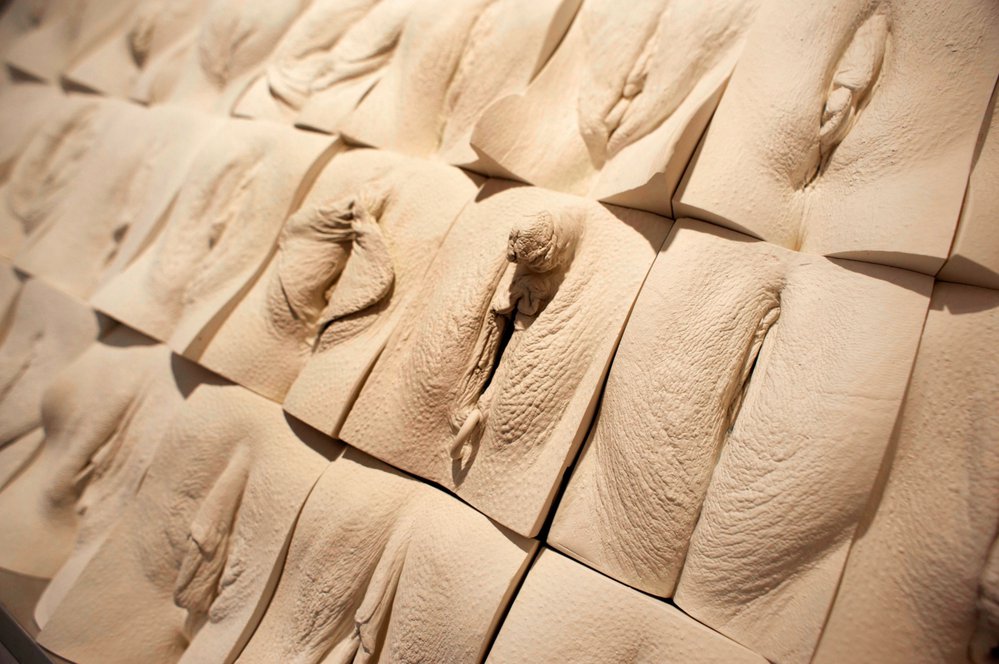
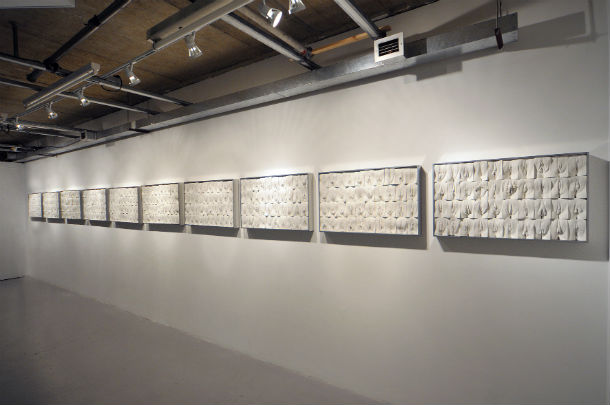
He is attempting through art to change female body perceptions and show us that every woman’s vulvas are normal.  McCartney is a life cast artist; he spent five years collecting casts of volunteers’ vulva mounds and has turned the result into The Great Wall of Vagina.

Image

The work includes 400 casts, as accurate as photographs, displayed in ten wall panels. They range in age from 18 to 76 and include mothers and daughters, identical twins, transgendered men and women, women pre and post natal, and another one pre and post labiaplasty. It is impressive and at times overwhelming, but by reducing the body part to a simple white plaster cast, he removes the sexualization we would typically attach to such a display.  His use of spectacle shows us how absolutely diverse each and every woman’s vulva is – on the website it mentions how each one is as unique as a face.  And they are!

Image

“For many women their genital appearance is a source of anxiety and I was in a unique position to do something about that.” - Jamie McCartney

There are several things I find interesting about this art project.  First, by bombarding us with 400 vulvas in a small space, he reduces the body to a single part, from a view many of us have never seen. And while we ARE viewing the diversity and differences in vulvas, it also manages to emphasize the similarities.  We see the similarities in our differences.

Image

And second, if women are shocked and surprised at the diversity shown here – why is that?  Is it simply because most heterosexual women haven’t seen other women’s open vulvas?  Or is it the “pornification” of our modern culture?  If labiaplasties are on the rise, do you think an exhibit like this would help stop that trend? Do you think hetereosexual men and lesbians are surprised by this diversity?

So, would you go see the show?  And if you are the owner of a vulva, are you looking for one that looks like yours?

Image

“It’s time our society grew up around these issues and I’m certain that art has a role to play.” - Jamie McCartney

Summer, Sandals and Socialized Feet

So summer is swiftly approaching. The heat will of course cause a large shift in the way bodies are covered. Shorter and shorter skirts, barely there shorts, sleeveless tops and if your really hot, just bikinis all day! This of course horrifies the conservative sector of society that prefers woman cover up for moral reason. I however am concerned with a very specific body part that suddenly gets over exposed. FEET.

They are everywhere. There are flip-flops, peep-toe heals, strappy sandals and more, all overly exposing the foot to the population. I recognize this is not generally considered a big deal. I’m sure members of the foot fetish society community love this time of year. As for me, it is dreadful.

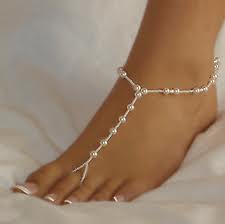
Here is why. All winter I had the luxury of socks and boots, fully protecting my feet from the public view. Now I have the added hassle of constantly preparing my feet for society. Painting my nails, making sure my heels and toes have lotion at all times, and making sure they have a generally attractive appearance. No one told me explicitly that I need to put the extra effort toward my toes. Yet I know, from the sexy models with the perfect feet in the DSW and Payless commercials. Every single one has toes painted with wonderfully bright colors, their toes fit perfectly in the shoe as if the designer tailored the shoe for that specific foot. Meanwhile, I have to pull of the same strappy sandal with my imperfect feet.  This may just be a personal dilemma, but I’m certain I’m not the only one who has noticed how even the barely noticed parts of our bodies have been subjected to socially constructed norms.Image

A Strange Kind of Mirror

This post could be triggering for people who struggle with body image.

Or maybe not.  That’s the question.

My Body Gallery first appeared on the internet sometime around August 2011, judging by the number of posts written about it on other websites during that time (see: Jezebel, The Hairpin, NY Daily News, Yahoo, and more).  The basic idea is that women upload pictures of themselves and then categorize them based on their height, weight, pant size, shirt size, and perceived body type.  Other women can then search the site by their height and weight, and to see what that looks like on other women.  According to the website, the point is to allow “other women to see that the world is not a place of cookie cutters,” because women “are all different in our body shape and size as well as our place in our journey to loving our bodies exactly as they are, not as we (or others) think they should be.”

Initially, though I recognized that the site obviously had its problems, and that it could be difficult and triggering for people who already had a history of or an inclination to compare themselves to others, I found the site interesting.  It could be helpful for people who have an “ideal” weight to see that their ideal might be different in reality.  There are not a lot of people of my height and weight, on this website or otherwise, especially considering the number of people that uploaded pictures for, say, 5’5″ and 120 pounds.   I like knowing that there are other people who look like me (and, notably, all of the people in that category appear to be white).  If sleeves are never long enough and pants are rarely made in your size (and, when they are, they’re never labeled “regular”), or if you have to order your shoes from a niche company who makes them large enough, or you have to shop in a “special” store, or you’re always hitting your head or ducking, or you’re not tall enough to ride the roller coasters, it can be comforting to know that you’re not the only one.  But good luck if you’re 5’5″ and 360 pounds.  Apparently, there is no one else like you.

So that, then, is one of the problems.  Even if the site continues to exists for several more years, even if people continue to submit their pictures to it by the thousands, it will never encompass the entirety of bodily experience.  It is possible to search for any weight by an interval of ten pounds between 100 and 500 pounds.  That’s a decent range, but there are not many people in the larger or less frequent categories.  They are possibly the people who would benefit most from knowing that there are others with similar bodies.  On the other hand, seeing that there are no pictures in your category- but plenty that are 5’5″ and 120 pounds- only reenforces those feelings of deviance.

Then there’s the fact that the pictures are almost entirely of white people, which in part reflects the general whiteness of representation on the internet.

And the fact that, even though women are not “cookie cutters,” they’re still trying to categorize women into categories of weight, and more tightly into categories of “body type,” which is apparently limited to pears, apples, bananas, and hourglasses.  I have never personally met anyone shaped like a banana.  If you do identify as banana-shaped, I certainly don’t want to deny your experience, but I imagine it would be hard to stand, and harder to walk (Have you ever tried to stand a banana up?  All you get is bruised bananas.).

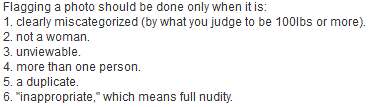
"Flagging a photo should only be done when it is: 1. clearly miscategorized (by which you judge to be 100 lbs. or more) 2. not a woman 3. unviewable 4. more than one person 5. a duplicate 6. "inappropriate," which means full nudity

Are people uploading pictures of dogs?

And then there’s the thing that bothers me most.  This site is for “real women.”  The is an alarming amount of shaming of skinny people within the “body positivity” movement, and plenty of dialogues that replace current beauty standards with other beauty standards- for example, that “real women have curves.”  Worse, the site appears to be only for women, and since whether or not a picture is of a woman is decided by how other members “judge” it, I worry that the site is only for ciswomen.

So, what do you think?  Is this more helpful than harmful?  Do you plan to upload your picture?

A New Type of Ideology

Plastic surgery has become an increasingingly common practice in western and affluent societies. Spending hundreds to thousands of dollars can alter the appearance of humans in dramatic ways. The advancements in science and medical procedures have allowed plastic surgery to be portrayed as having moderate to minimal risks for patient. In addition, over the years people tend to regard medical surgery as having fewer complications than the previous years. Despite the superb medical improvements   the possibility of danger to the patient and liability of the doctor/hospital are still very significant.  Anesthesia awareness is rare but it is possible for anyone to experience this traumatic ordeal. This occurrence poses a threat to anyone who undergoes plastic surgery or any other type of medical procedure involving anesthesia.

Anesthesia awareness occurs when a patient wakes up during surgery.  The individual’s body is in a state of stagnation but their mind is still cognizant. The patient’s body is under the influence of powerful anesthesia medications but the mind is attentive to its surroundings and the procedure being performed. Although this state occurs at the administration of the drug, anesthesia induces a separation between mind and body. The Cartesian dualism ideology alleges that the mind and body are separate entities and anesthesia awareness depicts this notion. The body is heavily sedated by anesthesia; therefore, the body is constrained by the physical science of medicine but the mind remains cognitive and free from the effects of the drug.

After further examination of the Cartesian ideology, a new theory should emerge encompassing aspects of both the Holistic and Cartesian dogma. The Cartesian phenomenon brings forth fundamental questions regarding the essence of the human body. Is the mind and body interlinked with one another or, are these two separate entities independent from one another? During the course of our class, Unruly Bodies, I have struggled with this vital question. Answering this question is problematic because there are several events that would be categorized as Holistic Embodiment, a strong alliance between the self and the body. One such example of holistic embodiment is self-esteem being linked to our physical appearance.  Anesthesia awareness is one example of Cartesian Dualism. I believe both ideologies are correct and should co -exist for different scenarios the body can be placed in and experience.  Perhaps a new ideology should be studied in mainstream literature which would include principles from both of these ideologies.

Sharing the Experience? The Menstruation Machine.

Image

To the phenotypical male, menstruation will always be a mystery that we will never experience.  Or is it?

Growing up as a boy, the only information I received about menstruation was by eavesdropping on girls whispering to each other, or the odd incomprehensible schoolyard insults about PMS.  Television provided images of pads (with wings!) that women were supposed to wear in order to catch an unnaturally blue liquid, but no indication of where those pads went, or what that odd liquid actually was. Sitcoms taught men to just stay out of the way during “that time of the month,” lest all hell break loose.  It wasn’t until many years later, when I screwed up my courage and started to ask questions of my partner, that I was able to come to understand what happened.  Sort of. I mean, I could be sympathetic, but how can one be empathetic of a bodily process you can never experience?

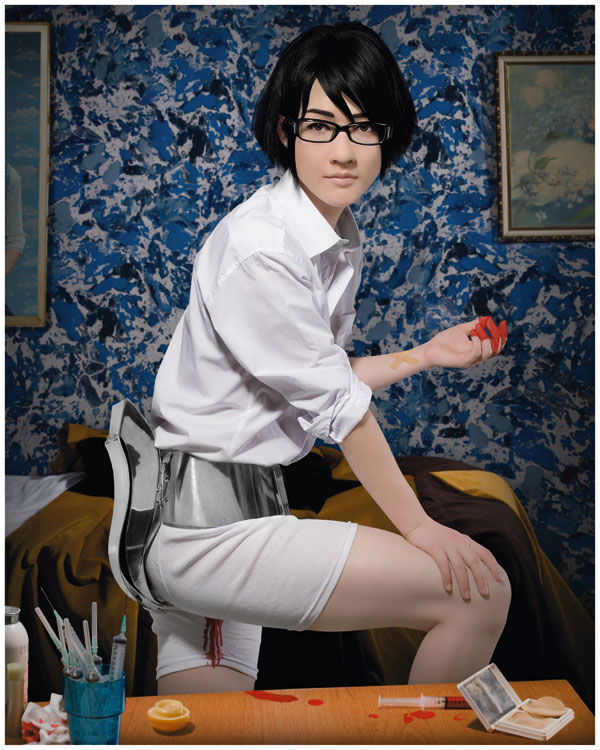
Performance artist Sputniko! (aka Hiromi Ozaki) seems to have developed a solution of sorts to this conundrum.  The Menstruation Machine, a gleaming chrome device that straps to the abdomen, is meant to simulate menstruation for those who would not otherwise experience it.  Prior to putting it on, a vial inside the machine is filled with the wearer’s own blood.  Once on, the strap around the abdomen simulates cramps, and the vial inside slowly drips blood into the wearer’s underwear.  Sputniko! created a music video of Takashi, a drag performer, wearing the machine out on the town and experiencing cramps and bleeding:

On the surface, this seems like a really interesting opportunity for someone who doesn’t menstruate (whatever their gender identity) to experience what goes on during this part of the menstrual cycle.  But in the end, it is just a simulation, and like all simulations, it can be stopped.  And it has limitations- it does not simulate the anxiety of a late period, or account for variations in severity over time.

Obviously, Sputniko! created this as an art piece to stimulate discussion.  Can such a machine be used to bring about empathy in those who don’t menstruate? Or would it create a sort of false empathy because the experience of menstruation is a fully embodied, ongoing experience? I find myself sort of in-between these two stances. What do you think?

“Boobs Don’t Work That Way”

Has anyone come across this tumblr? I really like it.

“Okay, so we want two sexy women on the front cover. Both with tops that don’t cover much and you know what? Maybe one of them is pants-less. Yeah! And have them pose in a really sexy way. Woah, woah woah! What is that? Did you just draw nipples? That’s too far man. Children read these things."

“Boobs Don’t Work That Way” is a “blog about tits and the impossible things artists make them do,” according to the homepage. And it delivers! Each of the 22 pages features numerous renderings of women and their breasts, or I should say, their impossible breasts. Because let’s face it, friends, Real Breasts Don’t Work This Way.

Conversations about our breast-obsessed culture are not new or radical. We know we love breasts, and it doesn’t take a lot of looking around to be reminded of this fact. Breasts are all over the place! On billboards, commercials, movies, magazines, and oh yes, on many of the women we encounter every day. For a lot of us in women’s bodies, we’ve experienced having a conversation with a man and noticing his eyes conversing with our breasts, rather than our faces. I noticed this for the first time when I was about thirteen.

What “Boobs Don’t Work That Way” does that I love is expose some of the absurdity of our breast obsession. Artistic depictions of women’s breasts are often realistic, but this tumblr gives us a cache of the ones that are NOT. And it is refreshing to see someone make fun of these pictures! I mean, they’re so ridiculous! If I were an alien from another world, what would I think if I saw all these pictures? Would I think women have globes of flesh attached to their chests, devoid of nipples? Would I think these globes are perfectly round and humongous compared to their waists? Would I think these globes were detachable? Some of these breasts look like they’re about to fall right off the women who possess them.

And what is particularly interesting about that point what it brings to mind about embodiment. Women who have breasts experience their breasts are part of their bodies, as part of their embodied selves. Women bring their breasts everywhere with them (maybe if they had a choice, they wouldn’t?). Yet pictures like this one obscure this reality. These breasts are for display and affect, and give no indication that they are experienced for any reason other than to tantalize the viewer.

Bodies that bleed

The crucifixion of Jesus have been painted for decades. But for some reason they all look the same. He has little to no blood and has a halo that surrounds his head. Different artist my add his mother or other disciples but the amount of blood is little or none. Now this is a quite interesting depiction when from the 39 stripes on his back, the nails in his has and feet and not to mention the crown of thorns on his head one would think there would be more blood. But is we compare a picture like this: now if you would compare this typical portrayal of Jesu to the most recent depiction done by Mel Gibson and the Passion Of Christ  in this youtube clip (start watching from 2:10-4:05… be advised it is very bloody. The movie is R rated) http://youtu.be/G52Ejcf2qu8

So my question is why did earlier depictions of Jesus show Him as barely having a scratch on Him what that depiction is unrealistic. The whips they had were adorned with nails. So the nails on the whips went in his skin and then ripped off his flesh. Not only that but to make sure He was dead they pierced His side with a spear so that blood came gushing out. But society has it that what is on the inside of the body must remain on the inside. The that raises the question is there an inward and outside part of the body? Because I thought they were one in the same. But the parts of the body that we can not see should remain unseen. As soon there is a breach between the seen and unseen there is a problem. Heaven forbid we sneeze or leak and by all means possible defiantly do not bleed. We get cuts and bruised but of course we have bandaids to cover it up. And then heaven forbid we talk about females that might bleed five times a month. But don’t worry there are ways of hiding that too. So please do not bleed because that makes you human and we al know society basically wants us to be robots.

Androgyny

Often, we talk about “beauty standards” as a single set of rules, as though they can be internalized and followed the way one might follow the rules of grammar or mathematics.  Beauty standards have very real consequences for those who break them and also those who don’t, and they are so pervasive as to seem universal.  But they aren’t universal.

Take, for example, the context of the fashion industry.  Granted, there are plenty of harmful aspects of consumerism and misogyny in fashion in general.  Still, fashion is, purportedly, an art that pushes boundaries, even if it has inherited the unfortunate boundaries of the society of which it is a part.  This is an essay in itself.  What is interesting for the purposes of this post is how the beauty standards for fashion models differ from those for the average person in a given culture.  The purpose of fashion is to push boundaries, and so it continually shapes the beauty standards and trends for average people and then changes them.

Similarly, models are not held to the same set of standards.  Successful models have a certain set of common characteristics (tall, thin), as well as something that makes them “stand out”: a sharp nose, strong brow, angular jaw line.    At the same time, the desire for models who are tall and thin has necessarily led to an increase in models with androgynous bodies.  Perhaps the most popular androgynous model at the moment is Andrej Pejic, who in one season walked five men’s shows and four women’s shows.

His body seems to be proof that even biology is not dichotomous.  One would expect this to be more threatening, yet Andrej reports a happy, carefree childhood.  His mother is doting, his brother is supportive, and the hardest part of his teenage years, he says, was figuring out who he was.  The freedom that he seems to have felt from pressure to look or act a certain way, the ability to decide for himself who he wanted to be, is remarkable.  The following interview shows him to be level-headed and surprisingly unaffected by his sudden success as a model.

In the context of fashion, androgyny seems more acceptable, relatively speaking.  What do you think makes this the case?  Is this a positive move, or does it just reflect a fetishization of “unusual” bodies?

Making “Private Parts” Public

Over the summer I was an intern in the gardens at an intentional community called Heathcote. Intentional communities are essentially communes but the members do not have a shared income or business, so the members have outside jobs.  I instantly felt at home with the members, a group of older radicals and hairy second-wave feminists. One Saturday evening  the community was hosting a hot tub party in their handmade cob hot tub that sits over a fire. Although I was not interested in getting in, considering it was the middle of the summer and extremely hot, I was interested in attending the party to enjoy some conversation and vegan marshmallows. The party was taking place about a 10 minute walk through the woods from where my room was. As I approached I started to notice something was odd, everyone in the hot tub was naked.         I was stunned. These people I had gotten to know so well through everyday interactions were now baring it all in front of me. Going into this internship I was not expecting to see my boss, the intern coordinator, naked. My own reaction to the nudity of the community members was surprising to me. I needed to analyze why I felt so uncomfortable about this.
My first thought was that I felt uncomfortable because no one has warned me in advance that clothing was optional, and perhaps they should have. But, what was the real reason for my discomfort? The human body itself is simply raw material, however it is also packed with meaning given by society. The body is sexualized; society has created a framework in which certain body parts are not to be shown to the public. Even in more enclosed and safe environments, like the one I was in, to many is thought to be eccentric. Sexualized body parts are labeled with words like “private” and are expected to stay that way unless that are being used for arousal.
Something many young people rarely see is a naked average-sized body, imperfections, cellulite, and all. When “plus-sized” women are shown in the media, like in the Dove Campaign for Real Beauty,  the images of the body are distorted with airbrushing, thus creating a false idea of what a “real” body looks like. Because of my instilled sexualized associations and my lack of experience in seeing what real naked bodies look like, my experience at the hot tub party was an awkward one.