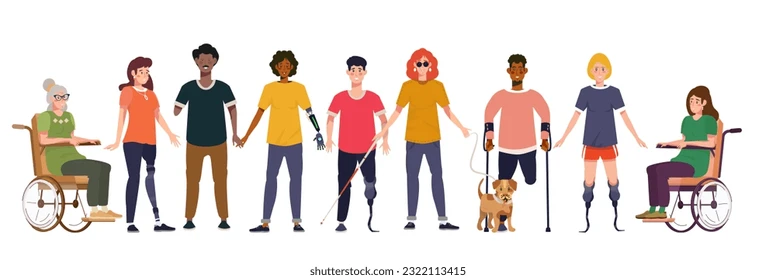
I’d like to know the who, what, when, where, and why behind the time in human history where it became a concept to have an ‘ideal’ type of person within society. Who’s judgement of another person decided that having a thinner body type is ‘normal,’ while having a bigger one is not. Or, are these judgements just an innate human nature, that was always bound to be unavoidable? I truthfully wonder why people’s judgements and opinions towards certain types of bodies became so prominent/trendy. These bounds within society seem nearly unbreakable, as in, can we ever really alter these narratives? This goes hand in hand with the question of: who decided what a ‘normal, nondisabled body’ looks like within society? Why was it never initially concluded that there can be multiple versions of ‘normal,’ and why isn’t being simply human, normal enough? Insecurities are oh so prominent amongst humans, particularly due to the crafted narrative that’s come to be, surrounding what the ‘preferred body’ is within society. It’s all too common for people in today’s age to feel the need to ‘fix’ something about themselves. Whether it be thinking that you’re too big, you’re too small, your nose is too big, your lips are too small, etc., it seems that hardly anyone is ever fully satisfied with how they look, and I believe that this didn’t always have to be the case. Obviously, society has always been excluding and hateful towards differing groups of people, so the current global dynamic full of insecurities and judgement is anything but surprising. The film Crimp Camp strongly supports these concerns as a sense of normalcy was experienced by the campers when they existed together in nature, away from society’s restricting expectations. The film emphasizes that ‘normalcy’ is not a simple definition, but a spectrum of human experience.
Watching Crip Camp honestly had me sitting there like… wow. I had no idea any of this even happened. I didn’t know a place like Crip Camp existed, and I definitely didn’t know how much the disability community had to fight just to have basic rights. The camp itself was actually beautiful to me having kids and adults come from all over, with different disabilities finally getting to to be able to just live life. No overprotective parents hovering, no being treated like they were made of glass, no feeling like they were “different” in a bad way. They finally got to have what everyone else calls a “normal” experience, which is crazy because it shouldn’t have taken a whole camp for that to happen.
And honestly, it kind of bothers me that I had never heard about this before. In school we always learned about the civil rights movement, the women’s movement, all these big historical moments happening around the same time but the disability movement is it really talked about. It’s like because so many other movements were happening, theirs just got pushed to the back sort of being pushed as not important as the other movements. Fact that it’s not true they were fighting for their rights, equality, and accessibility just like everyone else. And that just leads me to the question of why they don’t talk about this movement.
What hit me the hardest is how far they had to go. Some of them were starving themselves, camping out in a government building for weeks even though some of them needed home aides or medical help. But you know what the government still ignored them. All they wanted were things like being able to enter a building or ride public transportation things that can be simply resolved yet they didn’t want to spend extra money to have all these changes made. It just goes to really show how trashy our government is how are you supposed to be for the people when you’re not really for the people.
The wildest part is these are recent changes that took longer to happen in the women’s movement and the civil rights movement the ADA was passed not to long ago it makes me mad to think a powerful movement like this is being ignored and it just reminds me of the quote that I wrote down which is” You can pass a law but until you change society’s attitudes that law won’t mean anything” and I really like this quote because I feel like it it sort of means what is still happening today yeah they have these laws but society’s attitude hasn’t changed. I feel like since these laws have happened it still feels as though they try to shut people with disabilities out.
But this documentary opened my eyes. I feel like more people need to see it this should be shown in high school, in history classes. Because this isn’t some small side story it’s real history that deserves attention. I really enjoyed the documentary, and it made me think a lot about how we still don’t talk about it enough. It really made me feel like why did they have to fight this hard for rights they should’ve had from the beginning? And why did I have to wait until now to learn about it?
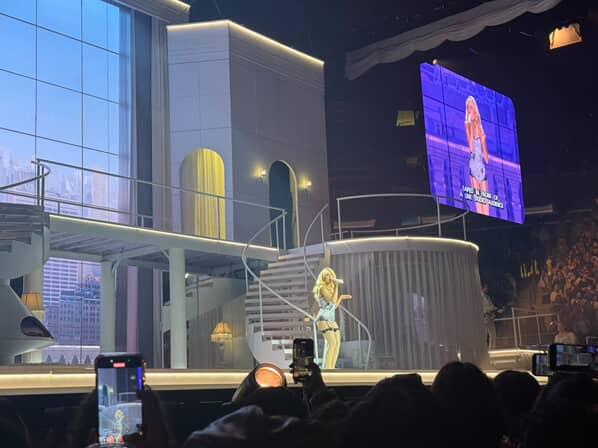
I had an experience recently that I really wanted to write about for this post so forgive me if my connections to the readings are a bit of a reach. On November 1st, I took my girlfriend, Madison, to see Sabrina Carpenter at Madison Square Garden for her birthday and while it was like the best night ever, I noticed a lot about how the people around us were using their bodies.
In Roxanne Gay’s ‘My body is a cage of my own making’ she writes, “I am, perhaps, self-obsessed beyond measure. No matter where I am, I wonder about where I stand and how I look…I am the fattest person. This is a constant refrain and I cannot escape it.” When we were assigned to read this for class, I definitely related to constantly being aware of how your body moves and what it looks like and in Madison Square Garden, a place that holds thousands of people, I was feeling it a little extra heavy. I know realistically that I was not the biggest person in that audience, but as I was standing there, it felt like everyone around me was aware of how much space I was taking up. This was not made better by the fact that I was holding a tote bag carrying the merch we purchased on my shoulder.
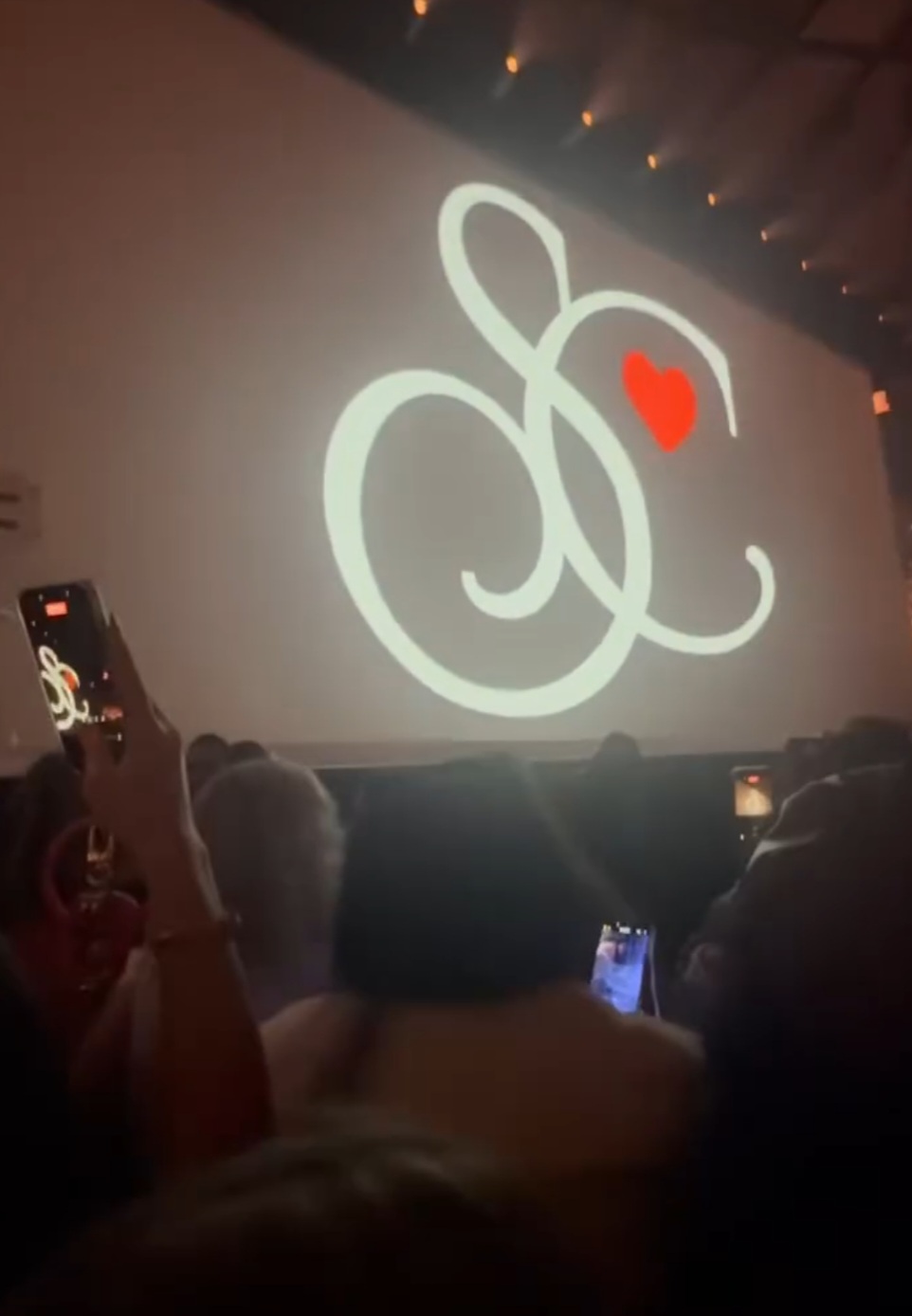
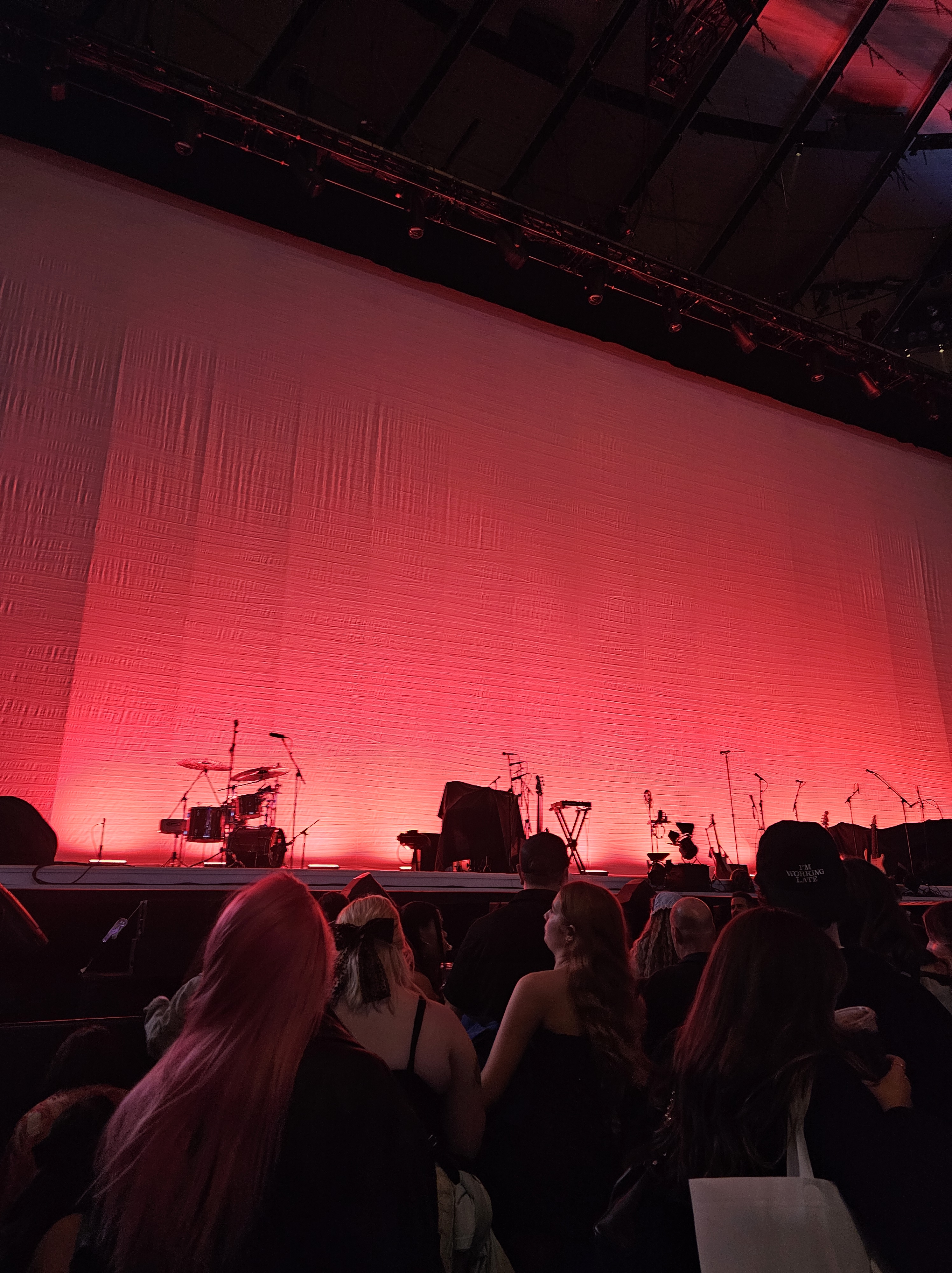
Everything seemed pretty much fine when the opening performers were on stage. My girlfriend and I had our space and were enjoying the show. Then, however, Olivia Dean exits the stage and a large ‘SC’ appears on the big screen on the stage. Sabrina Carpenter is about to come out and people are ecstatic. All of a sudden, everyone around us (for context, we were in the pit) is pushing and shoving their ways past us to get closer to the stage, seemingly not realizing that there is not enough space for the matter of their body to take up. It’s a little difficult to tell, but the pictures below show where we were while the openers were performing vs when Sabrina came out.
Now, I don’t think all of these people are just selfish scum of the earth. I understand that they were excited to see this person that they idolize so much. As I was standing there, still waiting for the main event to start, I began to think about how people desire physical proximity to the people they admire. For me, just seeing her up there on the stage was enough to conceptualize that she is a real person. I am left with the question of what is it about celebrity that makes one so desirable to simply being close to? Why did all of these 14-year-old girls feel so called to force themselves in front of Madison and I and why did they feel that they had a more of a right to be close to her than us?
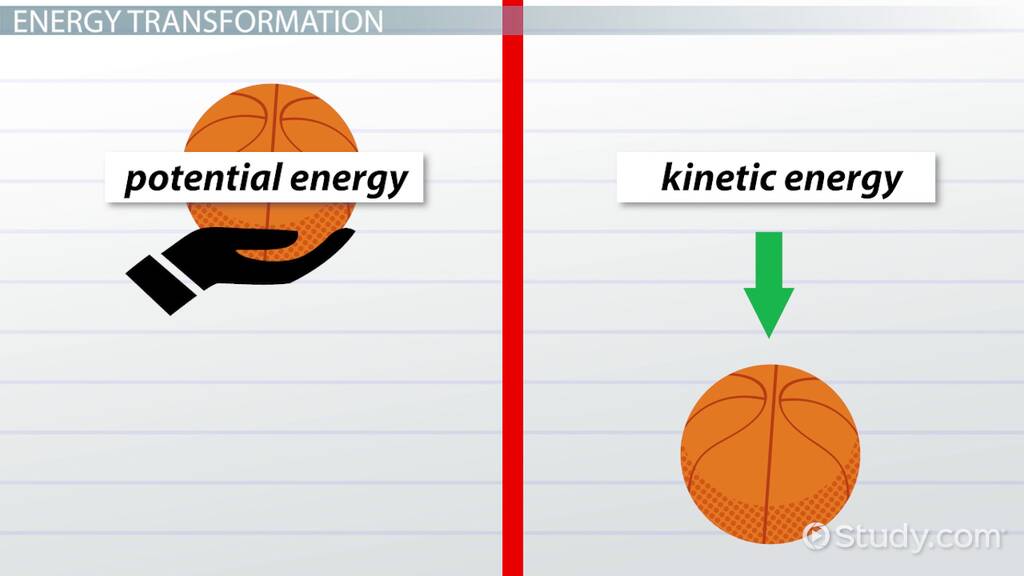
Throughout our class discussions about various communities using their bodies for change, I got flashbacks to middle school science class when I first learned about potential and kinetic energy. I think the thing that makes non-violent protests so powerful is that they mirror the concept of potential energy. Potential energy is defined as “the stored energy an object has due to its position, state, or composition.” The part of the definition regarding position is what stuck out to me. For example, with the Susan Foster Reading, and how we learned about various social justice movements, particularly the lunch counter sit ins. During these sit-ins, the activists weaponized the perceived kinetic energy that the media places on the black community, that they always lash out and are always violent. With these sit-ins, they flipped that media narrative on its head by weaponizing the potential energy and power that their bodies had. I think it is so important to note how non violent protests in general tips the scales in favor of marginalized groups, such as the black community, LGBTQ+ community, disabled community, incarcerated people, and anyone whose power has been stripped away from them because of their position in society, I am in no way saying that violent protests do not also tip the scales as well, but oftentimes these communities have to resort to non violent protests because they cannot afford to further or reinforce any sort of negative sterotypes pushed onto their community.
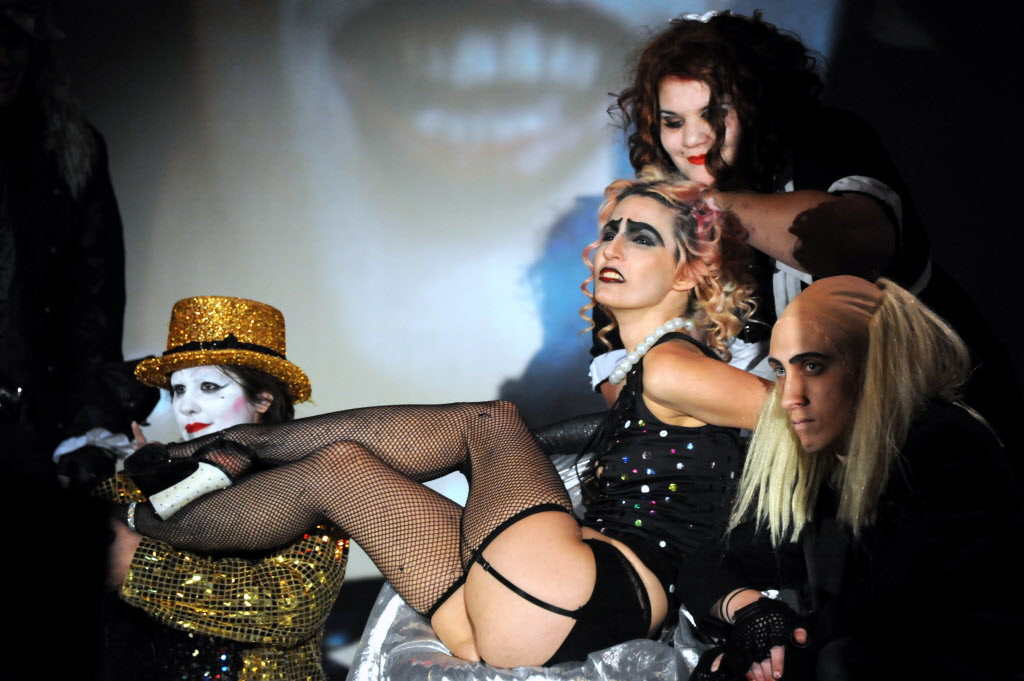
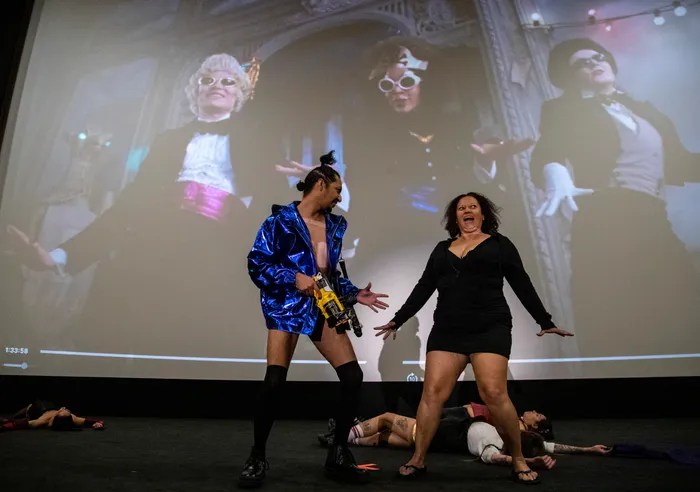
Keely Sherpinskas as Dr. Frank N. Furter performs with Riff Raff and Magenta at the showing of The Rocky Horror Picture Show at Lakewood Theater in Dallas, TX on October 25, 2013. (Alexandra Olivia/ Special Contributor)
After watching Crip Camp there was a scene with a preformer with cerebral palsy preforming in what looked to be a shadow cast of rocky horror (although they could’ve just been singing the one song) it made me start to think about theatre casting version shadow cast casting.
When you see a theatrical show often the actors are beautiful able bodied people. Who is allowed to play what role is highly gate kept and usually based off of the physical appearance of the performer.
However shadow casts aren’t kept to that same standard. For those who don’t know a shadow cast is a performance in which a movie is being projected in the back and actors mouth along and do the movements of their parts in front, usually adding in their own gags or jokes. In a shadow cast, anyone can play any role. Regardless of weight, race, disabilities, or even sometimes gender expression.
This practice started with the rocky horror picture show in the 80s but nowadays plenty of cult classic films have shadow casts such as Refer Madness or The Room.
Rocky Horror is a gem of it’s time. The plot line follows a cast of queer and gender nonconforming characters through one strange night. Throughout the years of shadow casts it became known as a safe place for anyone who lived outside of the norms. It became a meeting place for those who didn’t have or didn’t feel safe going to gay bars in their area. Because the bar for entry was so low, a lot of people were able to find and explore themselves here.
There are a lot of reasons why Rocky was so successful but the biggest one was that it was the community that it built. A big part of these shows became shouting things out at the screen (Statler and Waldorf style) to make each other laugh at different things each week.
They might not have realized it but a laugh is a powerful thing. They connect us.
A laugh can help us feel less alone and more willing to fight for each other.
Over the years I have been to many Rocky Horror Shadow casts and let me tell you there’s nothing like it. Some of them are better than others so stay safe if you do choose to go, but no matter what you will laugh, you will feel weird, and you’ll have some fun memories.
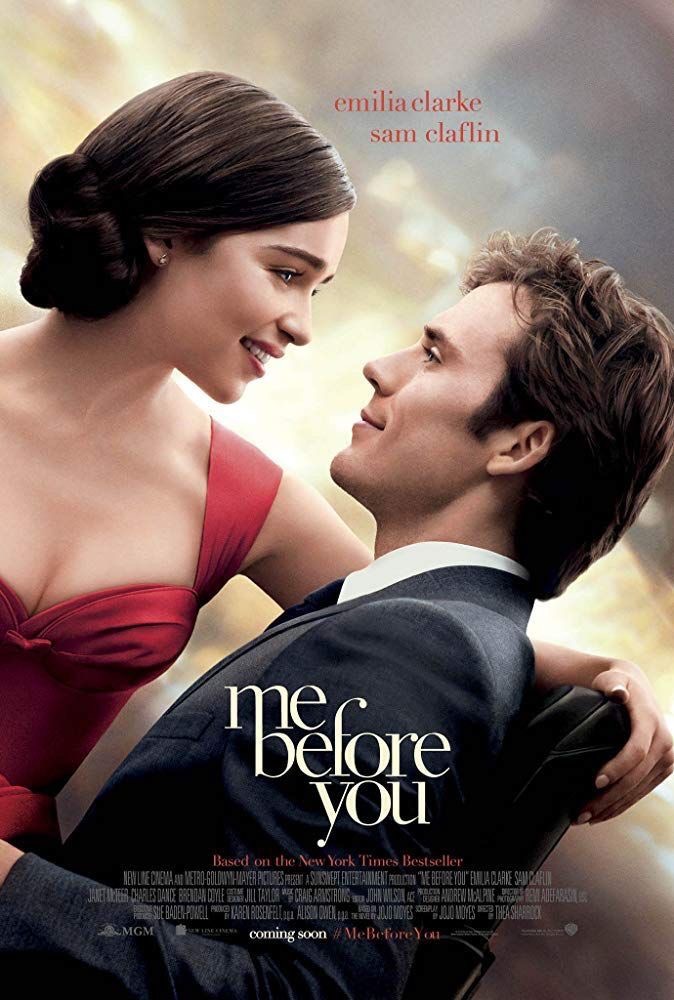
When I first watched Me Before You, I felt like my heart was ripped out of my chest. The story follows Louisa “Lou” Clark who becomes the caregiver of Will Traynor, a man who was adventurous before becoming paralyzed after an accident. Will unfortunately faces many challenges both physically and mentally, leading him to choose assisted suicide despite falling in love, and I haven’t been able to stop thinking about this movie ever since. Recently I started to question, if it was romantic, or was it reinforcing the idea that a disabled life isn’t worth living? After reading Nicole Schroeder’s “Dying a ‘Good’ Death: Disability and the Assisted Suicide Debate” from the Disability Visibility Project, I started to see the story through a completely different lens.
Before I fully dive in, I want to fully paint the picture of this movie. Firstly, Will’s parents hire Lou to care for him after his accident two years in an attempt to raise his spirits. Lou’s unapologetic, positive personality slowly breaks through his bitterness, and they form a deep connection. After finding out he plans to go to Swtizerland for assisted suicide, Lou tries her best to change his mind by trying everything from taking him to concerts and a trip out of the country. But in the end, Will does not change his mind even after falling for Lou. The movie paints his choice as noble as a way of reclaiming control over his life and giving Lou a chance to live hers. The final scene shows Lou reading Will’s farewell letter in Paris, smiling through her tears. It’s meant to be bittersweet, but it also raises difficult questions about what “a good death” really means, and whether society offers disabled people real choices about living.
Nicole Schroeder’s essay completely reframes this debate. She argues that the real issue isn’t about whether people have the right to die, but it’s about why so many disabled people feel they need to. She writes, “those of us protesting do not want people to be in needless pain; instead we want resources other than death to alleviate suffering while people are still alive.” That line stuck with me because it exposes how the conversation around assisted suicide often ignores the failures that lead people to that point: lack of access to care, isolation, and social neglect.
In the film, Will isn’t shown receiving much support beyond Lou’s companionship and his personal caretaker, Nathan. Even with wealth, he seems completely alone in a world not built to include him. Schroeder highlights that in a “hyper-capitalist world,” assisted suicide can become a cheaper alternative to improving care and accessibility. It’s haunting to think about how Will’s decision might have been shaped not by genuine choice, but by a culture that sees disability as tragedy especially after losing the hyper-active life he once had.
One of Schroeder’s most important points is that assisted suicide is often presented as a form of autonomy, when in reality, many disabled people are making choices under pressure. She shares that in Canada, nearly half of those choosing Medical Assistance in Dying (MAID) cite feeling like a burden or experiencing loneliness. That statistic immediately reminded me of Will telling Lou he didn’t want her to give up her life for him. What sounds selfless in a romantic story becomes more complicated when you realize how society teaches disabled people to internalize guilt for simply existing.
The movie’s emotional framing makes Will’s death feel inevitable, even “beautiful,” but Schroeder challenges that idea. She calls out how assisted suicide has “eugenics-centered roots,” meaning that the very systems allowing it have historically viewed disabled lives as less valuable. When I look back at Me Before You now, I can’t unsee this unfortunate pattern that tangles up love, care, and death into a message that equates disability with hopelessness.
When I first watched Me Before You, I can still remember myself tearing up during the beach scene when Will tells Lou that he is still going to Switzerland after she pours her heart out to him. Me and many fans of this movie are still heartbroken over what could’ve blossomed between Will and Lou. But now, I think the real heartbreak isn’t Will’s death….it’s that the story never gives him another option. Schroeder’s essay reminded me that true dignity doesn’t come from the “freedom” to die; it comes from having the support and resources to live fully. The film romanticizes Will’s choice, but if it reflected the realities Schroeder describes like underfunded care systems, social isolation, and ableist messaging, it might look less like empowerment and more like surrender to a world that failed him.
I still love Me Before You for its intensity and emotional honesty, but I see it differently now. It’s not just a love story; it’s also a mirror of how our society defines whose lives are worth fighting for.
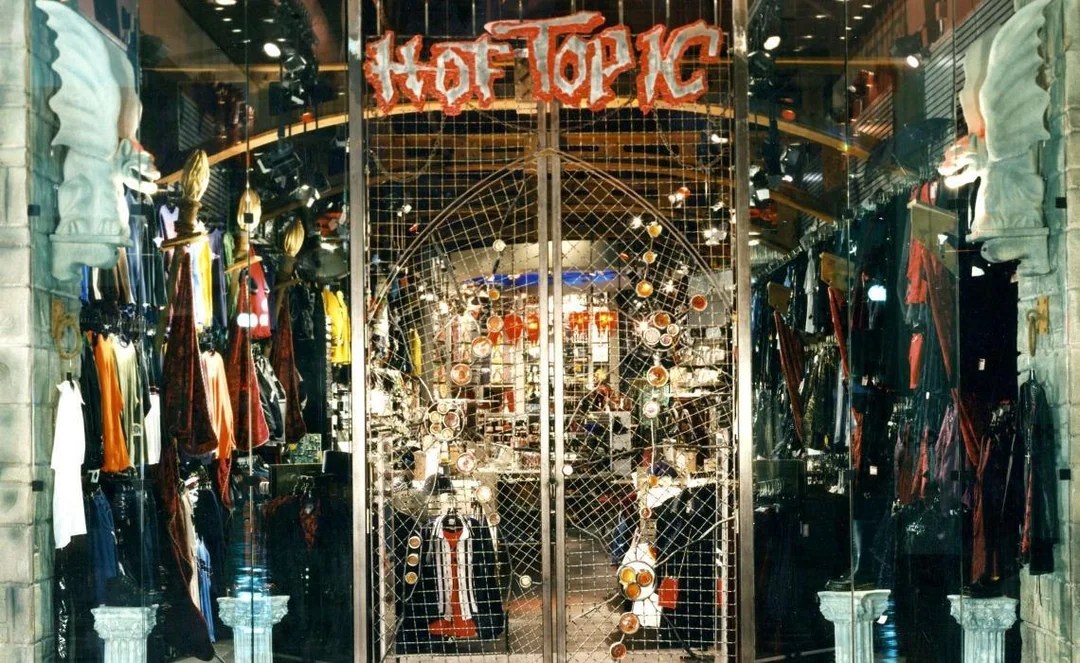
I loved my sister’s emo phase. She was a true 2010 Hot Topic warrior. Despite what all of my middle school friends would say, I don’t think I ever personally had an emo phase but the early alternative influence was definitely clear. She dyed her hair green at 15 so I dyed my hair pink at 12. She went to Warped tour and had the time of her life, so I tagged along the next (and somewhat last- rip national warped tour) year. I listened to Panic!, and Get Scared, and Motionless in White because she swore they were the best music had to offer. Reading the “What Growing Up Punk Taught Me About Being Gender Nonconforming” reframed how I think about that time though. In the alternative scene, there is such a strong emphasis placed on expression. Whether you were pastel goth, scene kid, or tumblr alt, there were hundreds of different labels you could use to encompass the community you belonged to and the idea you wanted to portray yourself as in society. I think gender builds on the same idea.
Coming out as queer felt so much more straightforward than being non-binary. I knew what a crush was supposed to feel like, and I knew I had them towards girls. In a way, it wasn’t personal, it was just something that I was, in the same way I’m hispanic, I really didn’t have much say in the matter.
To me, being non-binary is much more intentional. Not in the sense that it’s a choice, but because I had to come to terms with whether or not I wanted to take it on, allow it to influence my life. Clarifying pronouns, speaking up when tasked to choose between the two binaries, speculating a name change- it’s a constant effort, not a one and done like “I’m gay” felt.
But I’m thankful I was given the space to explore it, that I never felt trapped between hyperfem and machismo masc. Growing up, all my favorite artists wore makeup, and annoyingly skinny jeans, and cut up to shirts, regardless of gender, there was so much grey area it never really occurred to me that the way I felt towards expression could be from not being cis, I just assumed that was the alternative mindset, which in so many ways it still is.
I hope to continue exploring. I hope to continue to accept myself though every transition with the same empathy I would exert a stranger. The author of the piece confessed they let fear rule them as they got older, I’ve been privileged enough not to experience such discrimination yet but I know it’ll likely catch up with me soon. I hope I make it anyways.
It goes without saying that every concert one attends will be different, factors such as the genre of music, the size of the venue, time of day, will contribute to how the audience will behave that fateful night. I went to my first concert when I was twelve, it was at the Merriweather and my sister and I were in the seated section. While we jumped and sang our hearts out to the older Paramore throwbacks, the majority of their set displayed their newest album at the time, which was far chiller and had more of a pop sound, so the audience was zen as well. I’ve been to many concerts since then, mainly indie and alternative, but with the occasional hardcore band in which I kept to the sidelines and headbanged within the comfort of my own space. I didn’t enter my first mosh pit until April of last year.
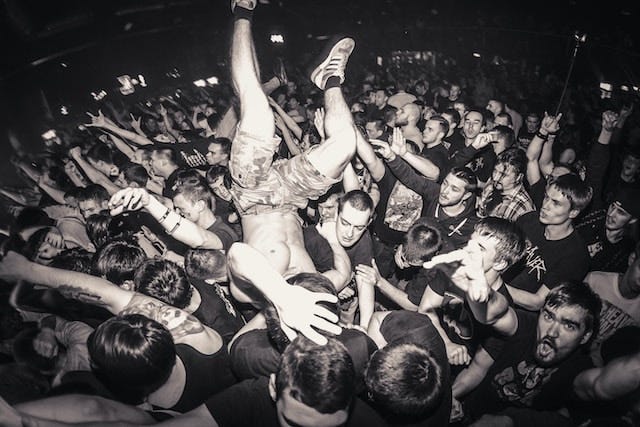
It was such a drastic difference to anything I had experienced before. Watching a pit and being in the center of one was unlike how I imagined. I felt so present in my body and in that moment in time. I was shoved in the shoulder and shoved someone by their arms back. We moved with the pounding rhythm of the song, and I felt fueled by the energy coursing throughout the room. As someone who’s 5’1, I’ve always felt that my body couldn’t make all that much of an impact, I didn’t trust it would withstand roughhousing so I never tried. To be in a setting where people of all age groups and sizes were encouraged to get physical, even when it was painful, it was still so freeing. I wore the cut on my cheek the next day with pride.
I think concert etiquette has changed over the years. The coolest shoegaze and alternative bands have such lively audiences now, but there’s a lack of respect for those who choose not to participate in a mosh. And then, the more mainstream the concert, the more people will opt to record over dance at all. Why don’t we look out for one another, give each other space? Why are we so in our heads, so afraid of looking goofy, that we hold ourselves back if we want to participate? We pay to attend a concert, everyone’s eyes are literally glued to the stage, and yet in the cramped settings, doing anything more than bobbing your head feels taboo and holding your ground at a barricade and not giving into the mosh is rigid. What is the perfect medium? Is there one to be found?