A Letter to My Daughter About Her Birth

Dear Mary,

About halfway through my pregnancy with you, I began researching “natural childbirth”, which is just another way of saying “unmedicated”. I had an epidural for the birth of both of your older brothers. Jackson’s birth was fairly uneventful. 15 hours of labor, more than half of which I couldn’t feel from the waist down. He never could get the hang of nursing, but was otherwise healthy. By the time I was 39 weeks pregnant with Timmy, I was ready to not be pregnant any more. I had been having very manageable contractions at work, so I decided to go to the hospital to check and see if there was anything happening. They decided to just admit me and put me on Pitocin since I was 39 weeks and uncomfortable. What followed for the next day was truly a nightmare. After 25 hours of labor, some very touch-and-go moments with his heartbeat, and a near brush with having to get a c-section, I finally delivered Timmy. Just moments after they cut the cord, I was too exhausted to even hold my baby. I spent the first 8 hours of his life asleep. It was a horrible, terrifying experience, and one that I was not keen to relive.

All of my research pointed to an adverse reaction to the epidural, by both myself and my baby.  His heart couldn’t handle the combination of the Pitocin and epidural, and my body couldn’t keep up with the cocktail of medications. When I got pregnant with you, I was determined to do it differently – so I told your dad that I wanted to give birth to you without ANY medical intervention. He was completely supportive of my decision. When I started to research our hospital’s protocol on natural birth, I was frustrated with what I learned. I would not be able to walk around during labor, or get into the water. I would also not be able to eat. All of the research I’d done, combined with my own labor experiences, showed me that these were things that I really valued during the labor experience. Walking around was non-negotiable, since I experienced terrible back pain the first two times. Not to mention, I became a little irritated at the fact that I had little to no control over my own body during the birthing process. This did not sit well with me. After watching the documentary The Business of Being Born, I was convinced that home birth was for me. Dad and I interviewed a highly recommended midwife and the decision was made as soon as we walked out of her office.  A week later, I fired my OB. I had my records transferred and began preparing for what I expected to be a wonderful, natural birth in the comfort of my very own home.

Towards the end of my pregnancy, your dad and I began to anticipate your arrival with each passing day. By the time I was 38 weeks, we knew it could be “any day now”. As this was my third pregnancy, we fully expected that I would at least go into labor a little early. During the 38-week home visit from our midwife, she felt around on my belly and became concerned that you were in a breech position. It’s not a major complication, but one that would keep us from having a home birth. According to Louisiana law, breech deliveries must be done at a hospital. And so, we began to research. Thankfully, I had a team of support to show me exactly what I could do to get you to turn. I knew right then that having a midwife was the best decision I’d ever made. Chances are, an OB would not have caught your position (I say this because no previous OB had ever checked my baby’s position in utero, but the midwife did it at every appointment). Knowing this info ahead of time gave us a chance to try and turn you around. So we spent the next week or so doing everything we knew to get your head down. I made regular visits to the chiropractor that practiced the Webster method. My doula came over and rubbed peppermint essential oil on the top of my belly, and she coached me in how to do inversions. A week after we’d discovered you’d flipped, I went to see the obstetrician that backs up my midwife for an ultrasound to see where you were. When she confirmed that you’d turned the proper way, a flood of emotion ran over me. I was back on track to having the birth I’d so desperately hoped for. 

When I was just a few days away from being 40 weeks, neither one of us could believe I’d made it this far without even a hint of a contraction. I was uncomfortable, of course, but now that you were correctly positioned, everything else was textbook. Waiting for you was just so difficult. We were both so anxious to meet you, and yes – I was so tired of being pregnant.

40 plus 3

Another week went by with no sign of labor. Finally, when I was nine days “overdue”, Daddy and I decided that it was time to go furniture shopping. We had to buy a new sofa, and we took every opportunity to walk around in an effort to coax you out of your comfy little spot. In the middle of the furniture store, I began having some contractions that felt quite a bit stronger than the Braxton Hicks contractions I’d been having for weeks. Could it be?!?!?!  We made our purchase and went home. Daddy turned on his app that monitored the duration and frequency of my contractions. After a couple of hours, we decided to give our midwife a call. We told her what was going on and she agreed that it was time for the team to head over to our house. While we waited, Daddy blew up the birthing pool and began preparations for your arrival.

Birth_05

My doula sat with me during the contractions and the midwife monitored my progress and took notes.

Birth_06

And just like that – as quickly as the contractions started, they stopped. We waited a while longer for something to happen, but my labor completely stalled. The birth team went home, and I got into bed, feeling more than a little defeated. My body was disappointing me, but I knew at the very least that the real deal was close. We had a fetal non-stress test scheduled for Monday, so unless we went into labor during the weekend, we would head to our appointment. I sat at the machine on Monday while it monitored your heart rate and my contractions. We were given a clean bill of health and all signs pointed to the fact that you were doing great! So Daddy and I went back home and relaxed. That evening, contractions started up again. We waited a bit longer before making any phone calls this time, but after a couple of hours, the contractions began to take my breath away. 

Birth_10

The birth team, your aunt, and your grandmothers came over. Your brothers held my hand throughout many contractions before we finally sent them both to bed to get some sleep. As is the case with many births, my body began to labor late in the evening, so we knew sleep was necessary for whoever could get it.

Birth_12

For the next few hours, I walked around, ate miso soup, and even slept in between contractions. It wasn’t a deep or long sleep, but I was baffled at how my body would shut down during those several minutes to allow me some rest and renewal in time to get through the next contractions. I had developed a breathing routine that worked really well for my pain management. Deep, guttural moans got me from the beginning of the contraction, through to the peak of the highest mountain of pain, and back down to relief again. With each contraction, I imagined my cervix opening just a bit more. This helped me significantly, because it would guide me through the contraction and keep me focused on the purpose behind my pain. I was in awe at what my body was capable of. 

After several more contractions, I was eager to see if any progress had been made in dilation. I asked the midwife to check my cervix, and her report was less than favorable. I was only four centimeters! What a bummer…all of that labor and I still had quite a bit more to go. She checked me on my bed, so I just opted to stay there. The pain was causing me to have the chills, so someone covered me with a blanket. The women in the room each massaged me through the contractions as Daddy knelt on the floor and read affirmations to me. As the doula explained it:

“You moved around the house until finally, you surrendered. Laying on your bed, covered in a blanket and praying hands! I rubbed your feet, your sister rubbed your face, and your husband whispered words of encouragement to you.”

Birth_18

The midwife noticed that I was getting far too comfortable on that bed, so she encouraged me to get up and go to the bathroom, to keep labor from stalling any further. I did just what she asked, and then moved to her birthing chair in the living room. At this point, I asked to get in the water, so your grandmother began filling the pool, and went in to wake up Jackson. He was present from that moment on, and loved being a part of your birth. 

I sat and labored in that birthing chair for a few minutes with my sister in front of me and Daddy behind me. Contractions were almost unbearable but being in that seated position helped tremendously. There was little to no time between contractions and EVERYTHING burned. All of the books that I’d read explained it as the ring of fire, which tracks. I felt like I had less and less control over each contraction at this point. I looked at your Aunt Chris and told her that I didn’t think I could do this anymore. She locked her eyes with mine, looked at me and said,

“…you ARE doing it!!!”

A few minutes later, I heard a strange noise and felt a gush of warmth between my legs. I shouted to the midwife that it felt like my water broke. She ran over and looked to make sure that the fluid was clear, which it was. When she tried to get your heart tones, my position squatting on that seat made that nearly impossible, so they hoisted me up onto the sofa to check your heart to make sure all was well. Well…your heart was fine, but there was no time to get into the pool. You were coming and it was time for Momma to push! Just a few strong pushes and you were here!!!  I couldn’t believe it. There were cheers and tears all around the room. Ten fingers and ten toes and I simply couldn’t believe I did it. You see, my sweet child…we were a team that day. You and I had been working together to grow your perfect little body for ten months and then for those eight hours, we worked together to get you out. You helped me realize that my body is powerful….that I AM POWERFUL…and learning that is a gift that I’ll be forever grateful for.

Birth_21

Reflecting on having an untreated digestive disease

This previous summer, I was diagnosed with celiac disease.  For those who don’t know, celiac disease is “a chronic digestive and immune disorder that damages the small intestine. The disease is triggered by eating foods containing gluten.”  Essentially, gluten destroys the villi in my small intestine.  I have been living with this for almost 21 years at this point, but I only got it confirmed less than half a year ago.  And I’ve been looking back on a lot of the symptoms I thought were normal.

For starters, there have always been a lot of foods that I never liked, and sometimes felt ostracized for not liking them.  This included: plain paincakes, animal crackers, Cheez-its, goldfish, croissants, fortune cookies, pizza, and a variety of other bready foods.  A lot of peers would always ask “Wait, you don’t like (insert food here)? Why not? What’s wrong with you?”

When I was in elementary school, I remember getting headaches in the morning after eating breakfast.  I brought this up to my parents, but since I had no fever they just assumed I was tired from waking up early.  The headaches didn’t stop.

In middle school, the stomach aches started. I attributed it to stress and being overworked with the massive homework assignments we had to do.  I had also begun to develop insomnia, which made it hard to get enough sleep at night.  We also weren’t allowed to eat in class, so I always made sure to eat an egg for breakfast to tide me over for the four hours until lunch.  Even so, I was still hungry.  I was still tired.  In eighth grade I got into the habit of, whenever the teacher asked how we were, I would calmly respond “tired and hungry”.  Eventually she got tired of my complaining, and she had what can only be described as a fit of anger that morphed into a mental breakdown, and by the end both of us were crying (since I was 12 and she was a grown ass woman yelling at me).  I stopped complaining after that.  The hunger and tiredness didn’t stop.

In my junior year of high school I started developing nausea, but I attributed that to the fact that I was going through my hardest year of high school.  The nausea didn’t stop.  

Last year, I thought everything was going relatively okay.  I still got frequent stomach pains and stopped eating donuts because they made me sick, but I still thought everything was fine. Then I suddenly had a seemingly unprompted mental breakdown.  I couldn’t shower for a few days, and it took about a week to eat a portion of food somewhat large enough to call a meal.  In the weeks that followed I still couldn’t finish meals.  I called my parents to let them know what was going on.

That winter I had a doctor’s appointment, and we found out I had lost 20 pounds.  After I explained how I was feeling and she checked my medical record and family history, she suggested I get bloodwork: A full metabolic panel along with testing for thyroid and celiac.

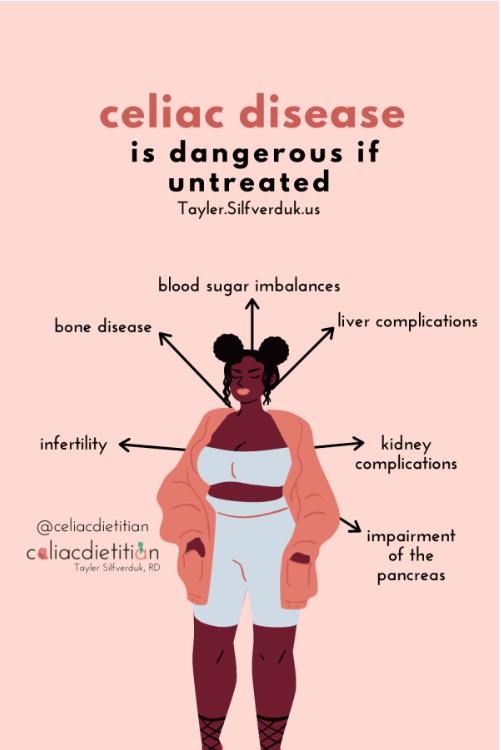
The bloodwork came back positive for celiac antibodies, and the metabolic panel showed that I was pretty damn anemic too.  A few months later I got an endoscopy and biopsy; we already figured that I had celiac disease, but they needed to see the extent of the damage and make sure I didn’t have something else like parasites or things like dysplasia (something that, if untreated, can lead to cancer).  The good news was that I only had celiac; the bad news was that my upper intestine was flat since all of the villi were basically destroyed, and while it would heal on a gluten free diet, it could take up to a year before it’s fully healed.

So I switched to a gluten free diet, and also read up on the information the doctors had provided.  I researched the symptoms and, after everything, it all clicked.

I realized that almost everything I felt was likely contributed to celiac disease.  The headaches, stomach pain, insomnia, nausea, anemia, and heightened anxiety are all symptoms of celiac.  I was probably hungry and tired all of the time because my intestines were actively and continually being destroyed, and that was causing malabsorption (a type of malnutrition), so I wasn’t getting enough energy.  

And one way or another, various people who were supposed to help me brushed me off, and taught me to ignore my symptoms.  Particularly in middle school.  I remember telling teachers that I had frequent stomach aches, and they were the ones who told me it was likely stress.  And for the one teacher: every day I told her I was tired and hungry, and she didn’t care.  Every day I was experiencing symptoms of celiac disease, and I mentioned it to her when she asked how we were doing.  She knew I ate “enough” food, but she didn’t care that I was in pain, and just wanted me to shut up.  She didn’t stop and think “Hey, if a child is hungry and tired all the time, there might be something wrong.”

I am fine with the fact that I have celiac.  I’m not fine with the fact that I could have realized it sooner if people just listened to me and took my symptoms seriously. 

Needing Accommodations Without Having A Standard “Disability”

The only time I’ve ever asked for an excuse from anything was when I was literally passed out on the sidewalk near True Grits. I emailed my professor from the health office, phone in one hand and electrolyte freeze pop in the other, asking for an excuse for missing class (where attendance counted towards grade). I was probably more worried about their response than I was my own health.

I was fully excused and the professor obviously was very understanding.

Even crippling in my bed from stress and depression, I will pull out my laptop and do all 3 attempts on my homework until I get the highest grade. Even with random vertigo hitting me, I still handled dangerous chemicals in lab. Even with my grandma passing away, I only missed one day of work for her funeral.

These are all situations where I would demand my friends to take a break! Prioritize yourself! Ask for help, an extension, a friend, anything! I would never expect anyone else to put themselves through more for something like school or a job. Not being able all the time is okay, and normal.

Does this mean that I have a disability? No, I don’t think so. Sure, I have my fair share of medical conditions that make some days harder than others. But somedays it’s just life that is making a day hard. Why do I need the label of a disability in order to have an accommodation?

I genuinely think asking for an extension or excuse is harder than just doing the work for me. The mental energy of typing out that email and stressing about the response, what the professor thinks of me, and what I think of myself, turns me away from it. The guilt of just calling off of work is so intense that it haunts me for days. Not to mention, feeling disabled sounds so scary to me. I almost try not to accept it for myself, and I have often had the privilege of doing so. But, like that time I was passed out, sometimes we have to accept our own limitations. Sometimes we simply cannot power through it. And sometimes, we have to get help. Asking for help is hard. Asking for help because you have an internal stigma around disability is harder. I know I must get over this, because my ability will wear away over time.

I hope I don’t offend anyone with this post. I truly don’t think anyone should follow my footsteps. This is just a product of how I was raised, and I hope others can relate to breaking free of the stigma of disability. I, personally, will take time to get there. There has been days where the quality of my work has suffered due to this. We all deserve a break sometimes, even just for exhaustion; and it doesn’t take away from the people who deserve breaks for other impairments.

I think often about how in class we talked about creating a system where we can accommodate better to people’s needs. Although it is quite impossible to accommodate everything all the time, there are ways to better serve people. The repairs need to take place from the foundation of our system, starting with mindsets. There are many ways I could feel more comfortable missing a class or getting an extension, and it starts with the mindset of my parents, the attitude of my professors, and my own. From then on, once the details are hashed out, a much more promising world is ahead. Think about what we could be without these barriers holding us back. I think it is quite beautiful.

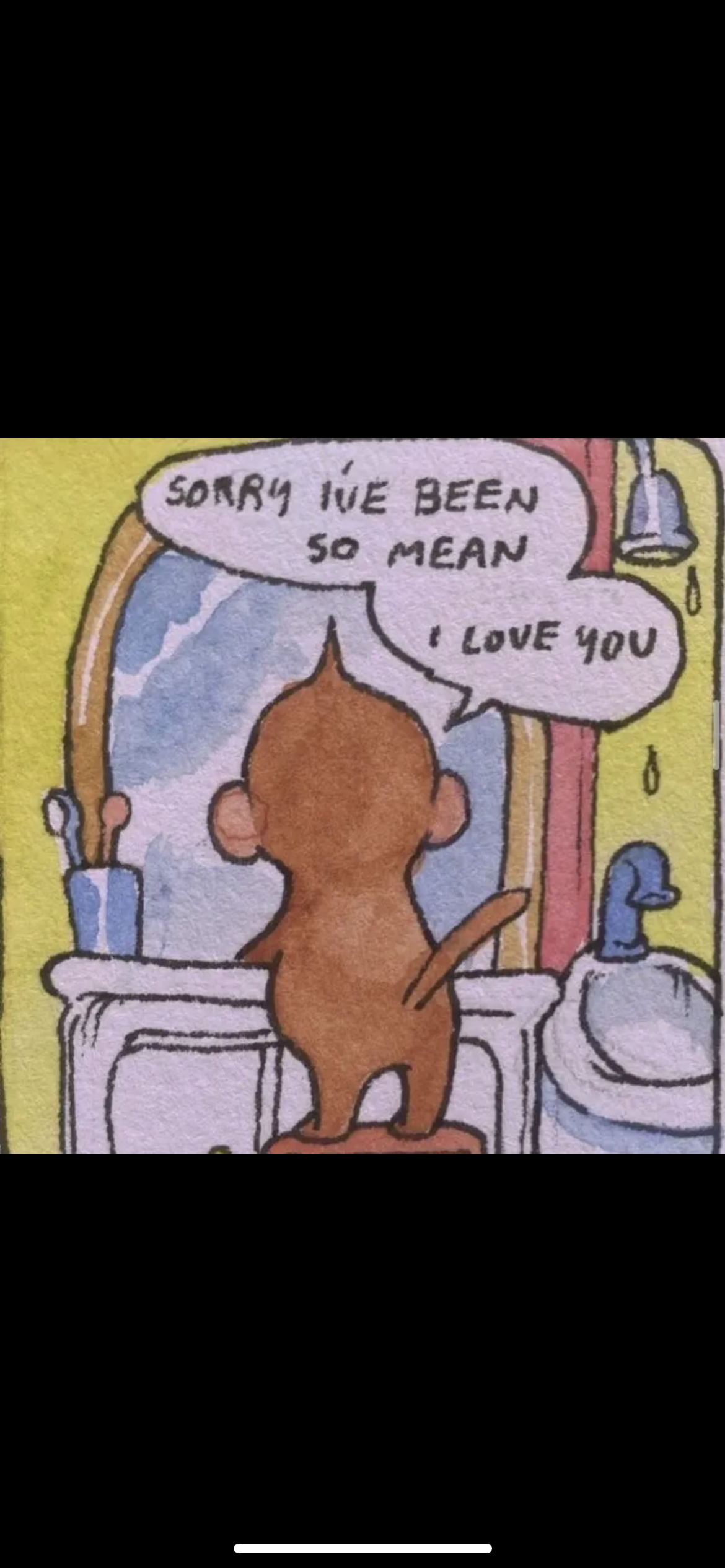
Drawing of a little animal looking in the mirror saying "Sorry I've been so mean, I love you"

(Reminder to be kind to yourself)

My job isn’t to convince you (Why I shouldn’t have to explain myself):

Whose business is it if I decide to get medicated, ask for a diagnosis, seek resources & aids to make my life easier & more comfortable to live? If I decide to avoid certain kinds of movement or exercise (even if they’re “healthy”)because it hurts me or makes me sick? Who gets to decide whether I’m telling the truth or not? I’m too young to be complaining? I’m too fit to be sick? I’m too functional to be in pain? I’m just lazy, or looking for an excuse, looking for attention? Am I still just looking for attention when I’m home alone, curled in my bed & unable to sleep due to pain? How about when my bones pop or roll or twist with a simple movement? Do the digestive issues only occur when its convenient for me? The migraines you never hear about? 

These are the thoughts that cross my mind whenever conversations around work, disability, and mental or emotional health come up. I remember the first year I really started to pay attention to the pain. I was so confused, so stressed & frustrated. What was wrong with me? I couldn’t believe I was truly that out of shape. I was training every day! I was working my ass off to keep up. Everyone else was doing just fine, maybe struggling, but managing, getting better, stronger. So was I just weak? Did I simply lack the mental toughness and willpower to be better? They tried to convince me that if I just worked a little harder, wanted it a little more, took a little more care of myself that maybe I would be fine. Told me I just had to change my attitude, change my diet, push myself harder. So I did. And I got worse. And worse. It didn’t matter how much or how little I ate, how “healthy”or “unhealthy”. I lost almost 25lbs in a 10 day period. Still couldn’t run any faster, still felt so much pain, still was injured. My ankles couldn’t bear the intensity of the training, my wrist was crumbling, my lungs couldn’t give me enough air even with months of conditioning, my brain tortured by migraines that lasted weeks at times. My commander said it was just me, my peers said it was all in my head, my parents asked me if I just didn’t want to admit that I didn’t really want to be there and just needed an excuse to leave, my doctors told me everything was normal. So I just pushed through. After all, if even my doctors are saying nothing is wrong then there must be nothing wrong, right? So I pushed through. I pushed & trained & restricted & ignored the cues of my body because how could I trust myself when everyone else doesn’t?

I stopped getting a period. I ran on shin splints and sprained ankles. I developed an eating disorder. And I got worse. And worse. Until I had had enough. I began demanding to be heard, to be helped. Began telling my parents to take me seriously, to believe me when I said that I wanted to be there, I just didn’t want to be in this kind of pain all the time. It took two years to eventually get one issue diagnosed. A hormonal problem, impacting my body’s cortisol & functionality. It’s taking even longer to get to the root issue, though I’ve long suspected the truth. Chronic pain, stress, fatigue, emotional turmoil. I am disabled. I am disabled? Such a simple declaration that comes with so much attached. Am I allowed to claim that before I am officially diagnosed? Does my condition count? If nobody sees it, is it real? If it only bother me, does it matter? And what of the social & professional consequences of disability? That is where my mother has begun to focus now that she understands I am not just weak or faking it. Being disabled has made it difficult to work, and I do worry about applying for jobs post-diagnosis, about requesting accommodations. I don’t want to disclose my condition prior to onboarding lest it does impact my hireability. It’s infuriating at times. Being around new people, talking to friends or my family about what I’m experiencing, what I’m trying to manage, the appointments I have coming up, trying to explain WHY its so important to me to be believed, to be diagnosed. So many aspects of life are impacted by having a disability or disabling condition. It is neither purely medical, purely personal, nor purely social.

And so I ask. Whose business is it?

These songs make me think a lot 🙂
Is it Possible to Feel Life Burnout?

Is it Possible to Feel Life Burnout?

When watching Aftershock in class, I couldn’t help but feel hopeless after a certain point; I felt as though the statistics and facts being presented to the audience were just doubling down on people’s ideas of institutionalized racism, police brutality, and now I learn about the issues around childbirth for black mothers. There’s always more and more that keeps piling on, and after a certain point, I stop and ask myself if this is really what life is. It shouldn’t be. But it is.

My connection to motherhood and childbirth as a gay man is really adoption as it feels like my only option if I were to ever decide to be a father with a future partner. I know that there are other options out there and I know they work but it all involves the same dilemmas and ordeals but with more paperwork and more money. I don’t know how to feel about that; childbirth is really something that white, straight men have control over ever since taking away the midwife in favor of the doctor and OB-GYN. The movie in class was eye-opening and made me think about my own relationship to childbirth and the struggles that my peers in the LGBTQ community face every day regarding the adoption process and laws and regulations about adoption. So many babies for adoption can’t be loved by a gay couple because they are gay, and at some point, I will have to face the same issues because being a parent is in the “straight world” so-to-speak.

Image showing two arms reaching out in a dark room, with nothing but a rainbow cast on them.
Photo by cottonbro studio on Pexels.com

This brings me to my question of life burnout; disabilities, sexual minorities, gender, race, and so much more just all gets so jumbled and oppressed and underrepresented and killed and hated and feared and stereotyped and the list goes on. Everything happening in Israel and Palestine adds to it and amplifies the hate that is going on in our life right now. I’m lethargic, tired; why can’t people just see other people and be positive or indifferent instead of choosing hate? And if choosing hate, why do people have to kill? It makes no sense to me and on top of having to find a career after graduation, pay a mortgage and insurance, and actually grow up and get old terrify me and I just feel stuck. That’s my experience right now. I know it will come to pass but having these negative ideas and events pushed and pushed and pushed onto me don’t help and only make me more upset as a human being.

Let’s Just Not

Why do we kill our bodies and minds working so hard? Why do we spend almost our entire lives sitting at a desk away from friends and family. Why do we choose to be unhappy doing labor that we often do not want to do, that puts money in the pockets of people who will not have to work a day in their life. The answer seems pretty simple: money. We need money to survive. To eat. To be happy. To do things with and for our friends and family. To give our children a good life. To get a good education. To be able to receive medical care. To have a roof over our heads. To live. Whoever said that money doesn’t make you happy was just straight up wrong, because in the system that has been put in place, you do need money to be happy. Because without it you often cannot live as happy a life. You may be sick and cant afford medical care. You could be in need of therapy or psychiatric treatment, but if you cannot afford it, it will be difficult to get that care. It could also be simple things; being unable to treat yourself to some good food after a long days work; having a day to yourself without needing to go to work; or having that car you’ve wanted since you were a kid (or even a car at all). This is not to say that one cannot be happy without money, but money sure does help.

The system that we have now is not a good one. I do not have a different plan in place, but I sure know that what we are doing now is not nearly close to perfect. It is extremely depressing to know that you have to work like 40 years just to be able to retire and enjoy the last 10-20 of them. The most interesting concept that was in one of the readings was Emotional Labor. Coming off of a shift feeling tired and drained and shitty, knowing tomorrow you have to do it all again is one of the worst feelings. It takes a large mental toll to keep a happy face on for 6 hours while eating very little and being on your feet the whole time. I would often come home and not even talk to my family because of how drained I felt. I would just quickly eat some food, go up to my room, and collapse on my bed. Expecting someone to do that for so many years while dealing with the other stressors of life is just cruel. And the only alternative being starvation? That does not sound like a system I want to participate in. It’s also just taxing on your body in general. I have not been in the workforce long, but I already have had some effects from working long hours. When I used to work as a cashier I would come home exhausted, my back and feet hurting, and my eyes strained from looking at the monitor all day. Sometimes these feelings would go away during the night, but other times they persisted. Doing something like that for years is unthinkable. I would not be able to keep doing that, I would go insane.

Let me make my silly little choices, and you can make yours.

Let me make my silly little choices, and you can make yours.

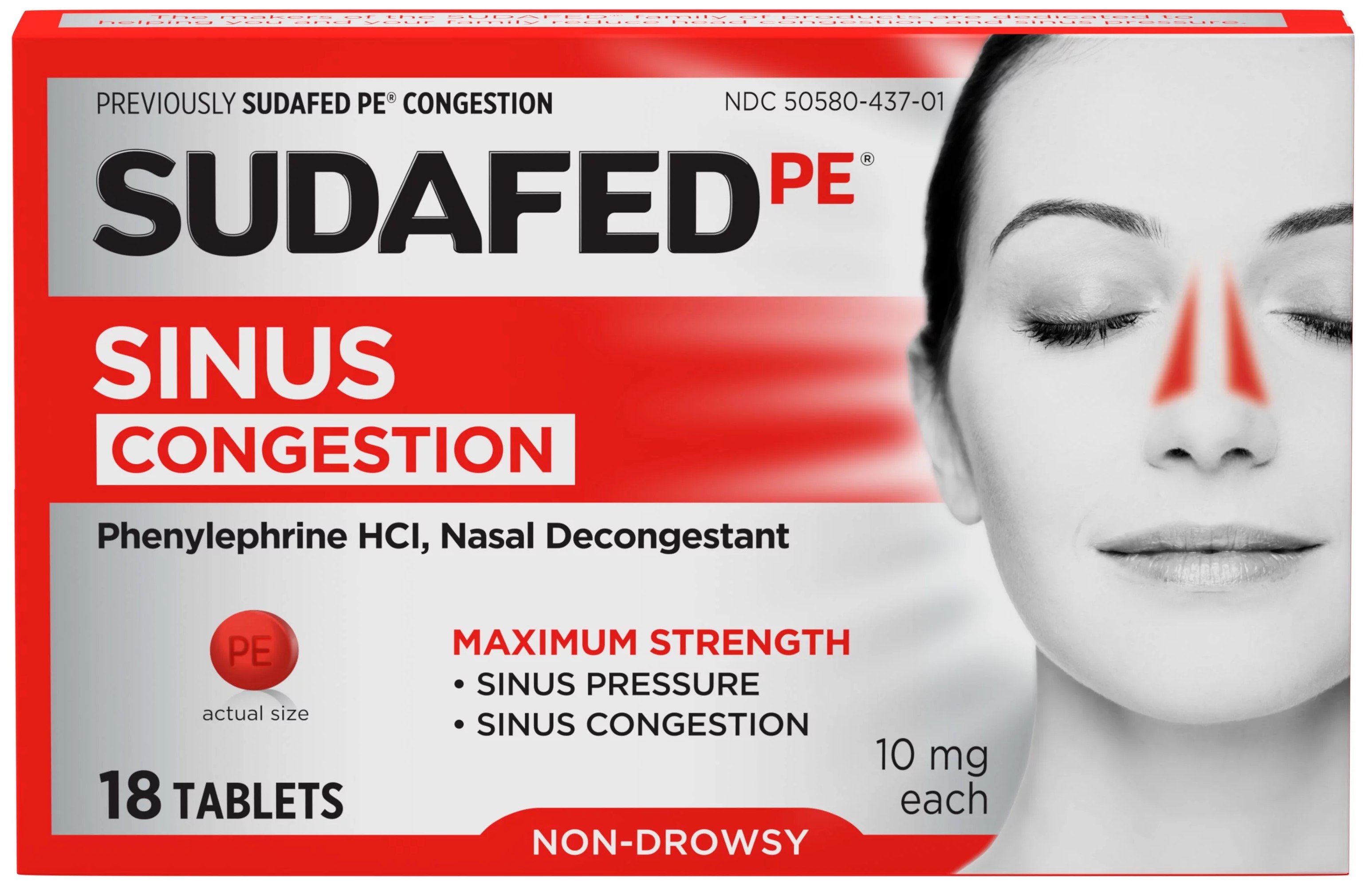
Front cover of the Sudafed PE OTC box.

Recently, an FDA panel announced that Sudafed PE and other decongestants are, essentially, ineffective. Since this announcement, I’ve seen countless articles pop up on my Google News feed about removing Sudafed PE, Mucinex, and Benadryl from the shelves. The argument to remove the medicines is that we shouldn’t be selling ineffective products–but are they really ineffective? An argument can be made that these are exceptionally effective placebos (sugar pills/ineffective medicine).

The placebo effect is well documented; even when a patient knows they are taking a placebo, sometimes just taking a pill helps to trick the body into the desired effect. Bodies and minds are weird, and whatever works, works. Even if Sudafed and its relatives are little more than placebos, I think they should be allowed to stay on the shelves. After all, the placebo effect can reduce symptoms by up to 50%, and that’s more than enough to convince me.

For all the many ailments I have–visible and invisible, temporary and chronic–very few have effective and fast solutions. There is no Xanax for depression, no Zofran for migraines, but there is Sudafed for a stuffy nose. Maybe it’s silly to continue to take something that has been proven not to work, but I swear I feel my sinuses clear up minutes after taking Sudafed. It allows me to get a restful sleep instead of battling with the correct sleeping position that allows me to breathe.

With the lack of effective medications available for a variety of illnesses, I am frustrated by the attempt to remove existing medications instead of putting new ones on the market. While I am not necessarily a fan of being stuffed full of pills, I like having the hope that maybe there is an accessible medication out there that will work for me. When the number of approved medications is even further limited, frustrated and exhausted people like me turn to home remedies and endless concoctions of honey, sea salt, herbs, and usually get roped into the wellness industry once or twice.

If Sudafed doesn’t work for general populace, there is nothing I can do about it. But whether it’s the placebo effect at work or there really is some merit to Sudafed, let me decide how to spend my money. Taking Sudafed off the shelves leaves me one less remedy for a restful night–and when I’m combating so many other ailments for a moment of peace, this tiny relief is a huge victory for me. Leave the silly little pill on the silly little shelf and let me make my silly little choice; you are free to pass it in the aisle if you wish, but leave some for me.

My black pregnant self matters!!

It is the year 2023 and we are still be ignored and left to either fend for ourselves are die during pregnancy and childbirth. Who is in charge of the pregnant body? Well, it should be a combination of the expectant mother and her medical provider(s). However, oftentimes, we are not, and this a normal attitude that needs to change since the mortality rate is alarming. An OB/GYN has a medical degree for that specific area, but does not have charge over the symptoms and ailments that come with pregnancy, so I have the final say on WHAT I want to happen during this amazing reproductive experience. Some attitudes regarding black maternal health are the same as the 17th centuries views. In the reading “African American Midwifery” talks about how the slave masters would ignore the pain and concerns of the black pregnant women because all that mattered was providing minimum care just enough so that slaves can keep reproducing MORE slaves! The mere fact that as the decades passed, more black women were entering the midwife field, was great. What better a way for a black expectant mother getting care from someone who looks like her? But, these midwives were not getting the respect or credit that they deserved, therefore; the white man was looked up as great for these medical developments. Fast forward to 2020, and the issue is still ongoing. For example, the film “Aftershock” is about the stories of families that were followed and interviewed regarding how the black woman was treated during pregnancy and childbirth, which ultimately ended in these women’s tragic death. Leaving their children with memories, have a newborn never know their mom, leaving the partner devastated and raising a child alone, and leaving families destroyed. Women are able to reproduce in order for ANYONE to be born. THE WOMB MATTERS! In the film, Sharmari is constantly telling the medical system that she is in pain and having issues, but she is ignored numerous of times, her test results are overlooked, and finally when the medical professionals realize something is in fact wrong, it is too late and another black woman has died during the childbirth experience. There has to be a change, but where does this change begin?

2 jobs, 1 degree.

2 jobs, 1 degree.

I Am Tired…

I am tired of working. I work at a very high pace profession that requires a lot of interaction with people and walking. There are times where I have to push and slide people onto beds. This has taken a toll on my body. There was a time where I worked Monday-Sunday (I know, I am crazy for even thinking that this was a good idea) because we were very short staffed and the overtime sounded really nice. However, just because it sounded nice two weeks before the actual shift doesn’t mean it was actually worth it when I was working. After working with a person from prison to getting yelled at and cursed out by older people for moving them I was done. I was tired physically, emotionally and mentally. I didn’t want to go to work and even contemplated calling out because of how bad it got but I knew that I could push through. There were some days where I just sat in my car 30 minutes before my shift just staring into space and completely zoning out because of how much I didn’t want to go inside and interact with people. Everytime I talked to anyone I had to act happy even if I had just seen someone passed out on their bed and a code was called on them. However, I finally saw the light. That sunday night I was so tired but so happy knowing that I am done with the week and thought about how I WILL NEVER PICK UP CRAZY SHIFTS. This was definitely a learning experience for me and I don’t think that I would ever work like that again unless it is in the summer where I don’t have to worry about classwork. My job had taken such a mental toll on me that I had to ask my professors for extensions on some of the assignments because I simply could not get them done in a timely manner. Even though I needed the money, my education is worth wayyy more and I would never compromise it like that again. This reminds me of Arlie Hochschild from ‘The Concept Creep of ‘Emotional Labor’ where she said that emotional labor is “the work of managing one’s own emotions that was required by certain professions”. I related to this so much because I had to put on this fake smile everytime I interacted with people because I couldn’t show them that I was going through a tough time since they are probably going through something worse.